Château de Buffavent: A Fifteenth-Century Hunting Residence in France
Site at a Glance
- Popularity
- Low
- Country
- France
- Primary era
- Medieval
- Eras represented
- Medieval
- Civilizations
- Duchy of Savoy, Holy Roman Empire
- Site type
- Domestic
- Remains
- Castle
On this page5 sections
History
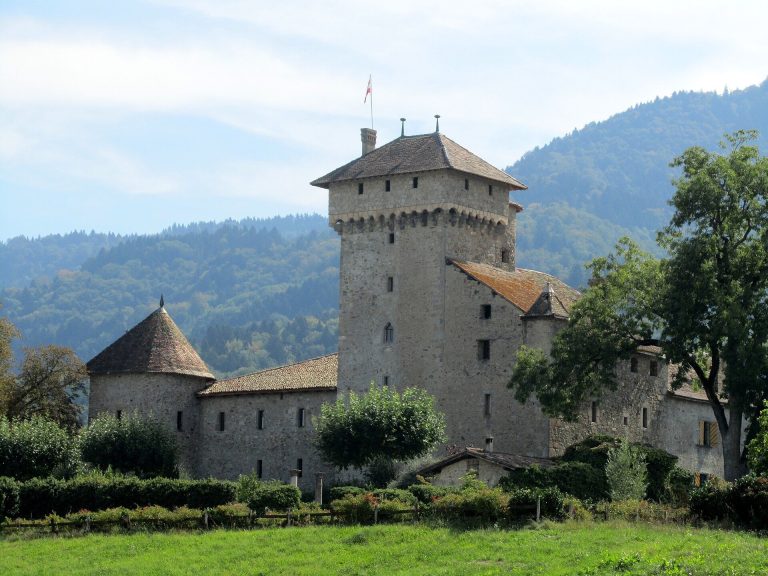
Château de Buffavent is a fifteenth-century hunting residence in Lully, France, built by the lords of Langin, probably around 1498. Priest Claude-François Trosset interpreted its woodland-edge setting, architecture, estate, and surroundings as evidence of its original purpose. The name, also written Buffavens, is thought to come from an Arpitan word meaning “to blow.” Arpitan, also called Franco-Provençal, is a Romance language, and the name refers to strong winds at the site.
The Langin Lords
Louis de Langin divided his property among his twelve children. His sons Étienne and Guigues inherited the château and estate. Guigues’s son Philibert was the last male heir. After the male line ended, Philibert’s sisters Antoinette and Louise succeeded to the lordship. Antoinette’s marriage to Aymon de Bellegarde and Louise’s marriage to Jean de Cervens carried the property into their husbands’ families.
In 1590, soldiers from Geneva seized the château.
Later Inheritance and Refitting
On 16 May 1650, Jeanne de Bellegarde, the last heir, bequeathed the château and lordship to her second husband, Louis de Seyssel. Philippine-Françoise de Seyssel inherited the property from her brother in 1729 and married Claude-Charles Gerbais de Sonnaz. Claude-Charles later inherited it and left it to his nephew Janus.
Janus and Joseph de Gerbais de Sonnaz refitted the former hunting residence during the eighteenth century. Later, Joséphine de Sonnaz, Baroness of Livet, transferred it to her cousins, the Count of Gerbais de Sonnaz d’Habères, a senior French military general, and Count Charles-Albert Gerbais de Sonnaz. The château remained in the Gerbais de Sonnaz family until 1922.
Twentieth-Century Ownership and Renovation
Philibert Vuargnoz acquired the château in 1923 and sold it in 1944. Since 24 January 1944, it has been registered as a French historic monument, a form of state heritage protection.
Surgeon Jean-Luc de Moerloose renovated the château from the late twentieth century through 2012.
Remains
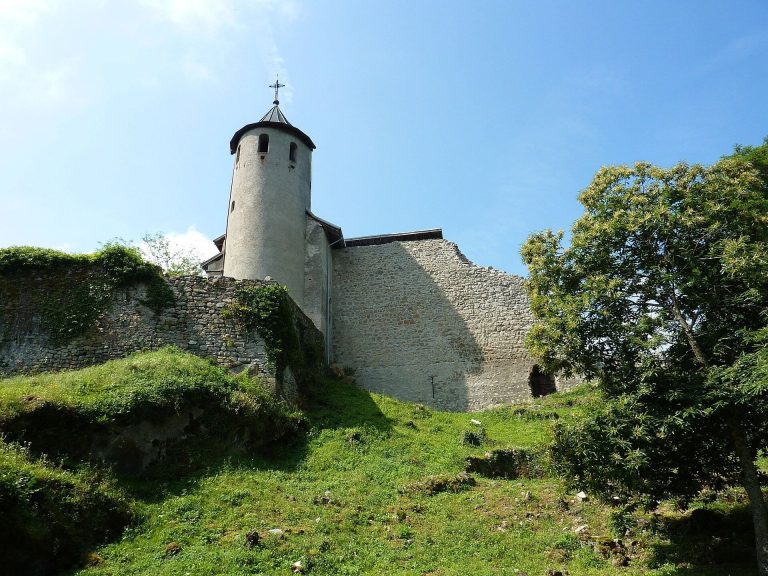
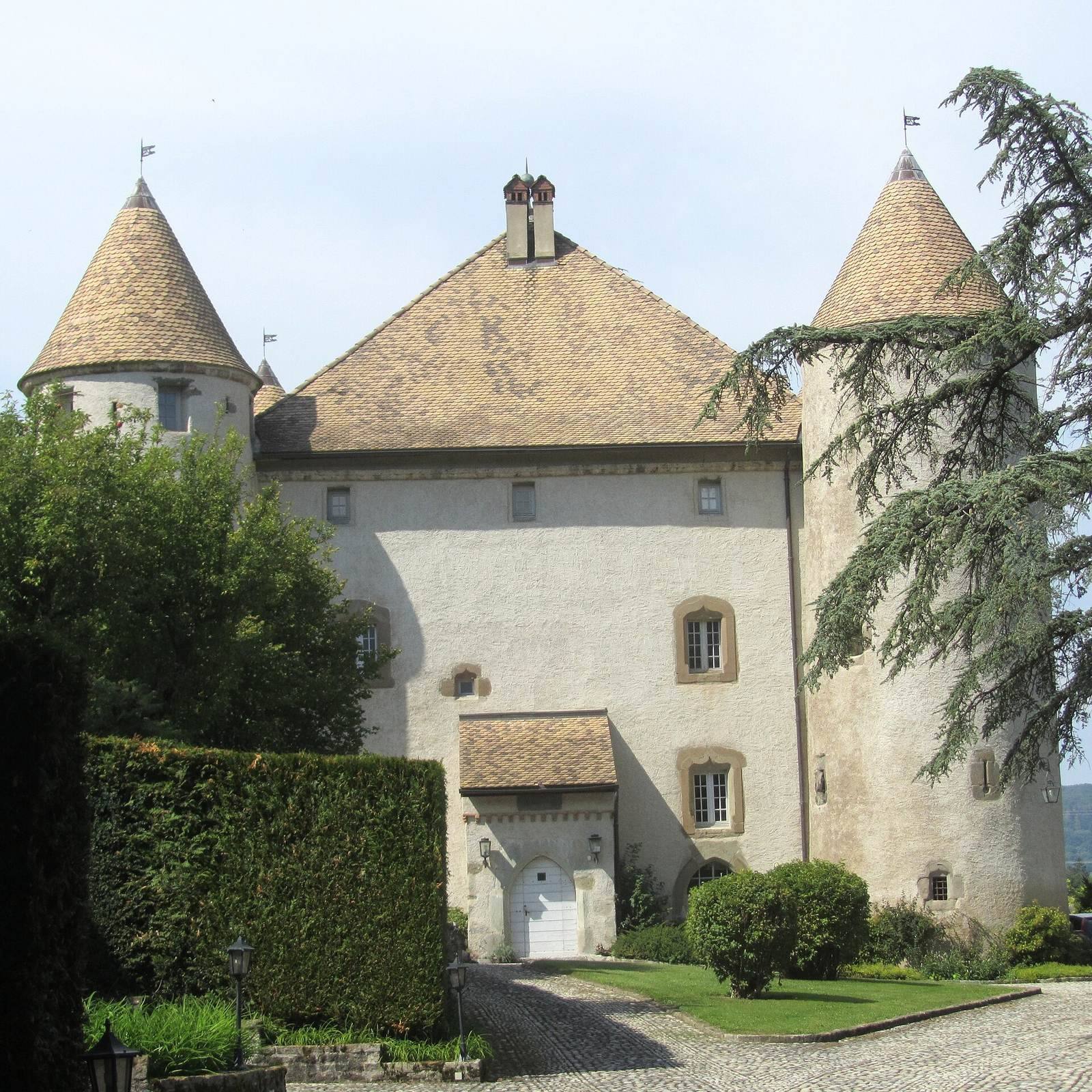
The château stands about 800 metres northwest of Lully’s centre, at the edge of the woodland between the hamlet and the Chavanex hillside. It is on the right-hand side of the railway line between Bons-en-Chablais and Thonon. The building has a four-sided plan typical of the region, with a round tower at each corner. Each tower is topped by a small, pepper-pot-shaped roof.
The entrance bears the Langin coat of arms, carved with a gold tower on a blue field and a gold section of wall on the shield’s left, which is the viewer’s right. The walls also retain impact marks from projectiles fired during the 1590 seizure.