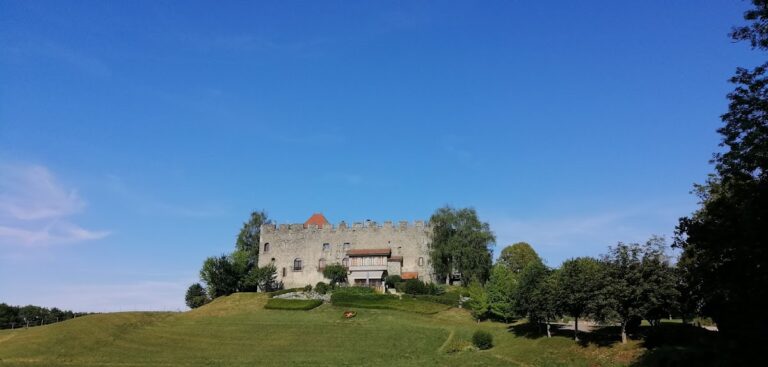
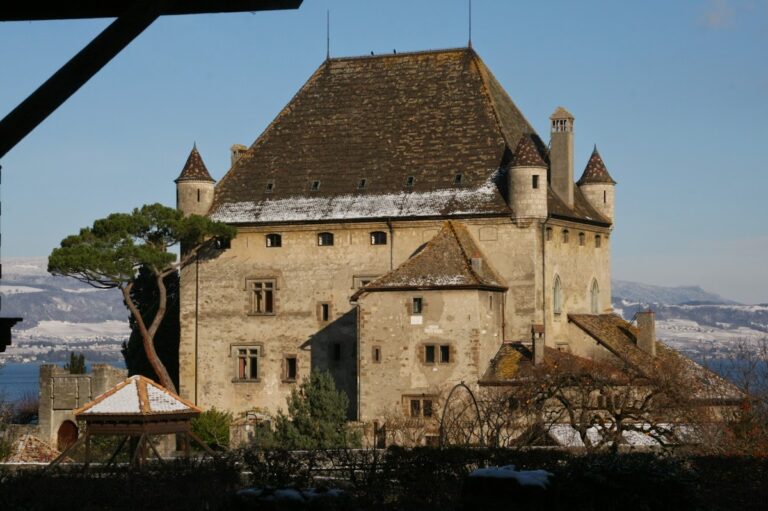
Château de Rives: Former Montjoux Priory in Thonon-les-Bains


Site at a Glance
- Rating
- 4.1
- Popularity
- Very Low
- Country
- France
- Primary era
- Medieval
- Eras represented
- Medieval
- Civilizations
- Holy Roman Empire
- Site type
- Religious
- Remains
- Monastery
On this page7 sections
History
Château de Rives, in France, is the former Montjoux priory in Thonon-les-Bains, a medieval Catholic religious establishment built beside Lake Geneva. It developed at the center of the borough of Rives, founded around 1280 by Philippe I, Count of Savoy, and was associated with the regular canons of Saint Augustine, clergy who lived communally according to a religious rule.
Foundation and the neighboring fortified house
The priory grew from several houses acquired by the Augustinian canons. Among these properties was land purchased from the Lombard Rolando Guerreti from 1321 onward, and the institution is first documented in 1386. Its construction history began in the fourteenth century and continued through later periods, with works extending into the twentieth century.
For many years, the priory was mistaken for a fortified house supposedly built in the first half of the fourteenth century by the Greysier family, perhaps a junior branch of the Faucigny family. That building was thought to have passed by marriage to the Rovorée family in the fifteenth century. The interpretation originated with Louis-Étienne Piccard, a Chablais priest and scholar, in the 1880s and was repeated by several twentieth-century writers. The priory and the Greysier fortified house are now understood to have been two neighboring buildings of the same general period.
The fortified house was last mentioned in archival records in 1487. It later disappeared from the written record, was shown as ruined by the first half of the seventeenth century, and was described as a ruin in the cadastral survey made under the Kingdom of Sardinia, which ruled Savoy before its annexation to France.
Religious, industrial, and military uses
The canons remained at Rives until the middle of the eighteenth century. In 1752, after the Grand-Saint-Bernard provostship was dismantled by decision of the Duke of Savoy and the pope, the priory was transferred to the Order of Saints Maurice and Lazarus, a dynastic Catholic order associated with the House of Savoy.
The property was sold to the Count of Sonnaz in 1791. During the French Revolution it was nationalized, and in the nineteenth century the building was used for industrial activities that included tanning and pottery. It returned to use as a private residence in 1920 and was later requisitioned to house troops during the Second World War.
Wartime events and municipal ownership
On 29 October 1944, Henri Brun, a former commander of the G.M.R. “Île-de-France,” a wartime mobile reserve police unit, was brought to the building after being arrested in Paris. A section of the Patriotic Militia, a French Resistance-era armed organization active during the Liberation, confined him in one of its rooms. At about 10 p.m. on 2 November, an unidentified person threw a grenade into the room, making Brun the victim of an attack.
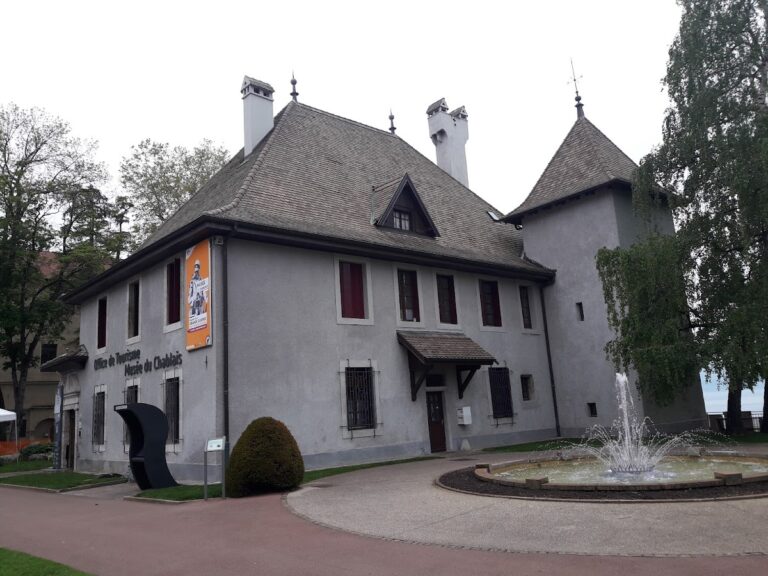
The façades and roofs, the enclosed courtyard, and the courtyard portal were listed as a Monument historique on 28 June 1932. This French legal heritage designation protects buildings and sites considered historically or architecturally important. The property passed to the city of Thonon in 1999 and was selected to accommodate the new museum of Thonon-les-Bains.
Remains
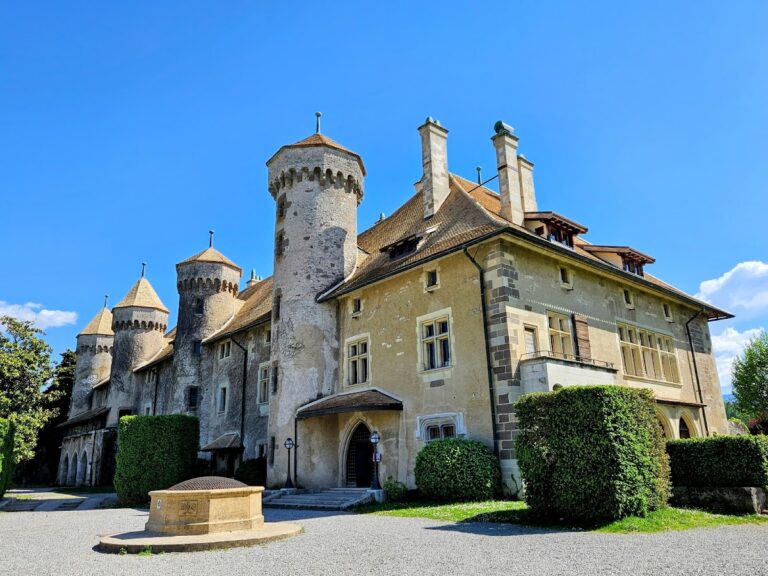
Beside Lake Geneva in the Rives district, the former priory presents a medieval and modern architectural character. It is an assemblage of several houses acquired by the Augustinian canons, rather than the neighboring Greysier fortified house with which it was once identified. The surviving complex is organized around a closed courtyard entered through a portal, while its construction and alterations span from the fourteenth century into the twentieth.
Former priory complex
The physical remains of Château de Rives include the façades and roofs of the former priory, together with its enclosed courtyard and portal. These elements belong to a building formed through the gradual combination of several houses. Their surviving arrangement expresses the priory’s development as an ecclesiastical establishment beside the lake and preserves fabric shaped by construction and modification over several centuries.
Remnant of the Greysier fortified house
The neighboring Greysier fortified house has disappeared except for the Languages Tower, identified as its surviving vestige. The tower is therefore distinct from the former priory complex and preserves the only stated physical remnant of the building that was once confused with it.