Échéry Castle: A Medieval Stronghold in Sainte-Croix-aux-Mines
Site at a Glance
- Rating
- 5
- Popularity
- Very Low
- Country
- France
- Primary era
- Medieval
- Eras represented
- Medieval
- Civilizations
- Duchy of Lorraine, Holy Roman Empire
- Site type
- Military
- Remains
- Castle
On this page10 sections
History
Échéry Castle is a thirteenth-century stronghold at Sainte-Croix-aux-Mines, France, built by the Eckerich nobles, who worked the region’s silver mines. It stood above the only road then passing through the valley by Petit Rombach, giving its holders a position from which to watch troop movements.
Origins and the Eckerich family
The history of Petit Rombach’s mining reaches back before the castle. Monks from Gorze, a Benedictine abbey in Lorraine, worked in the region and may have granted mining rights to the Eckerich nobles during the twelfth century, perhaps to protect them from the ambitions of local lords. This earlier activity does not establish that a castle existed at the time.
The castle was first called Belmont Castle. Petit Rombach’s Échéry was also known as Alt-Eckerich, meaning Old Échéry, to distinguish it from another Échéry about six kilometres away near Sainte-Marie-aux-Mines. A tradition connects the Eckerichs’ right to build at Petit Rombach with service to the dukes of Lorraine. The dukes may have appointed them deputy advocates of Lièpvre Priory, a religious house led by a prior. A deputy advocate was a lay official with delegated protective or administrative duties.
The route through Petit Rombach may have been built around 750 by Abbot Fulrad, during the reign of Pepin the Short, king of the Franks, to link Lorraine and Alsace. The road to Sainte-Marie-aux-Mines was not built until 1721. The Eckerich lordship was held from the dukes of Lorraine as a fief, land held under obligations to a superior lord.
The Eckerich family also held civic and regional authority. From 1299 to 1352, members served as Sélestat’s imperial chief magistrate, the city’s leading civic official under the Holy Roman Emperor. In 1312, Henri Waffler transferred the office to Godfrey, Count of Linange, for 400 silver marks. Waffler was the name of one Eckerich family branch.
Conflict and the end of the family line
In 1284, Jean d’Échéry was murdered by his cousins, possibly with the approval of Duke Ferry III of Lorraine. The lord of Hohenstein, then regional governor of Alsace and an ally of Jean, besieged the castle and soon captured it. Because the lordship belonged to Lorraine, Ferry III entrusted the castle in 1286 to Conrad, Bishop of Strasbourg, who held it for three years. It then passed to the duke’s cousin, the lord of Blamont. The Eckerichs regained possession soon afterward.
In 1316, Duke Ferry IV granted Henri Waffler Lorraine holdings in the Lièpvre Valley. In 1331, part of the castle passed through marriage to Werner Gutman of Hattstatt. That year, Jean d’Échéry, who had fought alongside the duke against the Count of Bar, imprisoned three high-status captives in the keep and demanded 750 livres tournois in ransom. By 1336, Jean was among the Bishop of Strasbourg’s noble vassals.
In 1338, during a conflict between Bishop Berthold of Bucheck of Strasbourg and the imperial cities, communities governed directly by the Holy Roman Emperor, the bishop ravaged the Lièpvre Valley and besieged the castle. Jean d’Échéry commanded Sélestat’s troops. In 1350, he made peace with several Alsatian lords and Marie, Duchess and regent of Lorraine. Fiefs at Saint-Maurice and La Vancelle also came to the Eckerichs during the fourteenth century. In 1374, Duke John of Lorraine granted Bruno of Ribeaupierre possible rights to holdings that might pass to him after the deaths of Conrad and Werner of Hattstatt and Jean’s children. Jean’s son died in 1381, ending the Eckerich family line.
Divided ownership
After the last Eckerich’s death in 1381, the dukes of Lorraine inherited one half of the castle. The Ribeaupierre, also called Rappolstein, held the other half as independent property, rather than under feudal obligations. The dukes granted their share to the Hattstatt family as a fief, and the two families often quarrelled. On 9 December 1399, Frédéric of Hattstatt and the Ribeaupierre brothers Maximin and Schassmann agreed to a castle-peace treaty regulating relations between the shared holders. In 1404, Frédéric held half the fief from Duke Charles. The Hattstatt share passed through the family’s heirs until the family died out in 1585.
In 1452, Gaspard and Guillaume of Ribeaupierre granted their half as a fief to the knight Adam of Andolsheim and his wife Lucie, who were charged with guarding the castle. After Adam died in 1472, his cousin Hermann Waldner succeeded him. The Ribeaupierre later pledged their share to raise money: in 1512, they secured 1,200 florins from Walther of Uttenheim of Ramstein, repayable within twelve years, and in 1519 pledged it again to Conrad Rieff for eight years in return for 600 florins.
Murbach Abbey continued to hold land in the Lièpvre Valley amid these transfers. In 1463, the Hattstatt made a related arrangement concerning the Lorraine share. In 1507, the Ribeaupierre half was granted as a fief to Jean Walther of Greidt, abbot of Murbach. The eastern part later passed as a fief to Prince Maximilian-Joseph of Deux-Ponts, who held it from the knightly chapter of Guebwiller, a collegiate religious body whose members came from the nobility.
Prison, abandonment and later history
The castle served as a prison. During a conflict between Mulhouse and local nobles aligned with the Habsburg dynasty, the Hattstatt confined citizens of the city there. The castle’s occupants also gained a reputation for banditry. An estimate in 1586 set out repairs that were needed, and the castle was described as abandoned in 1587, after the Hattstatt family’s extinction.
The castle may have suffered damage during the Thirty Years’ War, a major European conflict fought from 1618 to 1648. Lorraine accounts in 1631 refer to obligations to repair it, and in 1749 it was still being used as a prison, holding Swiss merchants until they paid substantial sums. Excavations in 1856 interpreted a square opening at the castle’s centre as a cistern. Some restoration followed but was later halted.
After the French Revolution, the castle passed into private ownership. It was sold to the government of Alsace-Lorraine in 1880 and classified as a historic monument in 1898. The classification was withdrawn on 12 May 1932 because of the castle’s advanced deterioration. In 1993, the state sold the ruins to an association responsible for their maintenance.
Remains
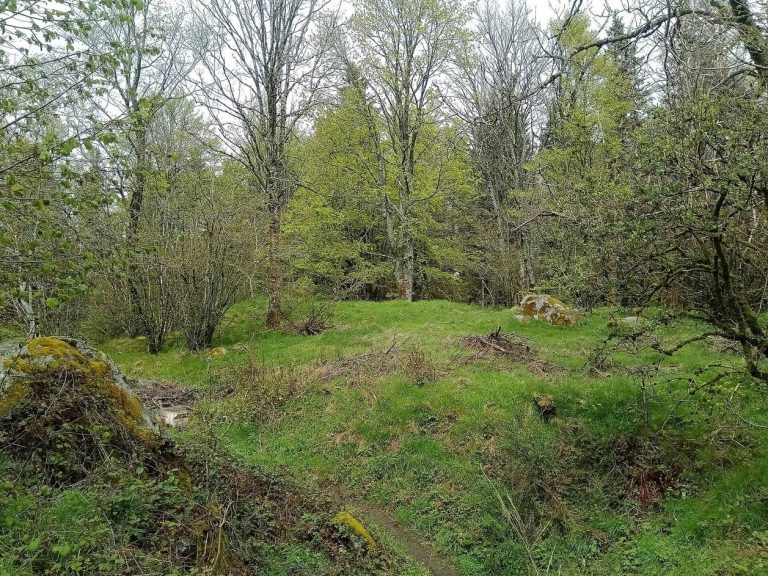
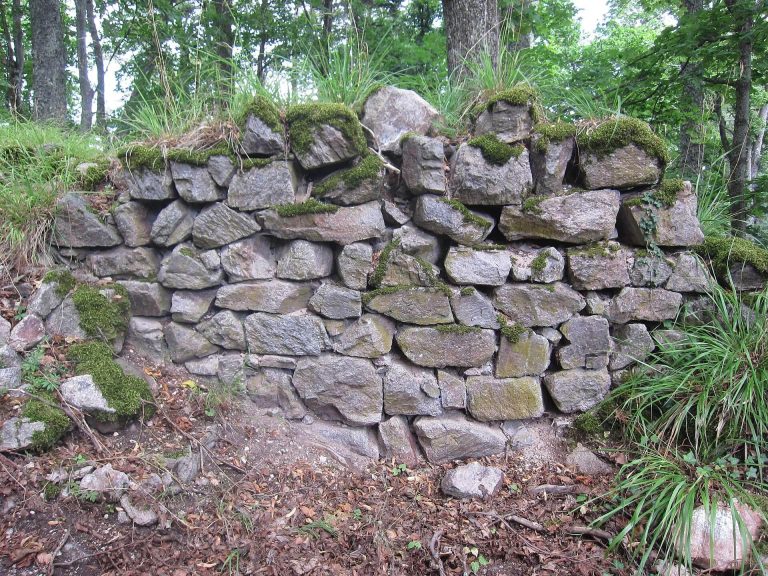
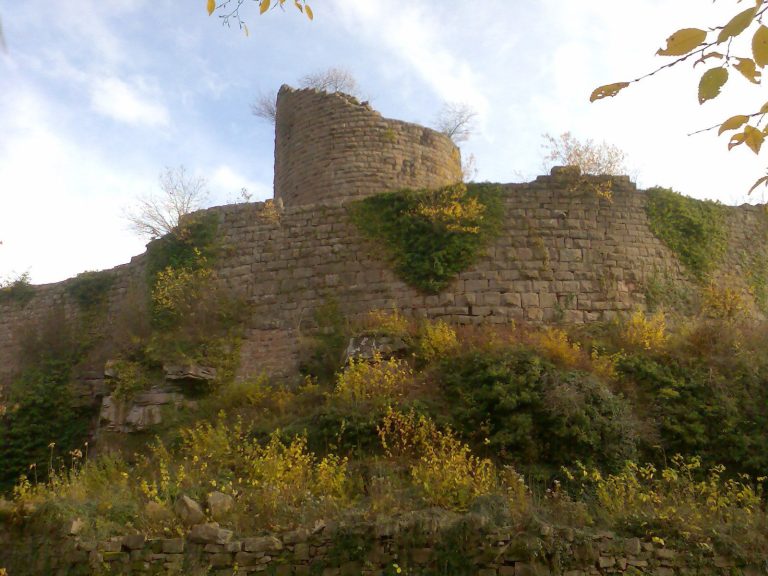
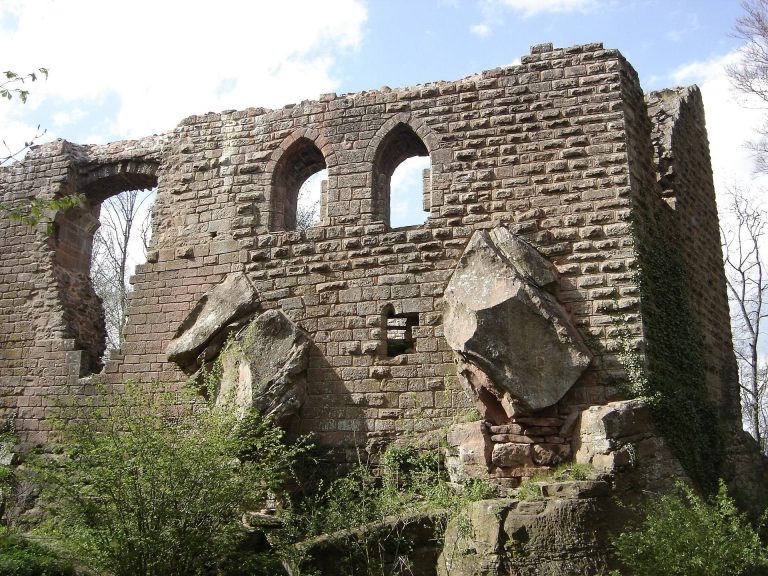
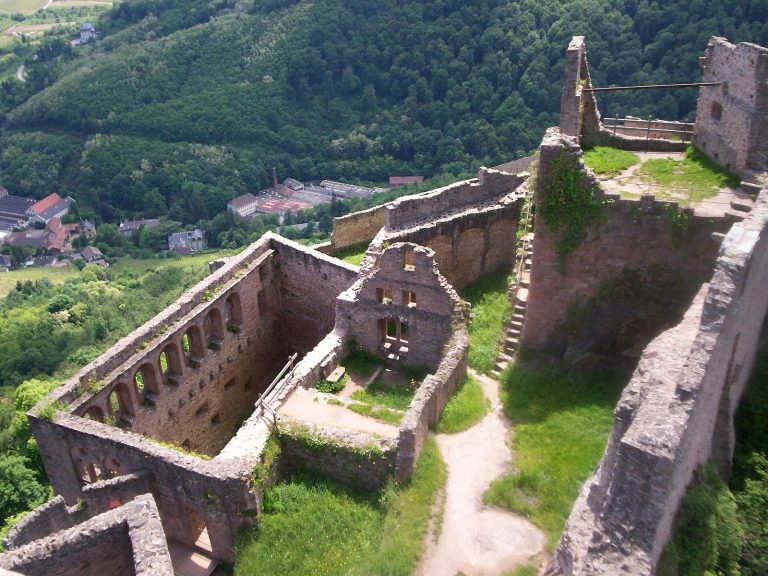
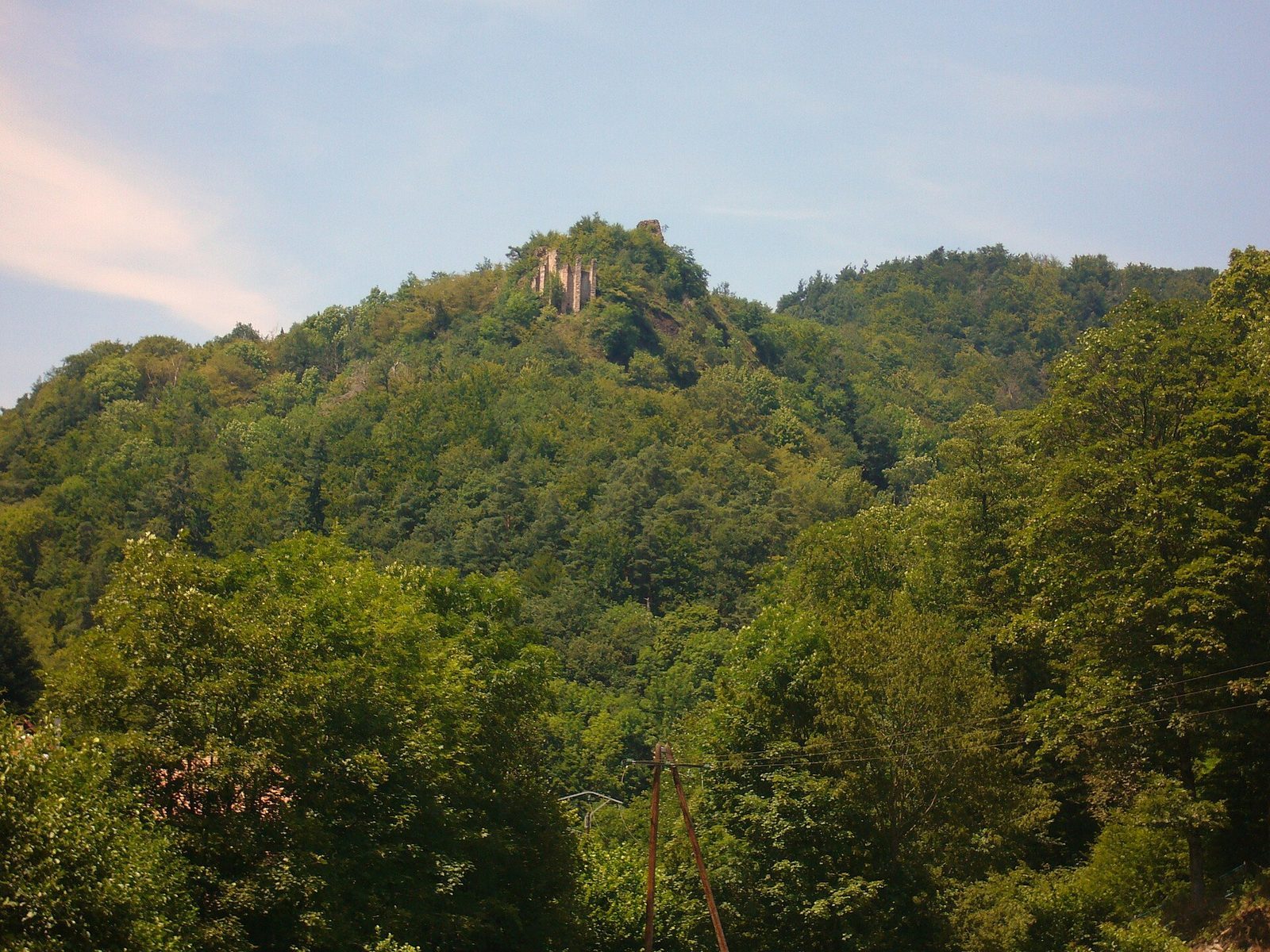
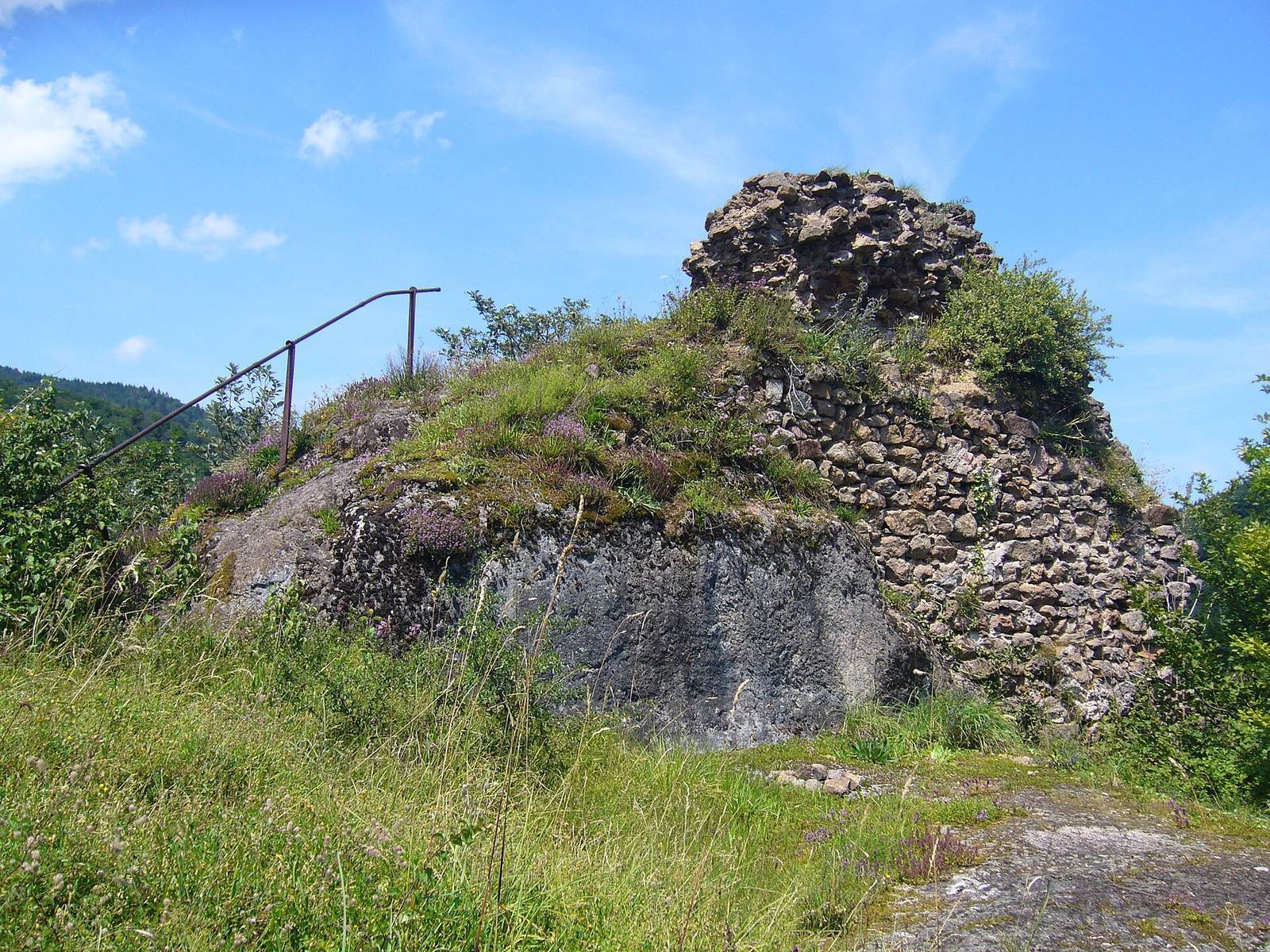
The ruins occupy a rocky outcrop about 508 metres above sea level, where the Jaboumont and Vraie Côte valleys meet. The rock rises roughly 100 metres above the valley floor. The former castle had an elongated rectangular plan, with a large polygonal courtyard to the west; surviving walls include limestone rubble. Brambles and wild trees now cover parts of the ruins.
Castle layout and surviving structures
Enclosure and defensive walls
Walls and towers at the corners enclosed the western courtyard. A ditch four to five metres wide separated the castle from the mountain. A defensive shield wall, a high protective barrier, survives at the top of the rock, along with sections of the castle’s walls.
Keep and rock-cut access
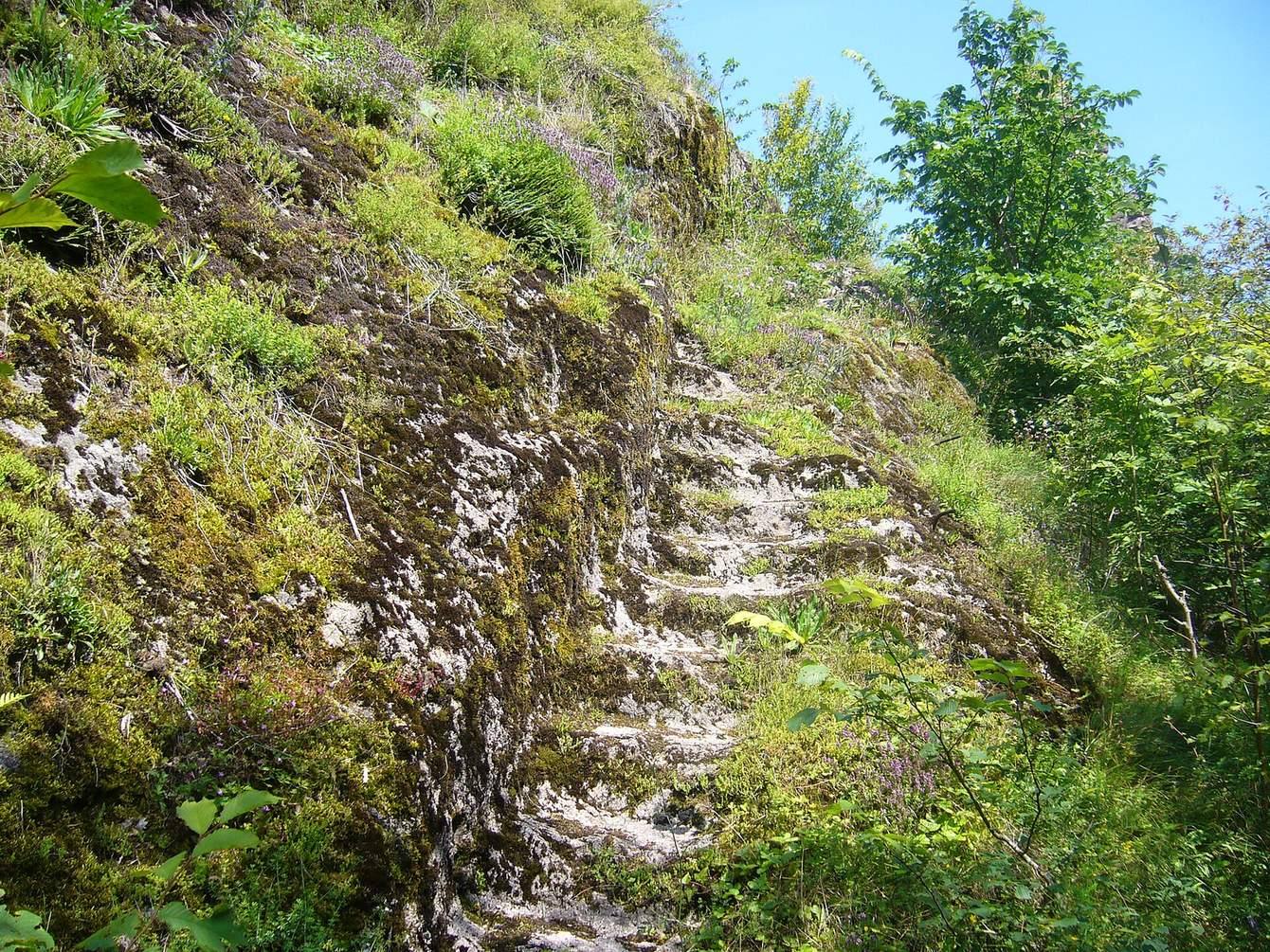
The keep, the castle’s main fortified tower, stood to the north. Reaching it involved passing through five gates protected by towers and climbing four stairways cut into the rock. Rock-cut stairways remain among the visible features. The castle façade had three storeys and was still relatively well preserved in 1810.
Chapel
The chapel stood east of the castle and outside its original enclosure. Added in 1460 against a thick wall, it is now represented by a supporting wall with substantial buttresses, projecting supports that reinforce a wall. A few chapel buttresses remain.