Faîte Castle (Château de Faîte): A Medieval Fortress in France


Site at a Glance
- Rating
- 4.8
- Popularity
- Very Low
- Country
- France
- Primary era
- Modern
- Eras represented
- Medieval, Modern
- Civilizations
- Duchy of Lorraine, French, Holy Roman Empire
- Site type
- Military
- Remains
- Fort
On this page8 sections
History
Faîte Castle, known in French as Château de Faîte, is a medieval fortified castle in France, near Wisembach in the Vosges. The Duchy of Lorraine built it in 1306 on the orders of Duke Thiébaud II, and it was originally called Châtel-sur-Faîte. The castle protected the duke’s silver mines at La Croix-aux-Mines and supported Haut-Échery, the ducal castle guarding the Lorraine side of the Sainte-Marie-aux-Mines mining district.
A fortress of Lorraine
The castle also controlled the route through the Sainte-Marie Pass. Its castellan, the official responsible for the stronghold, collected a toll from those using the passage. In this way, the site combined military protection with control of an important transit route connected to Lorraine’s mining interests.
The seizure of 1674
On 12 December 1674, Duke Charles IV of Lorraine seized the castle from its French occupants and established a fortified position there. Charles IV had been driven into exile after the French invasion of Lorraine. Count de Bourlémont, serving under the French commander Turenne, tried unsuccessfully to remove him, and Charles IV captured a large number of prisoners.
The victory did not return Charles IV to his duchy. Lorraine regained its independence only temporarily under Duke Léopold, before the region’s later political history continued under French influence.
Ruins and wartime reuse
By the French Revolution, the castle was already in ruins. The revolutionary government sold it as national property, meaning land or buildings transferred to the state and then commonly sold. A resident of Wisembach acquired the site and used its surviving stone as a quarry.
In 1914, French forces occupied the ruins and converted them into a casemate, a fortified enclosed chamber for troops, weapons, or defensive installations. The position changed hands several times during the fighting and suffered combat damage. On 19 June 1940, the French 230th Fortification Regiment, which had reoccupied the site, was driven out by German forces. German troops held the position for four years before the American 142nd Infantry Regiment expelled them. The surviving remains therefore represent a history extending across approximately six centuries.
Remains
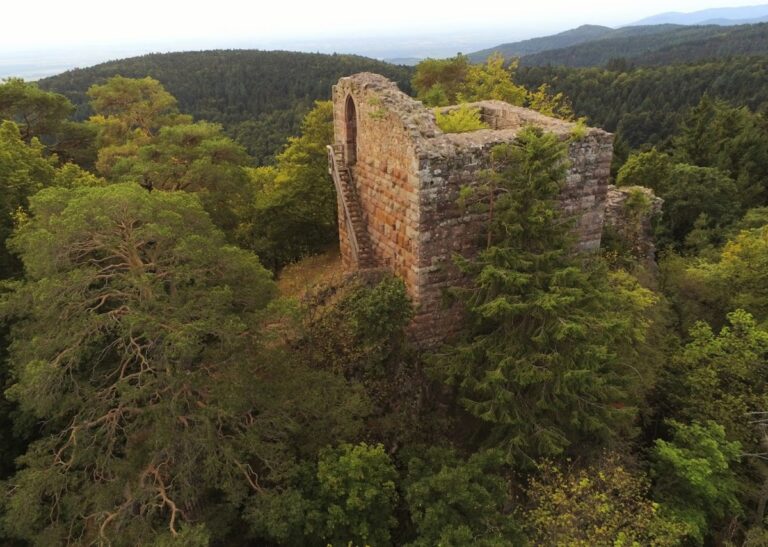
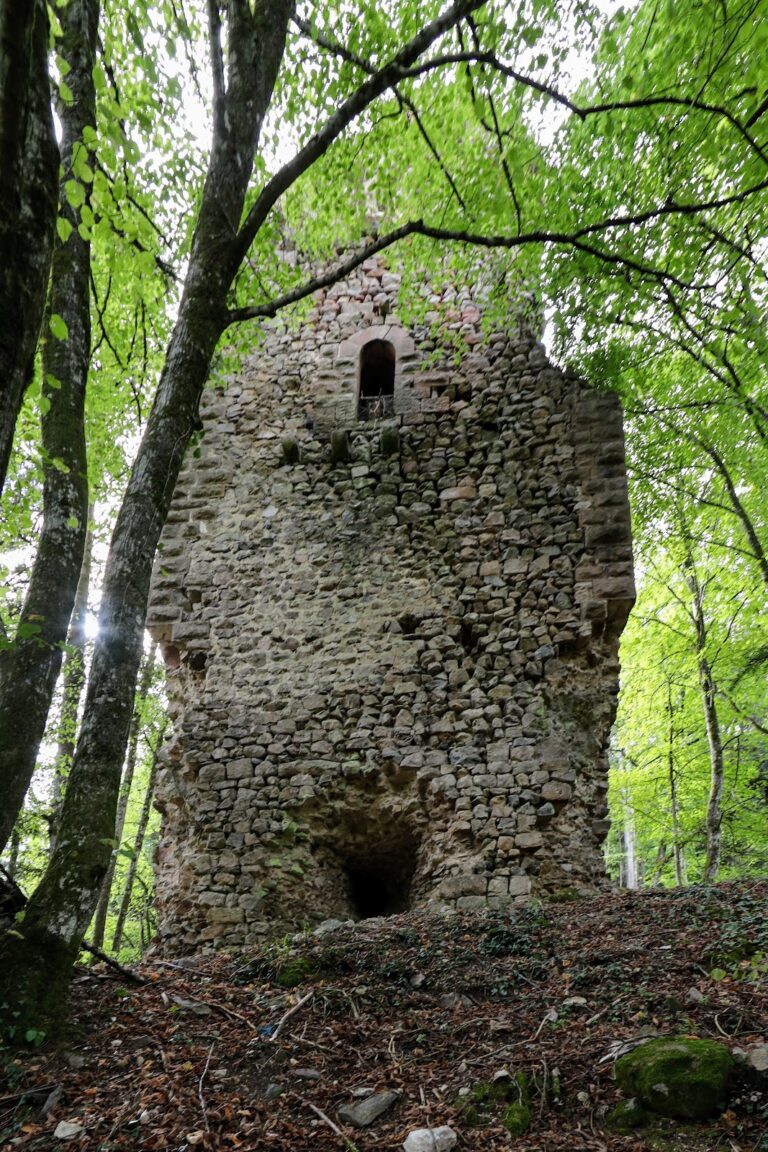
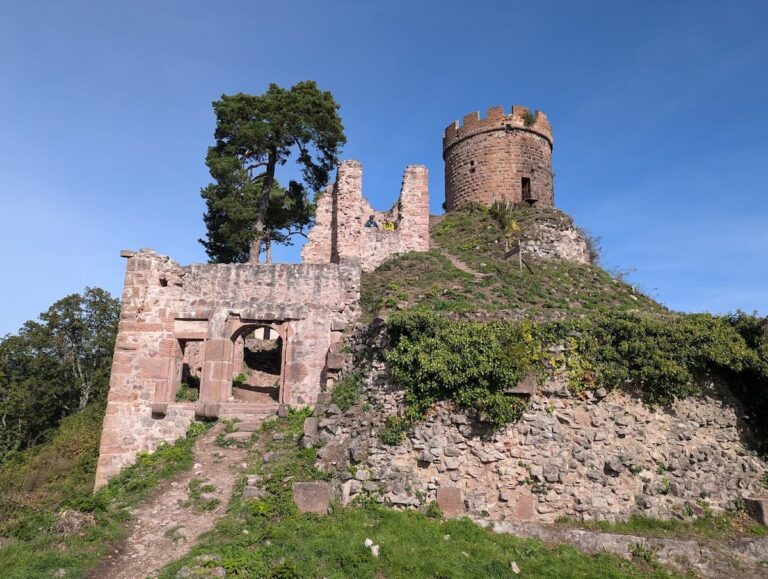
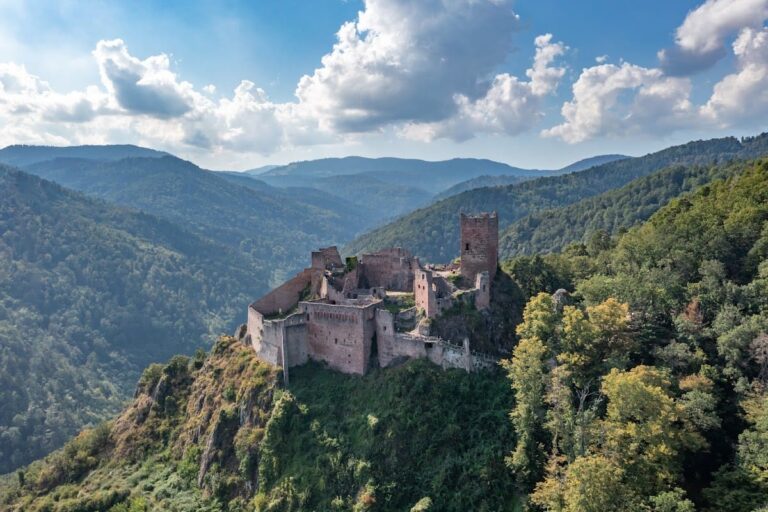
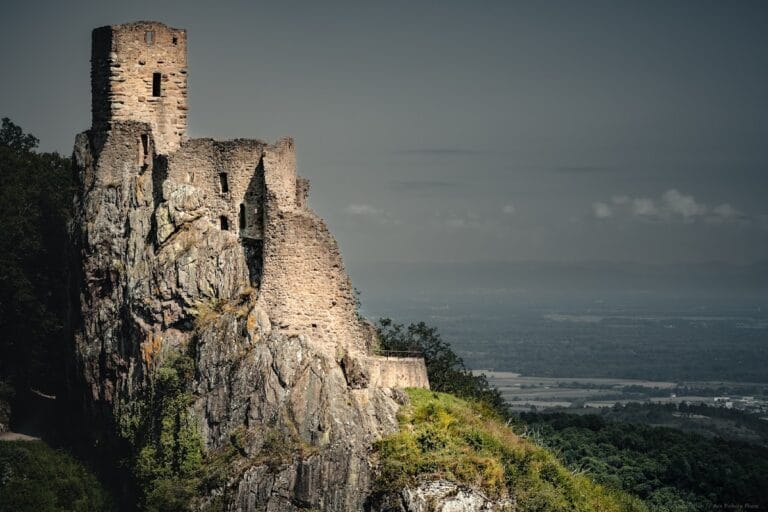
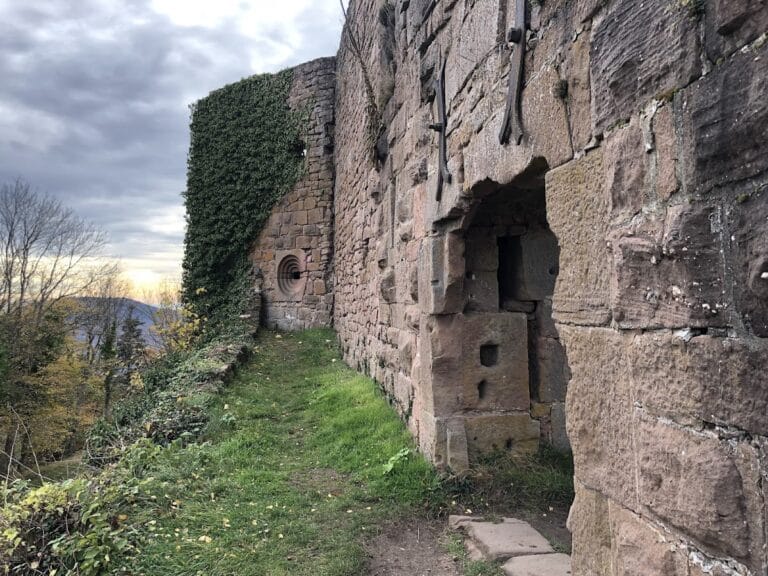
The ruins stand on the Roc du Haut de Faîte near the Sainte-Marie Pass, at an elevation of approximately 884 metres. Their position is associated with the route crossing the pass. Today, the site consists of rare fragments of the medieval castle together with casemates constructed during the First and Second World Wars. Brambles and nettles overgrow the remains, and the later military structures make the medieval elements difficult to distinguish.
Medieval fragments and military structures
Medieval castle remains
Only sparse fragments of the former castle survive. The physical remains do not preserve a detailed plan, measurements, building materials, or identifiable individual medieval structures. Their location on the Roc du Haut de Faîte preserves the connection between the castle and the passage through the Sainte-Marie Pass.
First and Second World War casemates
Fortified military chambers from the First and Second World Wars occupy parts of the medieval ruins. These casemates form the clearest later layer of the site, while combat damage and dense vegetation contribute to the fragmentary condition of the remains.