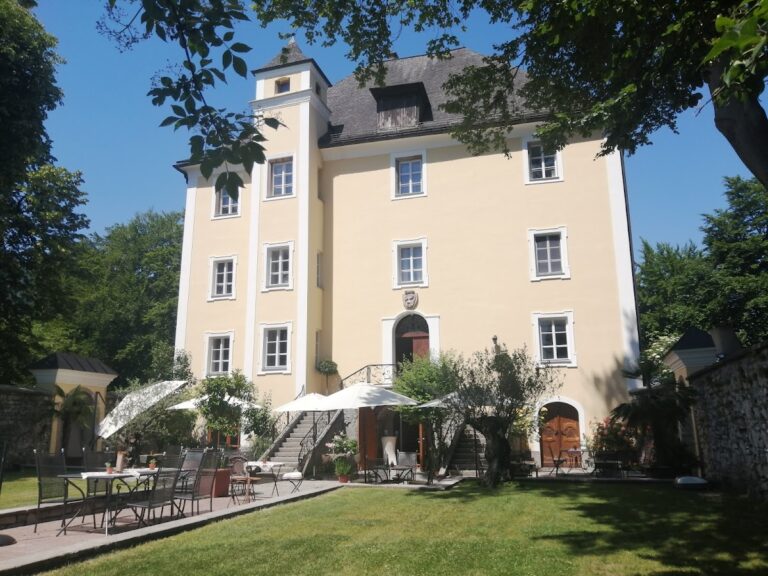
Langreith Hunting Lodge: A Former Manor and Hunting Residence in Austria
Site at a Glance
- Popularity
- Very Low
- Country
- Austria
- Primary era
- Early Modern
- Eras represented
- Early Modern
- Civilizations
- Holy Roman Empire
- Site type
- Domestic
- Remains
- Manor House
On this page7 sections
History
Langreith Hunting Lodge is an estate in Hintersee, Austria, whose origins as a manor house date at least to the fifteenth century. It was connected with the archbishops of Salzburg, who hunted in the area, and later served as a residence for gamekeepers.
Manor house and archiepiscopal hunting
When the archbishop of Salzburg travelled to hunt at Fuschl and Hintersee, a local official responsible for the area had to prepare his bedding. The manor house was burned during the Peasants’ War, a series of uprisings in German-speaking Central Europe from 1524 to 1526. In 1528, officials of the Wartenfels judicial and administrative district undertook to rebuild it and provided guarantors to Archbishop Matthäus Lang. The manor house, granary, and kitchen received new roofs in 1556.
By 1617, Archbishop Markus Sittikus had been informed that the building was in poor condition and needed another new roof. The game and fish keeper left in 1657, leaving the house empty. Although repairs to the roof followed in 1659, the windows and stoves were broken; the house could still be used for hunting. Further repairs took place in 1691. In 1694, an apartment for the gamekeeper and his assistants was established in the adjoining manor kitchen. A horse stable was built beside the cowshed in 1699, the roof was repaired again in 1705, and a retired gamekeeper was permitted to move into the manor house in 1724.
Repairs and proposed rebuilding
In 1741, workers demolished the ground-floor vaults and those in the entrance hall. The work exposed walls blackened by soot from the period of the Peasants’ War. In 1762, the Salzburg court architect proposed replacing the old house with a two-storey residence for the gamekeeper. His plans also included a cowshed and a threshing floor.
State and private ownership
From 1803 to 1806, when Salzburg was an electorate, the estate belonged to Ferdinand III of Habsburg-Tuscany. An electorate was a territory whose ruler could take part in choosing the Holy Roman Emperor. After Salzburg became part of Austria, the building passed in 1816 from the Court Chamber, the central financial and administrative office, to the Habsburg state.
Franz Anton Count Nostiz-Rieneck acquired the property in 1928. After his death in 1956, it passed to his widow, Elisabeth von Nostitz-Rieneck, who lived there during the summer months.
Remains
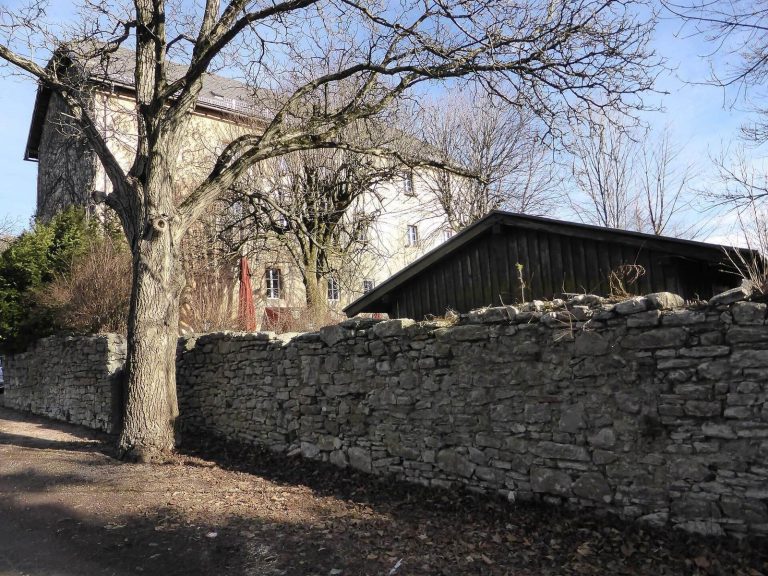
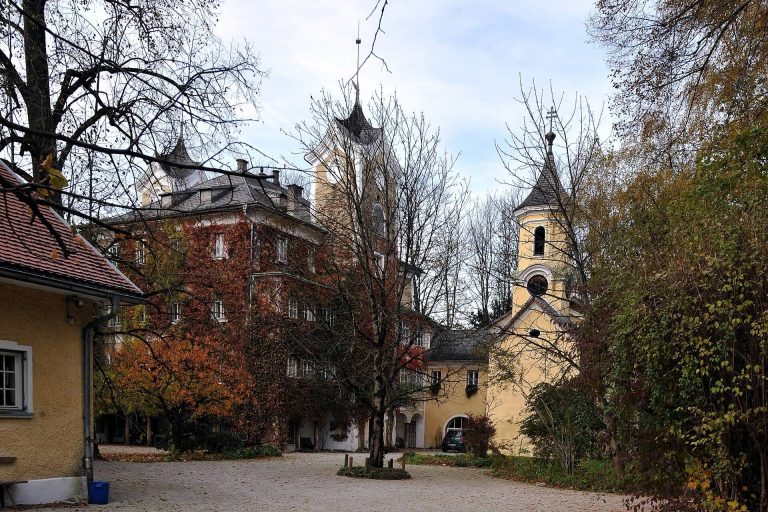
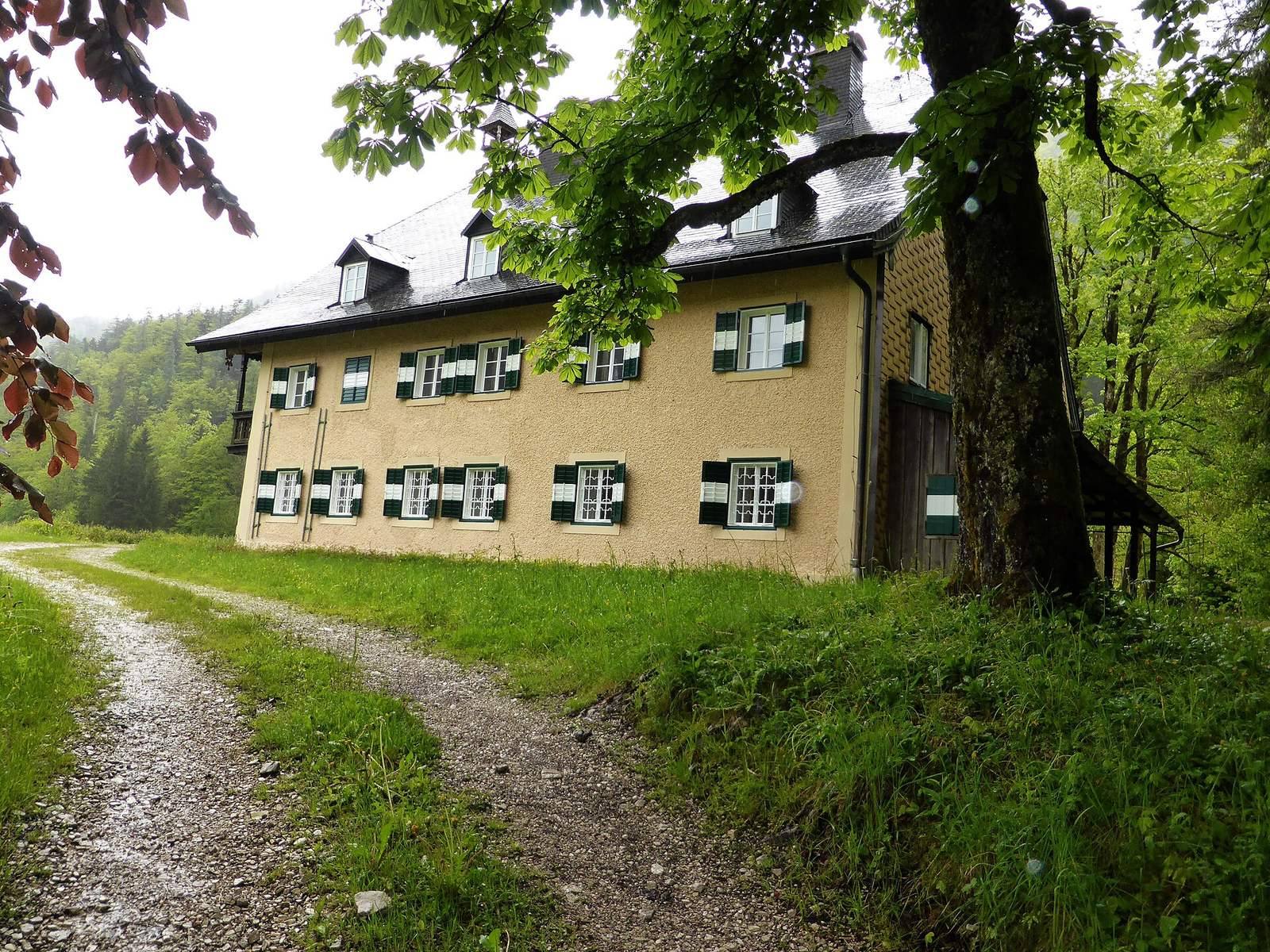
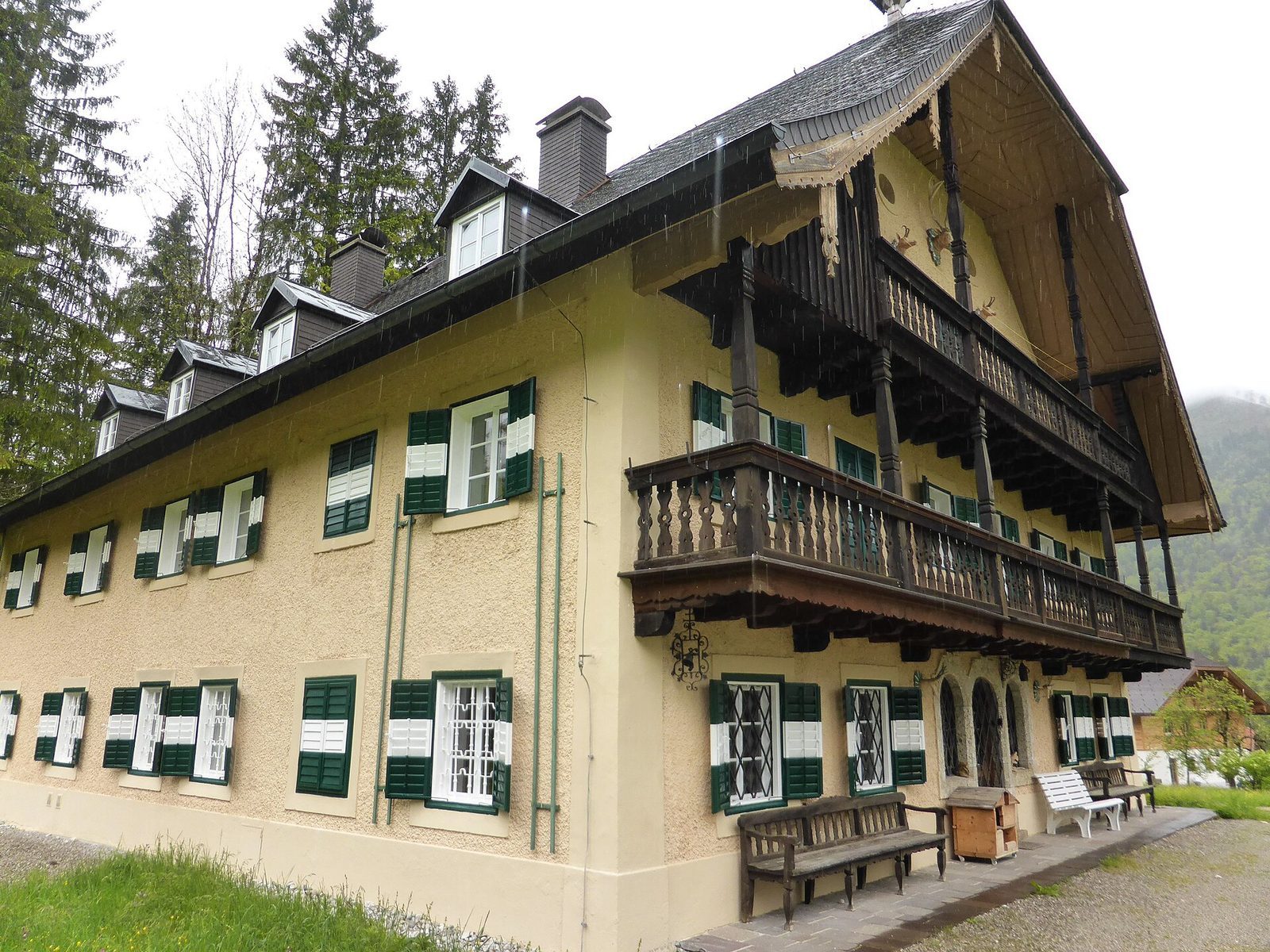
The estate includes a two-storey main building and two ancillary buildings. The main building retains recognizable elements of the 1762 design, while its elevations show the arrangement of windows and doors.
Main building
The front has six window bays, meaning vertical sections marked by windows, and round windows in the attic. The ground-floor entrance is a round-arched door flanked by two similarly arched windows. The 1762 design showed four window bays on the front and a rectangular door. The side elevation has five window bays and gabled dormer windows, which project from the roof slope.
Ancillary buildings
Two ancillary buildings form part of the estate.