Protestant Church of the Holy Cross in Weiler: A Historic Place of Protestant Worship
Site at a Glance
- Popularity
- Very Low
- Country
- Germany
- Primary era
- Medieval
- Eras represented
- Medieval, Early Modern
- Civilizations
- Holy Roman Empire
- Site type
- Religious
- Remains
- Church
On this page13 sections
History
Medieval origins and the Peasants’ War
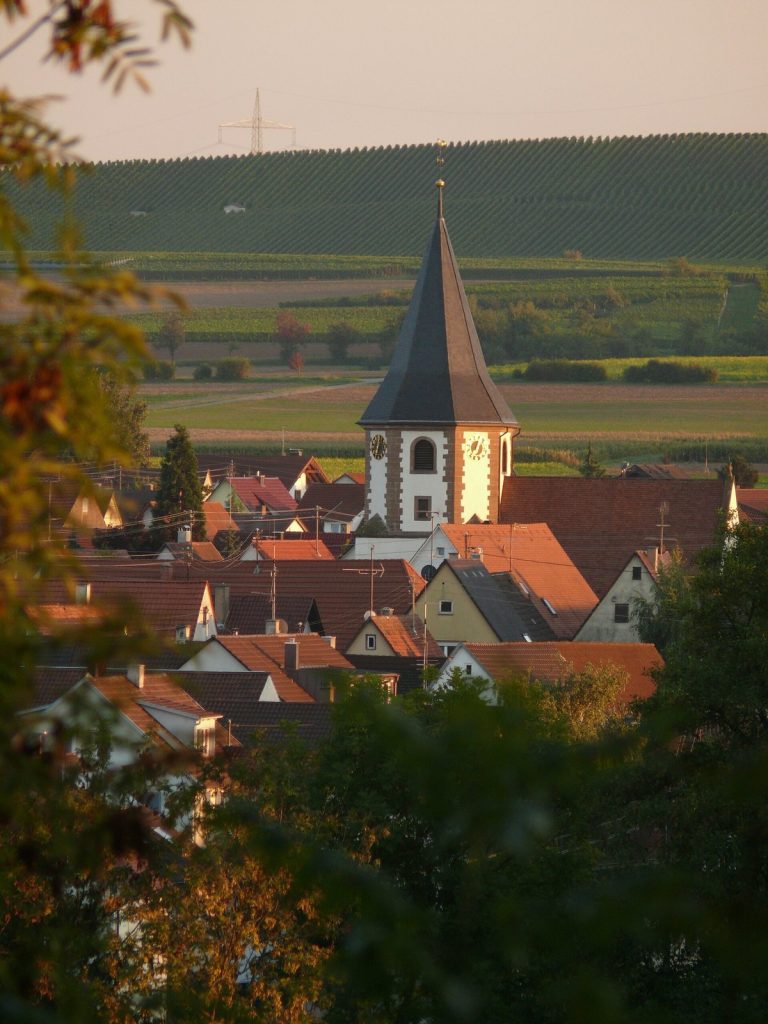
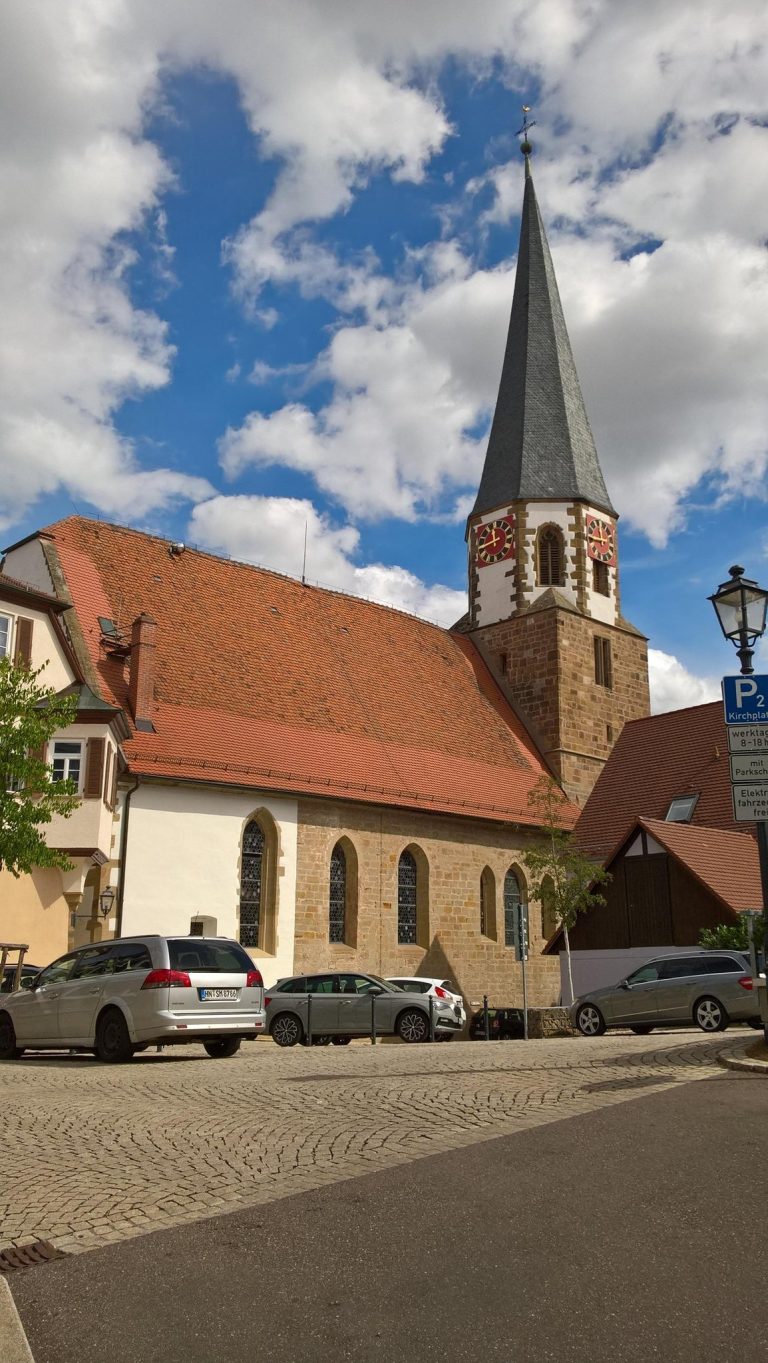
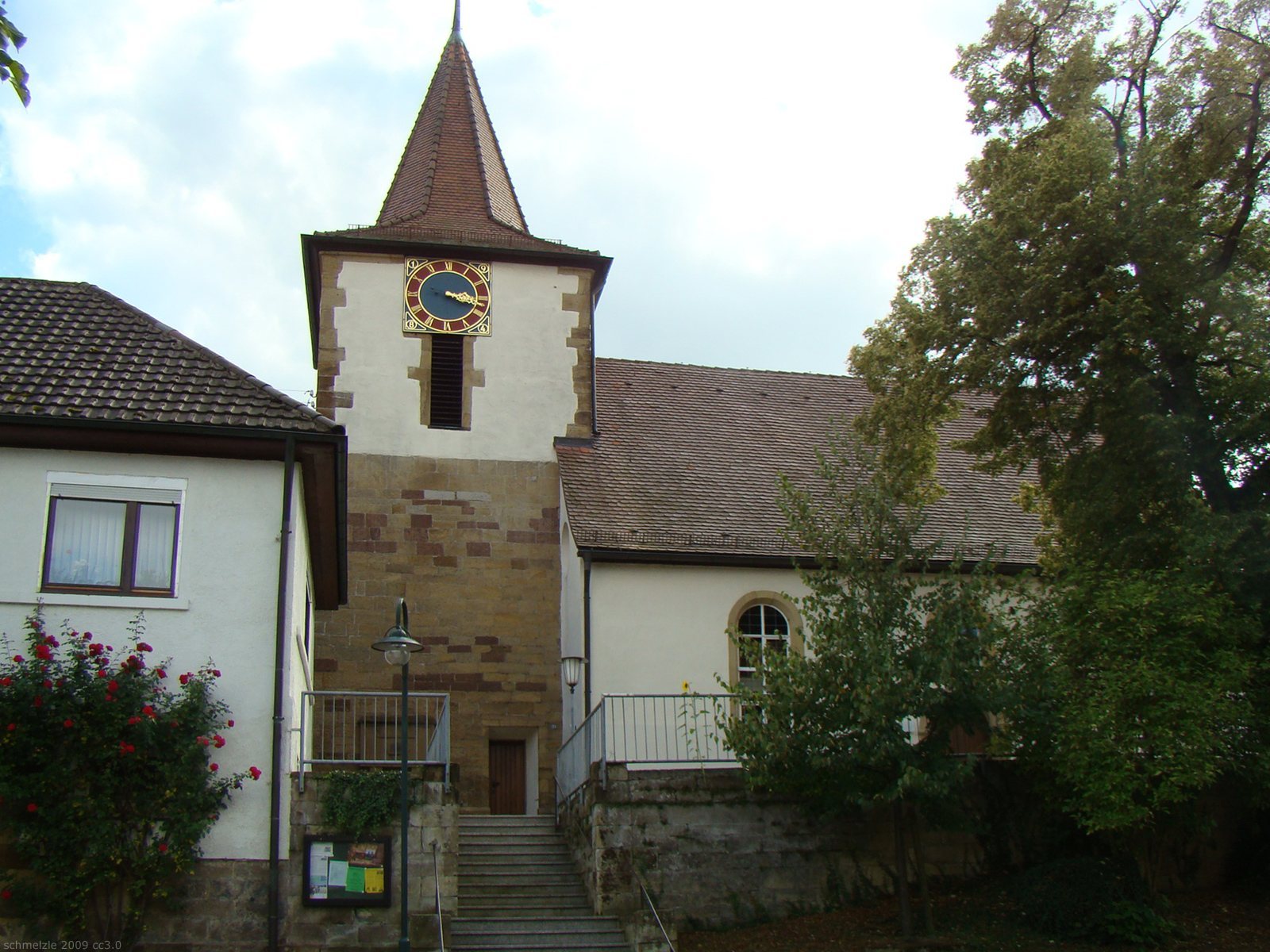
The Protestant Church of the Holy Cross in Weiler, Germany, has uncertain origins. Its lower tower dates to around 1300, and the church probably served a fortified role at that time.
Before the German Peasants’ War, the major central European uprising of 1524–1525, Anton Eisenhut was the priest in Weiler. He served the Prince-Bishopric of Speyer, a territory whose bishop also held secular authority. Eisenhut later became a peasant leader and was beheaded at Bruchsal in 1525.
War, damage, and renewal
Weiler was nearly depopulated during the Thirty Years’ War, the large-scale European conflict of 1618–1648. The church probably survived, but the community lacked the resources to care for it afterward. By 1698 the building was in disrepair, and lightning set fire to the tower spire in 1701. For many years, only makeshift repairs followed.
A major renovation in 1751 began a more substantial phase of renewal. It altered the church’s interior and closed off its medieval tower choir, the choir area located within the tower.
Eighteenth-century decoration and later changes
In 1767, the congregation commissioned Johannes Stiegler, a painter from Prague, to decorate the church. His work took a little over two months. The texts accompanying the paintings were probably written by the pastor, Johann Eberhard Gottlob Schober (1722–1768). The painted interior is an important record of rural Protestant belief in the eighteenth century and contributes to the church’s status as a cultural monument.
The date when the church acquired an organ is unknown. An instrument made around 1730 by Friedrich Philipp Wiegleb in Bönnigheim for another church was in Weiler by the early nineteenth century at the latest, and it was repaired and rebuilt several times. The present organ was made in 1997 by the Mühleisen firm in Leonberg. The church’s last renovation took place in 1984.
Remains
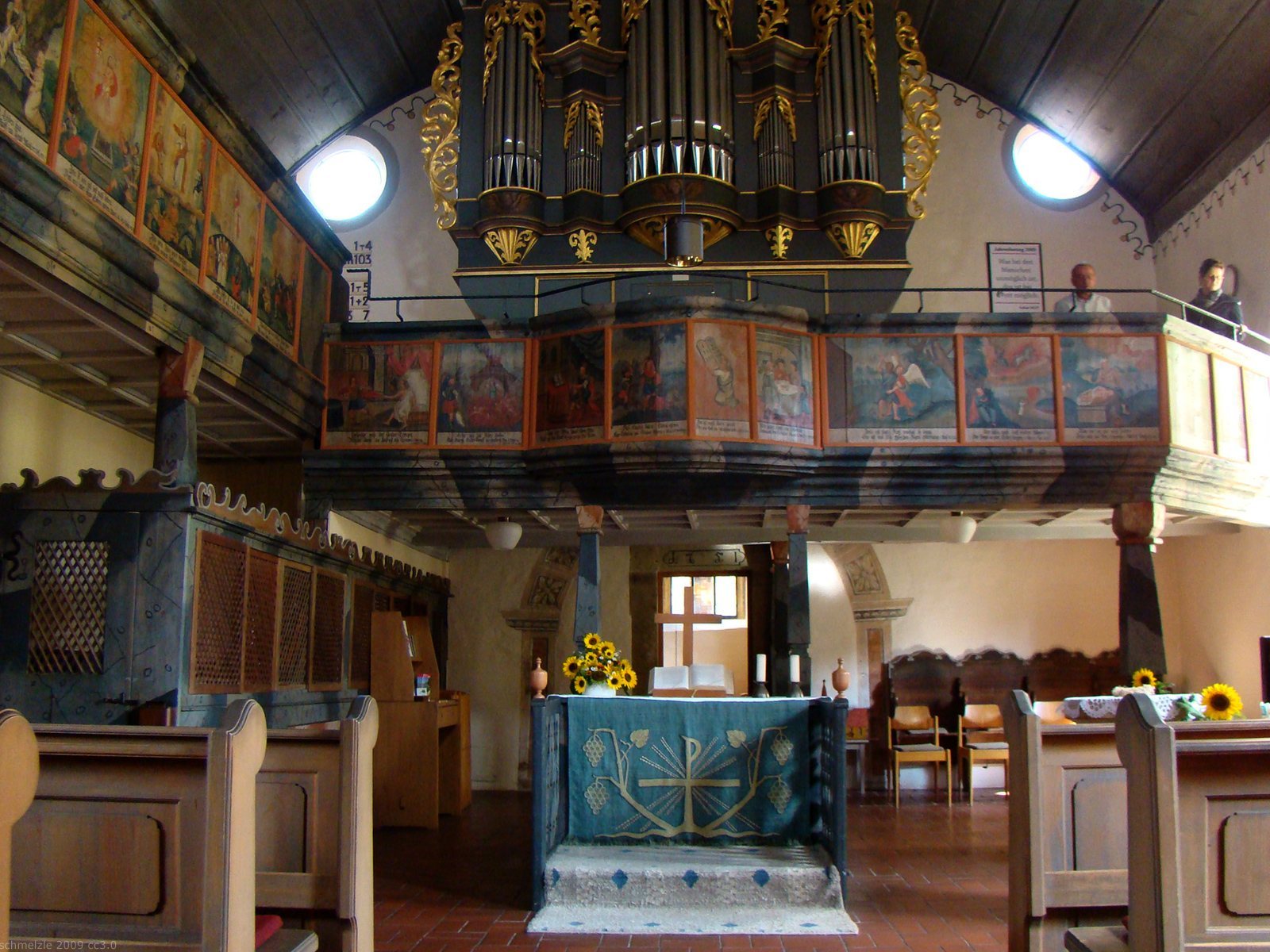
The church’s surviving fabric combines a medieval tower structure with a nave beneath a wooden barrel vault, a continuous tunnel-shaped ceiling. A wooden gallery extends along three sides of the nave. The pulpit stands midway along its south wall, so the seating faces a pulpit set on a long side rather than at the end, an arrangement known as a transverse-church layout.
Tower and nave
The lower part of the tower is the oldest surviving structure, dating to around 1300. Its interior contains a cross-rib vault, supported by intersecting ribs, with early and late Gothic paintings. The tower’s medieval choir area was bricked up during the 1751 renovation.
Inside the nave, the wooden gallery runs along three sides beneath the barrel vault. In the seating arrangement, men occupied the galleries, women sat in pews below, and young people stood in front of the pulpit. The pastor’s family had a reserved enclosed pew, while the other seats had been sold to members of the congregation.
Painted decoration
Organ-gallery paintings
Paintings on the organ gallery show stories from the Old Testament, the earlier main section of the Christian Bible. Their subjects include Adam and Eve in Paradise, their sons Cain and Abel, the Flood, Abraham’s son Isaac in a sacrifice scene, and the Israelites’ departure from Egypt. Accompanying texts connect these episodes to the New Testament, the section of the Bible centered on Jesus and early Christianity. Some link Isaac’s story to salvation through Jesus, while another contrasts Adam’s introduction of sin with Jesus’s role as savior.
A scene of three men in a fiery furnace carries a message praising resistance to image worship even at the cost of death. Its wording criticizes Catholic worship and the veneration of saints.
Western-gallery paintings
Eighteen New Testament scenes occupy the western section of the gallery. They include Christ’s circumcision, Jesus at the Temple at the age of twelve, the Crucifixion and Entombment, and the episode in which Jesus and his disciples find a coin for the Temple tax in a fish’s mouth.
Pulpit paintings
The pulpit paintings depict the beheading of John the Baptist, a Jewish preacher whom Christian tradition regards as Jesus’s forerunner; Pentecost, which commemorates the Holy Spirit’s descent upon Jesus’s disciples; and Jesus placing a communion host, or consecrated bread, in a believer’s mouth. The accompanying sayings urge teachers to speak truth despite danger, describe the Spirit as giving both ability and joy to the congregation, and ask Jesus to guide the preacher’s words.
Barrel vault and Last Judgment
The barrel vault is painted mainly with themes of repentance and conversion. Its central image is the Last Supper, the final meal Jesus shared with his disciples. The vault also bears the coat of arms of Carl Eugen, Duke of Württemberg from 1737 to 1793. A large painting of the Last Judgment was hung above the western gallery.
West-gable tablet
A tablet on the west gable names the painter, the pastor, the mayor, and several local dignitaries.
Organ
The historic organ façade survives. The present instrument has 13 stops, which control groups of pipes, one hand-played keyboard, and a pedal keyboard played with the feet.