Pieve di Cento Town Hall: A Municipal Palace and Cultural Venue
Site at a Glance
- Popularity
- Very Low
- Country
- Italy
- Primary era
- Early Modern
- Eras represented
- Early Modern, Modern
- Civilizations
- Italian, Papal States
- Site type
- Civic
- Remains
- Town Hall
On this page9 sections
History
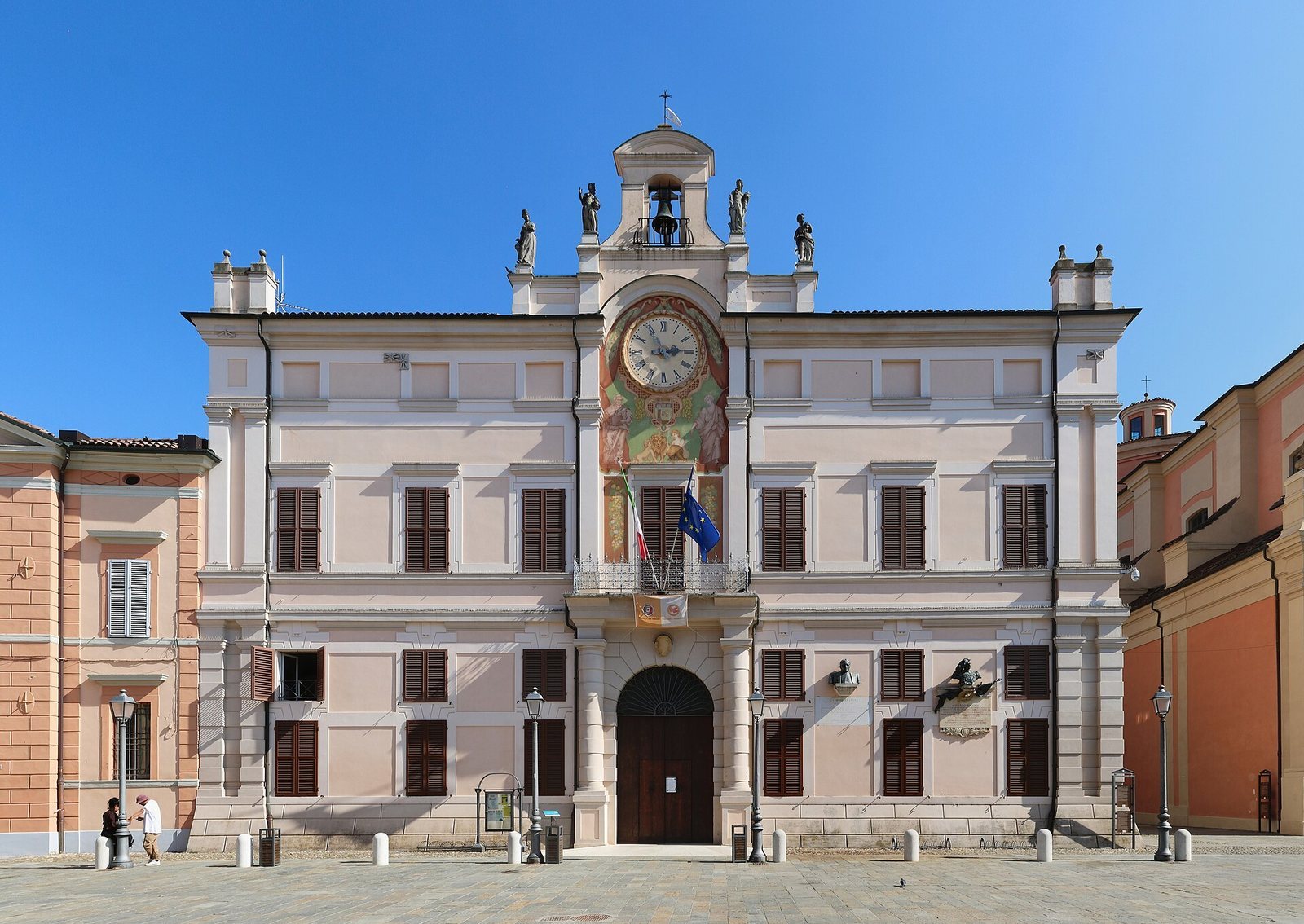
Pieve di Cento Town Hall, in Italy, is a municipal palace built during the sixteenth and seventeenth centuries, with forms characteristic of the eighteenth century. It serves as the municipal seat, housing local offices and council rooms.
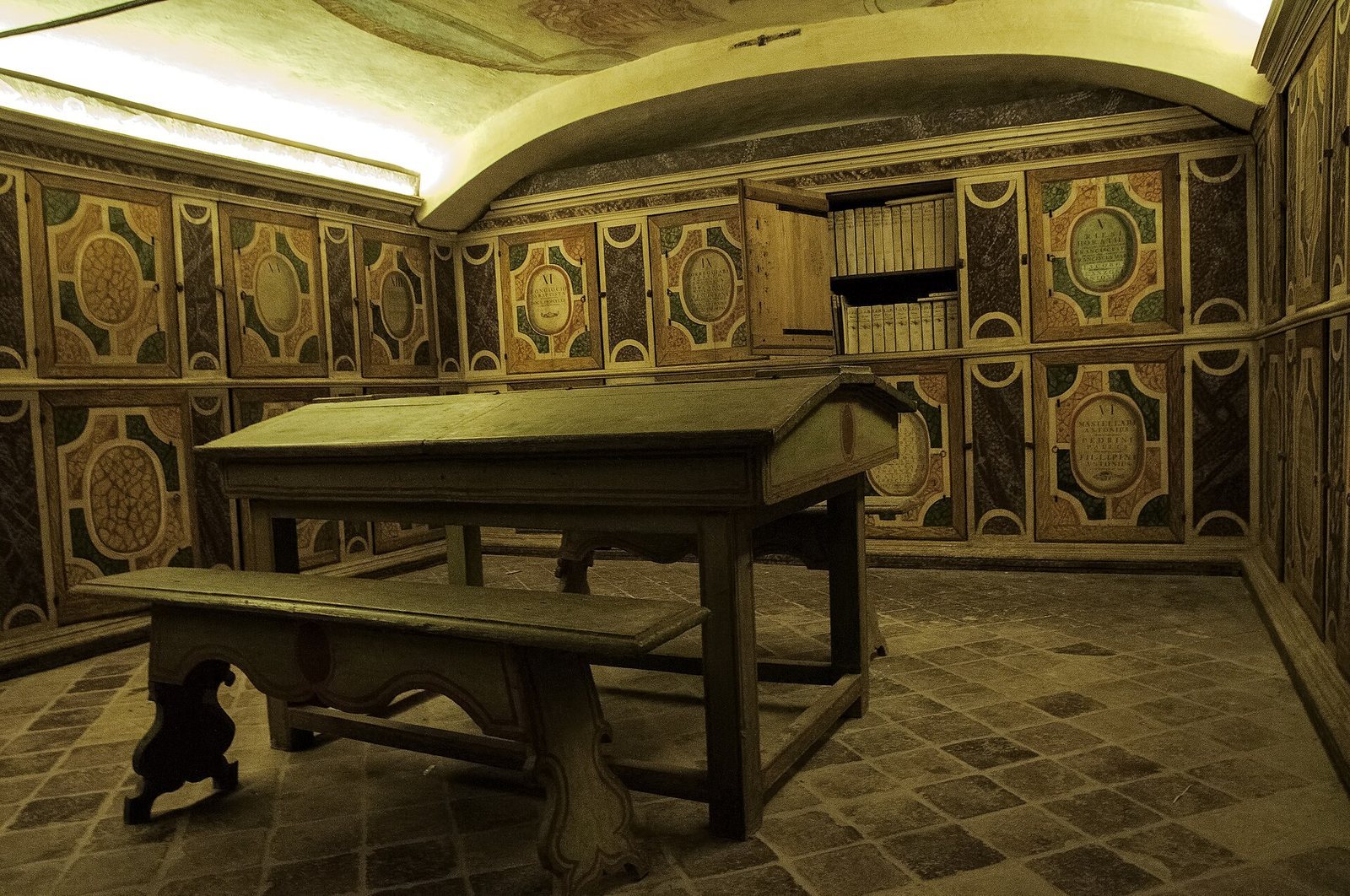
The palace also brings together cultural and archival institutions. The Alice Zeppilli Theatre is a rare performance venue within a municipal palace and the second largest of its kind in Italy. The music museum preserves the story of Pieve’s musical traditions, especially its string-instrument making. The notarial archive is one of the uncommon complete archives preserved where it originated. It contains more than 400 volumes of legal deeds drawn up by notaries, officials who formalize legal documents, from 1458 to 1795.
Remains
The palace’s composition connects its civic exterior with rooms serving municipal, theatrical, museum, and archival purposes. Its surviving features include sculpted and painted decoration, historic furnishings, and collections associated with local cultural life.
Exterior
Clock tower
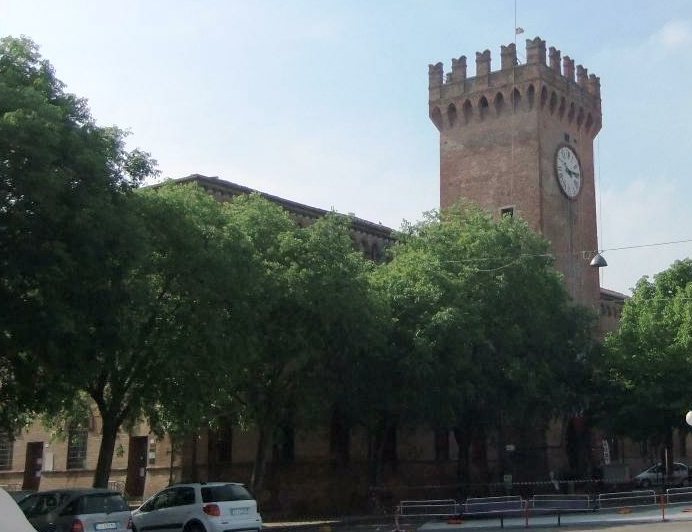
A clock tower rises at the center of the building. Sculptures representing the four seasons decorate it, while frescoes around the clock were painted in 1924 by local artist Antonio Mosca. Local painter Carlo Pinardi created a frieze on the tower in 1988.
Facade
Two bronze busts adorn the facade. Giuseppe Zacchini made the 1904 bust of Alfonso Riguzzi, who held the military rank of captain. Antonio Alberghini created the 1947 bust of Antonio Gramsci, an Italian Marxist thinker and politician.
Interior spaces
Council chamber
The municipal council chamber contains frescoes depicting nineteenth-century scenes, painted in a conventional style.
Theatre and music museum
The Alice Zeppilli Theatre is housed inside the town hall, and the music museum occupies the theatre’s entrance halls. Its collections include musical instruments, tools used in string-instrument making, and documents relating to Pieve’s musical traditions.
Notarial archive
The archive occupies one room with a decorated vaulted ceiling. Its custom-made, painted period furnishings include a writing desk, two benches, and a box for wills that had to remain secret. Cupboards bear graphic markings identifying the notary or notarial family assigned to each space, including the Bongiochi, Mastellari, and Meloni families.