St. Nikolai: A Protestant Village Church in Oberbobritzsch, Germany
Site at a Glance
- Popularity
- Low
- Country
- Germany
- Primary era
- Medieval
- Eras represented
- Medieval, Early Modern, Modern
- Civilizations
- Electorate of Saxony, German, Holy Roman Empire, Kingdom of Saxony, Margraviate of Meissen
- Site type
- Religious
- Remains
- Church
On this page16 sections
History
St. Nikolai is a Protestant village church in Oberbobritzsch, Germany, with a medieval core. It belongs to the Oberbobritzsch parish, within the Freiberg church district of the Evangelical Lutheran Church of Saxony.
Renovation and restoration
A major renovation, focused especially on the interior, took place in 1710. Substantial further alterations followed in 1902–1903. Later restoration work was carried out in 1966 and 1979.
Silbermann organ and later alterations
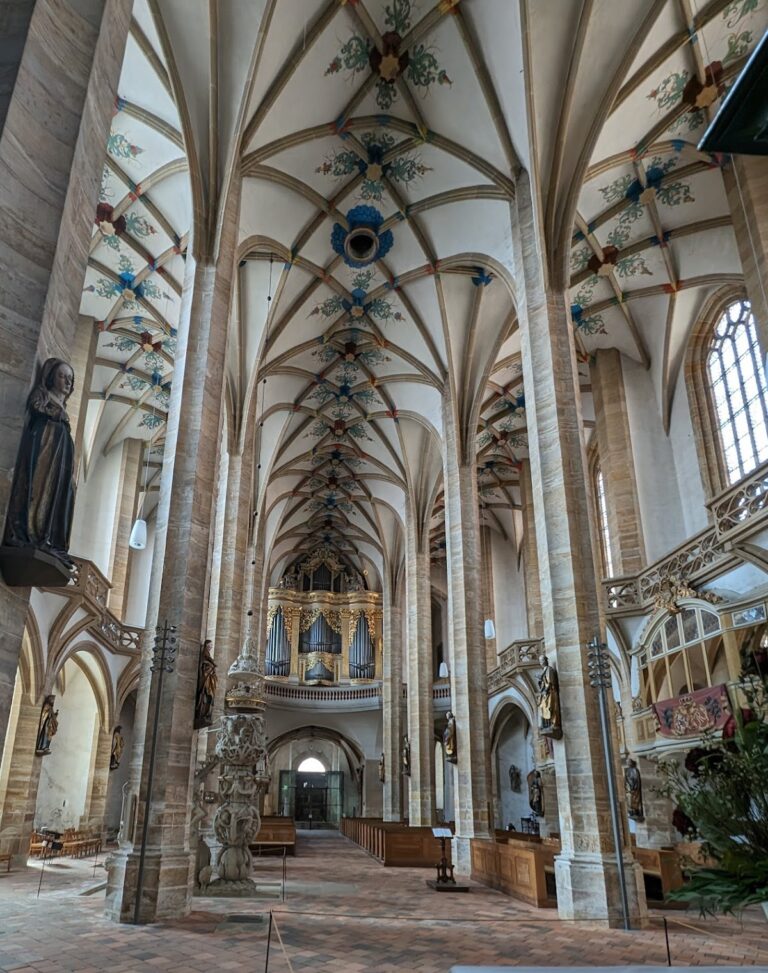
Gottfried Silbermann, a prominent German organ builder of the Baroque period, built the church organ in 1716. Julius Jahn & Son extensively rebuilt it in 1915–1916, replacing the windchests, which distribute air to the pipes, with cone chests that use cone-shaped valves. They also changed the mechanical key action, which transmits movement mechanically, to pneumatic action operated by air pressure. Eule Organ Building of Bautzen modified the instrument in 1946, followed by further work from Wilhelm Rühle in 1980. In 2001, Georg Wünning brought its arrangement of stops closer to the 1916 form and reused Jahn’s pipework.
Remains
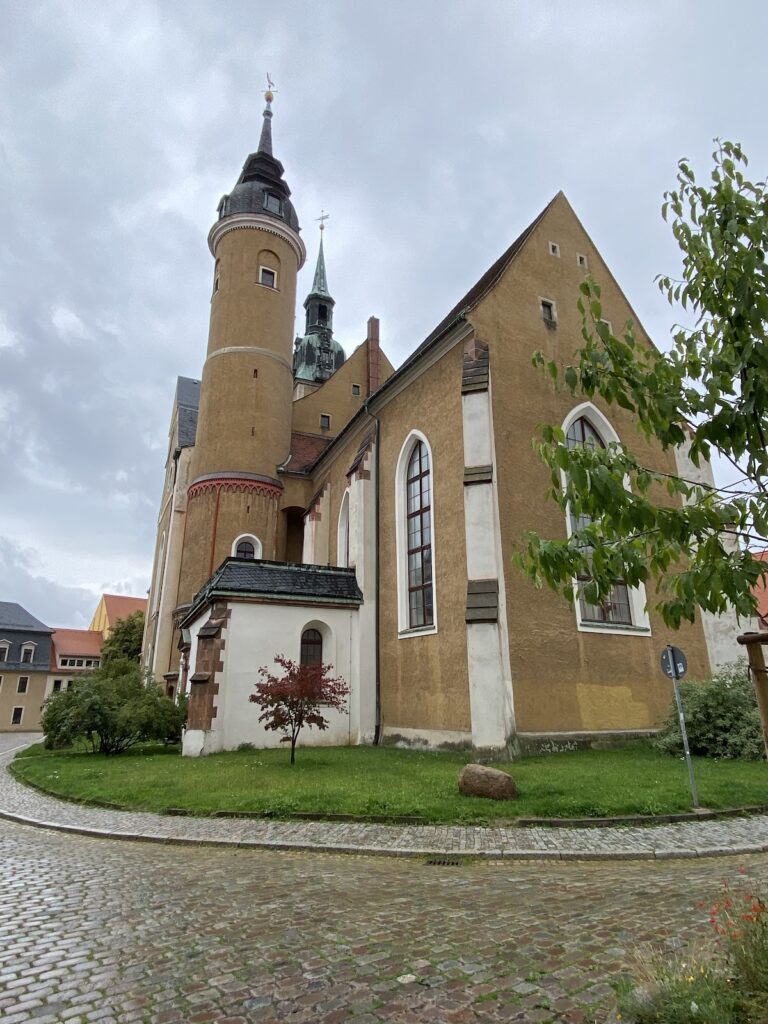
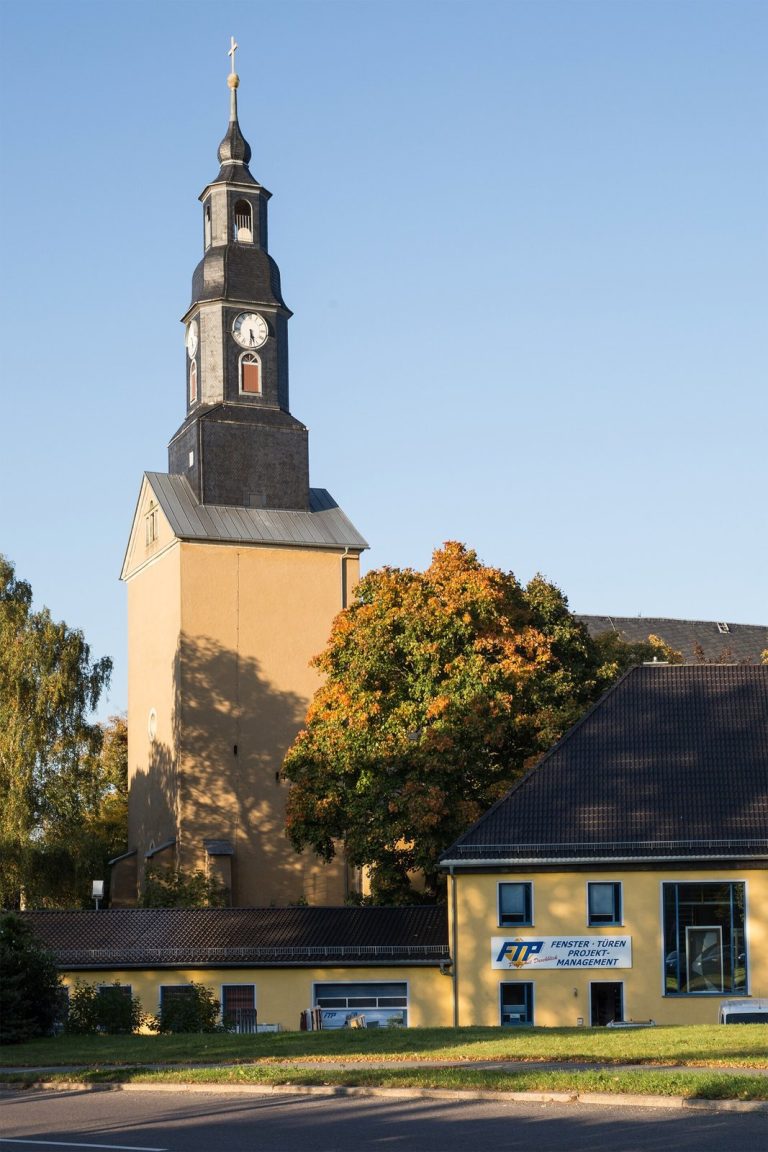
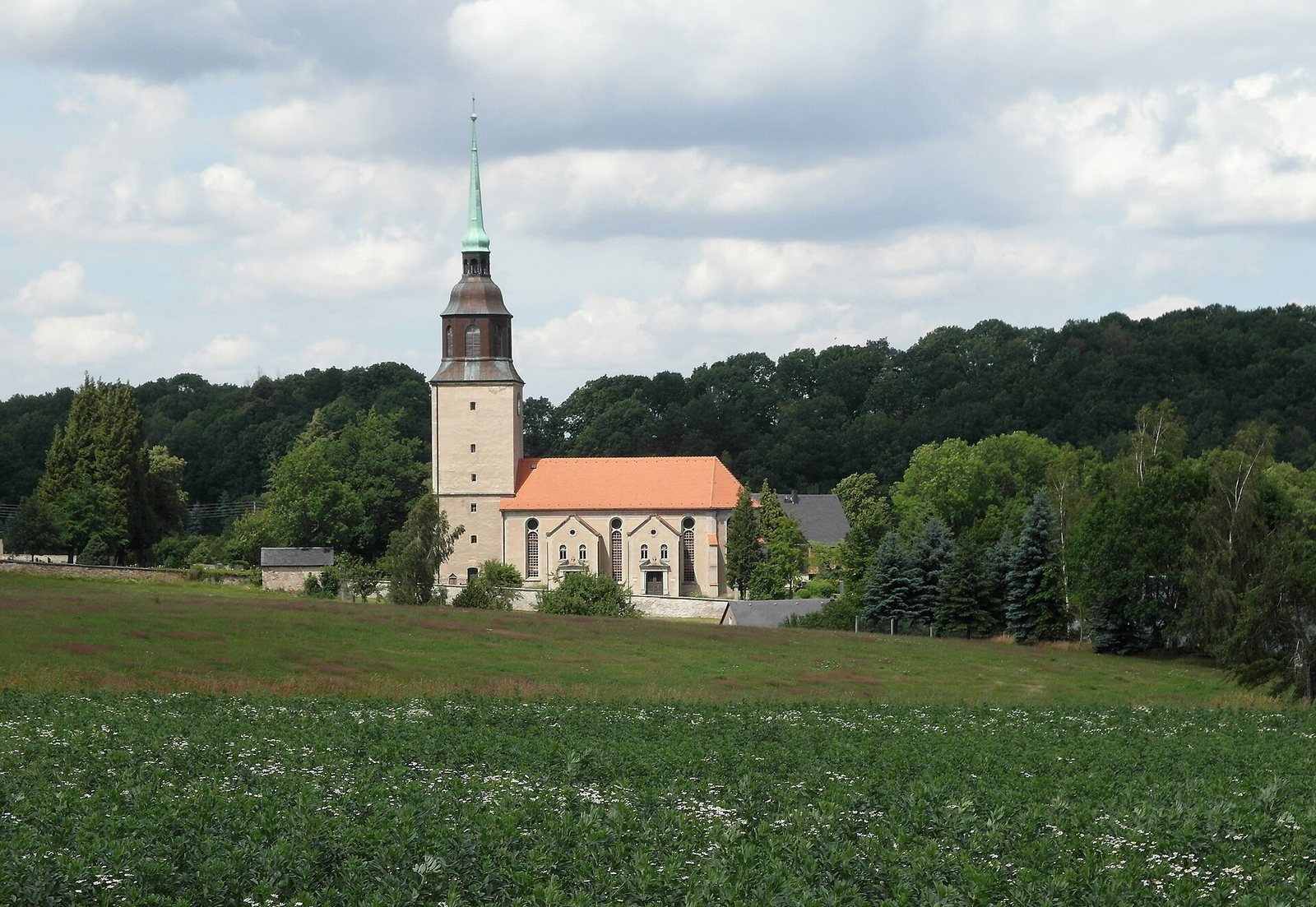
The church is an elongated hall with plastered rubble-stone walls, a three-sided end, and long, round-arched windows. Its enclosing walls are probably largely medieval. A projecting tower rises at the west end, while the interior retains historic galleries, furnishings, and decorative work.
Exterior and tower
The lower storeys of the projecting west tower have forms dating to the 14th century. The square tower once had a cross-shaped roof and a tall, slender roof turret. These were replaced in 1902 by a copper superstructure.
Interior
A shallow barrel vault, shaped like a gently curved ceiling, spans the interior and carries stencil decoration probably dating from 1902–1903. Two-tier galleries with heavy railings made of turned posts run along three sides. On the north side, a column-supported pulpit projects from the gallery. Decorated prayer boxes dating from 1710 stand toward the choir.
Liturgical furnishings
Winged altarpiece
The 1521 winged altarpiece, whose panels open to reveal different views, combines carved figures, painted panels, and Renaissance ornament. It is regarded as one of the most significant altarpieces in Saxony. The carvings are attributed to the workshop of the Master of the Freiberg Cathedral Apostles, a conventional name for an artist whose personal identity is unknown; the same artist is credited with some figures in the Virgin cycle at Freiberg Cathedral. The paintings are attributed to the similarly named Master of the Oberbobritzsch Altarpiece and are comparable to works at Seifersdorf and Hennersdorf churches and at St. Nikolai in Dippoldiswalde.
Central shrine and lower panel
Saint Nicholas, the Christian bishop of Myra, sits on a bishop’s throne in the central shrine, between Saints Catherine and Barbara. Carved figures of Saints Margaret and Dorothy occupy the wings beside him. The lower section, called the predella, shows the Adoration of the Magi.
Scenes on the opened wings
The first opening shows four episodes from Saint Nicholas’s legends: he saves the daughters of an impoverished nobleman from being sold to a brothel, rescues three soldiers from execution, saves three pilgrims in danger at sea, and miraculously fills grain ships during a famine at Myra. The sea rescue reflects his patronage of sailors, while the grain miracle connects him with bakers. The painted fronts of the predella wings depict Saints Andrew and John the Evangelist. A further opening shows the martyrdoms of Saints Dorothy, Catherine, Barbara, and Margaret; the backs of the predella wings bear Saints Ursula and Agatha.
Upper cresting
A carved superstructure installed in 1917 replaced an earlier ornamental cresting. The earlier work probably included a damaged sculpture of Saint Anne with the Virgin Mary and the Child Jesus, now held in the parish archive, as well as two putti that flanked a pair of coats of arms.
Baptismal font
The font dates from 1534 and consists of a round bowl on a turned stem. It was probably slightly altered and repainted around 1880.
Stained-glass windows
Bruno Urban of Dresden made the stained-glass windows to designs by Ludwig Otto, also of Dresden. The left-hand window depicts Peter’s miraculous catch of fish. The right-hand window shows the Transfiguration, the Resurrection, and the Ascension, with Christ rising on a luminous cloud.
Luther Room
The first upper storey of the tower contains the Luther Room, created in 1917 and decorated with polychrome stencil work. Its name refers to Martin Luther, the 16th-century theologian whose reform movement gave rise to Lutheran Protestantism.
Organ
The organ’s present arrangement includes couplers, devices that link keyboards and pedals: the second manual is coupled to the first, and the pedal to both manuals. Additional couplers provide super-octave coupling on the second manual and sub-octave coupling between the manuals and on the second manual. The instrument also has a tremulant, which produces a wavering sound, three preset combinations, and a roller for gradual changes in the selected stops. It is tuned in equal temperament at A1 = 441 Hz, with wind pressure of about 85 millimetres of water.
Bells
The bell installation comprises three bronze bells hung in an oak frame with cast-steel yokes.