Zigguln Castle: A Country Estate and Jesuit Residence in Klagenfurt
Site at a Glance
- Popularity
- Medium
- Country
- Austria
- Primary era
- Early Modern
- Eras represented
- Early Modern, Modern
- Civilizations
- Habsburg, Holy Roman Empire
- Site type
- Domestic
- Remains
- Castle
On this page9 sections
History
Early estate and formation of the castle
The estate’s name first appears as Zikullen in 1496 and derives from secula, an axe used for land clearance in the Middle Ages. In 1547, Zigguln was a small farm belonging to Adam Hofstetter.
Hofstetter’s daughter Ursula married Christoph Windisch, a master builder in Klagenfurt who later became the city’s first mayor. Windisch had held the property since 1589. Their daughter Regina inherited it; after marrying the Protestant Lattacher, she emigrated during the Counter-Reformation, the Catholic reform movement and effort to counter the spread of Protestantism. The estate was sold to mining entrepreneur Lebmacher, then passed to an administrator of the estates’ arsenal and a hammer-mill proprietor. It was probably developed as a country castle during this period.
Jesuit and state ownership
The Jesuits, members of the Catholic Society of Jesus with a long history of educational work, acquired Zigguln in 1633. They used it as a student residence and place of recreation for their school at Klagenfurt Cathedral.
When the Jesuit Order was dissolved in Austria in 1773, the castle and its other property passed into state ownership. Maria Theresa, the 18th-century Habsburg ruler, first leased Zigguln to the military orphanage on Deutenhofen Street and later gave the estate to the institution.
Nineteenth- and twentieth-century owners
Matthias Galler bought the estate in 1825, and Gottfried Ebner von Ebenthal acquired it in 1829. In 1843 it passed by inheritance to Maria Mühlbacher, née von Ebner, who died in 1855. A land-register entry notes a brewery making kettle beer at Zigguln and an inn that had operated there for many years.
Maria’s heir, Paul Mühlbacher, was born in Bleiberg in 1838. He was still a minor in the 1850s and came of age in 1860. He later served for many years as president of the Bleiberger Bergwerks-Union, a mining company founded in 1868 and based in Klagenfurt, and represented large landowners in the Carinthian state parliament. He died aged 82 in 1920. His heirs were Maria Balzar, Emil Mühlbacher, Dr. Hans Mühlbacher, and Paula von Blazekovic; Hans became the sole owner in 1927.
Paul Mühlbacher the younger was entered as owner in 1952. The Volkskeller-Gesellschaft Klagenfurt bought the estate in 1956 and transferred it to the Austrian Chamber of Labour, a representative body for workers and employees, in 1960. Electrical engineer Robert Tschuk acquired Zigguln in 1985, and the castle remains privately owned.
Remains
Building and architectural features
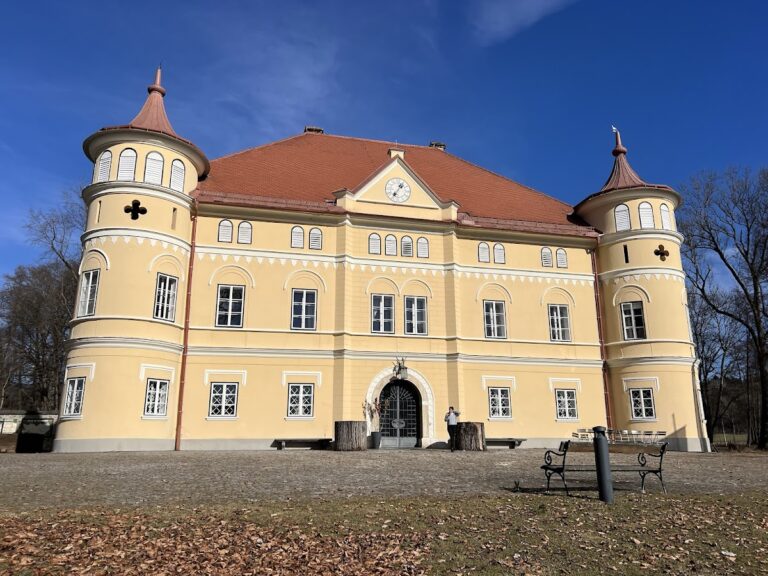
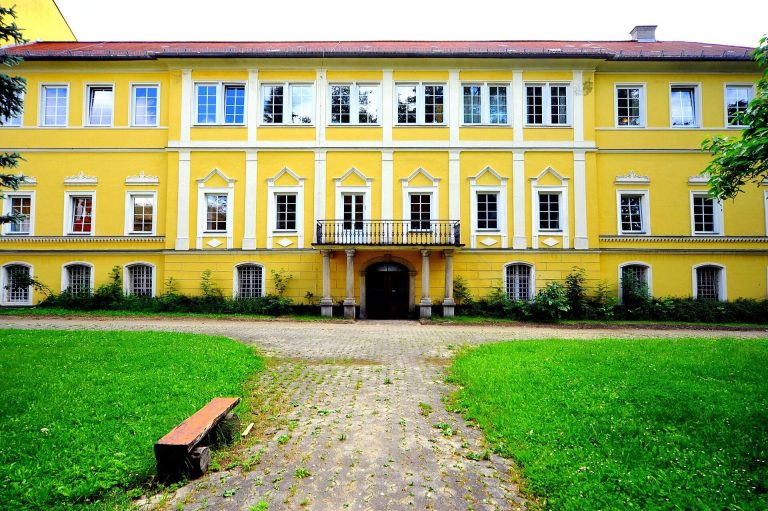
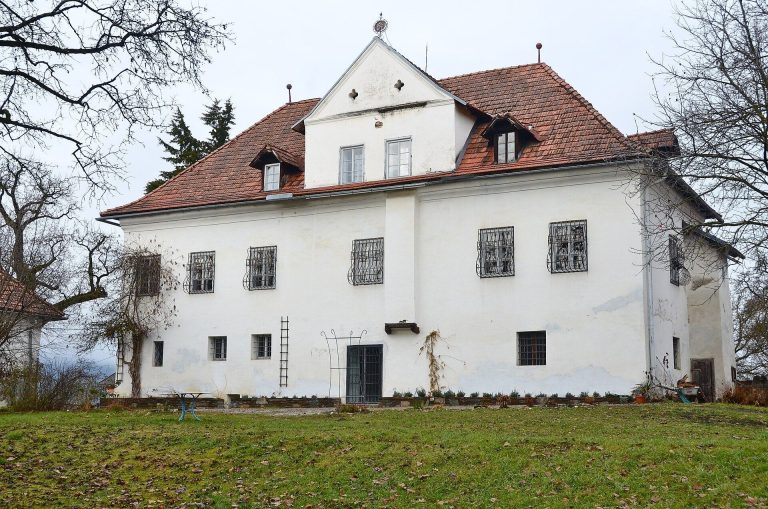
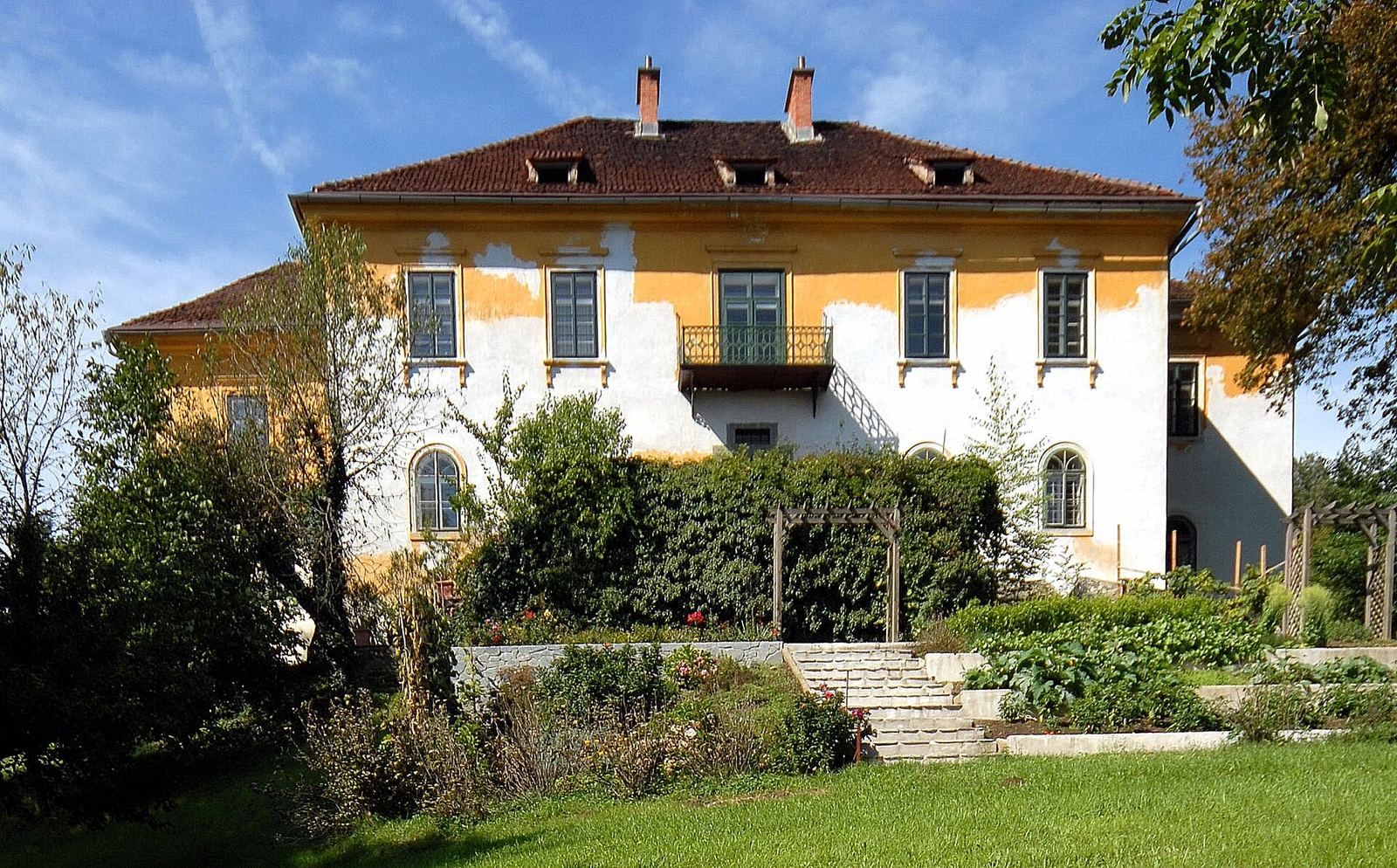
Zigguln Castle is a plain, four-sided building arranged around an inner courtyard. Most of the building has two storeys, while the south wing has three. The courtyard was restored and the plaster repaired in 1996.
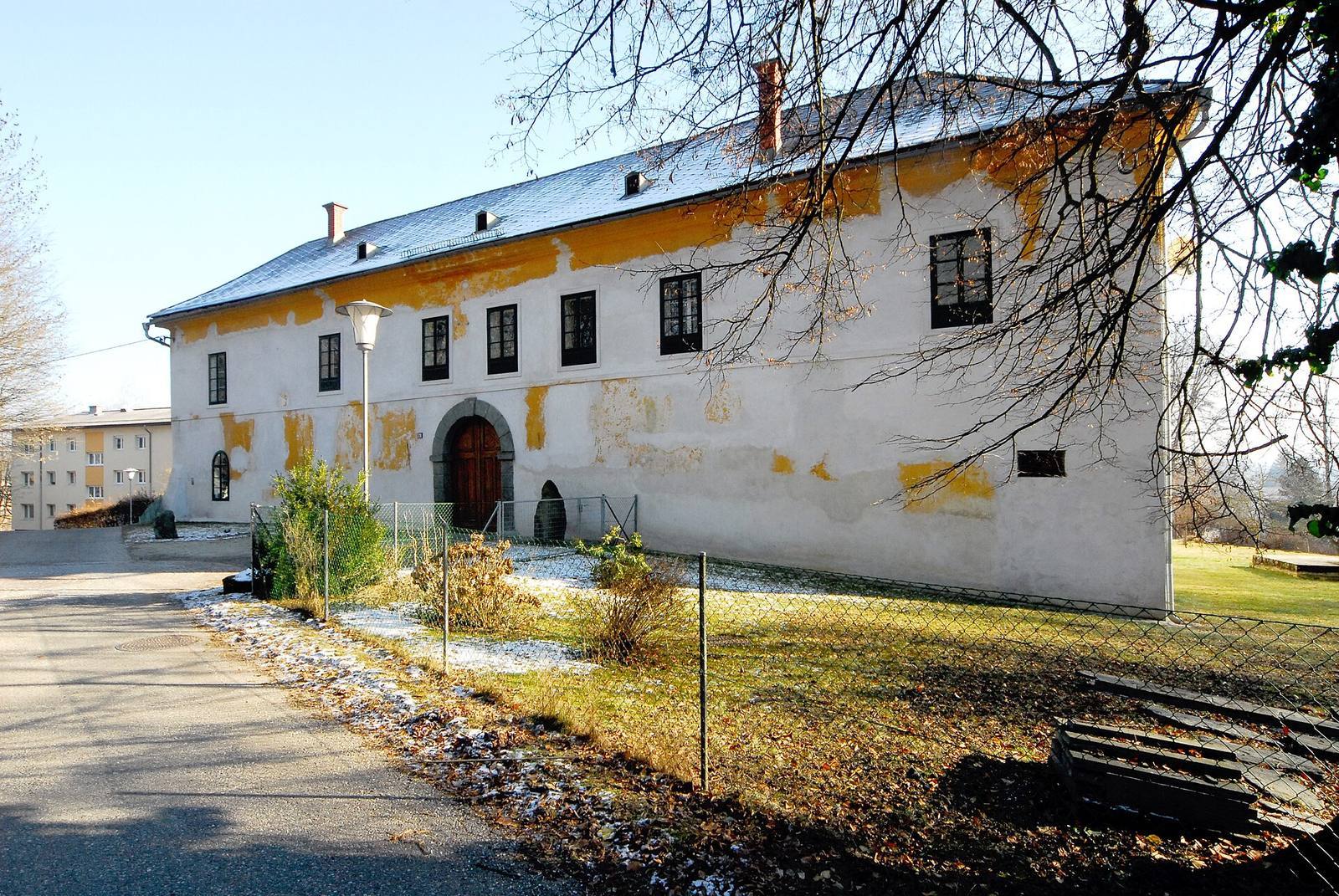
Southeast portal
The original building forms the projecting central section of the southeast wing. Its central doorway is made of chlorite schist and dates to the late 16th century. A rectangular window sits above the doorway.
Nineteenth-century facade additions
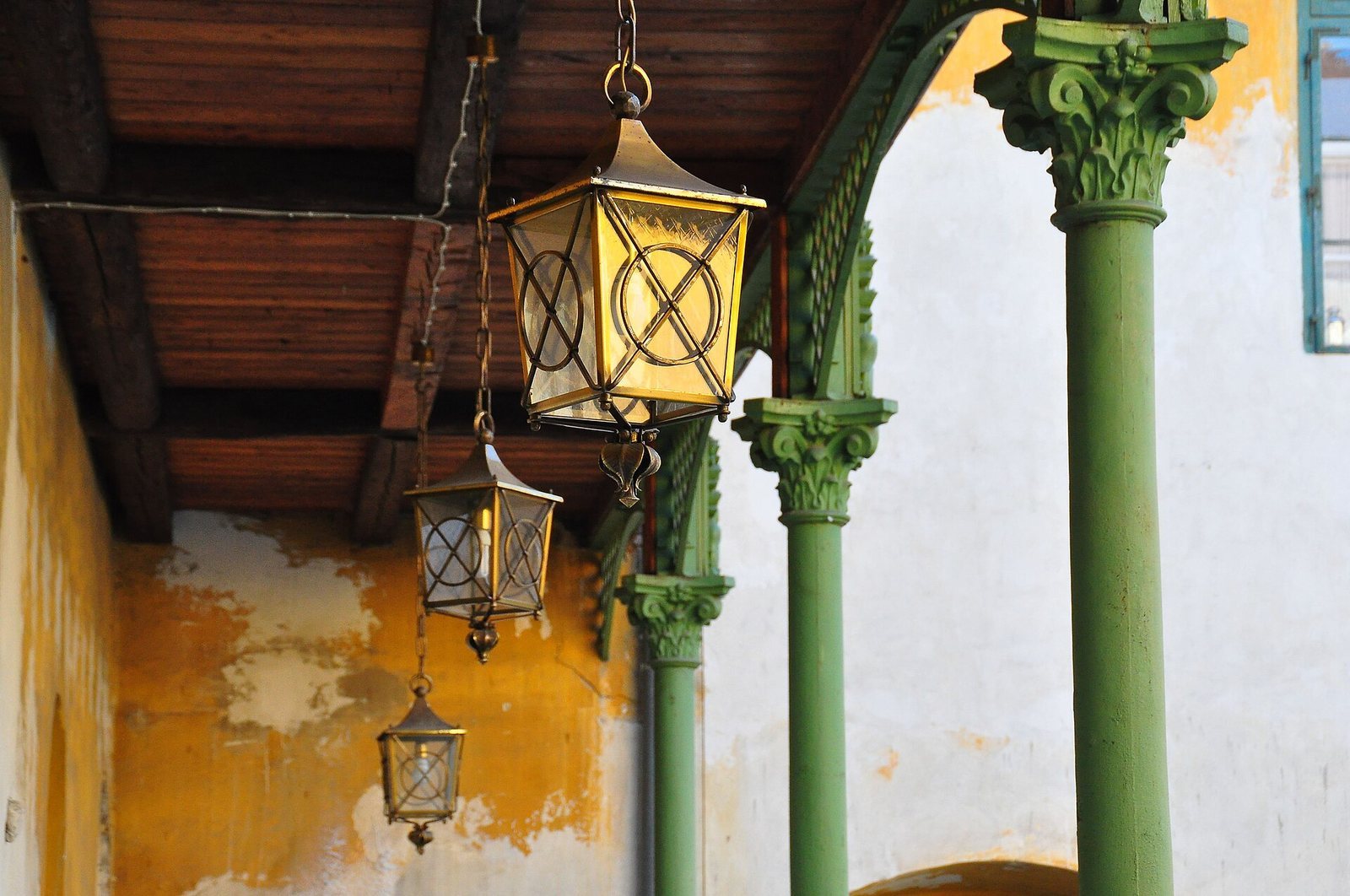
The exterior was redesigned in the 19th century. Additions from that period include a wrought-iron balcony carried on swan-shaped brackets and a two-storey cast-iron loggia, an open gallery integrated into the facade.
North courtyard gallery
A gallery on the north side of the courtyard is supported by cast-iron brackets.