Ingelmunster Castle: A Medieval Fortress Transformed into a Country Estate
Site at a Glance
- Popularity
- Low
- Country
- Belgium
- Primary era
- Early Modern
- Eras represented
- Medieval, Early Modern
- Civilizations
- County of Flanders, Habsburg
- Site type
- Domestic
- Remains
- Castle
On this page10 sections
History
Monastery tradition and fortress
Ingelmunster Castle is a historic estate in Ingelmunster, Belgium, whose origins lie in a fortress built around 1075 by Robert I the Frisian, Count of Flanders. The present castle is classicist, a restrained style drawing on classical forms. Ingelmunster’s name is thought to derive from a monastery traditionally associated with Saint Amandus, a Christian missionary and bishop active in the seventh century. Robert’s fortress stood near the Mandel and made extensive use of the monastery’s ruins.
The location offered access to both a waterway and the road linking Kortrijk and Bruges. The fortress was sometimes called the key of Flanders. In 1297, Philip the Fair, King of France, stayed there while travelling to Bruges to negotiate with its inhabitants.
Changing owners and the country estate
The castle passed through several family lines. De Rhodes and Van Gistel were associated with it from 1000 to 1384, followed by Bourgondi and Van Kleef from 1384 to 1583. The Plotho family held it from 1583 to 1825, and the de Montblanc family from 1825 to 1986.
By 1580, repeated alterations had transformed the fortress into a luxurious country estate. That year Calvinist forces led by François de La Noue, a French Huguenot (a Protestant associated with the Reformed tradition), besieged it. The castle later came under Spanish occupation.
Fire and restoration
The Van Honsebrouck brewing family acquired the castle in 1986 and restored it. A severe fire broke out during the night of 19 to 20 September 2001. The blaze also destroyed antique furniture, tapestries, sculptures, and paintings.
Major renovation work began in 2012 and continued until June 2015. The castle ceremonially reopened on 17 June 2015, and the Van Honsebrouck family remains its owner.
Remains
Castle and grounds
The present castle
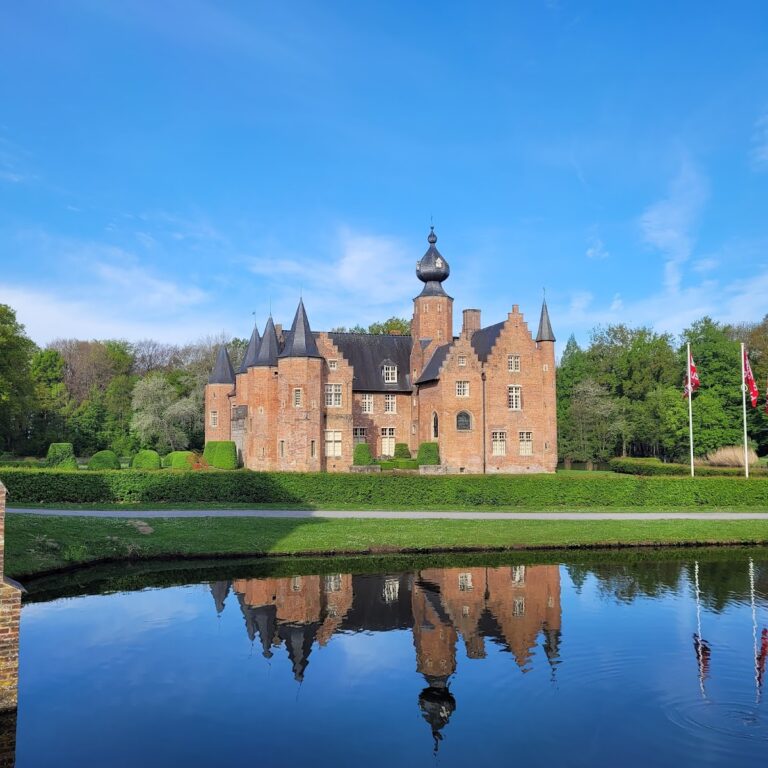
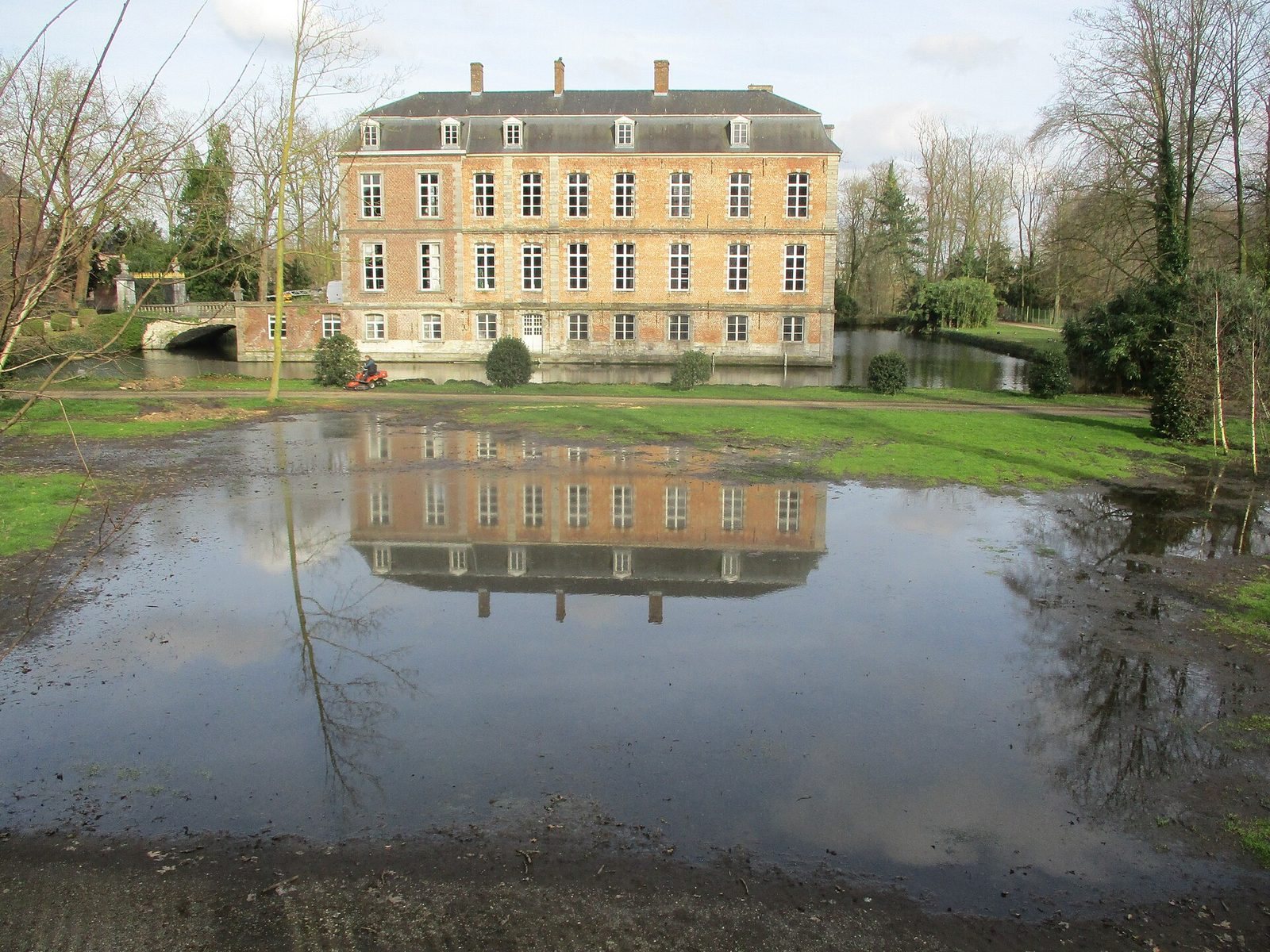
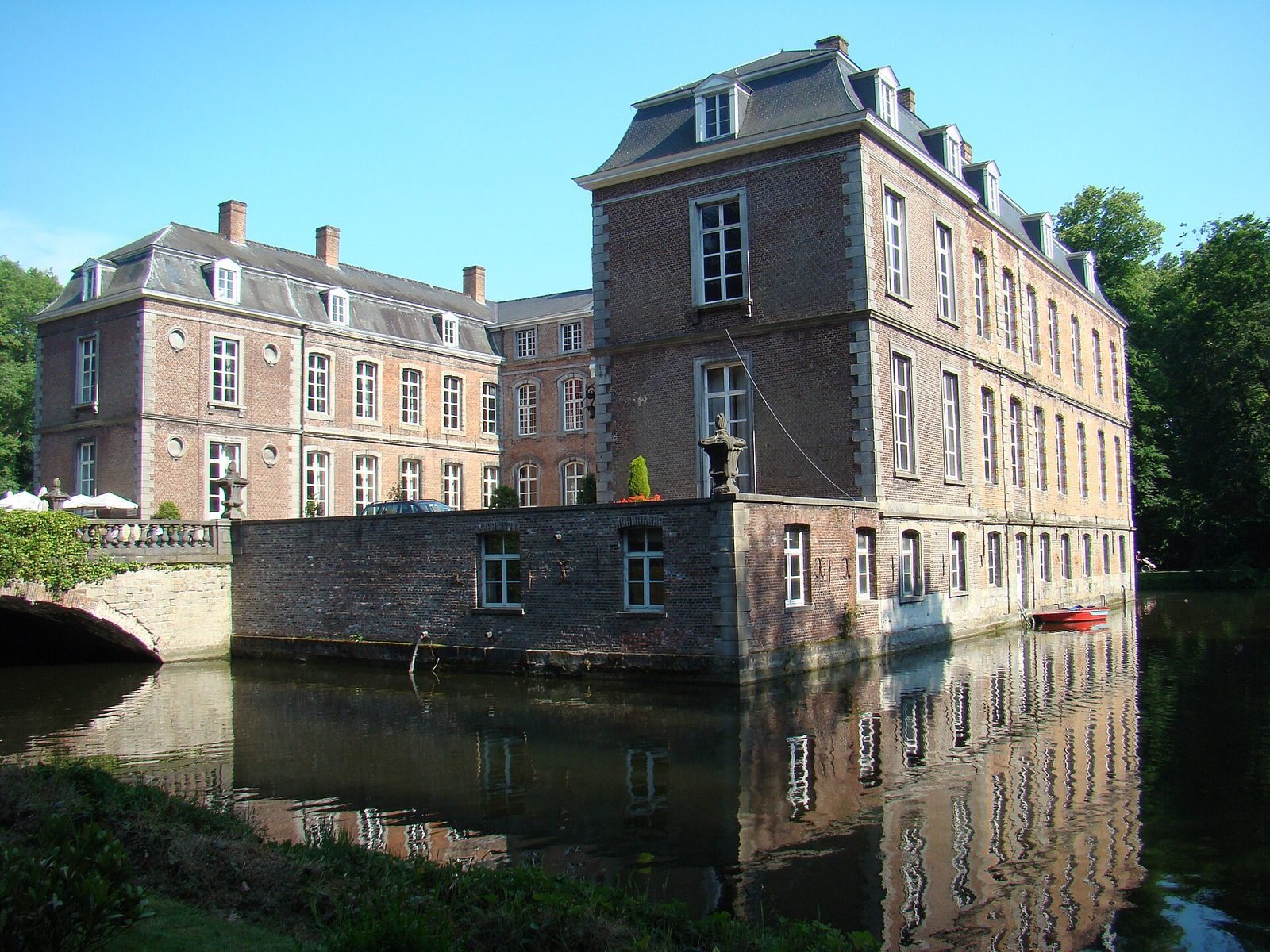
The classicist castle occupies the foundations of the earlier fortress and has a U-shaped plan. Delphin van Platho erected the building on those foundations. Its central section was completed in 1736, and the wings received Mansard roofs in the eighteenth century, each with two slopes on either side and a steeper lower slope. A triangular pediment above the front façade displays the Plotho family coat of arms.
Bridge, moat, and park
A stone bridge over the Mandel, a stream running through the estate, leads to the castle’s inner courtyard. A moat surrounds the castle, which stands within a park.
Medieval remains
The cellar, kitchen, and foundations are surviving parts of the medieval castle. The cellar lies beneath the present building and formerly operated as a drinking establishment with an associated museum.
Fire damage
In the aftermath of the 2001 fire, the left wing was the only wing to remain, with rooms on its ground and upper floors. Only the walls remained in the central section and the salons of the right wing.