Wakefield Castle: A Medieval Earthwork Fortification in England
Site at a Glance
- Country
- United Kingdom
- Primary era
- Medieval
- Eras represented
- Medieval
- Civilizations
- English
- Site type
- Military
- Remains
- Castle
On this page8 sections
History
Wakefield Castle, also known as Lowe Hill or Lawe Hill, is a medieval motte-and-bailey fortification in Thornes Park, United Kingdom. A motte-and-bailey castle combined a raised mound with enclosed courtyards. The Anglo-Norman nobleman William de Warenne, 3rd Earl of Surrey, probably began the castle in the 12th century during the Anarchy, the civil war over the English throne between King Stephen and Matilda, later known as Empress Matilda. De Warenne supported Stephen’s claim. Excavations in 1953 suggested that the castle was built without royal approval and left unfinished.
Origins and early records
The castle’s earliest known written reference dates to 1170, in a list of local constables. Earlier origins have also been proposed: the mound may have Roman origins, while aspects of the site’s layout have been interpreted as evidence of settlement by Danes and other Scandinavians. The names Lowe Hill and Lawe Hill derive from the Old English word hlaew, meaning a mound or cairn. The name may refer to a burial mound.
Medieval ownership and possible destruction
In 1318, Wakefield Castle and neighbouring Sandal Castle were granted to Thomas Plantagenet, 2nd Earl of Lancaster. In 1324, Edward II placed both castles in the care of Richard Moseley. The date of Wakefield Castle’s destruction is unknown. A severe gale that caused extensive damage in Wakefield in 1330 may have destroyed it.
Writing about his travels between 1535 and 1543, the English antiquary John Leland recounted a story that wind had quickly wrecked building work undertaken by an Earl Warenne. He regarded the tale as fanciful and also noted the suggestion that the hill had been made for a windmill.
Later use and investigation
In July 1558, a beacon was lit on Lowe Hill to warn people that a Spanish fleet had been sighted off The Lizard in Cornwall. Excavations took place at the castle in 1953, and English Heritage granted permission for earth-resistance and topographical surveys in 2015–2016. The remains are protected as a Scheduled Monument, a legal designation for archaeological or historic sites in England.
Remains
Earthwork layout
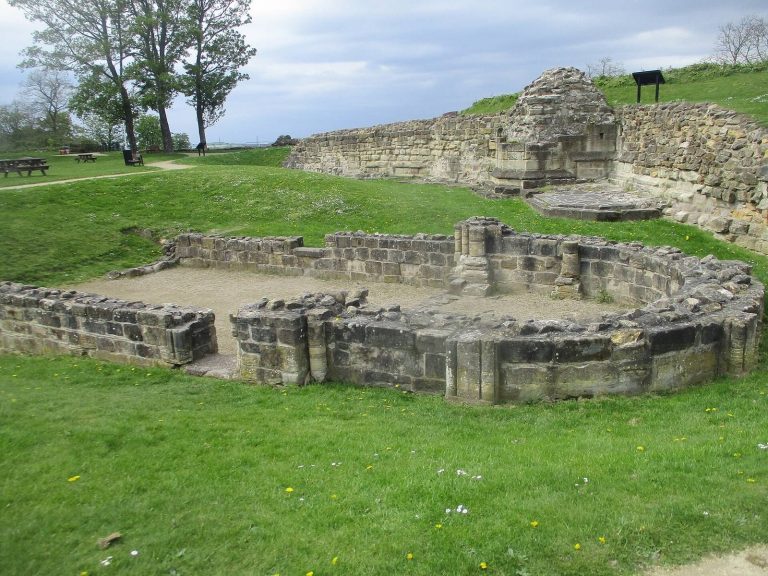
The castle’s earthworks occupy a hill north of the River Calder, overlooking the river and about 400 metres from it. Flat, swampy land separated the hill from the town. The fortification was arranged around a raised mound and two enclosed courtyards, with a ditch forming part of its defenses.
Motte
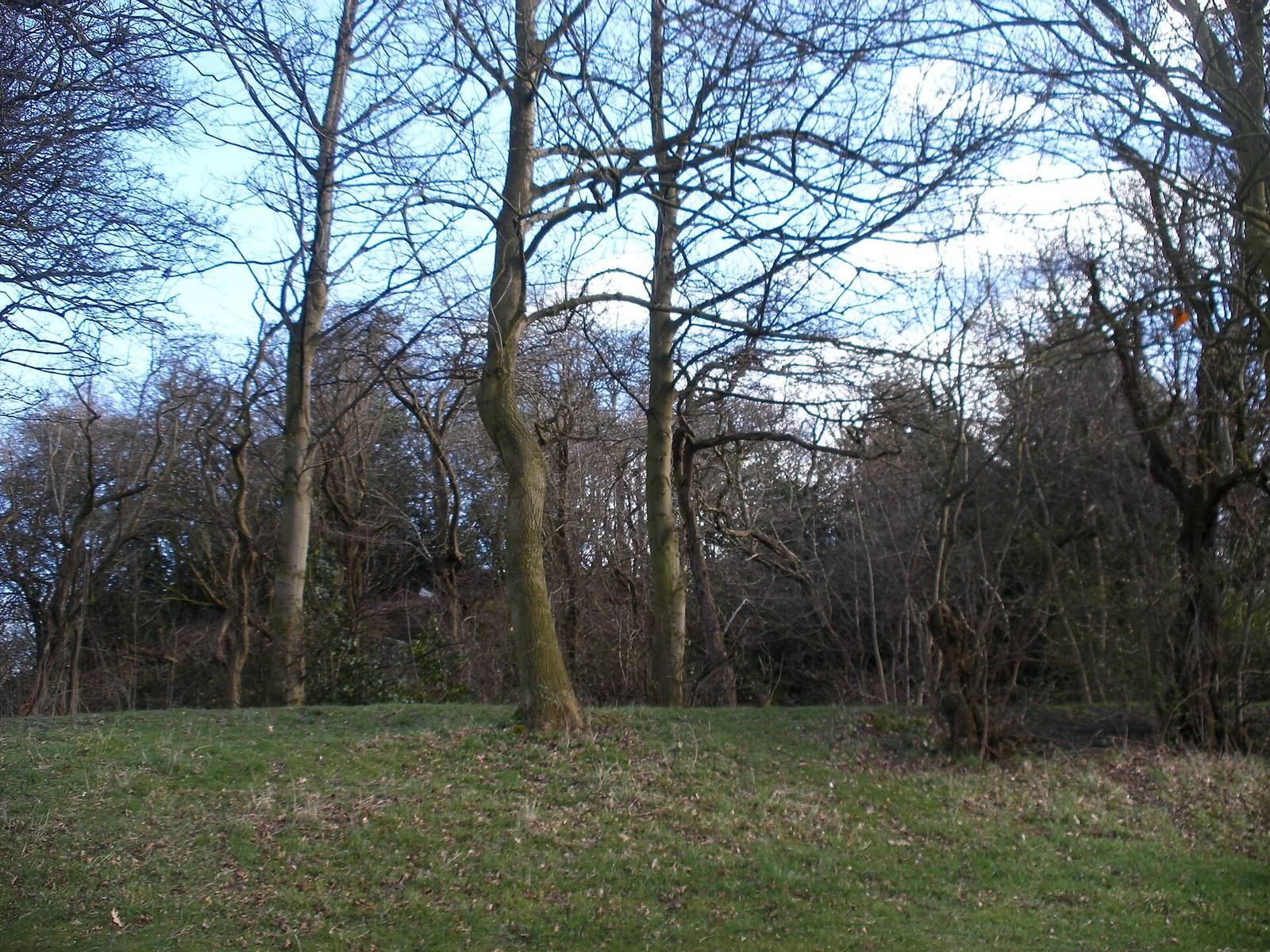
The motte, or raised earth mound, is estimated to have been about 9–12 metres high and 15–25 metres across, with a flat top. A ditch around it measured about 13 metres wide and 1.8 metres deep; it has since been filled in. The surviving mound is tree-covered.
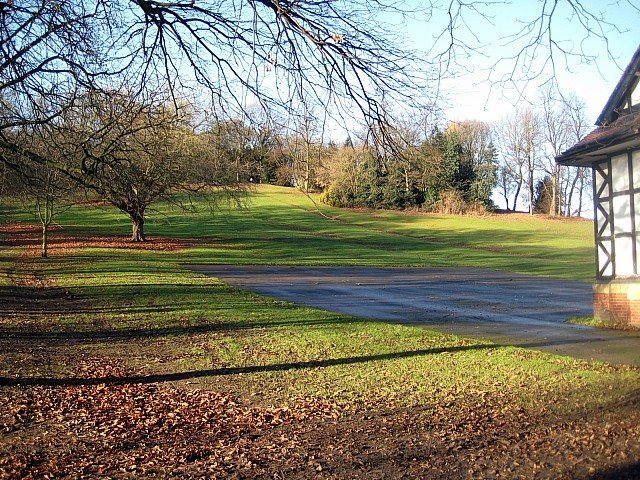
Baileys and defenses
The inner bailey, an enclosed courtyard, surrounded the motte within a roughly square area about 40 metres across. A smaller outer bailey lay to the northeast. Wooden defensive fences enclosed the baileys, which contained stables, workshops, and accommodation for soldiers. Grass-covered earthworks also survive, and the site has undergone little disturbance since the 1953 excavations.