Hamamatsu Castle: Tokugawa Ieyasu’s Headquarters and the Castle of Promotion
Site at a Glance
- Country
- Japan
- Primary era
- Early Modern
- Eras represented
- Early Modern, Modern
- Civilizations
- Japanese, Tokugawa, Toyotomi regime
- Site type
- Military
- Remains
- Castle
On this page21 sections
History
Hikuma Castle and the Imagawa
Hamamatsu Castle in Japan developed from Hikuma Castle, a stronghold that was in existence by 1514. Its foundation date is uncertain. Tradition attributes its establishment either to Imagawa Sadatsuke, head of the Imagawa family’s Enshu branch, or to Iio Noritsura.
The Kira held the area at an earlier stage. During a rivalry between the Shiba and Imagawa houses, Kira retainer Okochi Sadatsuna supported the Shiba, but the Imagawa defeated him and he died by suicide in 1517. In 1514, Imagawa Ujichika had granted Hikuma to the Iio family, making them Imagawa vassals.
Iio Noritsura fought at the Battle of Okehazama in 1560. After Imagawa Yoshimoto’s death weakened the Imagawa, Noritsura’s son Iio Tsuratatsu took over leadership of the family. Suspected of rebellion, Tsuratatsu faced an Imagawa siege at Hikuma in 1565. He agreed to a truce, but was later summoned to Suruga and killed.
Tokugawa Ieyasu’s headquarters
Tokugawa Ieyasu captured Hikuma in 1568. Tsuratatsu’s widow, Otazu no kata, is said to have rejected surrender and died while leading a sortie from the castle. In 1570, Ieyasu moved his headquarters from Okazaki to Hikuma as he prepared for conflict with Takeda Shingen, a leading military ruler and rival. He gave Okazaki to his eldest son, Nobuyasu.
Ieyasu had considered building a new castle near Mitsuke, but the Tenryu River would have lain behind it during a siege. He instead enlarged Hikuma toward the southwest and renamed both the castle and the place Hamamatsu, after Hamamatsu Manor. Hikuma was considered an unlucky name because it could be understood to mean “pulling a horse,” an image associated with defeat. The expansion and renovation were largely complete by about 1582.
In 1573, Ieyasu marched out from Hamamatsu to confront Shingen’s forces and suffered a major defeat at Mikatagahara. He retreated to the castle and reportedly ordered its gates opened and fires lit, making it appear prepared for an attack. The pursuing force is said to have hesitated and withdrawn. Ieyasu spent 17 years at Hamamatsu, from age 29 to 45, and moved his headquarters to Sunpu in 1586. The Battles of Anegawa, Nagashino, and Komaki and Nagakute took place while Hamamatsu was his seat.
Horio lords and the Tokugawa shogunate
After Ieyasu’s departure, Hamamatsu passed to Toyotomi Hideyoshi’s retainer Horio Yoshiharu and then to Yoshiharu’s son, Horio Tadauji. The Horio held it for about 11 years from 1590 and expanded and renewed the castle. After the Battle of Sekigahara in 1600, they were transferred to Izumo Province.
During the Edo period, the era of Tokugawa shogunate rule from 1603 to 1868, Hamamatsu generally served as the seat of successive lords whose families had served the Tokugawa before the shogunate was established. Appointment there was prestigious. Five lords later became senior shogunate councillors, two served as the shogunate’s representatives in Kyoto, two oversaw Osaka Castle, and four held office overseeing temples and shrines. This pattern of advancement gave Hamamatsu the nickname “Castle of Promotion.”
The castle’s principal tower, or keep, disappeared during the 17th century and was not rebuilt in the Edo period. A two-storey tower in the main enclosure apparently served in its place, though it remains uncertain whether the earlier castle had a formal principal tower. One later lord, Mizuno Tadakuni, was transferred from Karatsu to Hamamatsu after Inoue Masasuke was demoted for misconduct. At Karatsu, responsibility for Nagasaki’s defense was thought to restrict Tadakuni’s prospects, so he sought influence with shogunate officials through gifts and entertainments. At Hamamatsu he rose to an office overseeing temples and shrines and became a senior councillor in 1828. He later fell from power after the Tenpo Reforms, policies introduced in the 1840s to address economic and social problems. His son Tadakiyo was transferred to Yamagata, and Inoue Masaharu succeeded him at Hamamatsu.
Abolition and later changes
Hamamatsu ceased to function as a castle in 1871. Under the 1873 Abolition of Castles Decree, its buildings and land were disposed of. The central grounds remained with the city after the Second World War and became Hamamatsu Castle Park in 1950. The castle was designated a Hamamatsu City historic site in 1959.
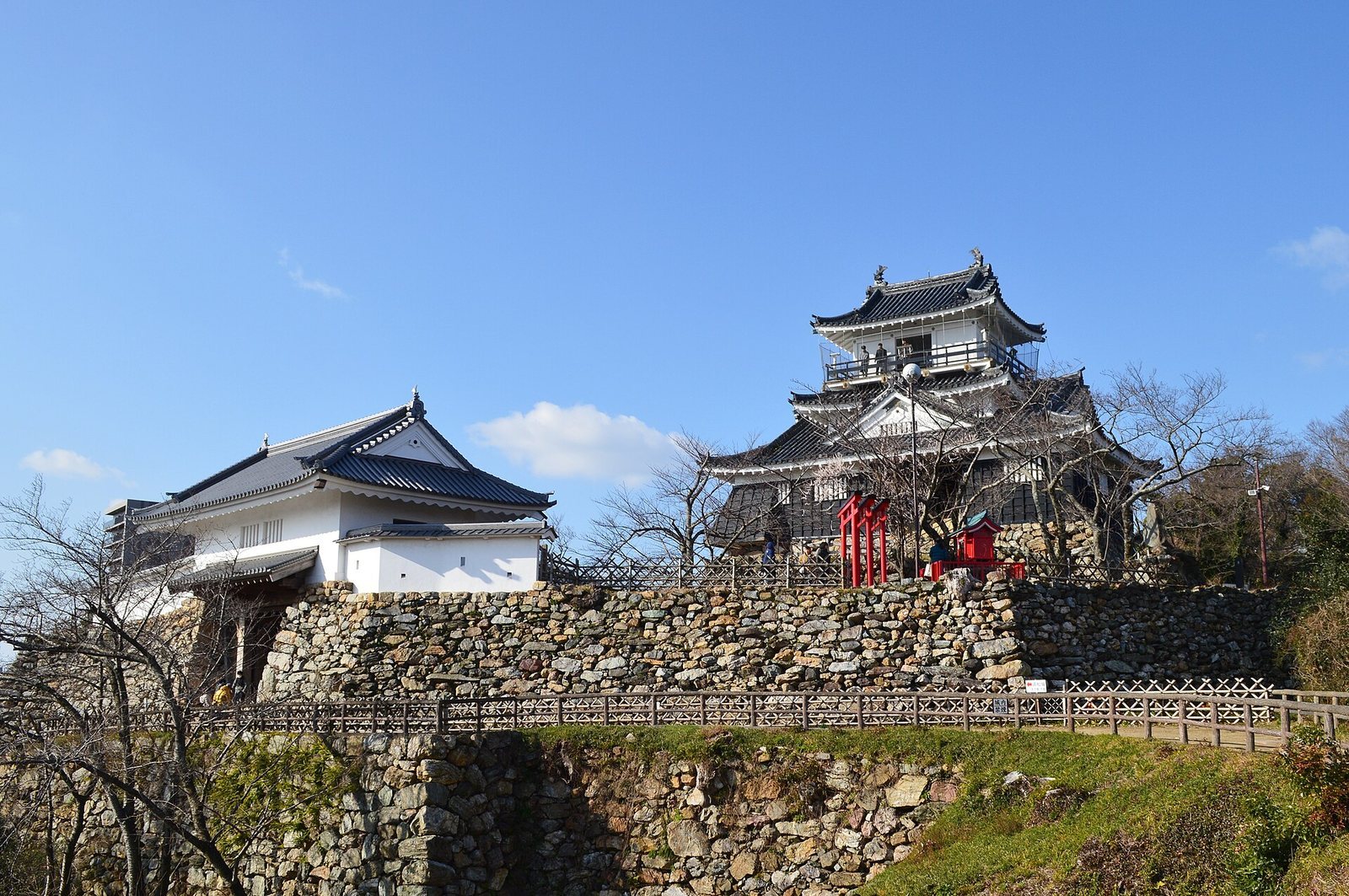
The former Hikuma Castle area was used for rice storehouses during the Edo period. A shrine was established there in 1894, burned in 1945, and was rebuilt in 1959. A reinforced-concrete replica keep was completed in 1958. Excavations beginning in 2009 informed later reconstruction work, including the wooden Keep Gate in 2014. A section of stonework from the Horio period, found beneath a path retaining wall in 2014, was made visible during work on the south plaza in 2020.
Remains
The castle occupied an area about 500 metres from north to south and 450 metres from east to west, along the sloping edge of the Mikatagahara Plateau. Its enclosed areas, or baileys, were arranged down the slope: the keep precinct stood highest in the northwest, the main bailey lay to its east, and the second and third baileys continued southeast. Rough-stone construction and the use of the slope shaped the defenses. Stonework from Hikuma Castle also formed part of the outer defenses.
The keep precinct
Enclosure and entrances
The keep precinct was a separate enclosure from the main bailey. It measured about 56 by 68 metres and had an irregular polygonal plan. Earthen walls and stone-faced embankments enclosed it. Folded sections of wall provided positions from which defenders could fire along the defenses, while walkways ran along the walls. The arrangement is understood as a design intended to withstand a siege. The Keep Gate formed the east entrance, and the Buried Gate stood to the west, connecting the precinct with the western bailey.
Keep Gate
The Keep Gate was a tower gate on the east side of the precinct. It remained, with alterations, until the castle’s abolition and became its most prominent building after the keep disappeared. Its wooden reconstruction was completed in 2014, drawing on an illustration of earthquake damage and archaeological evidence. Its width is estimated at about 10.92 metres and its height at about 37 metres.
Buried Gate
The Buried Gate connected the western side of the keep precinct to the western bailey. Remains of the gate have been confirmed.
Keep platform
The original stone platform for the keep dates to the late 16th century. It is an irregular square about 21 metres on each side, with a projection known as the Hachiman platform on the west and a projection for an attached turret on the east. Some upper courses appear to have been relaid after the Ansei earthquakes, a series of major earthquakes in Japan in the mid-19th century, and again when the replica keep was built. Much of the original platform survives.
Replica keep
Completed in 1958, the replica is a reinforced-concrete building with three storeys above ground and one below. It covers about two-thirds of the stone platform and is smaller than the historical keep would have been. Its designer, an honorary professor at Nagoya Institute of Technology, used the keep at Maruoka Castle as a model. The first and second floors house a museum with material relating to Ieyasu and Hamamatsu, including Tokugawa armour and other objects, as well as a model of the town as it may have appeared at the beginning of the Edo period. The third floor is an observation deck with a view toward the Pacific.
The main bailey
The main bailey lay east of, and below, the keep precinct. Earthen embankments and upper stone-faced walls enclosed it. Its western half is now within the park, while the eastern half was reshaped in the 1960s and is occupied by roads and the city hall. The historic plan placed the Fujimi Turret on the north, the Rear Gate on the east, the Hishi Turret at the southeast corner, and the Iron Gate and Tamon Turret along the south.
Fujimi Turret
The Fujimi Turret stood on the north side of the main bailey. Its stone base and some foundation stones remain. On the north, the supporting posts were exposed; a gravelled area lay in front of the building, which had the character of a palace structure. It is estimated to have been built in the mid-to-late 17th century and was altered from the late 18th century onward.
Iron Gate and Tamon Turret
The Iron Gate was the main entrance to the main bailey and stood at the eastern end of the Tamon Turret. The turret was a long, single-storey building between the main bailey and the Shimizu Bailey. A section of Horio-period stonework from this area was recovered beneath a path retaining wall and made visible during work on the south plaza in 2020.
Other baileys and the former Hikuma area
Shimizu Bailey
The Shimizu Bailey formed a long, narrow strip along the south side of the keep precinct. A dry moat and inner bank helped defend the precinct, and the Shimizu Gate stood at the bailey’s eastern end. Its northern part lies within the park; the southern part is built over.
Western bailey
The western bailey lay beyond the keep precinct. Earthen embankments and walls enclosed it, and a gate connected it with the outermost bailey. The area is now within Hamamatsu Castle Park.
Second bailey
The second bailey lay east of the main bailey. It contained the lord’s residence, where he lived and conducted official business, as well as a rear gate on the east and a gate facing the main bailey on the south. The residence was dismantled after the land was sold, but detailed drawings survive. The former bailey covers the site of a former elementary school and the northern part of the city hall grounds.
Third bailey
The third bailey extended southeast from the second. Earthen embankments and a moat enclosed it, and senior retainers’ residences stood within it. The castle’s main gate was on its south side, near the present Renjaku intersection. The area is now built over.
Hikuma Castle area and park
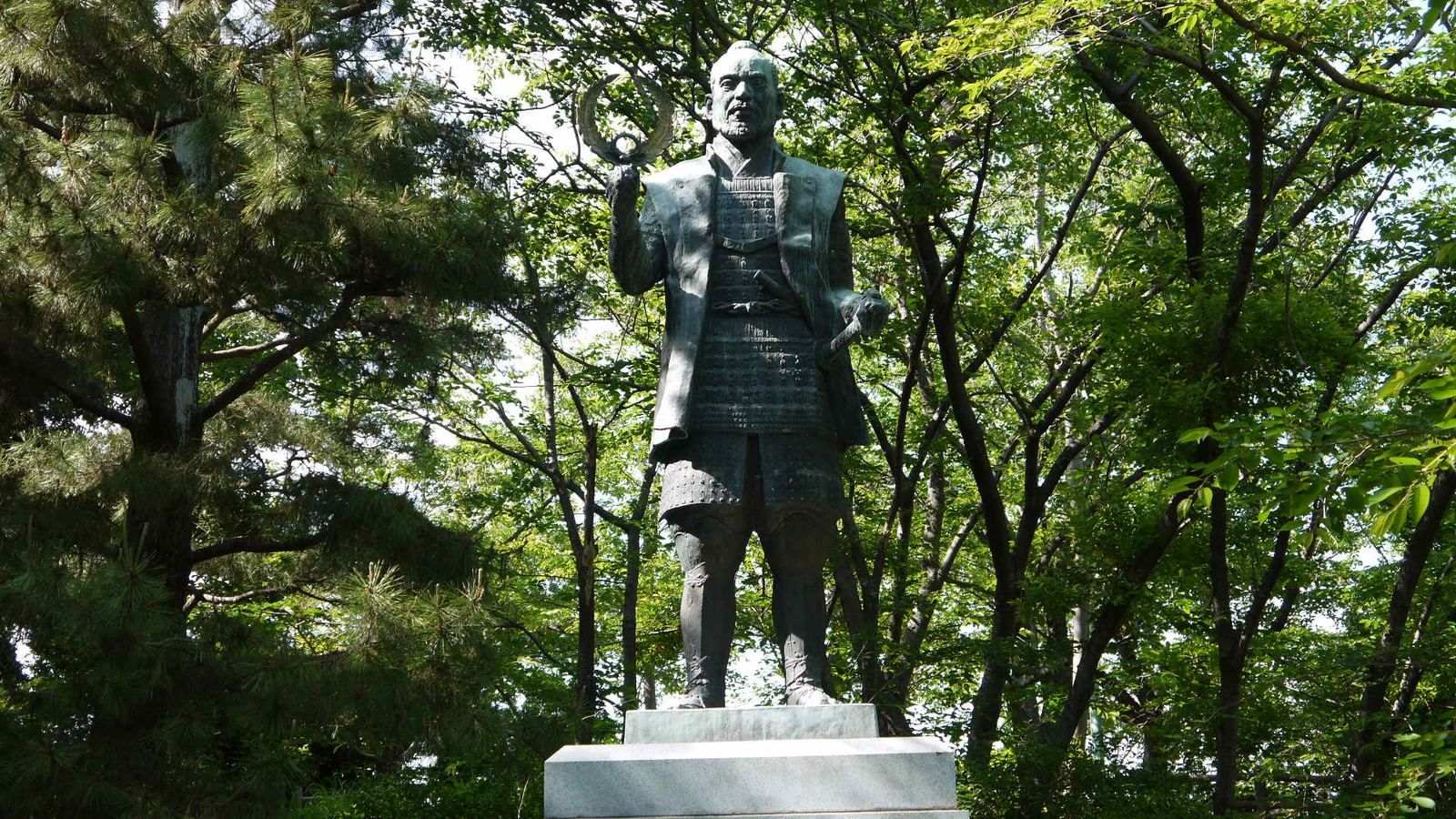
Early Hikuma Castle occupied ground near the present Hamamatsu Tōshō-gū, east of the later castle, and its remains contributed to the outer defenses. A memorial to Otazu no kata stands nearby. In the park, a bronze statue of Tokugawa Ieyasu stands among planted cherry trees.