Hiketa Castle: A Defensive Stronghold in Sanuki, Japan
Site at a Glance
- Country
- Japan
- Primary era
- Unclassified
- Eras represented
- Unclassified
- Civilizations
- Unclassified
- Site type
- Military
- Remains
- Castle
On this page8 sections
History
Hiketa Castle was a hilltop fortification north of Hiketa port in eastern Sanuki Province, the historic region broadly corresponding to present-day Kagawa Prefecture in Japan. Its hirayama-style layout used a low hill rising from a plain, and the castle overlooked the harbor.
Early control and regional conflict
The date when the first fortification was built is unknown. From the Heian period, Hiketa port connected Shikoku with the Kinai, the historic core region around Kyoto and Nara. By the late Muromachi period, a retainer of the Samukawa warrior clan held the castle. In 1570, forces of the Miyoshi clan attacked, and the Samukawa surrendered.
By the 1570s, Chōsokabe Motochika, a warlord from Tosa, had defeated the Miyoshi and brought most of Shikoku under his rule.
Toyotomi campaigns and Sanuki’s defense
In 1583, Toyotomi Hideyoshi sent his commander Sengoku Hidehisa to take Hiketa Castle and its harbor as a foothold for military operations. Chōsokabe forces counterattacked in 1584, driving Hidehisa’s troops back to Awaji. Hideyoshi returned with a larger army in 1585 and compelled Chōsokabe’s submission.
After the campaign, Hideyoshi assigned Sanuki to his general Ikoma Chikamasa, who first used Hiketa as his stronghold. In 1587, Ikoma moved his principal seat because Hiketa lay too far east for convenient administration of the province. The castle continued as a secondary defense on Sanuki’s eastern side, while Marugame Castle served the west.
Abandonment and preservation
Hiketa was abandoned in 1615 under the Tokugawa government’s one-castle-per-domain rule, which restricted each feudal territory to a single castle. The date when its structures were dismantled is unknown, and the castle was never rebuilt. This may help explain why it faded from the region’s historical record.
Growing interest in investigating and preserving the ruins led to their designation as a Higashikagawa City historic site in 2000. On 10 March 2020, Hiketa became a National Historic Site, the first such designation in Higashikagawa City.
Remains
Ridge layout and defenses
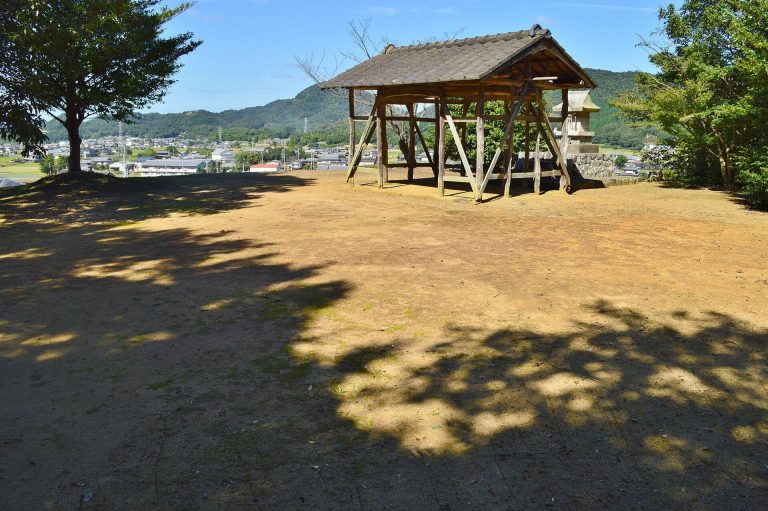
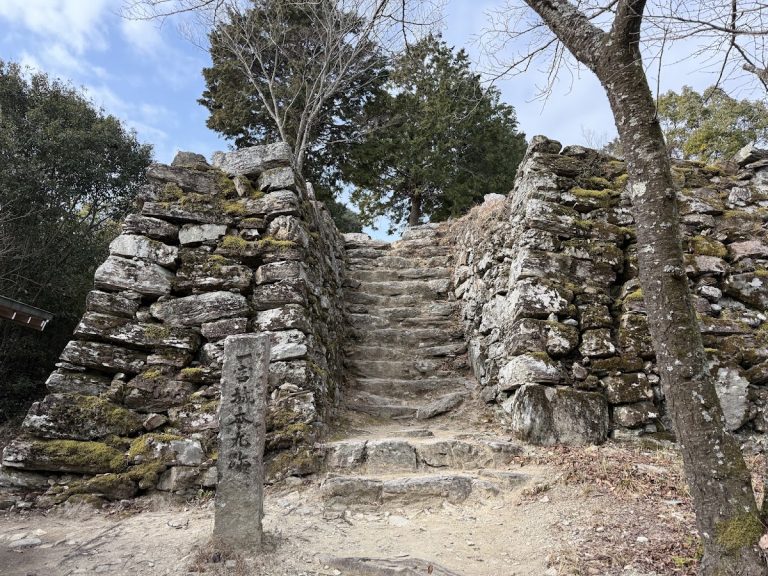
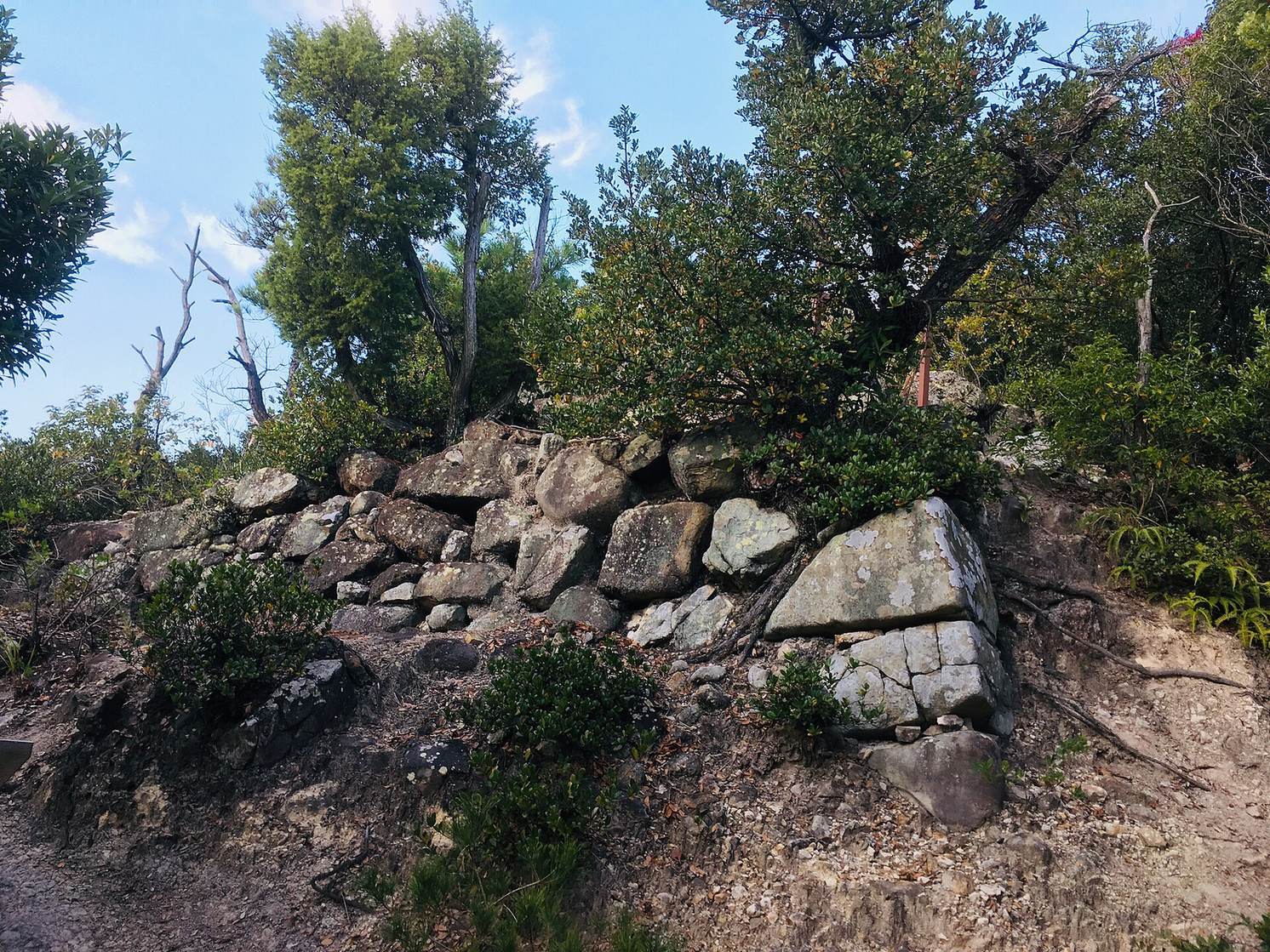
The castle’s enclosures extended for about 400 metres along the Shiroyama ridge. Its early layout followed a C-shaped plan, with towers at the four corners. The remains consist chiefly of small sections of stone wall.
Inner enclosure
Nishi-no-kuruwa, the innermost defensive enclosure, was protected by stone walls and may have contained three wooden towers used for observation and defense.
Northern and western defenses
Stone walls defended the castle’s northern and western sides, which faced the port and town. The surviving wall fragments are chiefly associated with the northern and western tower positions.