Obama Castle: A Seaside Fortress and Seat of the Obama Domain
Site at a Glance
- Country
- Japan
- Primary era
- Early Modern
- Eras represented
- Early Modern
- Civilizations
- Tokugawa
- Site type
- Military
- Remains
- Castle
On this page9 sections
History
Obama Castle, also called Unpin Castle, was a seaside fortress at Obama Bay in Japan and the seat of the Obama domain, a territory governed by a lord under the Tokugawa military government. Built in the early 17th century, it became the base of the Sakai lords and was included among the Eight Views of Unpin in Wakasa.
Foundation and construction
After the 1600 Battle of Sekigahara, Tokugawa Ieyasu, founder of Japan’s military government during the Edo period, granted Wakasa Province to Kyōgoku Takatsugu, a territorial lord. Takatsugu first occupied Nochiseyama Castle, a mountain fortress associated with the Takeda clan, before starting a new castle in 1601. Nochiseyama’s height made it inconvenient for everyday administration, while the former residence of the province’s military governor at the mountain’s foot was too small for a lord’s government. The riverside location offered better oversight of the settlement and strategic port, with administrative convenience taking priority over wartime defense.
Takatsugu’s son, Kyōgoku Tadataka, continued construction from 1609. The family was transferred to Matsue, in Izumo, in 1634 before the castle was complete.
Completion under the Sakai lords
Sakai Tadakatsu took over as lord of Obama, with a domain assessed at 123,000 koku, a traditional measure of rice-based productive capacity. A senior Tokugawa retainer, he had served as tairō, a high-ranking office in the shogunate, under Tokugawa Iemitsu and Tokugawa Ietsuna. Tadakatsu substantially revised the castle’s plan, incorporating features of Nijō Castle. The keep was completed in 1635, and the castle was finished in 1641, when the lord moved in.
The Sakai family governed from the castle for 14 generations, a period of about 237 years that lasted until the end of the Edo period.
Abolition and later changes
The castle was abolished in 1871, and the Osaka Garrison’s First Branch was established within its grounds. A fire during the construction of military barracks destroyed most of the buildings. The keep survived at first, but was sold and taken down in the mid-1870s.
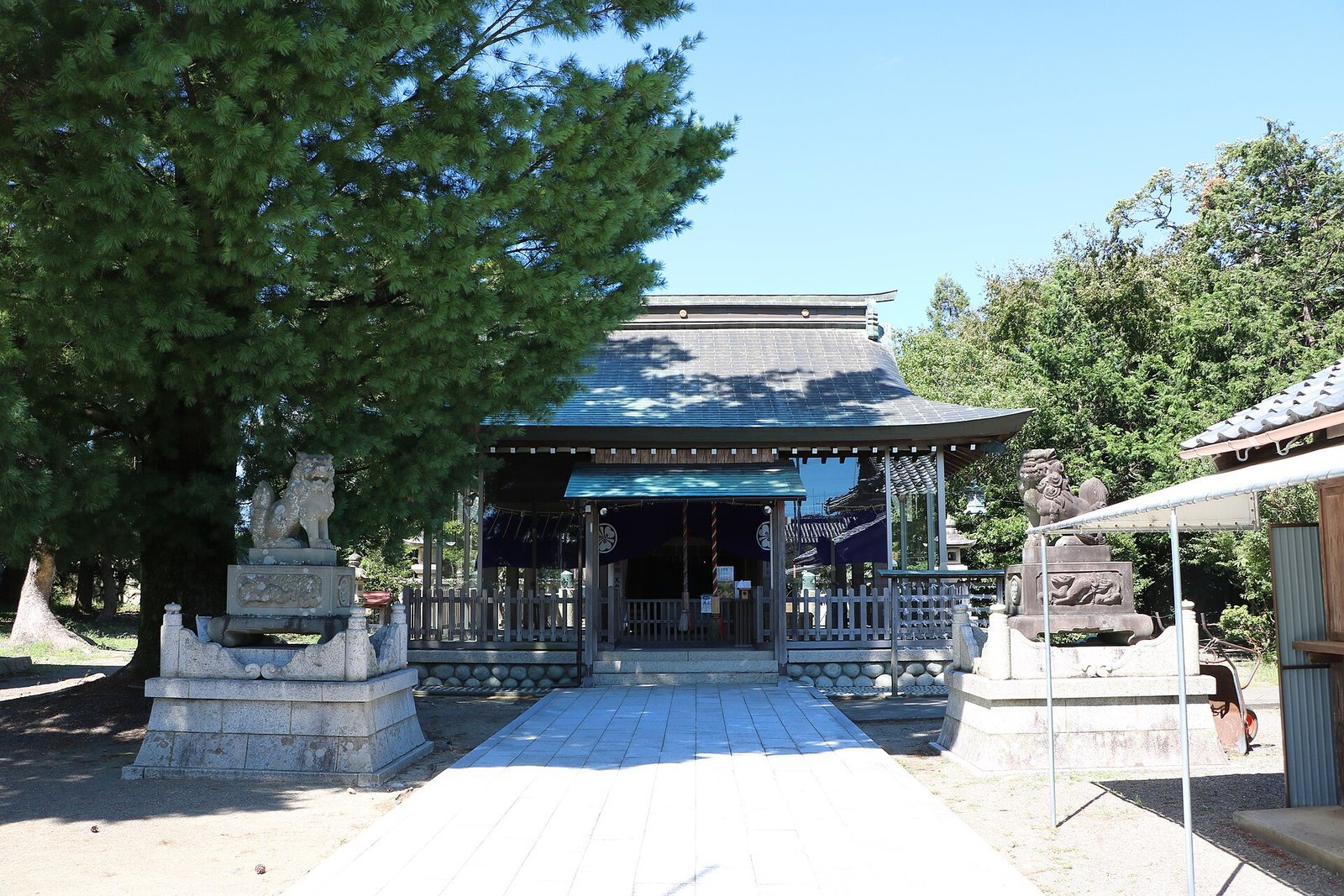
Obama Jinja, a shrine in Japan’s indigenous Shinto tradition, was established in 1875 to honor Sakai Tadakatsu, regarded as the founding lord of the domain. In 1956, the castle site received designation as a Fukui Prefectural Historic Site.
Remains
The castle had a concentric plan centered on a main bailey (the castle’s principal enclosed area) and its inner moat. Wood and stone were used in its construction, and its enclosures occupied a delta-like peninsula shaped by rivers and coastal waters.
Setting and enclosures
The Kita River, also called the Tada River, and the Minami River formed the peninsula at Obama Bay. Rivers, wetlands, and the bay helped protect the site, while the rivers also served as outer moats. The castle grounds covered 62,492 square metres, with 10,347 square metres in the main bailey. The northern and western enclosures lay in those directions from the main bailey, with the second enclosure to the south and the third to the east. An outer enclosure held 30 watchtowers and was bordered by water-filled moats.
The keep
The keep stood at the southwestern edge of the main bailey. It rose about 29 metres and had three tiers and three stories, combining a layered tower with a connected group of structures. Its design was modeled on Fujimi Yagura, a watchtower at Edo Castle.
Surviving castle fabric
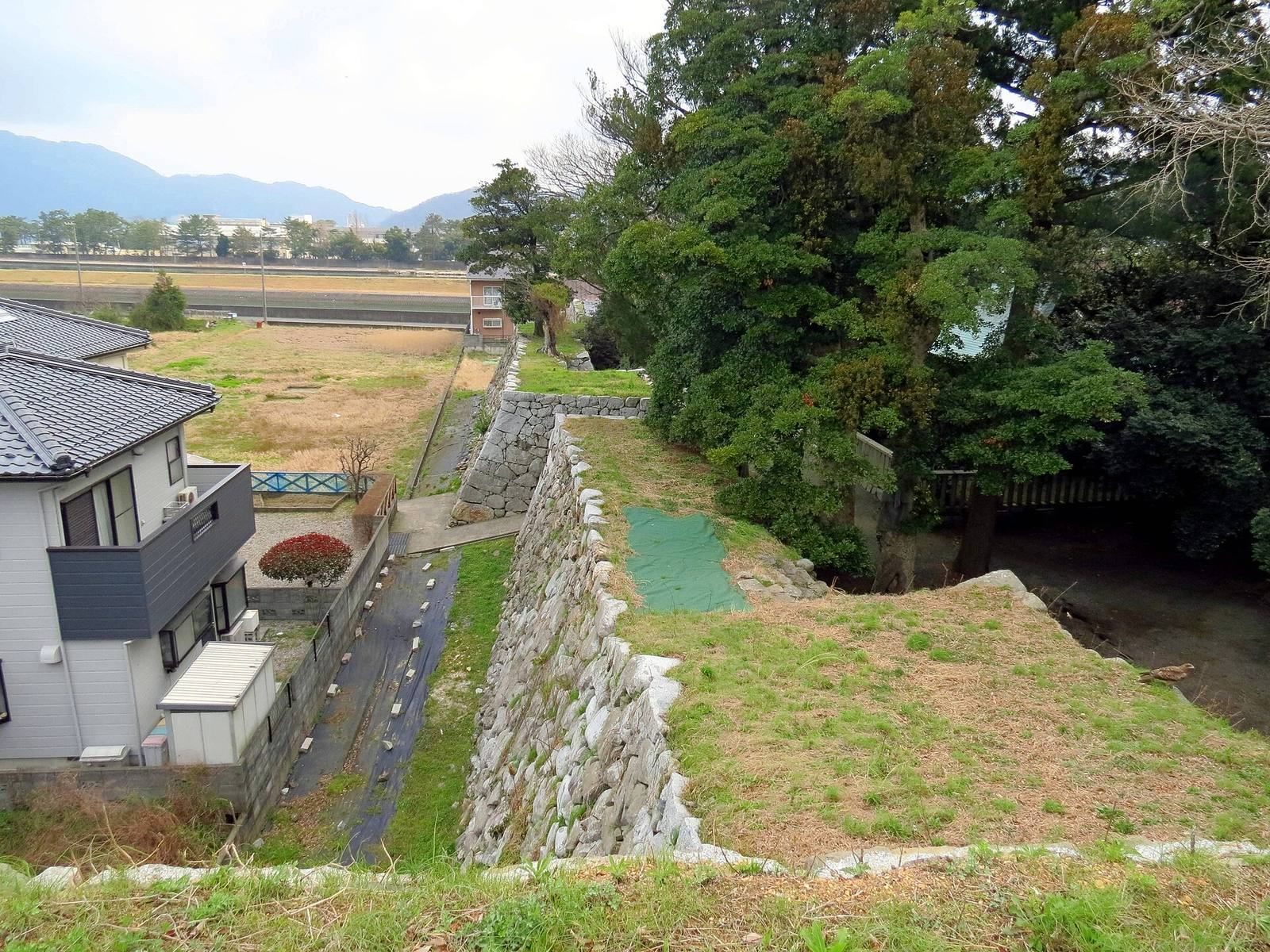
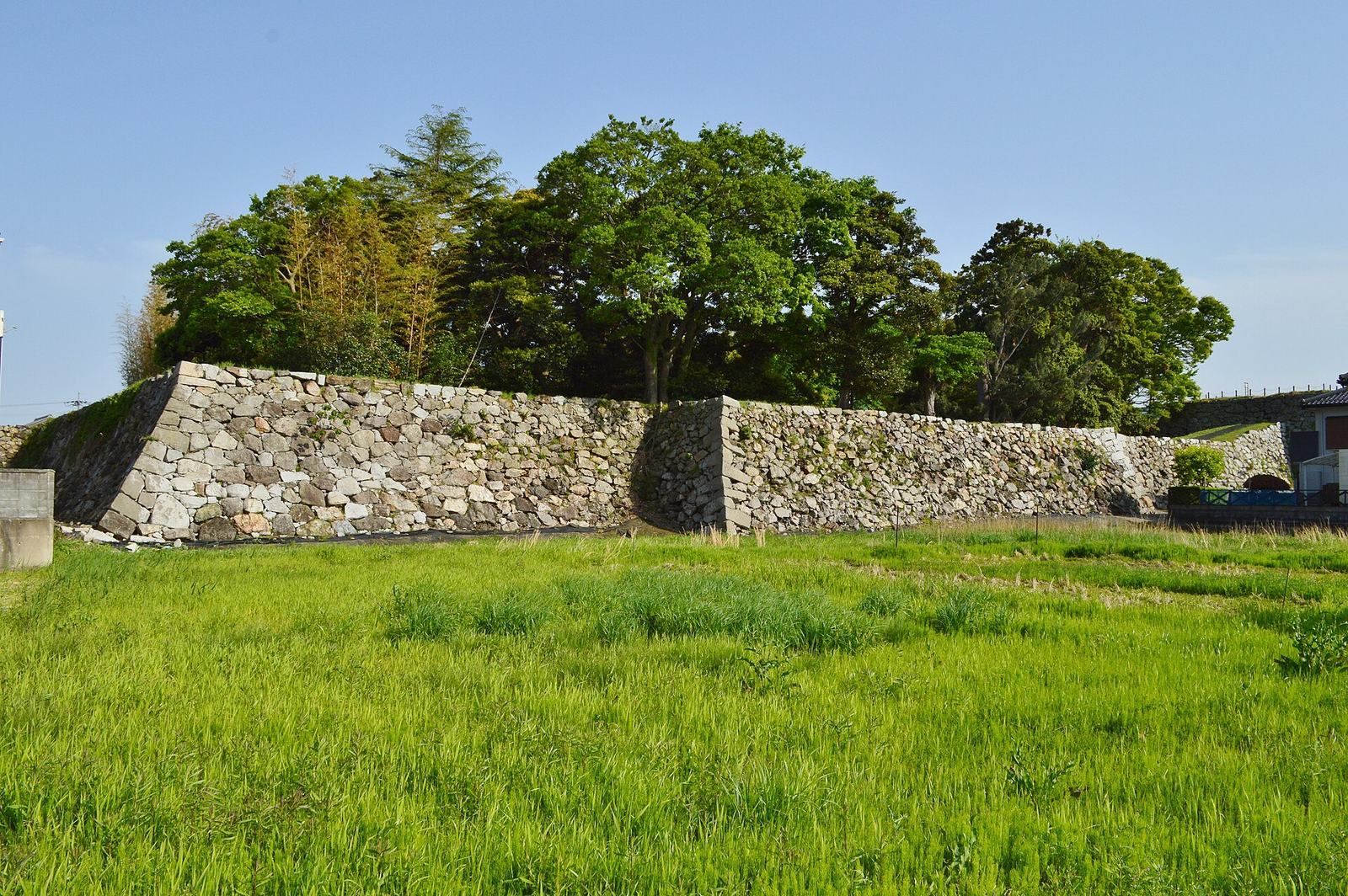
Parts of the main bailey’s stone perimeter walls remain, reaching about 11 metres in height, along with sections of moat and the keep’s foundation. Expansion of the Kita River and later residential development altered or occupied much of the former precinct. Housing now covers much of the second bailey, while Obama Jinja stands near the former keep site.
Relocated structures
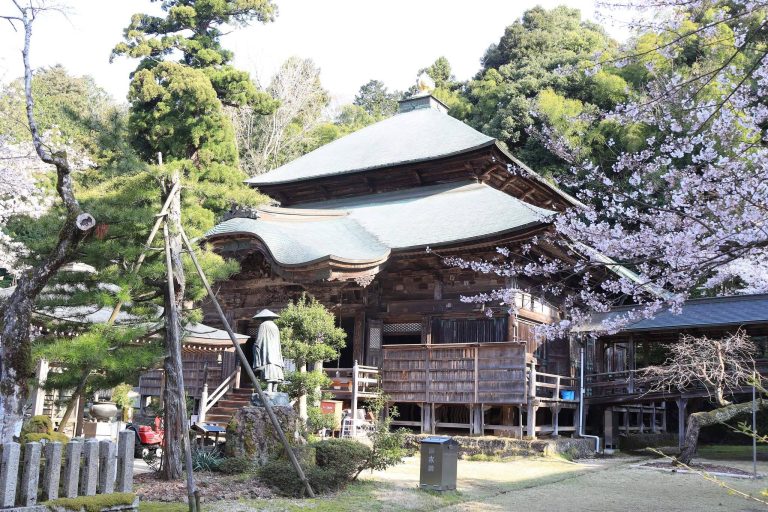
The main gate of the former domain school was moved and now serves as the entrance to Fukui Prefectural Wakasa High School. The entrance to a reception hall was relocated to a temple in Obama.