Machaerus: A Hasmonean Fortress and Herodian Palace in Jordan
Site at a Glance
- Country
- Jordan
- Primary era
- Classical
- Eras represented
- Classical
- Civilizations
- Roman
- Site type
- Military
On this page13 sections
History
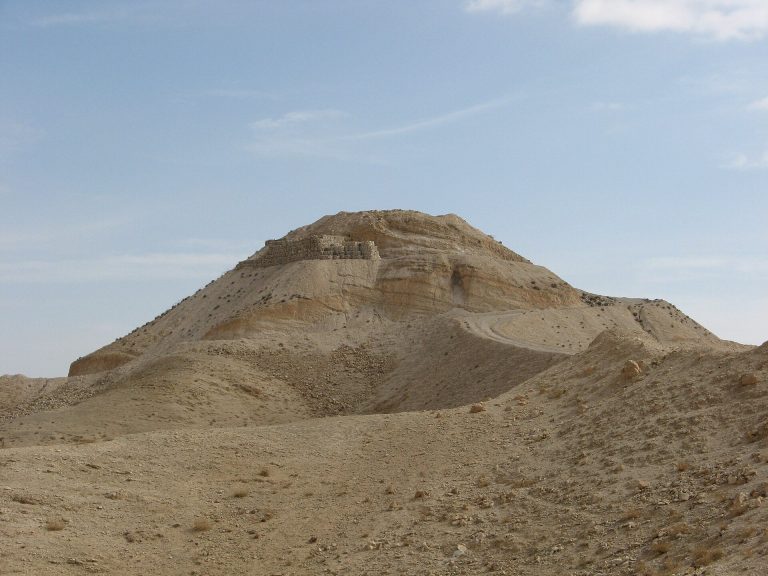
Machaerus was a hilltop fortress near Mukawir in Jordan, founded around 90 BCE by Alexander Jannaeus, a king of the Hasmoneans, the Jewish dynasty that emerged from the Maccabean revolt. Herod the Great rebuilt and enlarged it around 30 BCE as a defensive base east of the Jordan. The stronghold later became associated with John the Baptist and with Jewish resistance to Rome.
Hasmonean foundation and Herodian rebuilding
Machaerus’s hard-to-reach height made it useful for watching approaches from the east and relaying warnings to other Hasmonean and later Herodian fortresses. Fires lit at night and smoke by day could carry warnings toward Jerusalem. In 57 BCE, the Roman general Gabinius destroyed the fortress during conflict involving Aristobulus II.
Herod the Great, Rome’s client king in Judaea, later restored and expanded Machaerus. He used it as a military base to defend his lands east of the Jordan and as a possible refuge, and regarded its proximity to Arabia as an advantage. The precision of the design has prompted a suggestion that highly trained royal architects took part, perhaps builders from Egypt’s Ptolemaic ruling court after the Battle of Actium in 31 BCE. That connection remains uncertain.
Herod Antipas and John the Baptist
After Herod the Great’s death, Machaerus passed to his son Herod Antipas, who ruled Galilee and Perea, the region east of the Jordan, from 4 BCE to 39 CE. In 27 CE, Antipas divorced Phasaelis, daughter of the Nabataean king Aretas IV, and sought to marry Herodias, his niece and the wife of one of his half-brothers.
John the Baptist condemned the marriage and was imprisoned at Machaerus. The first-century Jewish historian Flavius Josephus and Christian Gospel traditions both associate John’s execution with the fortress, placing it around 32 CE. In Matthew’s account, Herodias urged her daughter Salome to ask for John’s head after dancing at Antipas’s birthday feast. Antipas was distressed but ordered the execution. The Gospel chronology places it near Passover, after about two years of imprisonment.
In 36 CE, Aretas IV’s Nabataean forces defeated Antipas’s army in a major battle. The defeat was understood as retaliation against Antipas, his former son-in-law. After Antipas was deposed and exiled in 39 CE, Machaerus passed to Herod Agrippa I, who held it until his death in 44 CE; it then came under Roman control.
Revolt against Rome and the siege
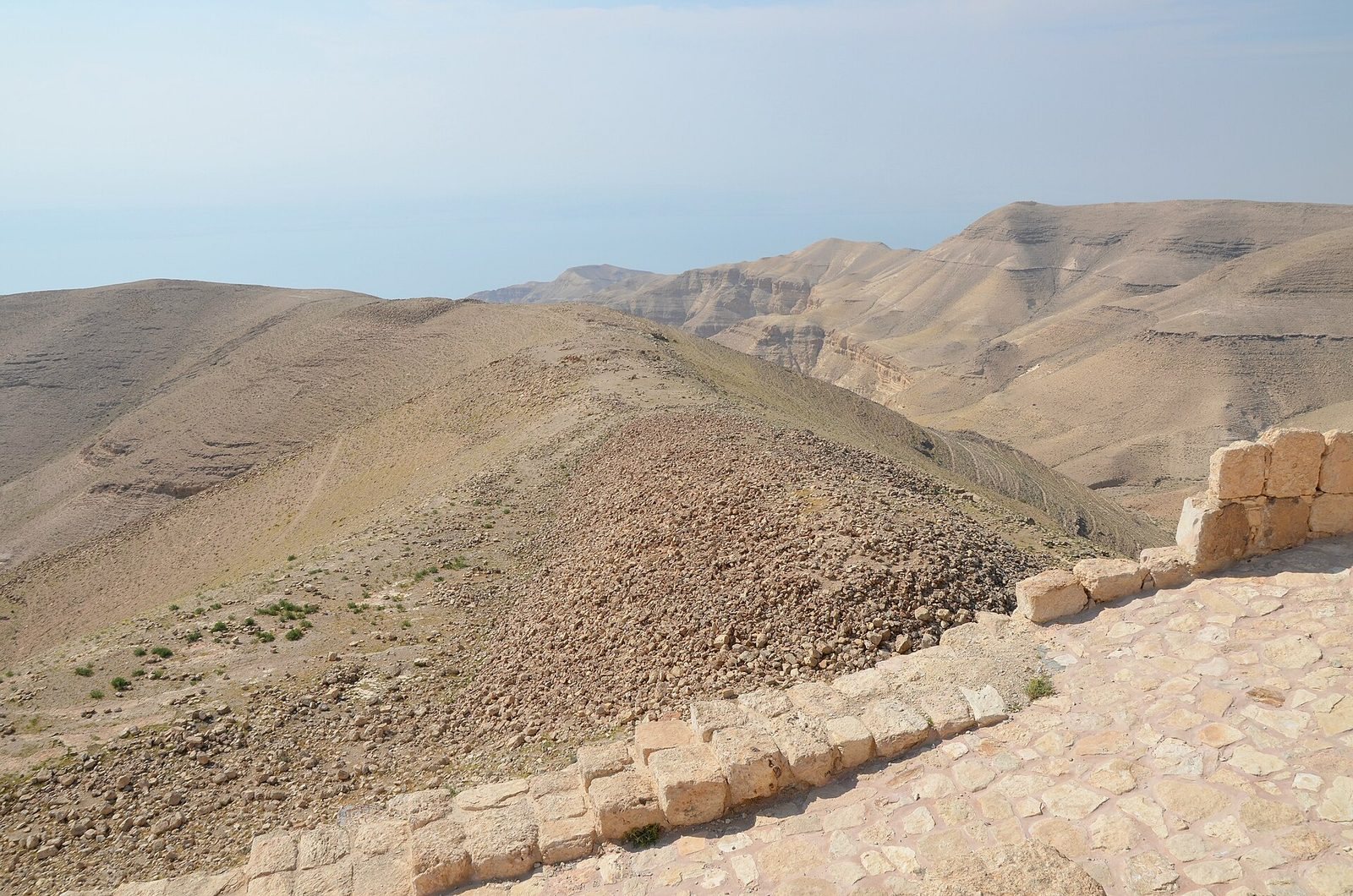
Jewish rebels took control of Machaerus after 66 CE, during the First Jewish Revolt, the uprising against Roman rule in Judaea. Even after Jerusalem fell in 70 CE, the fortress remained a center of resistance. In 71 CE, the Roman commander Lucilius Bassus besieged it. His forces raised a ramp through the southeastern ravine, began another from the higher northwestern ridge, and surrounded the site with a rectangular siege line and fixed camps.
Raids by the defenders caused losses on both sides. Outside the gates, a Roman soldier named Rufus seized a young Jewish fighter, Eleazar. Bassus had Eleazar flogged in view of the fortress and ordered a cross brought up. Eleazar then urged his comrades to surrender. Bassus spared him and agreed to let the Jewish defenders leave safely.
Non-Jewish residents, who were not covered by the agreement, tried to escape at night. Opponents inside the upper citadel alerted the Romans, who intercepted the fugitives. Some got away, but about 1,700 men were killed, while women and children were enslaved and sold. The Jewish rebels were allowed to depart. Roman forces then demolished the fortress, leaving its foundations.
Pottery indicates two main periods of occupation: the Hasmonean phase, around 90–57 BCE, and the Herodian phase, around 30 BCE–72 CE. A short reoccupation followed soon after 72 CE and formed the site’s final phase of use.
Exploration and archaeological work
In 1807, the Frisian explorer Ulrich Jasper Seetzen linked the nearby village’s name with the Greek name Machaerus. Tristram visited in 1872, and Ebel described the remains in 1909. Excavations began in 1968 under Jerry Vardaman. In 1973, August Strobel identified and studied the Roman siege wall. Excavation campaigns from 1978 to 1981 involved Virgilio Corbo, Stanislao Loffreda, and Michele Piccirillo of the Studium Biblicum Franciscanum, alongside a Franciscan and Jordanian Department of Antiquities team that began work in 1978.
Pope John Paul II visited Machaerus in 2000. It has since been regarded as one of Jordan’s five Christian pilgrimage sites.
Remains
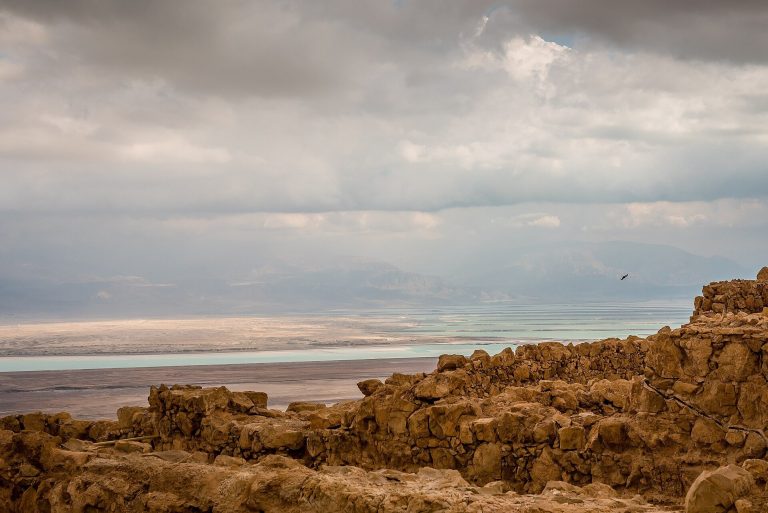
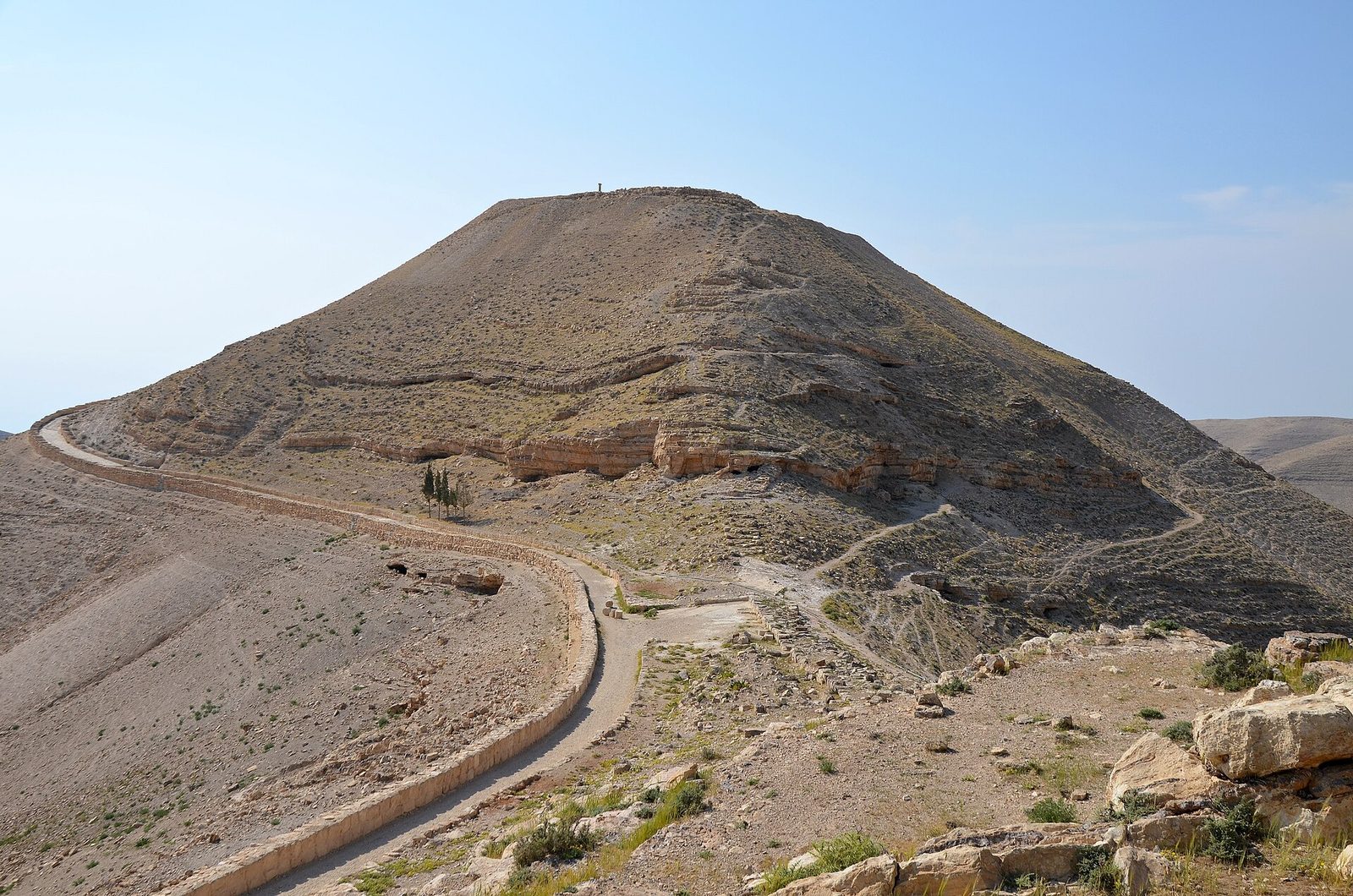
The fortress occupies a high, rocky, roughly cone-shaped hill surrounded by deep ravines. Its summit lies about 730 m above sea level, or about 1,100 m above the Dead Sea. The main enclosure and palace stood on the crest, with additional walls and towers on the eastern slope and an ancient paved road crossing the Moab Mountains toward the Dead Sea’s eastern shore.
Summit fortress and royal buildings
Enclosure and towers
A wall enclosed an area about 100 m long and 60 m wide at the hilltop. Three towers stood at its corners, each about 90 feet high. The palace occupied the center of the fortified area. The steep terrain added to the defensive position: a ravine on the eastern side drops about 150 feet, while the western valley runs toward the Dead Sea.
Palace, courtyard, and columns
Excavated palace remains include rooms, a large courtyard, an elaborate bathhouse, and fragments of floor mosaic. The fortress complex also included a Jewish ritual bath, a dining room arranged for reclining guests, and a courtyard surrounded by columns. The royal courtyard is considered one of the closest archaeological parallels to Gabbatha, the place associated with Pontius Pilate’s judgment of Jesus at the Roman governor’s headquarters in Jerusalem.
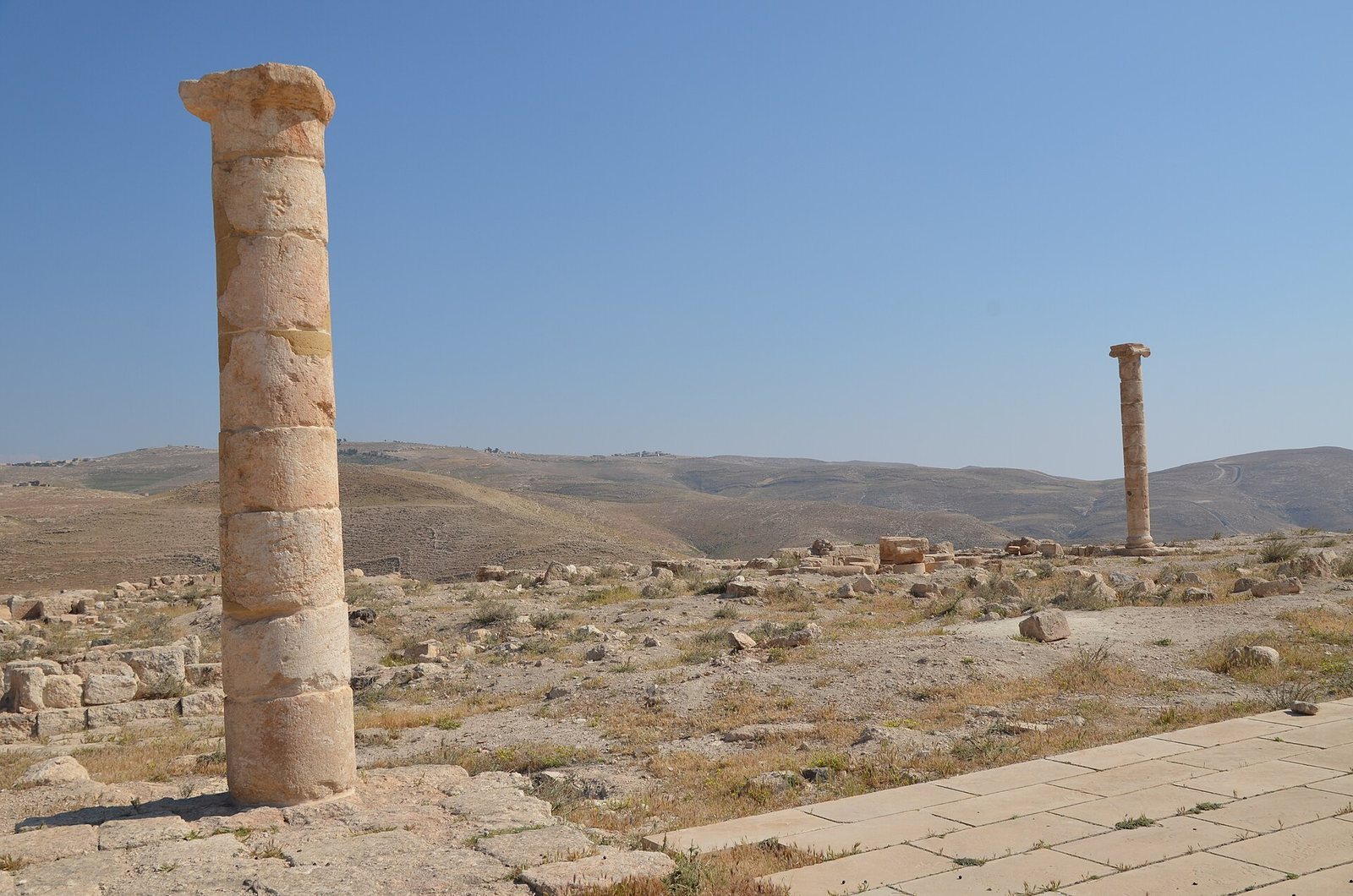
Two restored columns come from different parts of the royal complex. One, in the Doric style, came from the royal courtyard; the Ionic-style column came from the bathhouse. These are two styles of classical column. In 2014, both were cleaned and conserved in place, then joined using stainless-steel plugs fitted into holes in their centers. After separate incidents brought them down in February 2022 and March 2023, Jordan’s Department of Antiquities re-erected them in November 2023.
Water system and eastern slope
Numerous cisterns collected rainwater for the fortress. An aqueduct, a built channel for carrying water, can be traced from the east to the cisterns. Farther down the eastern slope, walls and towers may belong to a lower settlement. An encircling Roman siege wall has also been identified and studied.
Road to Callirhoe
An ancient road connected Machaerus with the thermal springs at Callirhoe on the Dead Sea’s eastern shore. Long stretches remain as a broad paved route across the slopes of the Moab Mountains. The lower section was paved and cleared of stones, and some portions were cut into bedrock. The road measures 3.5 to 6 m wide; kerbstones and built retaining walls, up to 1 m high, survive along its edges. Its date is uncertain. Archaeologist Chaim Ben David considers it older than the Roman siege and assigns it to the Herodian period, or possibly the Hasmonean period.
Excavated finds
Limestone relief
A limestone relief found at Machaerus in 2020 bears a three-lobed cluster of grapes and a pomegranate wreath. Its design closely resembles a carved band above the entrance to the Tomb of the Kings, a monumental burial complex in Jerusalem. Excavators used the comparison to argue that a tomb at Machaerus was commissioned by Herod the Great rather than Herod Agrippa I, as some scholars had proposed.