Mutianyu: A Defensive Section of the Great Wall in Beijing
Site at a Glance
- Country
- China
- Primary era
- Medieval
- Eras represented
- Medieval
- Civilizations
- Ming
- Site type
- Military
- Remains
- Wall
On this page7 sections
History
Mutianyu is a section of the Great Wall in Beijing, China, first fortified under the Northern Qi in the mid-sixth century. Rebuilt and strengthened during the Ming dynasty, it formed part of the northern defenses protecting the capital and the imperial tombs.
Northern Qi Origins
The first wall at Mutianyu was built during the Northern Qi, a Chinese dynasty that ruled from 550 to 577, to defend against northern nomadic peoples.
Ming Reconstruction and Reinforcement
After founding the Ming dynasty in 1368, its first emperor, Zhu Yuanzhang, sent the general Xu Da to organize defenses between Juyongguan and Gubeikou. A new wall was built at Mutianyu over the remains of the Northern Qi fortification. A pass followed in 1404, and the wall was rebuilt in 1569.
In 1568, the Longqing Emperor appointed the military commander Qi Jiguang to oversee defense and train local garrisons in Jizhou, Changping, and Baoding. Qi helped maintain 2,000 li of the Great Wall, a distance measured in a traditional Chinese unit whose length varied over time; this work was completed in 1572. After observing that the wall lacked projecting supports, he proposed adding them, and officials approved the plan. Later Ming generals, including Qi, repeatedly strengthened the section.
Modern Restoration and Protection
Mutianyu underwent repeated repairs after the founding of the People’s Republic of China. In 1983, the State Council approved a restoration of the section. The Great Wall, including Mutianyu, was added to UNESCO’s World Heritage List in 1987, a register of cultural and natural places recognized for outstanding universal value. In 2006, Mutianyu received the national designation of Major Historical and Cultural Site Protected at the National Level.
Remains
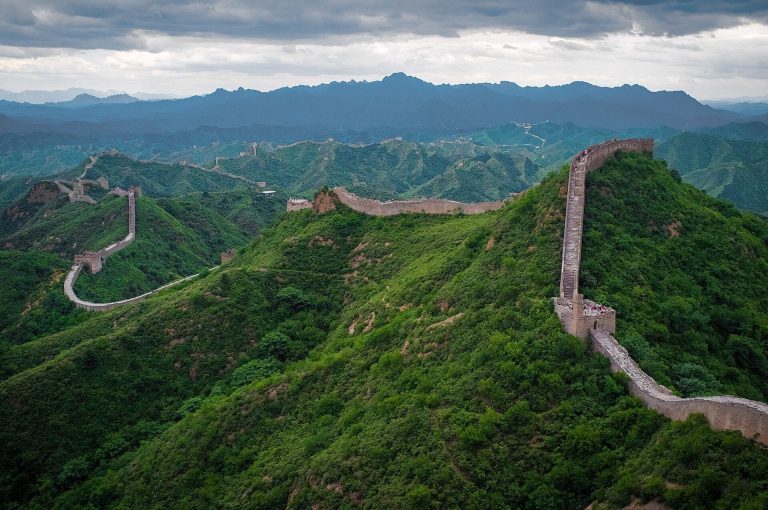
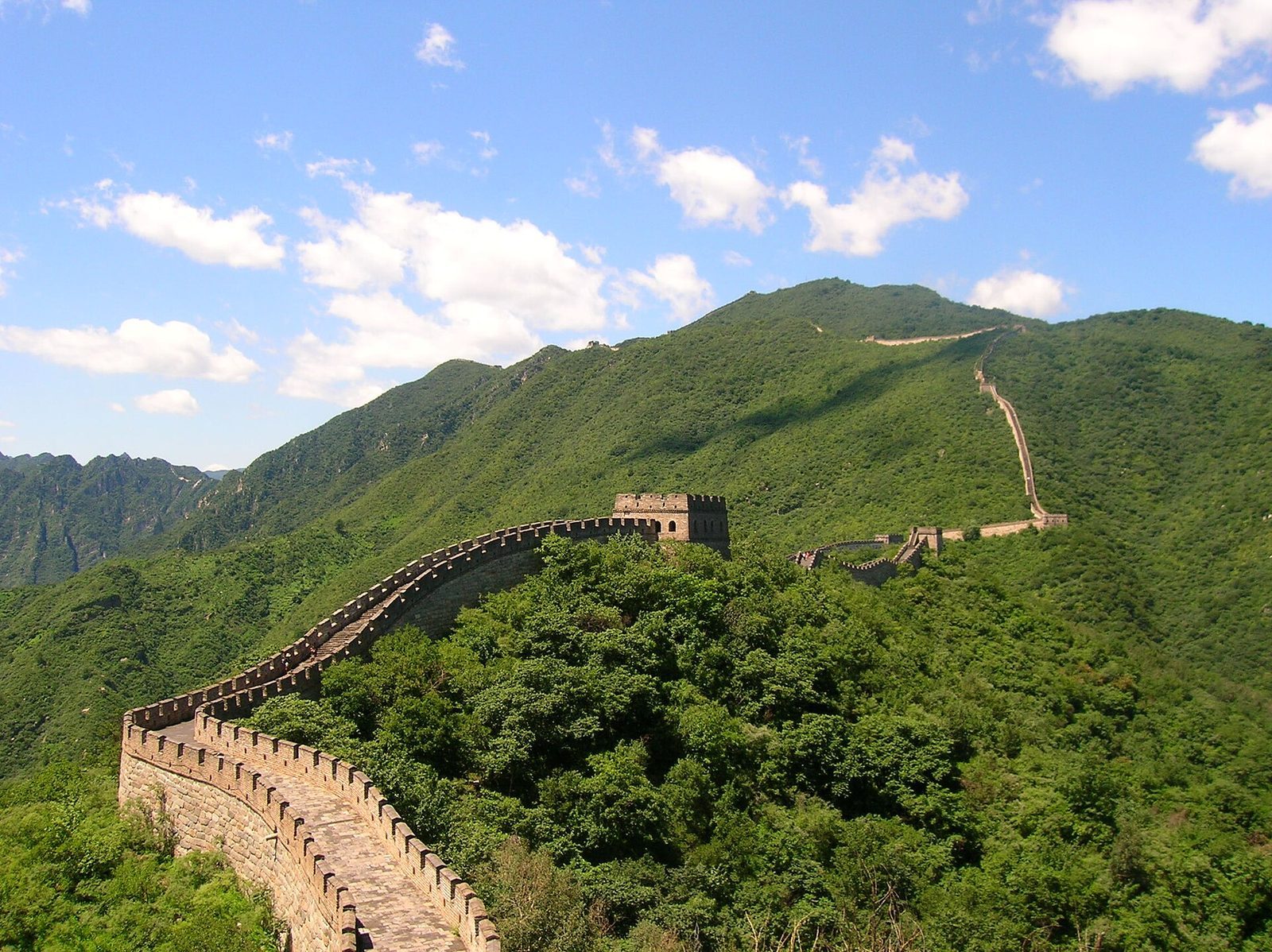
The wall runs through the Jundu Mountains in Huairou District, with its highest point reaching 940 metres above sea level. Woodland and streams surround the section, and forest covers more than 90 percent of the area.
Wall and Watchtowers
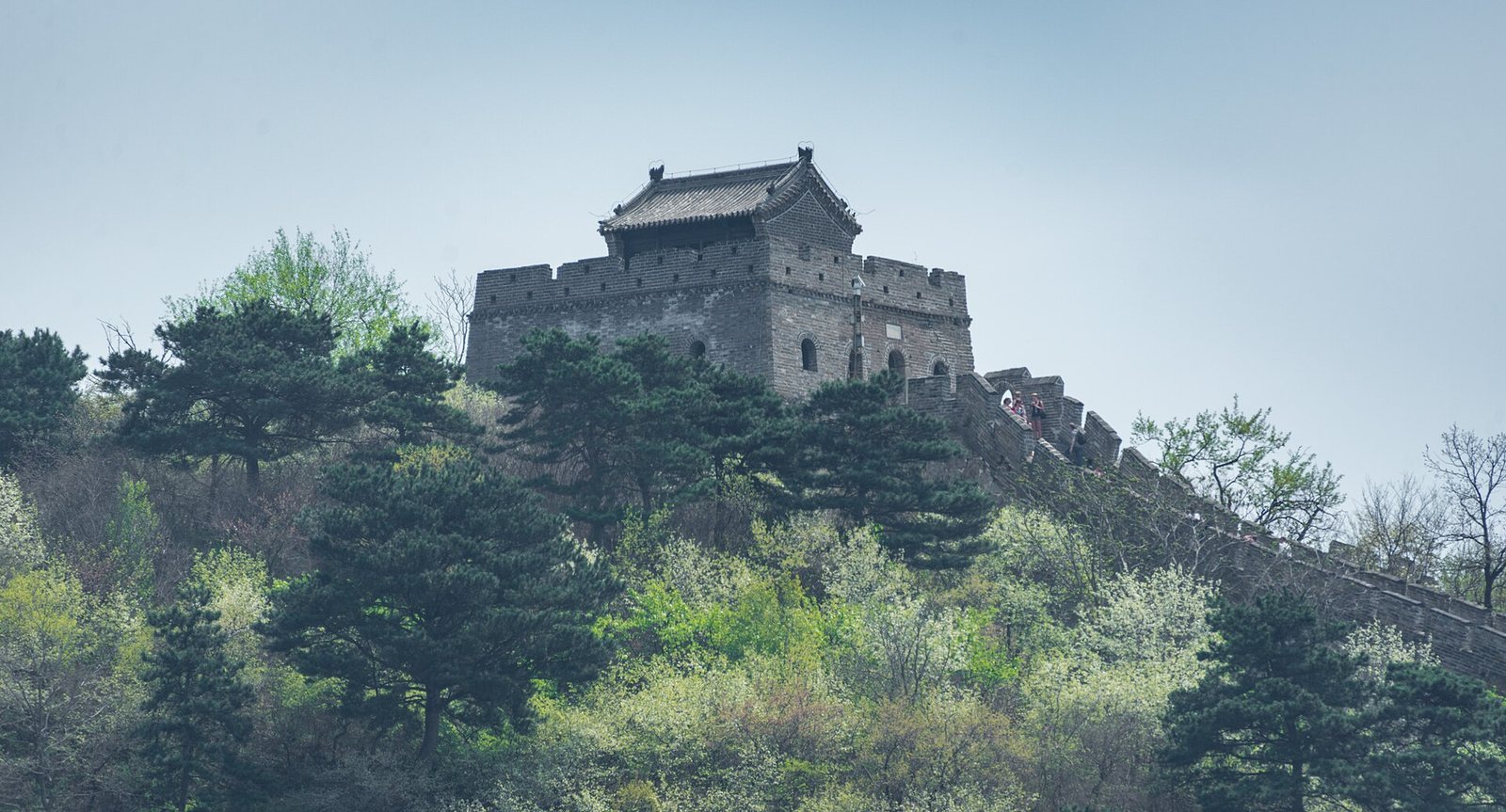
Built mainly of granite, the wall stands 7 to 8.5 metres high and measures 4 to 5 metres across at the top. A 2,250-metre stretch contains 22 watchtowers. The section is among the best-preserved parts of the Great Wall. Protective walls line both the inner and outer edges, with battlements formed by raised sections alternating with openings. This arrangement allowed archers to shoot while sheltered on either side.
Mutianyu Pass
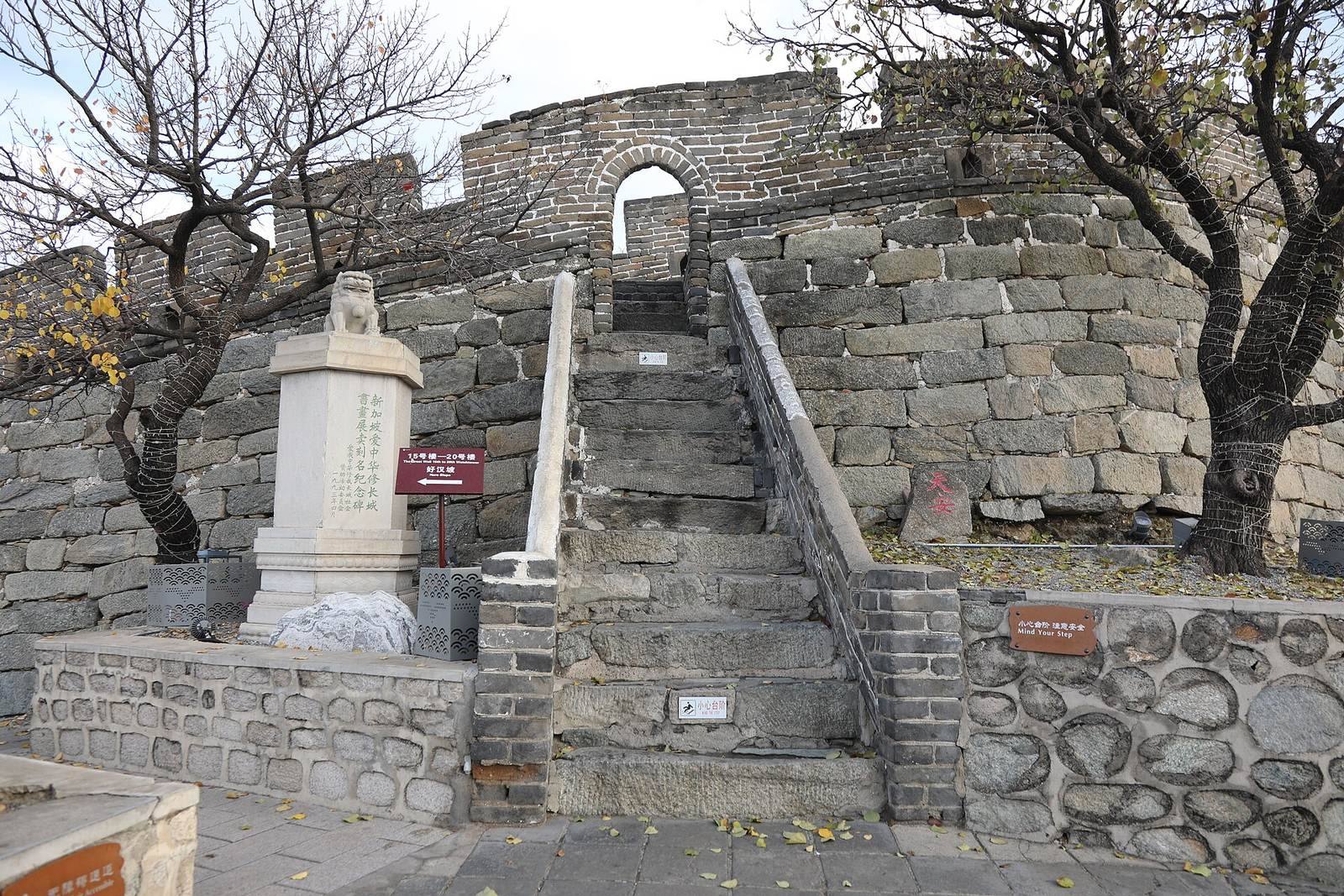
The pass consists of three watchtowers set on one shared terrace. A larger tower occupies the centre, flanked by two smaller towers; internal connections link all three. This configuration is uncommon among Great Wall sections. The side towers also have two graffiti panels that are replaced regularly.