Funtana Coberta: A Nuragic Sacred Well in Sardinia
Site at a Glance
- Country
- Italy
- Primary era
- Bronze Age
- Eras represented
- Bronze Age
- Civilizations
- Nuragic
- Site type
- Religious
- Remains
- Sanctuary
On this page13 sections
History
Funtana Coberta is a Bronze Age sacred well near Ballao in Sardinia, Italy, built by the Nuragic civilization, the prehistoric culture of the island known for its stone towers. Its precise construction date is uncertain, but it is regarded as one of Sardinia’s oldest sacred wells built from large stones.
Nuragic use and interpretation
The well’s use appears to have ended by the beginning of the Final Bronze Age. Its sacred architectural form has been compared with other Sardinian wells, part of a regional tradition that extended from the Middle Bronze Age into the Early Iron Age. This long continuity has been understood as reflecting a shared island culture.
Archaeologist Dimitrina Mitova-Djonova interpreted the well as connected with worship of subterranean water and Enki, a Sumerian deity associated with freshwater, wisdom, and creation.
Excavations and later damage
Antonio Taramelli began excavating Funtana Coberta in 1918, with the initial work continuing into 1919. Investigations resumed in 1994 under archaeologist Maria Rosaria Manunza, followed by further campaigns in 1998, 2003, and 2008.
In April 2013, the upper part of the structure collapsed. The water level then rose to the entrance of the access stairway.
Remains
Architectural layout
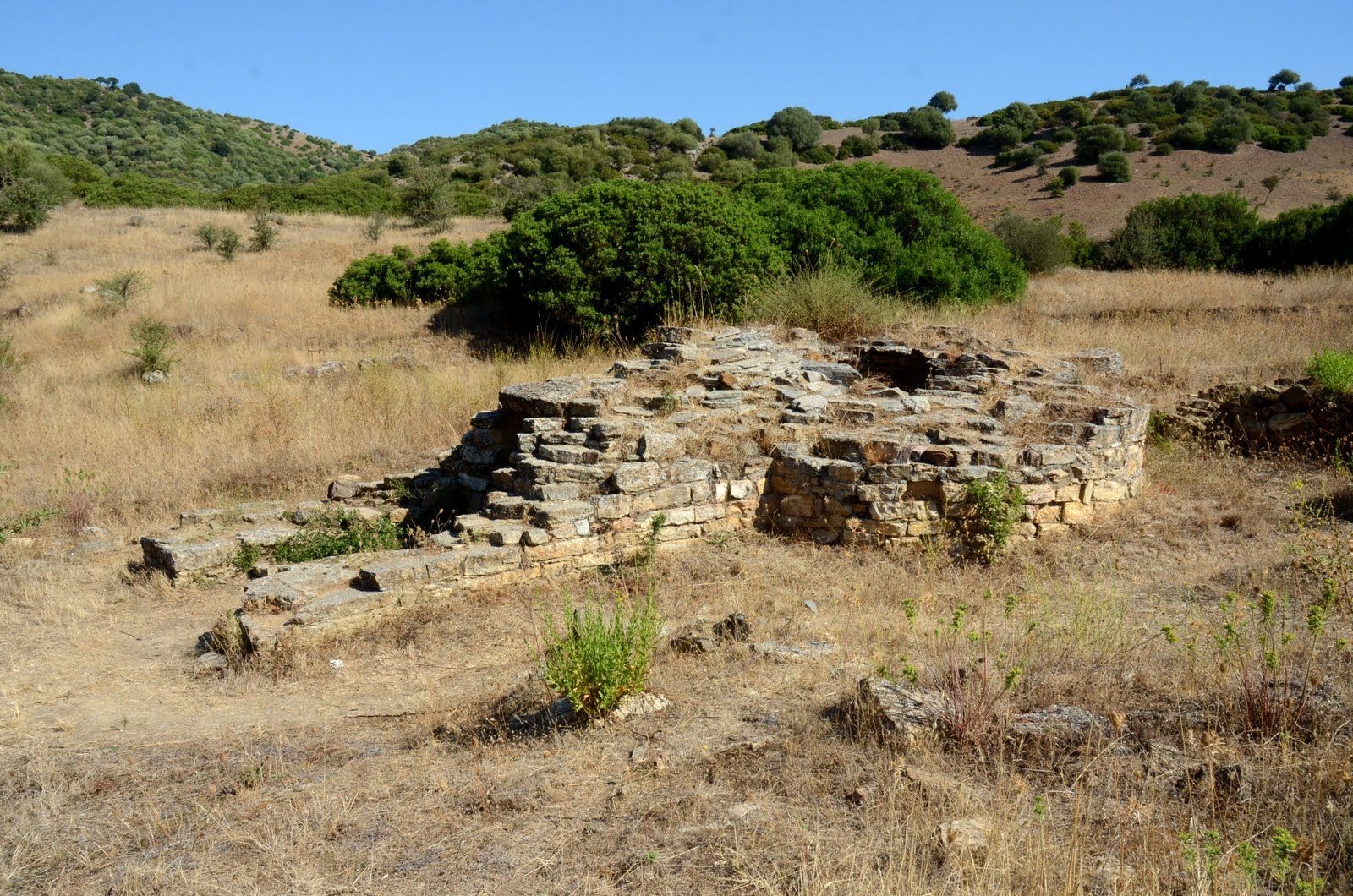
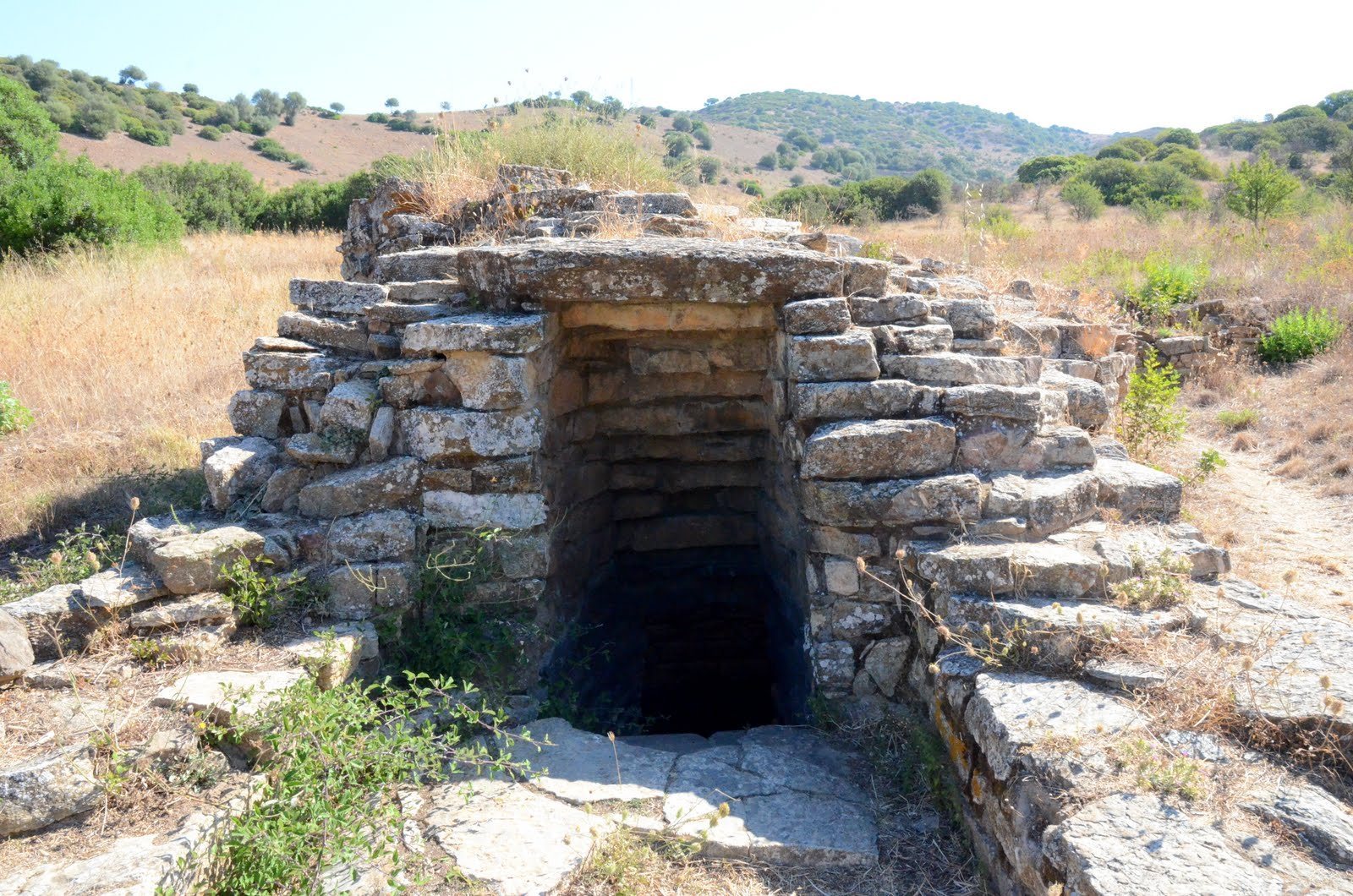
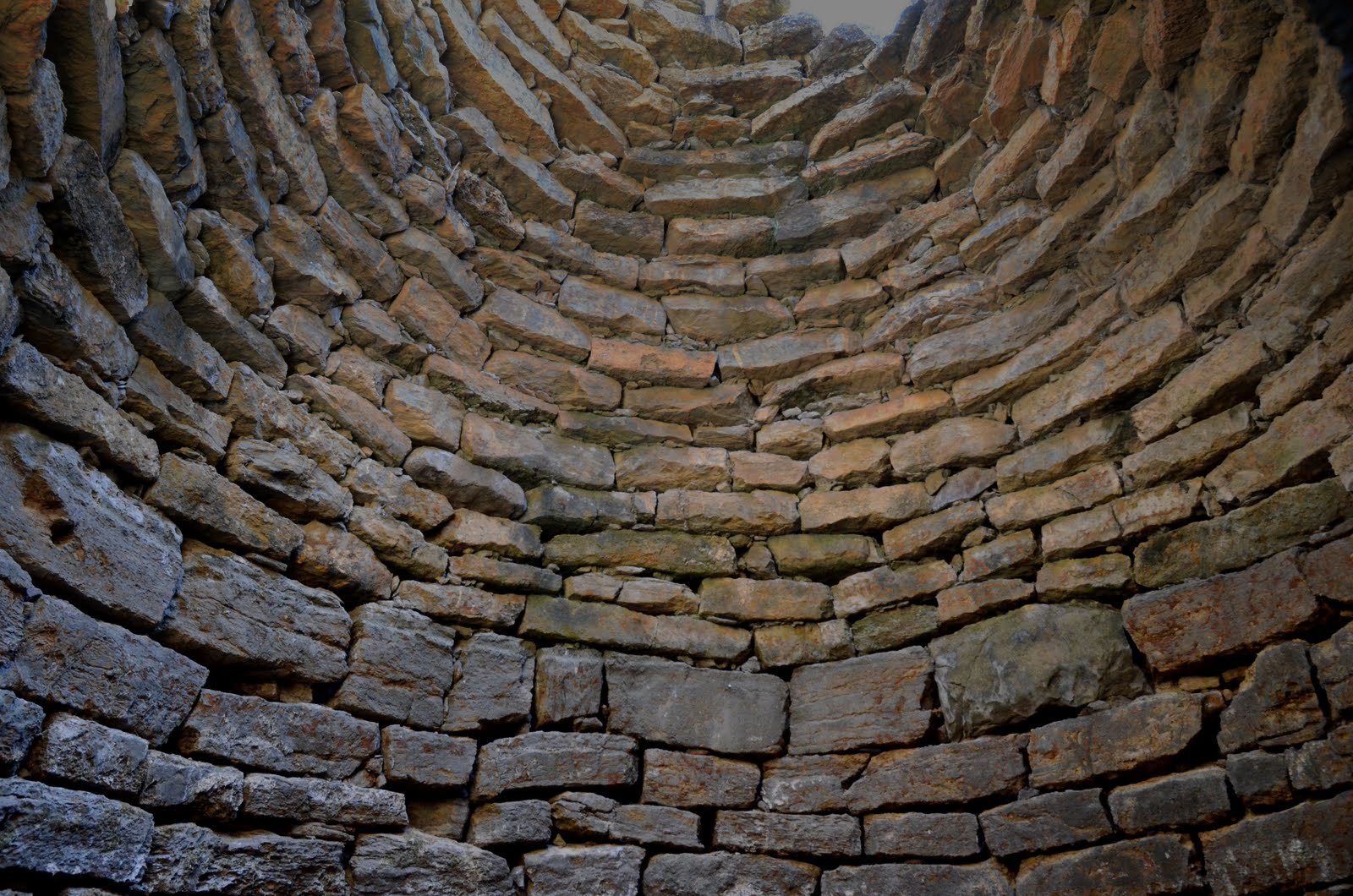
The complex stands in a small clearing overlooking the surrounding terrain, away from the modern settlement. Its entrance and central axis face the slope. The structure is 10.60 metres long and made of limestone blocks shaped into irregular rectangular forms. Its main elements are an entrance and vestibule, a descending passage, and a circular chamber roofed with a false dome formed by overlapping masonry.
Entrance and passage
The entrance is 1.90 metres wide, with nearly vertical sides and a level upper threshold made from a single stone lintel. The descending passage is about four metres long and 1.10 metres wide. It narrows toward the chamber floor and contains 12 steps, covered by a corresponding series of lintels. A plan published in 1954 reconstructs a rectangular vestibule about 2.50 metres long and 1.80 metres wide. It shows the vestibule narrowing as it joins the walls of the passage and chamber. Two stones survive from the open space that preceded it.
Chamber and well shaft
The circular chamber is about 5.5 metres high and 3.5 metres wide at its base. Its stone courses narrow progressively upward, while large slabs form the floor in a radial arrangement. The well opening sits off the chamber’s geometric centre, toward the opposite wall. Its shaft is lined with 34 courses of stone and descends 5.20 metres, narrowing from 1.35 metres across at the mouth to 0.90 metres at the bottom. The base is cut into bedrock, where the spring emerges.
Outer remains
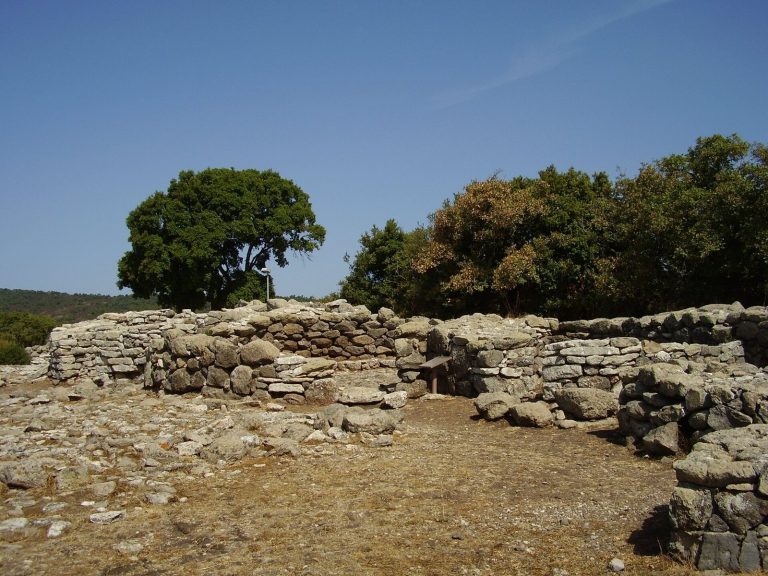
The surviving exposed features include a partly covered passage, the opening above the chamber, a small remnant of a separate protective wall, and a keyhole-shaped perimeter wall around the atrium and well drum. The shaft opening itself is described as lacking a protective wall. Floodwaters have carried away much of the rest of the structure over time.
Architectural parallels
Funtana Coberta’s above-ground arrangement has been compared with the sacred well of Santa Anastasia at Sardara. The two are described as contemporary and built using the same technique, though their plans differ: at Santa Anastasia, walls continue above ground to mark the underground chamber and passage and protect the roof opening. Related building features are also noted at Santa Vittoria and Santa Cristina. Funtana Coberta also closely resembles the sacred well at Gărlo in Bulgaria. Their dimensions differ by only a few centimetres, and a connection between the structures has been proposed.
Excavated finds
Pottery and ritual deposits
A Roman-period layer lay above a cultural layer identified with Nuragic activity. The Nuragic layer yielded about 150 pottery fragments dated to the Middle and Recent Bronze Age. A ceramic vessel from its oldest part contained fragments of swords interpreted as votive or oath-taking objects, along with metal ingots shaped like stretched hides, probably offerings. The vessel type dates to the Recent or Final Bronze Age, and its contents are also thought to belong to that period.
Bronze objects
Finds included bronze axes, as well as fragments from small bronze statuettes: an archer’s head, an animal’s ear, and a foot with a support. The axes have parallels among British examples, in Mycenaean casting molds, and at Troy VIIb; molds for casting the axes were found near Nuraghe Albucciu at Arzachena. The statuette foot resembles examples from Teti, Monte Arcosu, Uta, and Sorgono, including figures identified as chiefs, archers, warriors, and a soldier. The excavated votive objects also included bronze statuettes, jewelry, and valuable goods made locally and elsewhere.
Mycenaean pottery
Both imported Mycenaean pottery and local copies were found at the well. They date to Late Helladic III, a phase of Mycenaean civilization, and are also known from Nuraghe Antigori near Cagliari.