Fort Csillag, Komárom: Danube Defense and Wartime Internment
Site at a Glance
- Country
- Hungary
- Primary era
- Modern
- Eras represented
- Early Modern, Modern
- Civilizations
- Austria-Hungary, Austrian Empire, Habsburg, Hungarian
- Site type
- Military
- Remains
- Fort
On this page10 sections
History
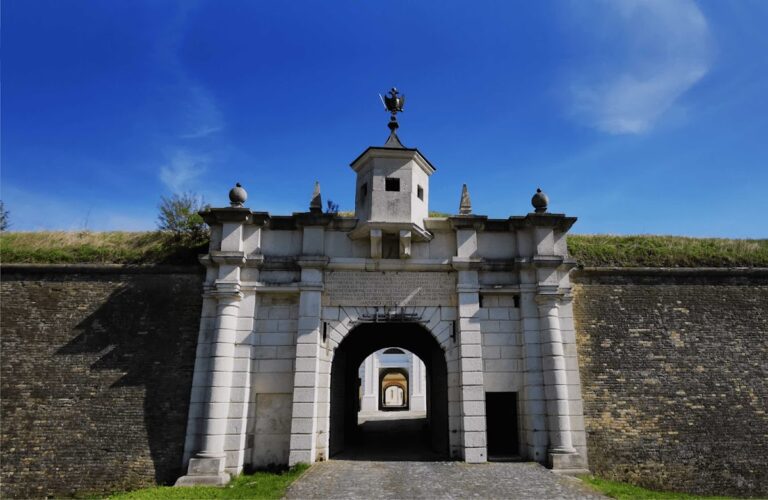
Fort Csillag, on the southern bank of the Danube in Hungary, is a nineteenth-century fortification rebuilt by Habsburg authorities between about 1850 and 1871. It guarded a river crossing as part of Komárom’s fortress system, then became a major internment, collection and deportation centre in 1944.
Bridgehead and revolution
A predecessor fort, the St Peter’s Palisade, was built at the crossing in 1586. Its four-pointed star plan later gave Fort Csillag its name. During the Hungarian Revolution and War of Independence of 1848–1849, Hungarian forces strengthened the defenses under Ignác Török, a military officer and engineer. Artillery at the position took part in fighting around Komárom in April 1849.
Rebuilding as part of Komárom’s fortress system
After Komárom surrendered in 1849, the Habsburg monarchy, a Central European dynastic state, began an extensive reconstruction of its defenses. The predecessor fort was largely demolished, and the new fort was rebuilt between about 1850 and 1871. The wider system was designed to protect forts on the opposite bank from enemy artillery and to secure communications across the Danube. Fort Csillag, Fort Monostor and Fort Igmánd formed its Hungarian-side defenses. The main building phase ended in 1871, and the system was completed with Fort Igmánd in 1877.
Under the Austro-Hungarian Empire, the dual monarchy formed in 1867, the military used Fort Csillag mainly for barracks and storage. No fighting took place there during this period. After the 1920 Treaty of Trianon, the post-First World War settlement that redrew Hungary’s borders, the Royal Hungarian Army used the fort as an ammunition depot. It served that purpose by 1938, and further changes for ammunition storage began in 1939. After Germany invaded Poland, the fort also gave temporary shelter to some Polish refugees.
Internment and deportation, 1944–1945
Fort Csillag’s role in the persecution and deportation of Jews must be distinguished from that of nearby Fort Monostor. Jews from Komárom and surrounding communities were concentrated principally at Fort Monostor before two transports left Komárom for Auschwitz-Birkenau on 13 and 16 June 1944, carrying about 5,463 people. Fort Csillag’s main role as an internment and deportation centre began later that year.
After the Arrow Cross, a Hungarian fascist movement led by Ferenc Szálasi, seized power on 15 October 1944, Hungarian authorities turned Fort Csillag into a military internment, collection and transit camp. Transfers of political prisoners and other detainees from Budapest prisons began around 22–24 October. On 3–4 November, the government ordered mass arrests, coordinated by Department VII of the Interior Ministry under Gábor Vajna and by representatives of the Defence Ministry. The fort was not part of the formal Nazi concentration-camp system, although German security organisations helped select and transfer prisoners, and German authorities received people deported by Hungarian officials.
Those imprisoned included political detainees from across Hungary, people connected with the 1944 Sátoraljaújhely prison uprising, Communists, Social Democrats and trade-union activists, former government officials, anti-Nazi clergy, foreign nationals, prisoners of war and suspected partisans. Jews who had escaped labour-service units or forced marches were also held there, as were people police regarded as politically or socially “unreliable.” Roma, often detained with their families and children, made up a large part of the prison population. People arrived from institutions including Vác, Székesfehérvár, Márianosztra and Sátoraljaújhely.
The fort became a major gathering point for Roma arrested across western and central Hungary. They were brought by train, lorry or forced march from Budapest and its suburbs, the Csallóköz region, and the counties of Baranya, Fejér, Győr-Moson-Sopron, Komárom-Esztergom, Tolna, Zala and Vas. Roma from parts of southern Slovakia then incorporated into Hungary were also imprisoned there. Several thousand Roma passed through the camp, many as entire families. By mid-November, an estimated 6,000–7,000 prisoners were confined there at one time, and some who could not be accommodated indoors had to stay outside. From November onward, about 10,000 people in total were brought to the fort.
Hundreds of prisoners died from hunger, disease, exposure and the conditions of confinement; the precise death toll is unknown. Hundreds of Roma are estimated to have died there, including Roma from southern Slovakia who succumbed to typhus. The camp also supplied forced labour to Nazi Germany, with prisoners selected according to their perceived fitness for work. A group of women taken away on the night of 10 November was sent through Dachau to Bergen-Belsen. A transport that reached Dachau on 14 November carried 1,512 men, including 175 Roma, 200 Jews and 482 Hungarian political prisoners. About 1,200 more prisoners travelled through Hegyeshalom to Flossenbürg, arriving on 18 November. Later transports took prisoners to Buchenwald, Sachsenhausen, Ravensbrück and Mauthausen, as well as to satellite labour camps.
Mass deportations largely ended around 27 December 1944 as Soviet forces approached Dunaalmás. During the evacuation, some Roma women, children and others judged unable to work were driven north through Dunaszerdahely towards Galánta. Some were released along the way; others were let go at Komárom without food, documents or transport. A military tribunal appears to have continued into January 1945. The final closure date of the detention facility is uncertain, although it was described as closed in early 1945.
Postwar use and commemoration
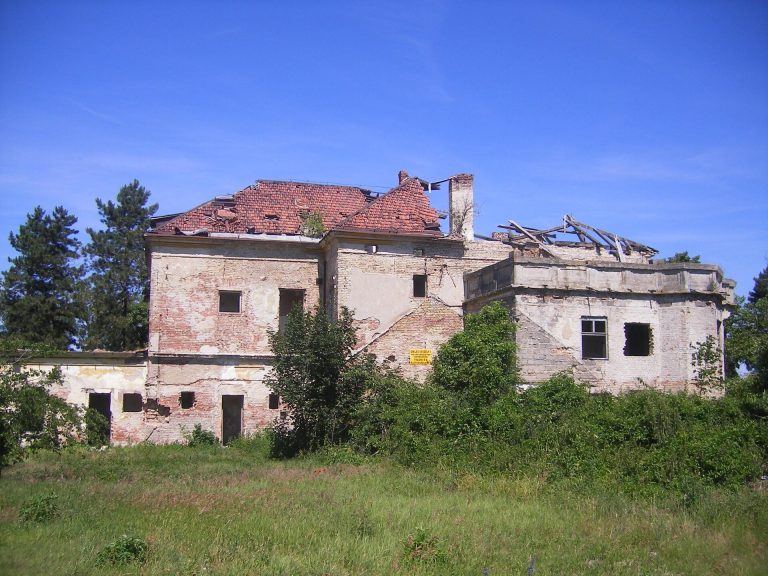
After the Second World War, parts of the fort were used as emergency housing. In summer 1945, it again served as an internment camp, this time for captured members of the Arrow Cross movement. A local consumer cooperative acquired the fort in 1963 and used it to store vegetables; sauerkraut production followed, and the complex was eventually abandoned. Fort Csillag and other forts in the system were registered as Hungarian national monuments in the early 1990s. By the turn of the millennium, the fort was heavily overgrown.
Vegetable storage ended in 2004, when management passed to the Monostori Fort Military Culture Centre. A major restoration and extension was decided on in 2014 and undertaken as part of the Liget Budapest Project, a cultural-development programme centered on Budapest’s City Park. Fort Csillag is now associated with the Museum of Fine Arts in Budapest. Roma organisations have held annual or periodic commemorations at the fort around Roma Holocaust Memorial Day on 2 August.
Remains
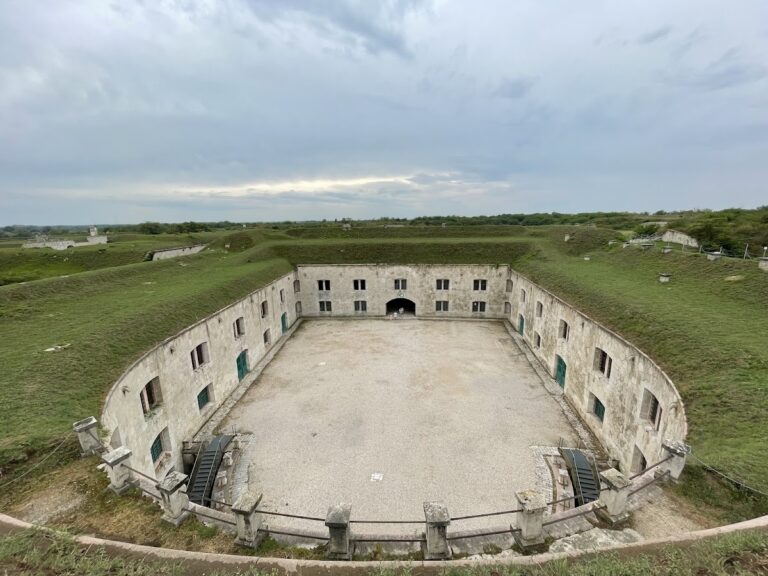
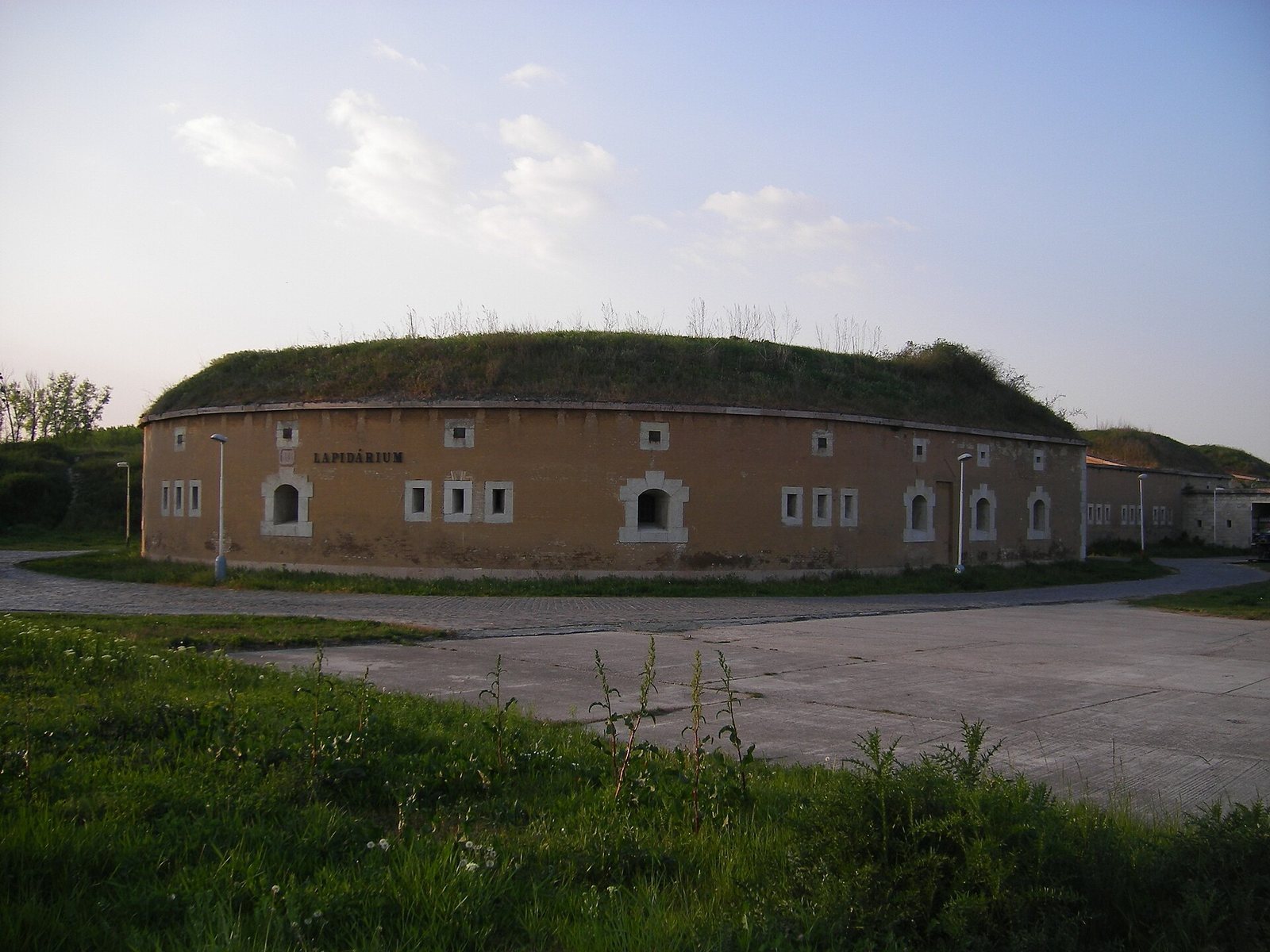
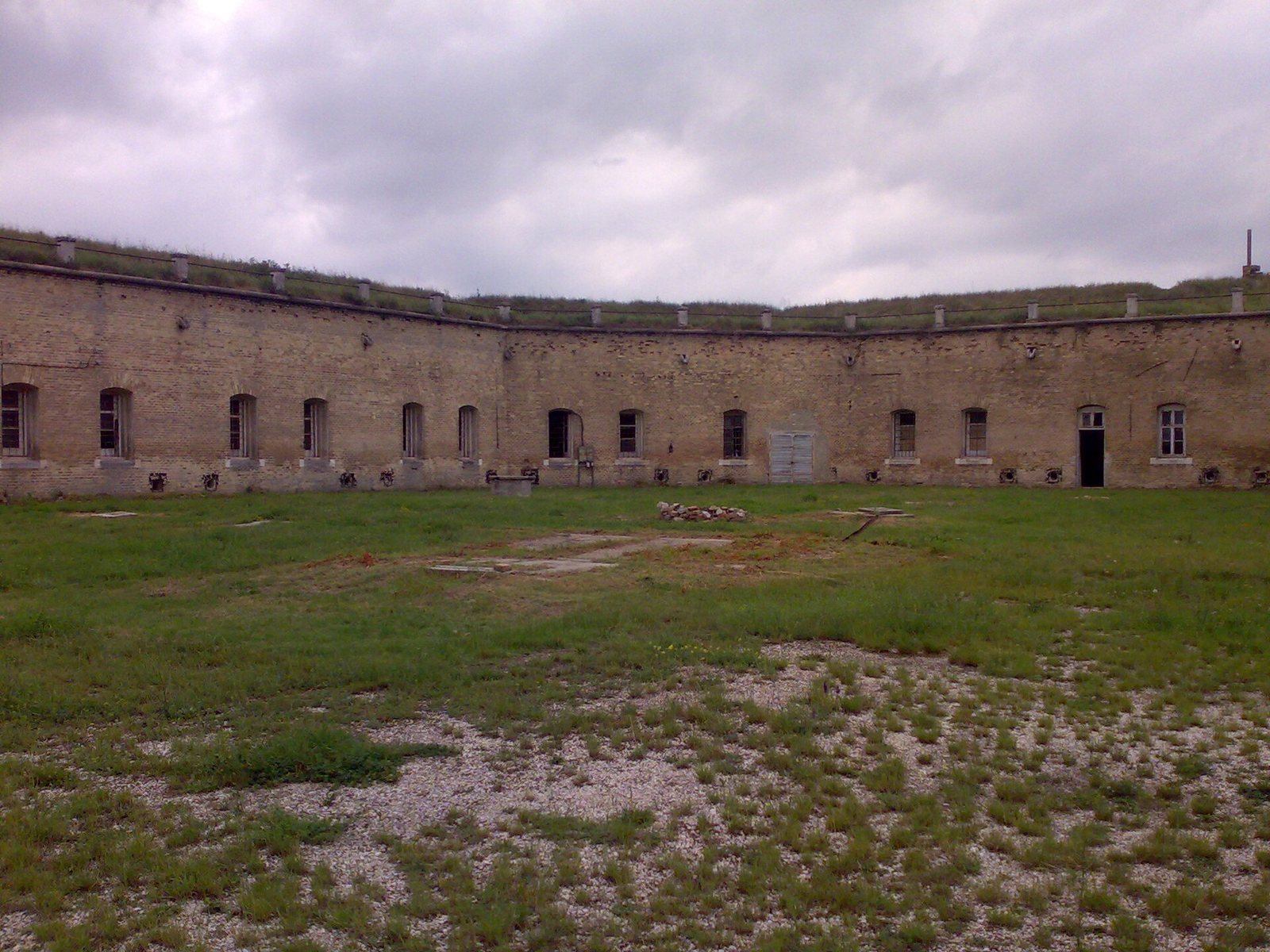
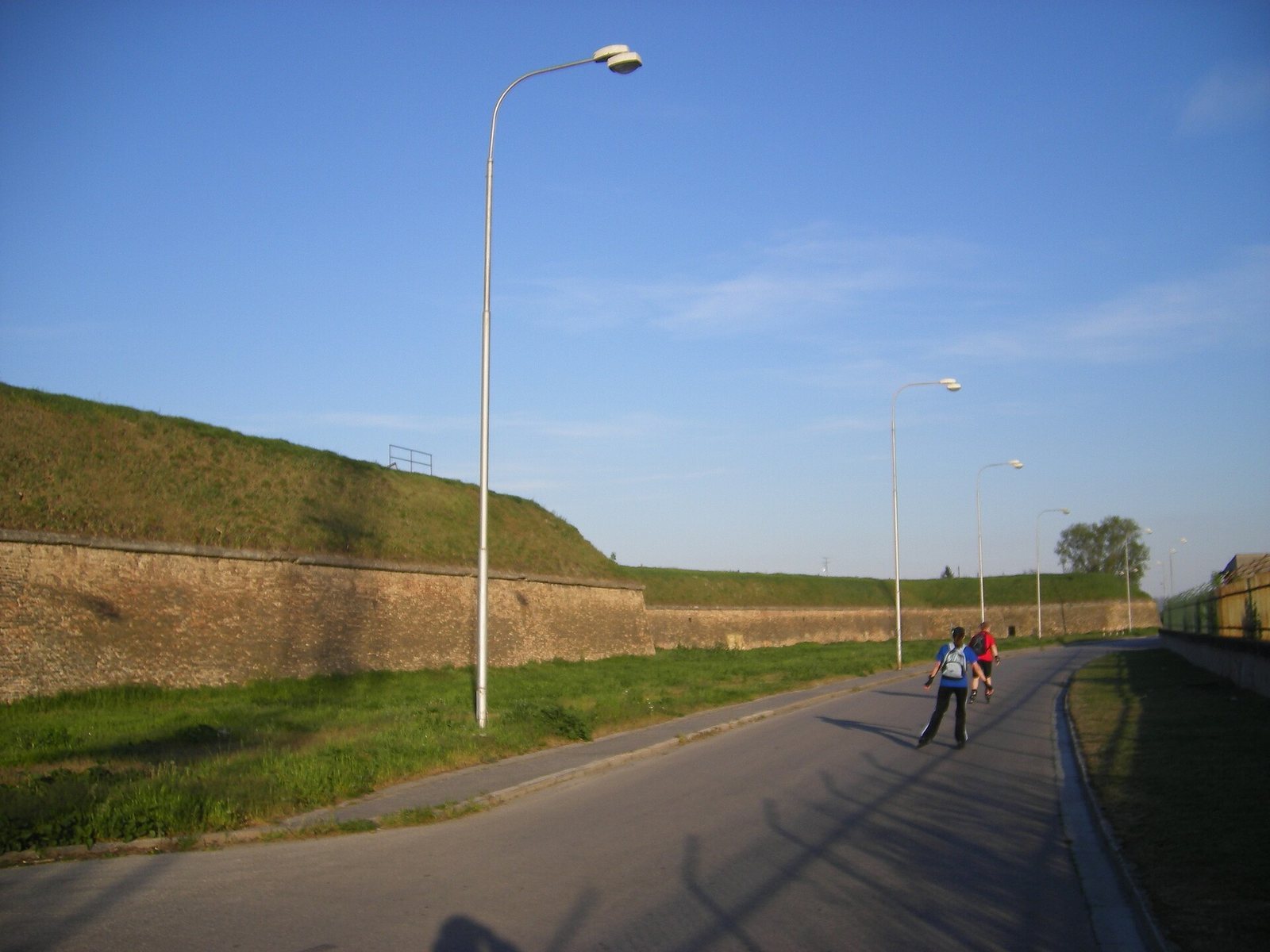
The fort’s star-shaped layout consists of projecting defensive positions linked by masonry walls and enclosed by a deep, water-filled ditch. A large barracks complex occupies the interior. The historic structure was rebuilt in stone and brick, and its defensive works and internal chambers form the principal parts of the surviving fort.
Defensive walls and ditch
The geometric plan is defined by the outward-projecting defensive positions and the masonry walls that connect them. The water-filled ditch surrounds the fort, while surviving earthworks form part of its defensive layout. Restoration retained or repaired historic masonry and earthworks and returned the gun and firing positions to their earlier form.
Barracks and casemates
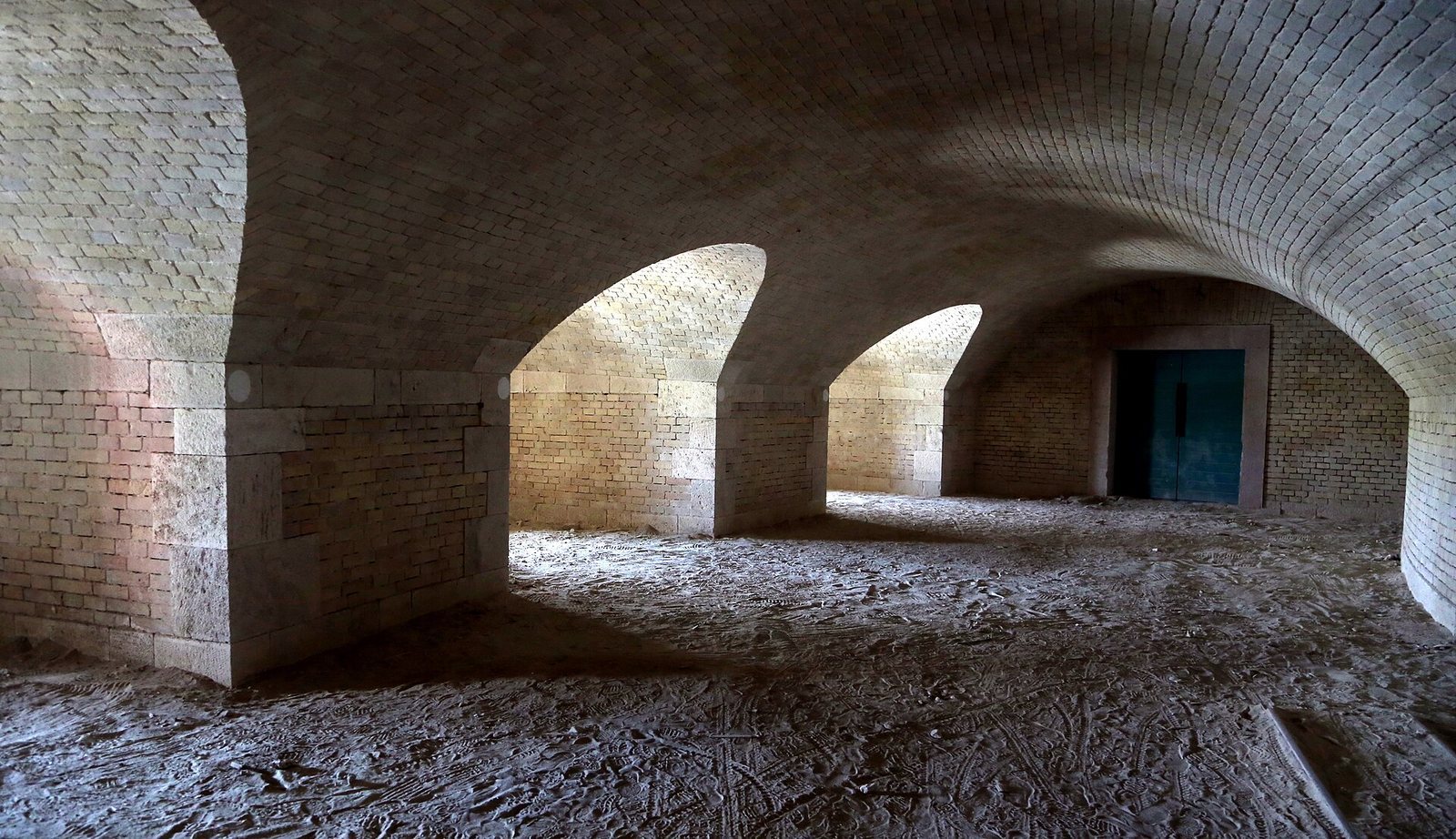
The barracks complex includes underground and semi-basement casemates, protected vaulted chambers within a fortification. These rooms are part of the fort’s internal arrangement. Restoration removed later partitions and alterations and included measures to insulate and dry the historic structure.
Museum extension and sculpture casts
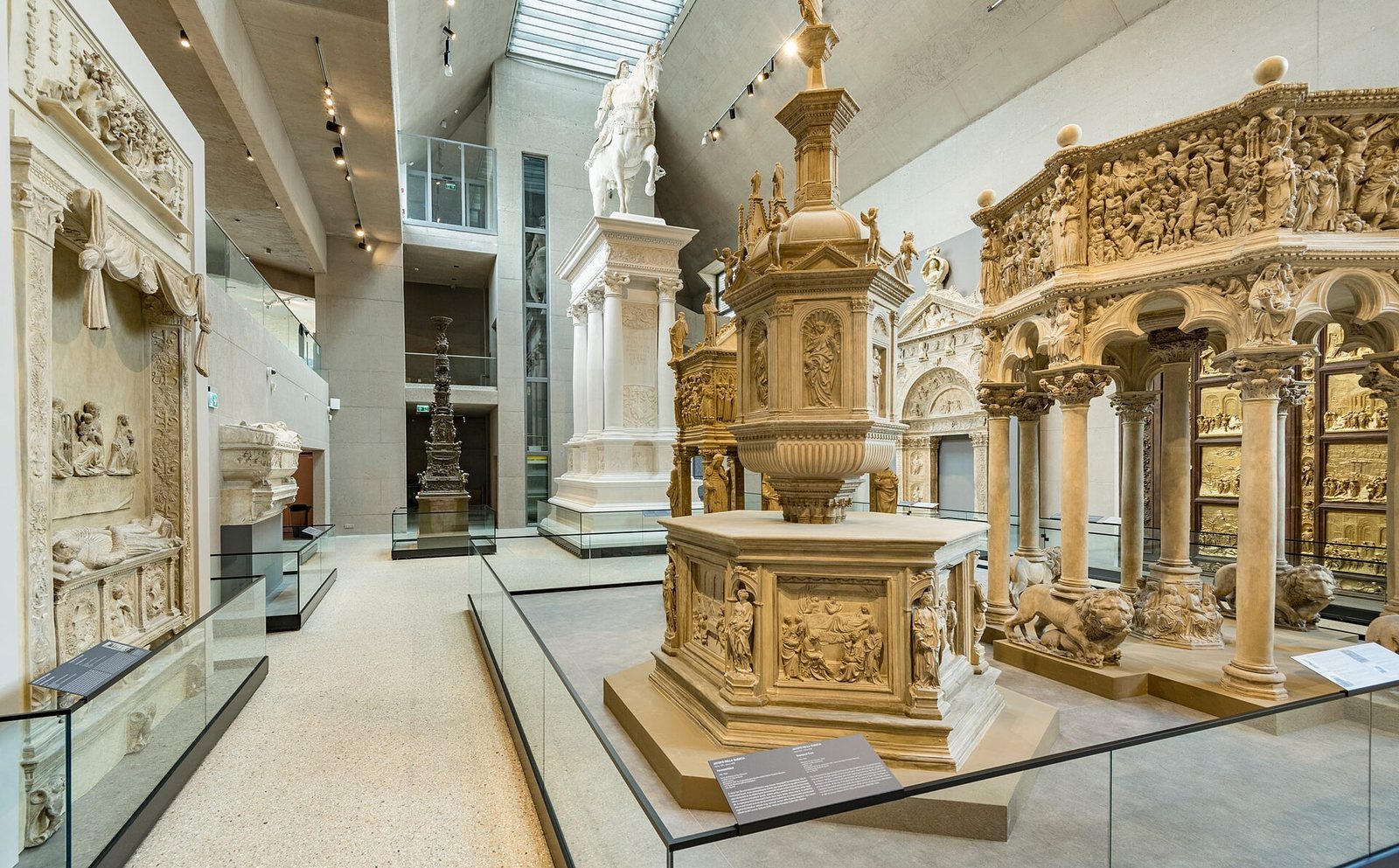
A new wing provides exhibition and educational space, with enough height to display large sculptures. The extended complex has more than 7,000 square metres of floor area. Its permanent display includes about 300 plaster casts from the Budapest Museum of Fine Arts, covering ancient, medieval and Renaissance sculpture. Examples include Andrea del Verrocchio’s equestrian statue of Bartolomeo Colleoni, Donatello’s Gattamelata, the ancient Laocoön group and Venus de Milo, and works by Michelangelo. The collection had not been exhibited publicly since 1953.
Commemorative plaques
Three plaques mark victims imprisoned at the fort. A 1985 plaque commemorates the “victims of the Star Fort,” a 2004 plaque specifically remembers victims of the Roma genocide, and a Holocaust memorial plaque was installed in 2014.