Crown Redoubt: A Defensive Fort in Gothenburg, Sweden
Site at a Glance
- Country
- Sweden
- Primary era
- Early Modern
- Eras represented
- Early Modern, Modern
- Civilizations
- Swedish
- Site type
- Military
- Remains
- Fort
On this page8 sections
History
Construction and military purpose
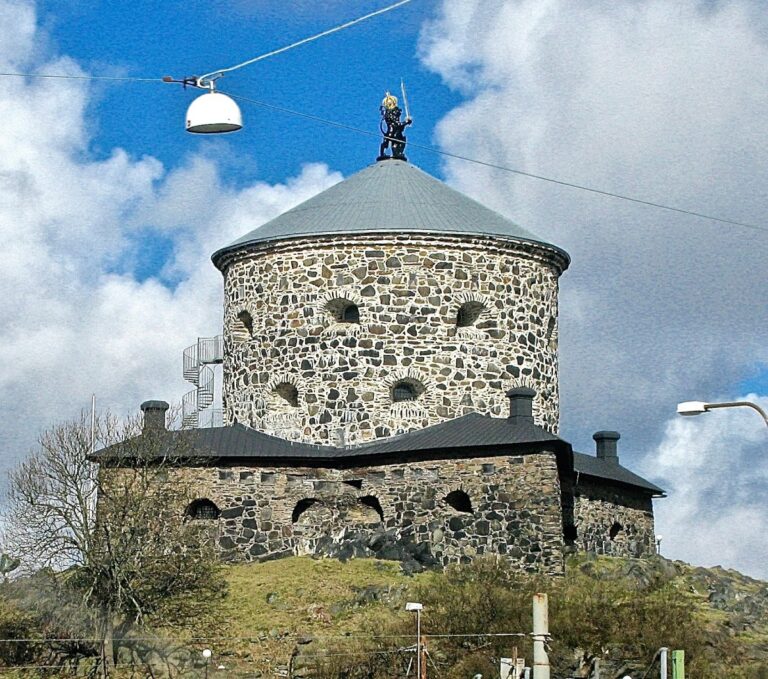
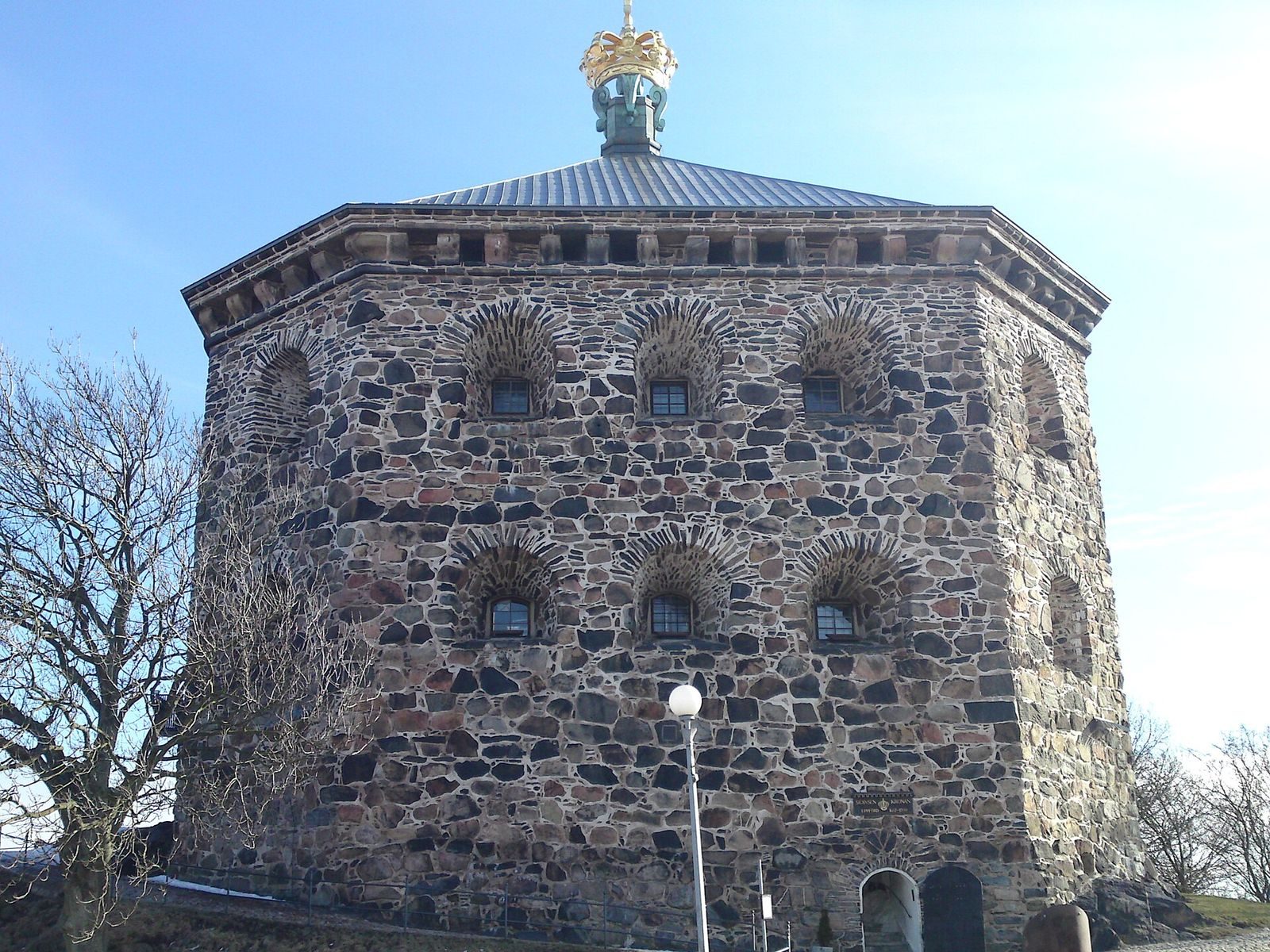
Crown Redoubt, also known as Skansen Kronan, is a seventeenth-century fort on Risåsberget in Gothenburg, Sweden. It formed part of a defensive system intended to protect the city from Danish attack. Its hilltop position was meant to prevent attackers from placing artillery above the settlement and to make a siege more difficult.
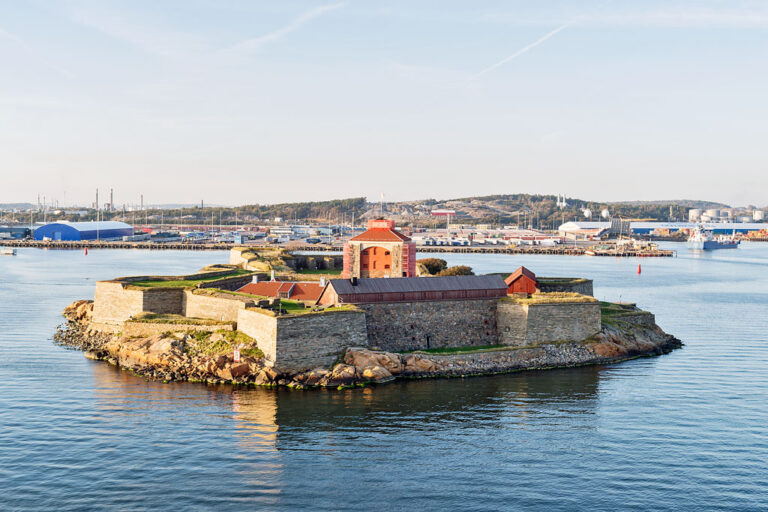
After Gothenburg was founded in 1621, defenses were planned on Risåsberget and Gullberg, both of which overlooked the city. Crown Redoubt and its counterpart, Skansen Lejonet, stood about a kilometre outside the city walls. Together with the seaward fort of Nya Älvsborg, they were intended to defend Gothenburg against Denmark. This system replaced the nearby Älvsborg fortress, which was demolished after the new defensive position was judged more advantageous. Nya Älvsborg was added in 1650.
Work on Risåsberget began in 1639 with the clearing of woodland. Swedish military engineer and architect Erik Dahlbergh designed Crown Redoubt and Skansen Lejonet. Crown Redoubt was enlarged to Dahlbergh’s plans from 1687 to 1689 and formally commissioned in 1698 with 23 guns. The fort was never attacked, and its cannons were never fired in combat.
Later uses and protection
Crown Redoubt was demilitarized in 1806 and later used as a storehouse and residence. It became a prison in 1854, then provided emergency shelter for Gothenburg’s growing population from 1874 to 1925. Renovation work took place around 1900.
A military museum displaying historical weapons and uniforms opened in the fort on 23 November 1904. It closed in September 2004, and its collections were transferred to the Museum of Gothenburg. The hill, once outside the city walls, was incorporated into the Haga district as Gothenburg expanded. The fort received state protection as a listed historic building in 1935.
Remains
Surviving fortifications
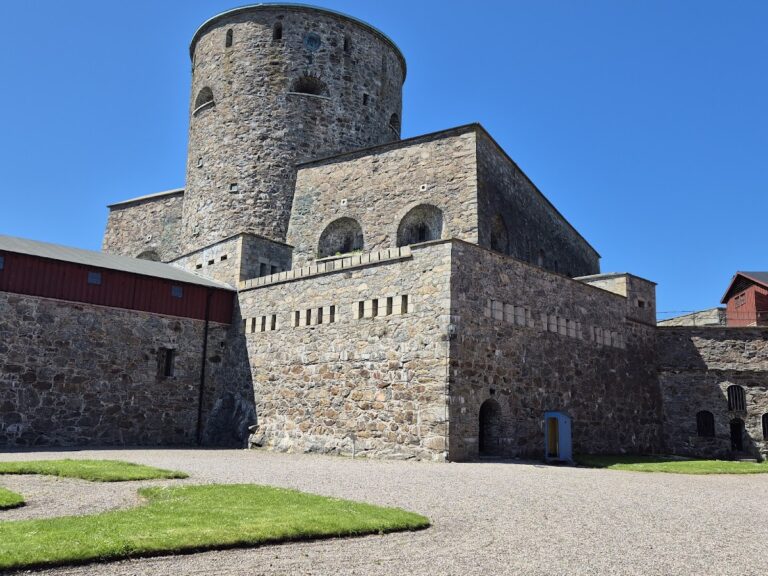
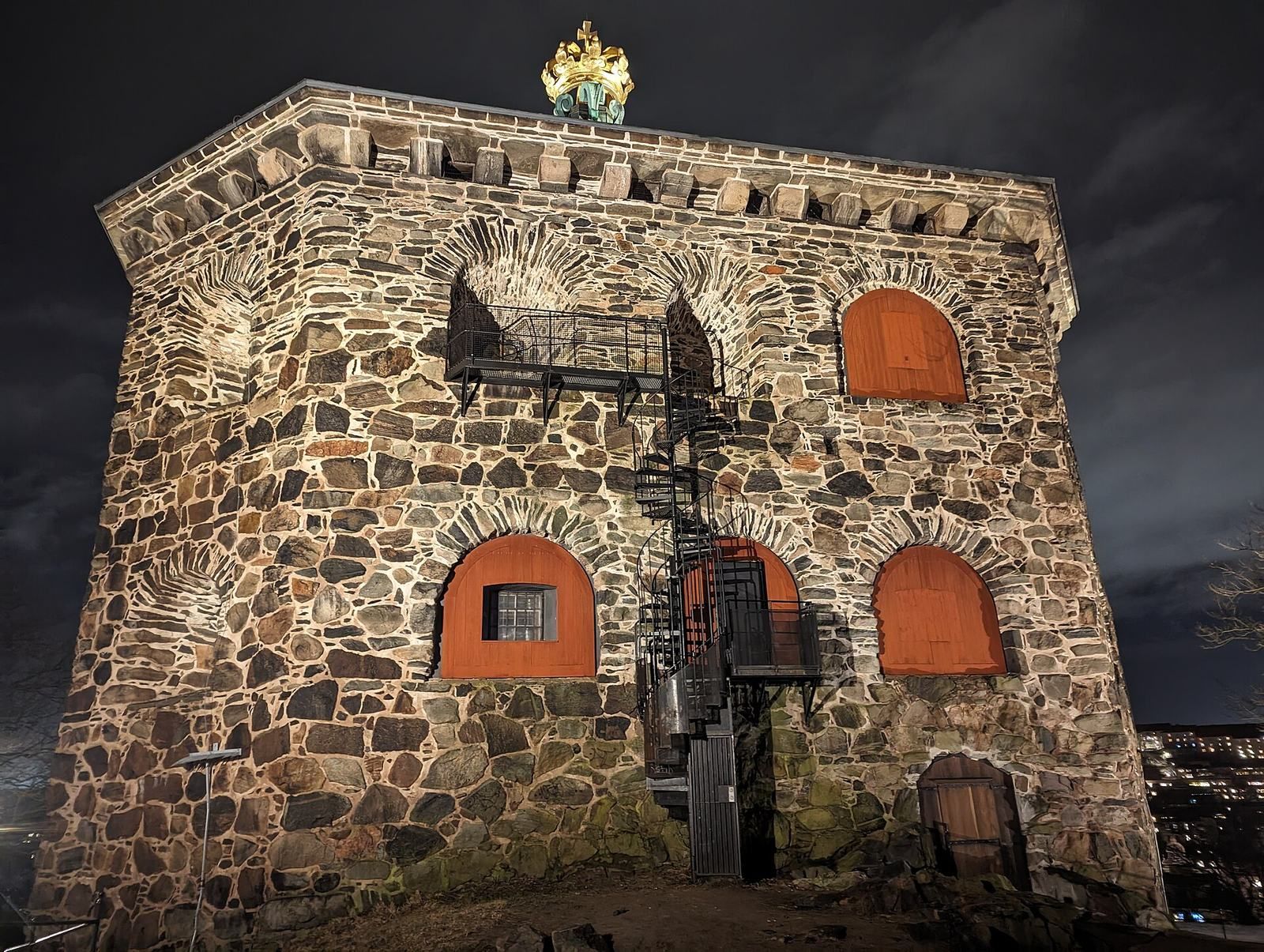
The fort stands on a granite hill. Its surviving tower is octagonal, and its walls are 4 to 5 metres thick, built from granite, gneiss, and diabase.
Tower and crown
The tower’s roof was completed in 1700. A copper-clad wooden crown was fixed to it in 1697; a wooden crown followed in 1738, and a third was installed in 1899. The present crown is made of gilded copper and is described as the largest ever to have adorned the tower.
Walls and courtyard
Cannons installed in 1788 are displayed in the fort’s courtyard.
Protected passage
Built in 1692, a protected passage connected the fort to the Christina Regina bastion, a projecting defensive section within Gothenburg’s fortifications.