Lion Redoubt: A Swedish Hilltop Fortress in Gothenburg


Site at a Glance
- Rating
- 4.3
- Popularity
- Low
- Country
- Sweden
- Primary era
- Early Modern
- External website
- Open
- Eras represented
- Early Modern, Modern
- Civilizations
- Swedish
- Site type
- Military
- Remains
- Fort
On this page6 sections
History
The medieval castle at Gullberg
Lion Redoubt is a hilltop defensive work in Gothenburg, Sweden, built under the Kingdom of Sweden between 1687 and 1692. It formed part of Gothenburg’s late 17th-century defenses and was intended to prevent an attacking force from using Gullberg hill for artillery positions over the city.
The redoubt occupies the site of Gullbergs hus, a medieval castle on Gullberg. According to Erik’s Chronicle, King Birger built the castle in 1285. It had fallen into disrepair by 1455, when Tord Karlsson Bonde rebuilt it. Danish forces destroyed it in 1523 during the Swedish War of Liberation. The early Vasa kings rebuilt the castle, but Danish forces destroyed it again in July 1612 during the Kalmar War.
The Swedish fortification
Gothenburg was founded in 1621 and developed extensive fortifications. Military engineers regarded the city as vulnerable because Gullberg and Risåsberg overlooked it, so defensive works were established on both heights. Lion Redoubt and its twin, Skansen Kronan, were built to guard against a possible Danish attack, with a purpose comparable to that of the contemporary sea fort New Älvsborg.
The fortification was designed by Erik Dahlbergh, a Swedish military engineer, architect, and draughtsman known for planning defenses and recording Swedish buildings and landscapes. Construction began in May 1687. On 10 September 1689, King Charles XI, who ruled Sweden from 1660 to 1697, visited the partly completed site with several dignitaries. His seven-year-old son, the future King Charles XII, was also present and made a drawing of the redoubt that is still preserved. Lion Redoubt was completed in 1692.
The name Westgötha Leijon referred to the lion as a symbol of Västergötland, a historical province of western Sweden. In common usage, the name was shortened to Skansen Lejonet, or Lejonet. The redoubt was decommissioned in 1822 and later served other purposes. As Gothenburg expanded, urban development surrounded Gullberg, which had once been separated from the city walls by a broad area of open ground. The site now stands amid the marshalling yards outside Gothenburg Central Station. It is owned by the fraternal order Götiska Förbundet and is used for wedding banquets, conferences, and private parties.
Remains
Hilltop defensive work
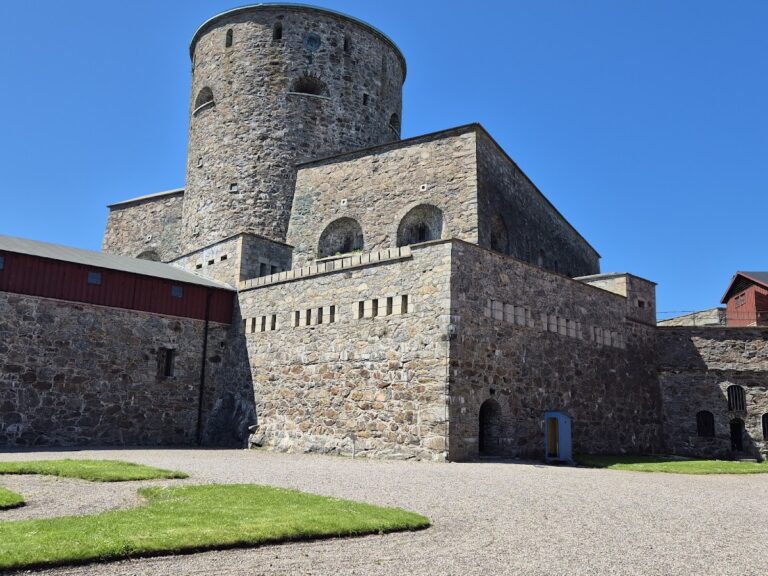
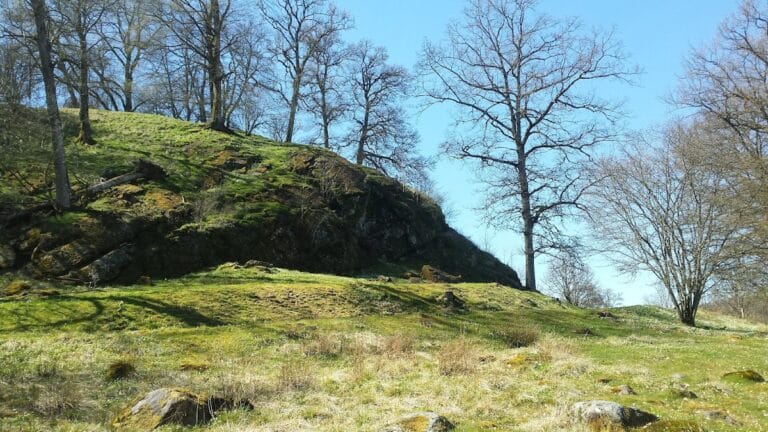
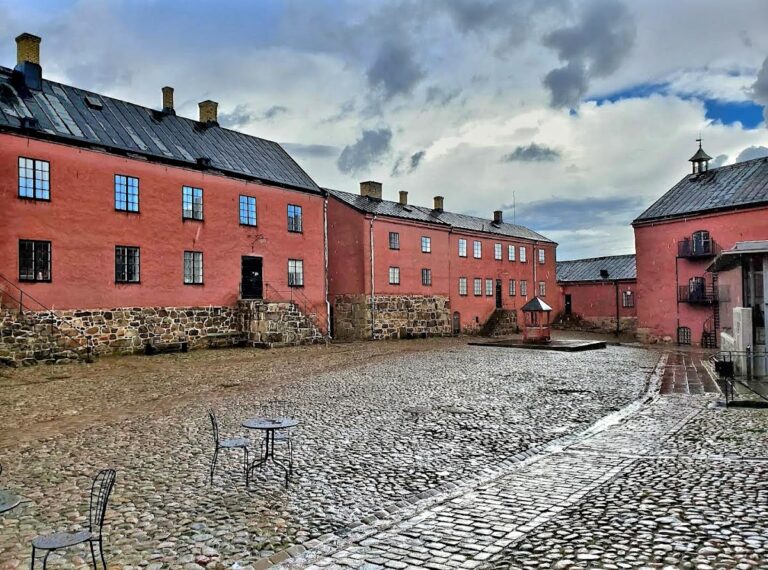
Lion Redoubt is a hilltop redoubt, or sconce, meaning a fortified work designed to protect a strategic position. Built on Gullberg from granite, gneiss, and diabase, it was positioned on one of the two heights overlooking Gothenburg. Its defensive purpose was to deny potential attackers a suitable place for artillery directed at the city. The surviving building occupies the hill within the modern railway landscape outside Gothenburg Central Station.
The lion ornament
A lion ornament by the sculptor Marcus Jäger the Elder was added as the finishing feature in 1692. The original figure wore a gilded crown, held a sword, and carried a shield with Sweden’s Three Crowns emblem. Its design imitated the lion on Gothenburg’s coat of arms. The first ornament was removed at an unknown date during the next two centuries and later lost.
A fire destroyed the building’s roof in 1891. After the roof was repaired, architect Eugen Thorburn designed a replacement lion. The copper figure, four metres high, was raised onto the tower on 6 October 1893 and remains the defining feature above the redoubt.
Nearby sites