Takatō Castle: A Japanese Hill Castle and Domain Seat
Site at a Glance
- Country
- Japan
- Primary era
- Early Modern
- Eras represented
- Early Modern
- Civilizations
- Takeda, Tokugawa
- Site type
- Military
- Remains
- Castle
On this page16 sections
History
Takatō Castle was a hill castle in Japan, built on rising ground above relatively level surroundings; its construction is broadly placed in the sixteenth century, though the exact date is unknown. It began as a stronghold of the Takatō branch of the Suwa clan, later became a Takeda military base, and ultimately served as the seat of Takatō Domain.
Suwa stronghold and Takeda capture
An earlier fortification stood on the same site and was held by the Takatō branch of the Suwa clan, which had dominated the area since the Kamakura period (1185-1333), an era of Japanese history. In 1541, Takatō Yoritsugu sided with Takeda Harunobu, later known as Takeda Shingen, in a campaign against the Suwa. The two allies then came into conflict over control of Suwa territory. In April 1545, Takeda forces took the castle as they expanded into the Ina region.
A major reconstruction in 1547 is attributed to Shingen, who directed Yamamoto Kansuke and Akiyama Torashige, also known as Nobutomo, to remodel the castle. Akiyama became its lord in 1556. In 1562, Shingen’s son Takeda Katsuyori took the lordship and became governor of the upper Ina district; the castle was remodeled again for his arrival. After Takeda Yoshinobu was disinherited in 1570, placing Katsuyori in line to succeed Shingen, Katsuyori was recalled to Takeda headquarters and Shingen’s younger brother Takeda Nobukado became lord of the castle.
Takeda stronghold and the 1582 siege
Shingen used Takatō as a base for military campaigns, including his invasion of Mino Province and his 1572 march toward Kyoto. As conflict with the Oda and Tokugawa intensified, the castle became an important Takeda stronghold. In 1581, after Katsuyori moved the Takeda seat to Shinpu Castle, he entrusted Takatō to his half-brother Nishina Morinobu. Takeda Nobukatsu was born at the castle, and Shingen’s father, Takeda Nobutora, died there.
In February 1582, Oda Nobutada, son and military heir of Oda Nobunaga, attacked with 30,000 troops against 3,000 Takeda defenders. Morinobu refused a demand to surrender. The castle fell after Morinobu and other defenders, including the commanders Oyamada Masanari and his brother, were killed. A Suwa commander’s wife also fought in the defense, and her resistance was praised as exceptional. The Oda advance from Ina toward Kai helped bring about the destruction of the Takeda clan. The castle was badly damaged, and Oda retainer Mori Nagahide was assigned the Ina region. Whether Takatō then served as a regional center is uncertain.
Contests for control and the domain seat
After the 1582 Honnō-ji Incident, the attack in which Nobunaga was killed, rival forces struggled for the former Takeda lands. Tokugawa Ieyasu’s forces recovered Takatō by July 15, 1582, and Hoshina Masanao took possession. He repelled an attack by Ogasawara Sadayoshi, who had joined Toyotomi Hideyoshi’s side. In 1590, after Hideyoshi transferred the Tokugawa to the Kantō region, Sadayoshi was assigned the castle. Ieyasu regained it after the Battle of Sekigahara. Under the Tokugawa shogunate, which he founded, the castle became the center of Takatō Domain, a semi-autonomous territory initially assessed at 30,000 koku, a measure of agricultural yield.
The Torii clan ruled the domain from 1636 to 1689. In 1691, Naitō Kiyokazu received it with an assessment of 33,000 koku, and the Naitō family governed for eight generations, through the Meiji Restoration. During the Edo period (1603-1868), when Japan was governed by the Tokugawa shogunate, the castle also served as the seat of a cadet branch of the Naitō clan. The last lord, Naitō Yorinao, established the domain school in 1860.
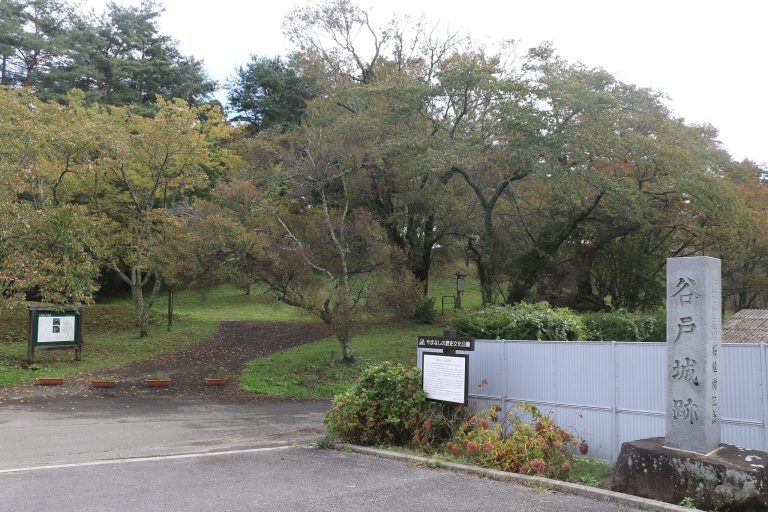
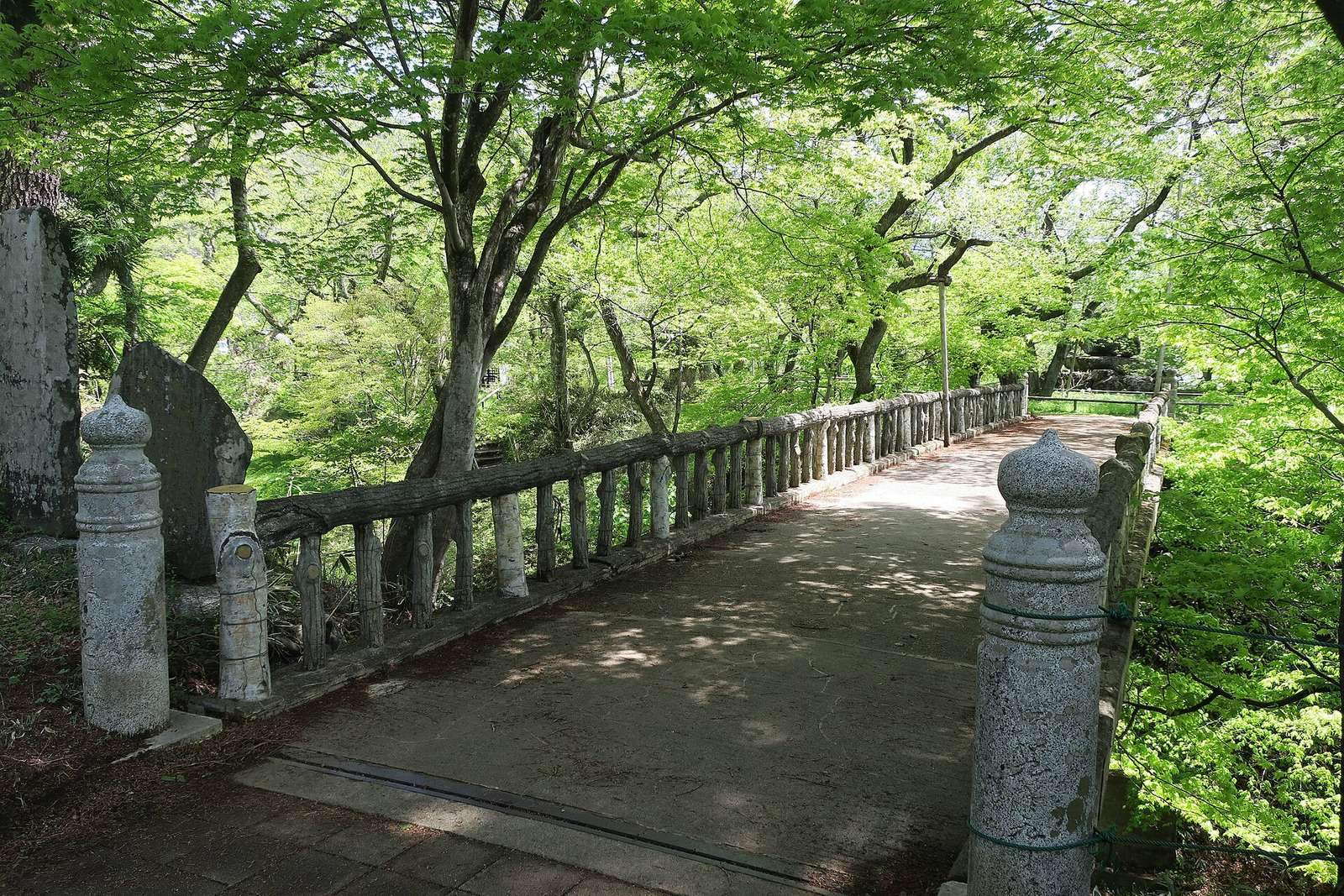
After the Meiji government abolished the domain system in 1868, the castle’s remaining structures were dismantled. Some gates went to nearby temples or private owners, and the site became Takatō Castle Ruins Park. Takatō is designated a National Historic Site of Japan. In 2006, the Japan Castle Foundation included it among Japan’s 100 Fine Castles.
Remains
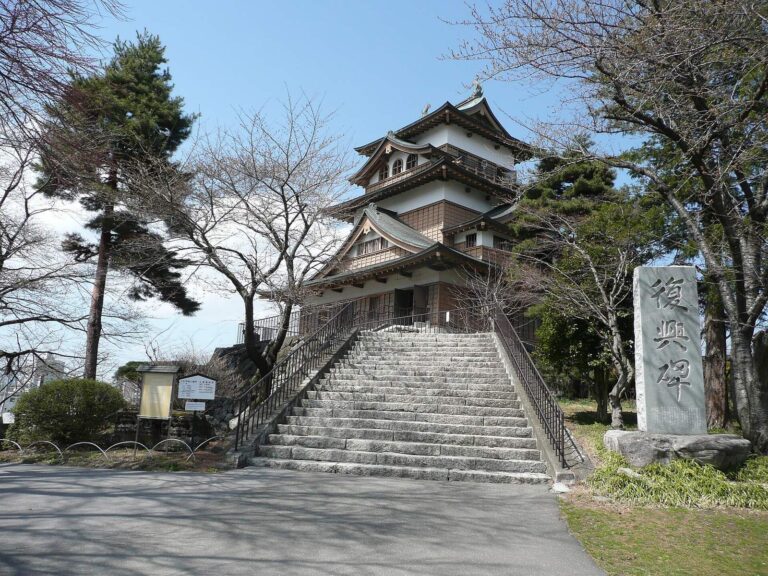
The castle’s defenses followed a concentric plan of deep moats, earthen ramparts, and stone walls. Much of the site is now in ruins, but sections of the moats and stone ramparts remain in place, and one turret has been reconstructed.
Setting and defensive plan
Landscape and approach
The castle occupied the eastern edge of the Ina Valley, overlooking the meeting of the Mibugawa and Fujisawa rivers. The rivers formed part of its natural defenses. Takatō also stood at a crossroads on the Akiba Kaidō, a highway linking Tōtōmi with Suwa in Shinano and Kai, and connecting toward western Ina and Mino.
Enclosures and walls
The central defensive enclosure was protected on its northwest and northeast sides by the second and third enclosures. Four more enclosures were named Suwa-kuruwa, Sasa-kuruwa, Minami-kuruwa, and Hōdōji-kuruwa. Most gates had a box-shaped plan. The main entrance was on the east side originally, but during the Edo period it was moved to the west, facing the castle town.
Buildings and gates
Shintokukan
The third enclosure contained Shintokukan, the domain school and the oldest surviving building on the site.
Reconstructed turret
One turret, a small tower used for observation or defense, has been reconstructed at the castle site.
Relocated gates
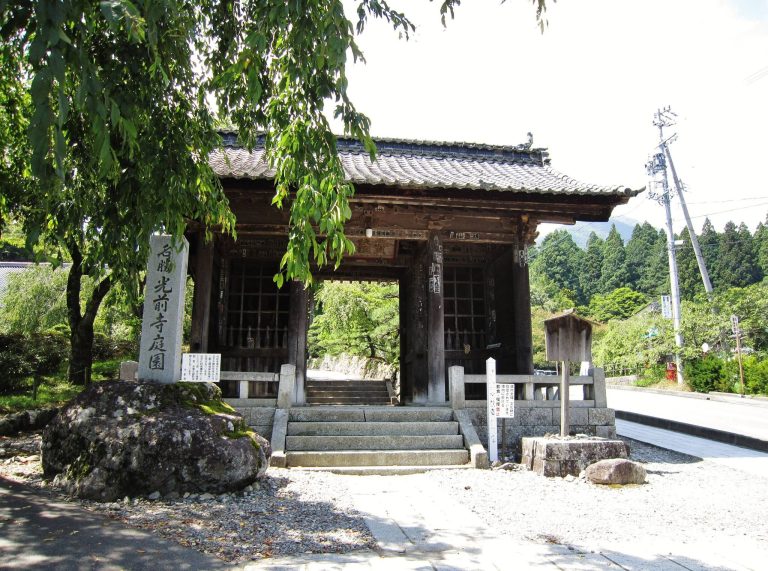
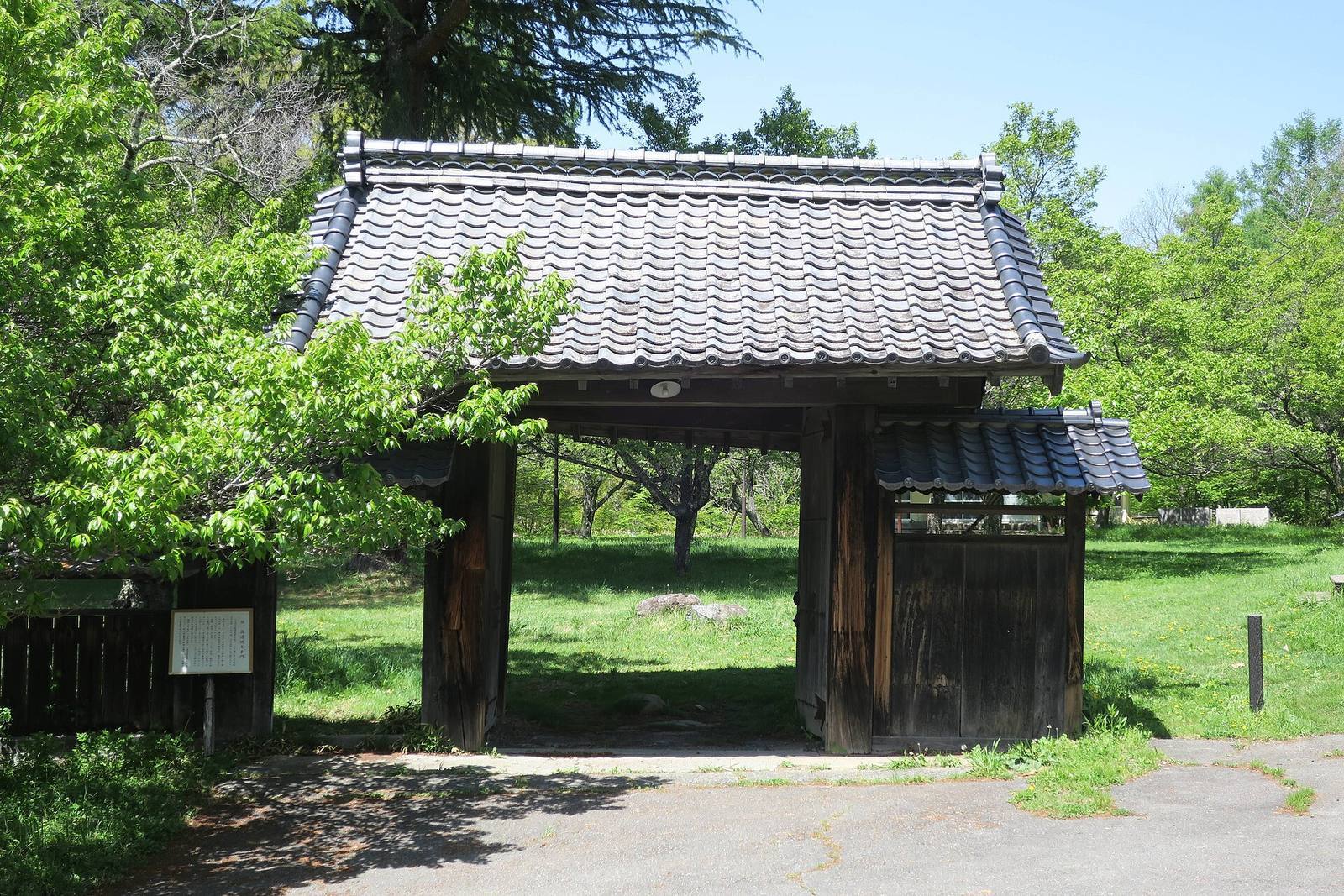
The Tōiya Gate was moved from an old town residence to the castle site in 1948. The Main Gate was donated to the city by its owner in 1954 and used as a high-school entrance until 1984, when it was returned to its original location. The Main Bailey Gate and Main Bailey Beam Gate were moved to private homes in Ina. The Second Bailey Gate was donated to Ina by its owners in Okaya and is dismantled and stored. The Rear Gate was relocated to Kubo Temple in Okaya.
Samurai residences
A few samurai residences also survive in the town.
Archaeological traces and park plantings
Position west of the castle
West of the castle, excavated remains are thought to mark a position used by Oda forces as a base during the siege.
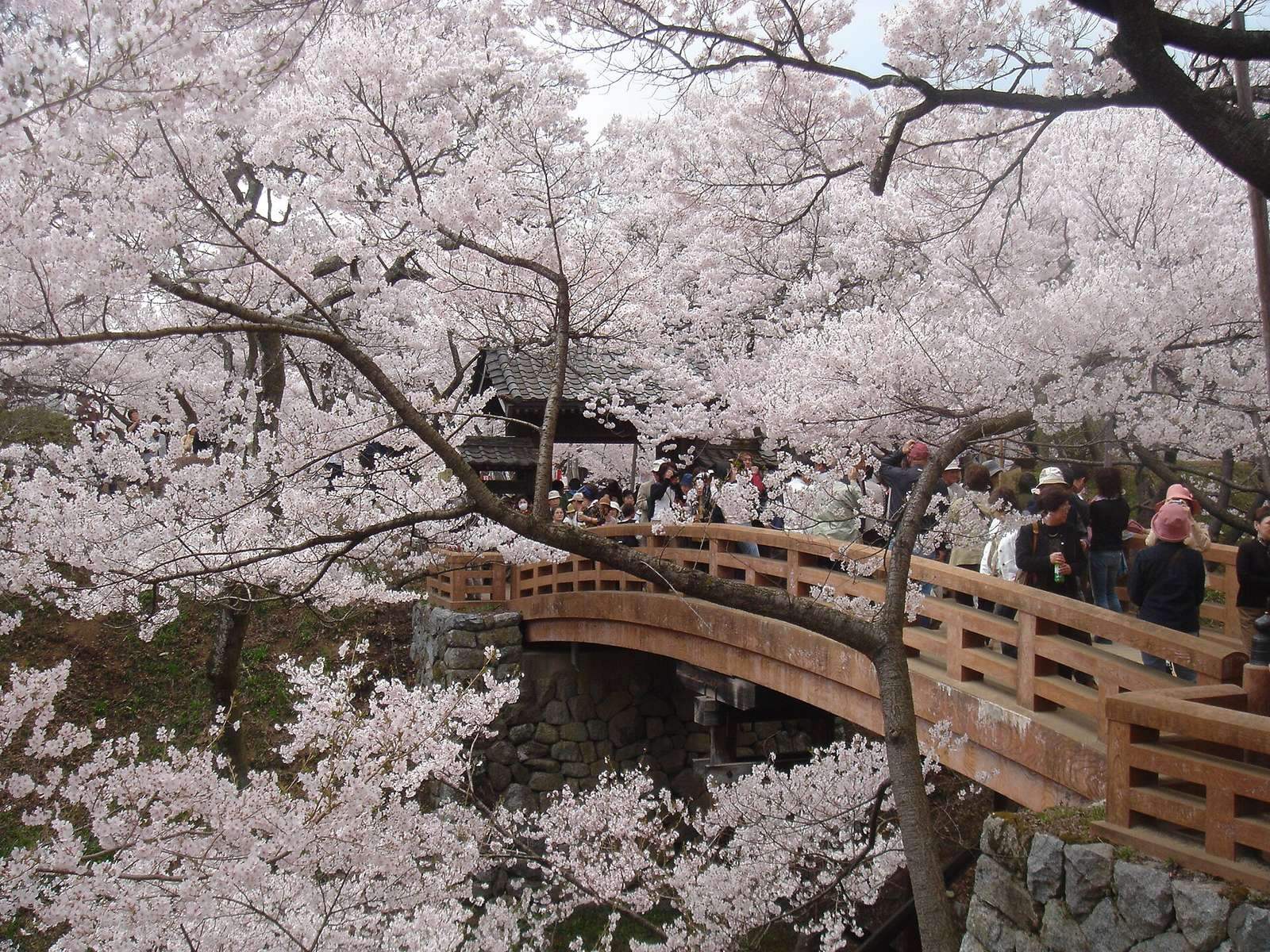
Cherry trees
Cherry trees were planted at the site during the Meiji period. The park now contains 1,500 trees of a rare local variety, known for their spring blossoms.