Kōzen-ji Temple: A Tendai Buddhist Head Temple in Japan


Site at a Glance
- Rating
- 4.4
- Popularity
- Medium
- Country
- Japan
- Primary era
- Early Modern
- External website
- Open
- Eras represented
- Medieval, Early Modern
- Civilizations
- Ashikaga shogunate, Kamakura shogunate, Tokugawa
- Site type
- Religious
On this page13 sections
History
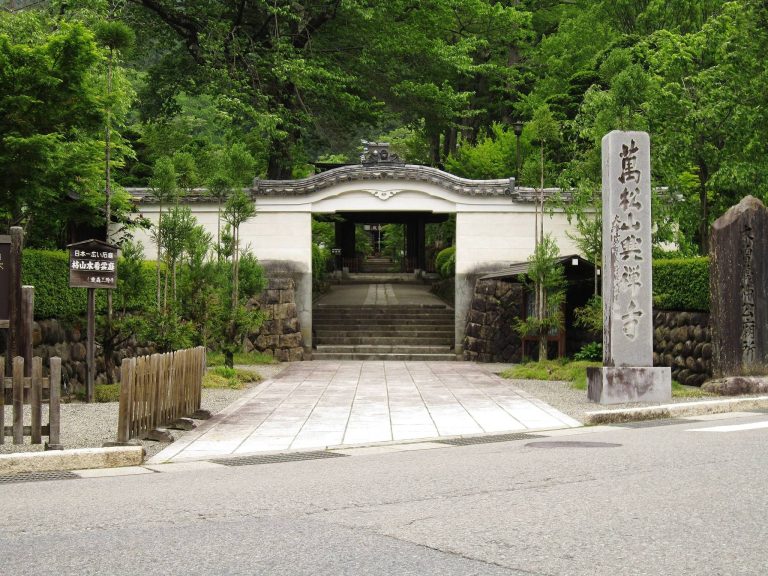
Kōzen-ji Temple is a Tendai Buddhist temple in Komagane, Nagano, Japan, traditionally founded in 860 and formally known as Hōshakuzan Mudō-in Kōzen-ji. Tendai is a major Japanese Buddhist school whose institutional tradition derives from the Chinese Tiantai school. Kōzen-ji is a special head temple of that school, a high-ranking institutional designation, and was counted among the five major Tendai temples of the Shin’etsu region.
Traditional Foundation
Tradition attributes the temple’s establishment to Honjō Shōnin, a disciple of the ninth-century monk Ennin. According to the story, Honjō received an image of Fudō Myō-ō from a waterfall in the Kurokawa River, a tributary of the Ōtagiri River, and founded Kōzen-ji after this encounter. Fudō Myō-ō is a Buddhist Wisdom King associated with immovable resolve and the destruction of spiritual obstacles. The temple’s principal image is a concealed sacred statue, normally kept from public view.
The early history cannot be fully verified because the temple’s old records were lost in repeated disasters, including warfare. Kōzen-ji originally stood about 200 metres closer to the Kiso Mountains than its present location. Its records were destroyed during conflicts of the Sengoku period, including fighting between Takeda Katsuyori and Oda Nobutada.
Protection and Decline
During the Tenshō and Keichō periods, Kōzen-ji received protection from the Takeda clan and the Hashiba clan, which was associated with Toyotomi Hideyoshi. At one stage, the temple’s holdings extended into the Saku and Suwa districts. In the Edo period, Shogun Tokugawa Iemitsu granted Kōzen-ji a stipend of 60 koku for its maintenance. A koku was an Edo-period measure of agricultural productivity and taxation, conventionally based on the rice needed to support one person for a year.
After the beginning of the Meiji period, many of Kōzen-ji’s subtemples and branch temples were abolished. This substantially reduced the size of the temple complex and altered the institutional structure that had supported it.
The Hayatarō Tradition
Kōzen-ji is closely associated with the Hayatarō legend. In the tradition, a mountain dog raised at the temple became its guardian. The dog later defeated supernatural monsters that had demanded human sacrifices in Mitsuke, in the former province of Tōtōmi. Wounded in the struggle, it returned to Kōzen-ji and died soon afterward. The temple priest is said to have ordered a grave beside the main hall.
One version places the event in August 1308, while another describes it as having taken place roughly seven centuries ago. The dog’s name also appears in variant forms, including Shippē Tarō in Tōtōmi and Shippū Tarō in Komagane. A wandering monk who borrowed the dog from Kōzen-ji is said to have presented the Great Perfection of Wisdom Sutra to the temple as a memorial offering. The sutra remains preserved in the temple’s sutra repository.
The garden and its approach were designated a National Place of Scenic Beauty in 1967. Kōzen-ji is also associated with the Shinano Five Great Temples, the Ina Seven Lucky Gods pilgrimage, and the 59th station of the Ina Suwa Eighty-eight Sacred Sites pilgrimage.
Remains
Gardens and Cedar Grounds
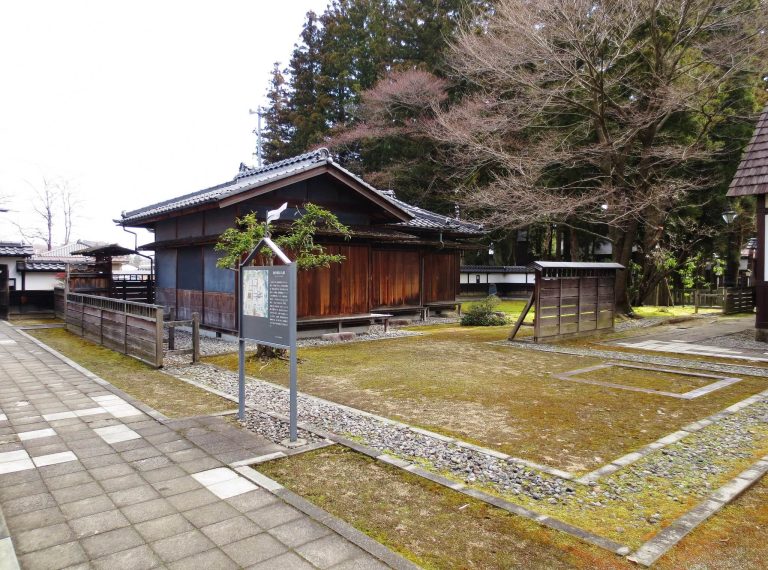
Kōzen-ji stands within a cedar forest containing many trees described as several centuries old. Three gardens occupy the grounds. Beside the main hall is a garden regarded as a Kamakura-period composition in the style associated with Rankei Dōryū. Its waterfall arrangement includes a carp stone at the top of the cascade, an unusual feature within the design. West of the guest hall is an early Edo-period hill-and-pond garden, while a separate dry landscape garden completes the group. The approach and its old trees form part of the designated scenic composition.
Principal Religious Buildings
Main Hall
The main hall was reconstructed in 1851. The garden lies in front of the building, and the grave associated with Hayatarō is beside it. Together, these features preserve the physical setting of the temple’s most prominent local legend.
Sanmon Gate
The Sanmon gate was reconstructed in 1848. Its upper storey enshrines the Sixteen Arhats, revered Buddhist disciples traditionally regarded as guardians of the Buddha’s teaching.
Benten-dō
The Benten-dō dates from the Muromachi period and has a hipped-and-gabled roof. It houses an image of Benzaiten and fifteen attendants. Benzaiten is a Buddhist and Japanese religious deity associated especially with eloquence, music, learning, and prosperity. The building is designated an Important Cultural Property of Japan.
Sutra Repository
The sutra repository was built in 1802. It has a hipped-and-gabled roof, an entrance set at the gable end, and a projecting porch with a curved gable. It preserves the Great Perfection of Wisdom Sutra associated with the Hayatarō tradition.
Three-Storey Pagoda
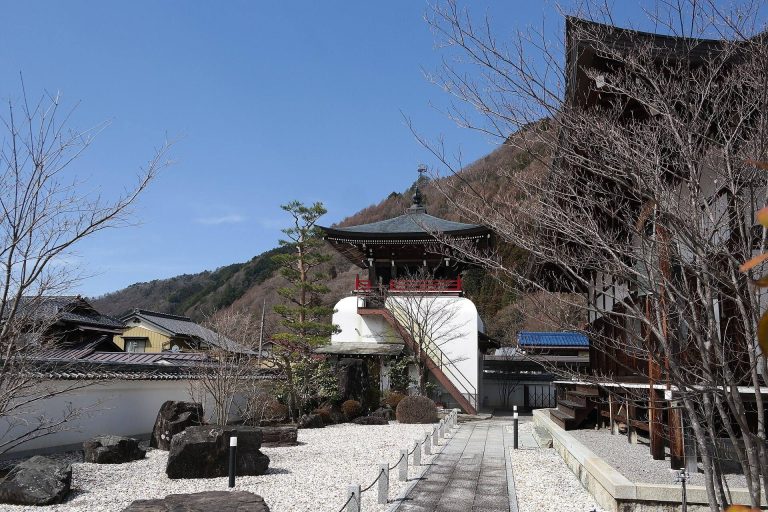
The three-storey pagoda was reconstructed in 1808 and stands approximately 17 metres high. It is designated a Nagano Prefectural Important Cultural Property.
Gates and Secondary Features
The Niōmon gate contains images of Kongōrikishi guardian figures made in 1528. These paired muscular Buddhist protectors are commonly placed at temple entrances, and the Kōzen-ji images are designated Tangible Cultural Properties of Komagane City. South of the three-storey pagoda, Sai no Kawara contains more than thirty statues of Jizō Bosatsu, a bodhisattva associated with protecting beings, including children and travelers. Luminous moss, known for its greenish glow in low light, grows naturally within the temple grounds.