Kanegasaki Castle: A Mountain Castle in Tsuruga, Japan
Site at a Glance
- Country
- Japan
- Primary era
- Unclassified
- Eras represented
- Unclassified
- Civilizations
- Unclassified
- Site type
- Military
- Remains
- Castle
On this page10 sections
History
Kanegasaki Castle is a hilltop castle on Kanegasaki-yama in Tsuruga, Japan. It is traditionally said to have been first built by Taira no Michimori during the late-twelfth-century Genpei War, a conflict between the Taira and Minamoto clans, while he fought the Minamoto commander Kiso Yoshinaka.
Early lords and the siege of 1336–1337
The Kehi, Kai, and Asakura clans were among the castle’s principal lords. After the Asakura clan took control of Echizen, its governor for Tsuruga district guarded the stronghold.
In 1336, during Japan’s Nanboku-chō period, when rival imperial courts competed for power, Ashikaga Takauji entered Kyoto. On October 13, Nitta Yoshisada, a military leader supporting the Southern Court, reached Kanegasaki with Princes Tsunenaga and Takanaga. Forces aligned with Takauji, led by Echizen’s military governor Shiba Takatsune, surrounded the castle and cut off supplies.
On February 5, 1337, Yoshisada and his companions escaped under cover of night to Somayama Castle to regroup. His effort to relieve Kanegasaki on February 16 was stopped, and an allied force was also driven back to Somayama. With provisions dwindling, the defenders ate horse meat and came close to cannibalism. Ashikaga-aligned troops entered the castle on March 3. Prince Takanaga, Nitta Yoshiaki, Yoshisada’s son, and about 300 defenders set the castle alight and died by suicide. Prince Tsunenaga was captured, and the castle fell on March 6.
Recovery and later medieval conflict
Yoshisada recaptured Kanegasaki in April 1338. After Ashikaga forces had secured Echizen, members of the Kai clan guarded the castle, which then came to be called Tsuruga Castle.
On May 13, 1459, Shiba Yoshitoshi attacked Kanegasaki after turning back from a campaign against Ashikaga Shigeuji. The attack came amid mounting tension between the Shiba clan and its deputy governors. The Kai defenders repelled Yoshitoshi’s troops, who suffered a major defeat. The outcome angered the eighth shogun, Ashikaga Yoshimasa, and Yoshitoshi lost his position. The wider struggle over provincial power later developed into the Chōroku War.
The Oda campaign of 1570
On April 25, 1570, an Oda army numbering 100,000 attacked the subsidiary castle on Mount Tezutsu. Several thousand people were killed on each side before it fell, and Asakura Kageaki withdrew to Kanegasaki. The next day, with reinforcements delayed, Kageaki surrendered the castle to Oda Nobunaga. When Azai Nagamasa, a rival lord in Omi, defected and advanced to Kaizu, threatening to trap Nobunaga’s forces between opposing armies, Nobunaga assigned the rear guard to Kinoshita Tokichiro, later known as Toyotomi Hideyoshi. Nobunaga retreated to Kyoto by way of Kutsuki in Omi.
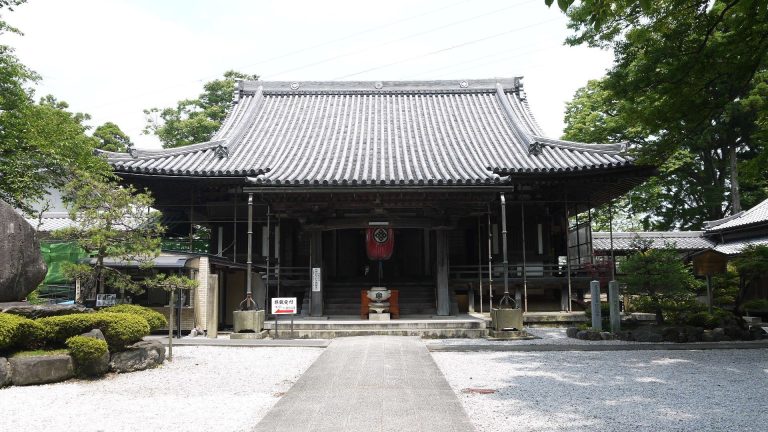
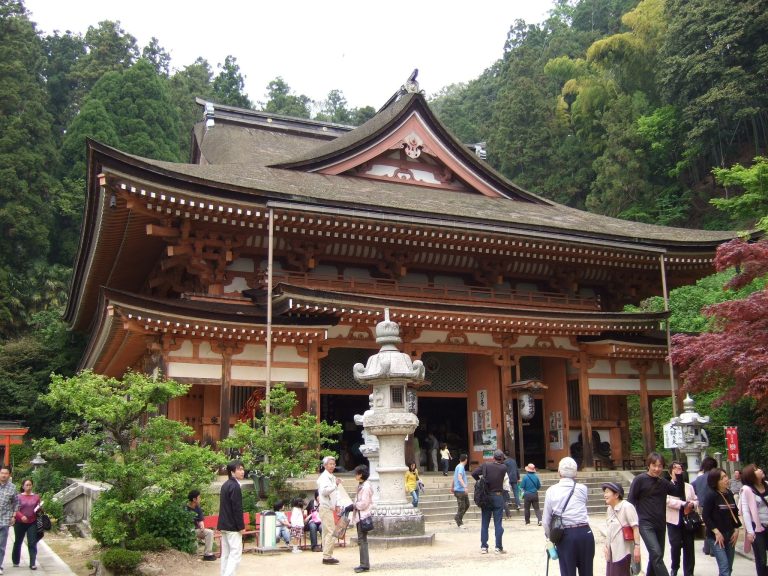
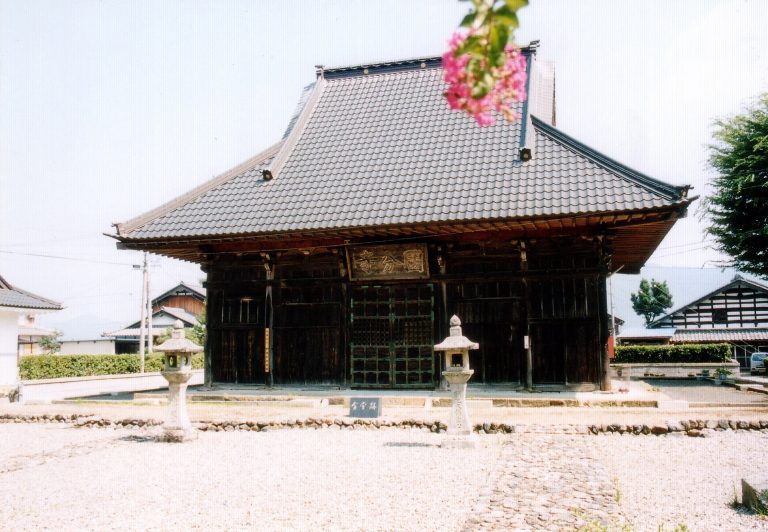
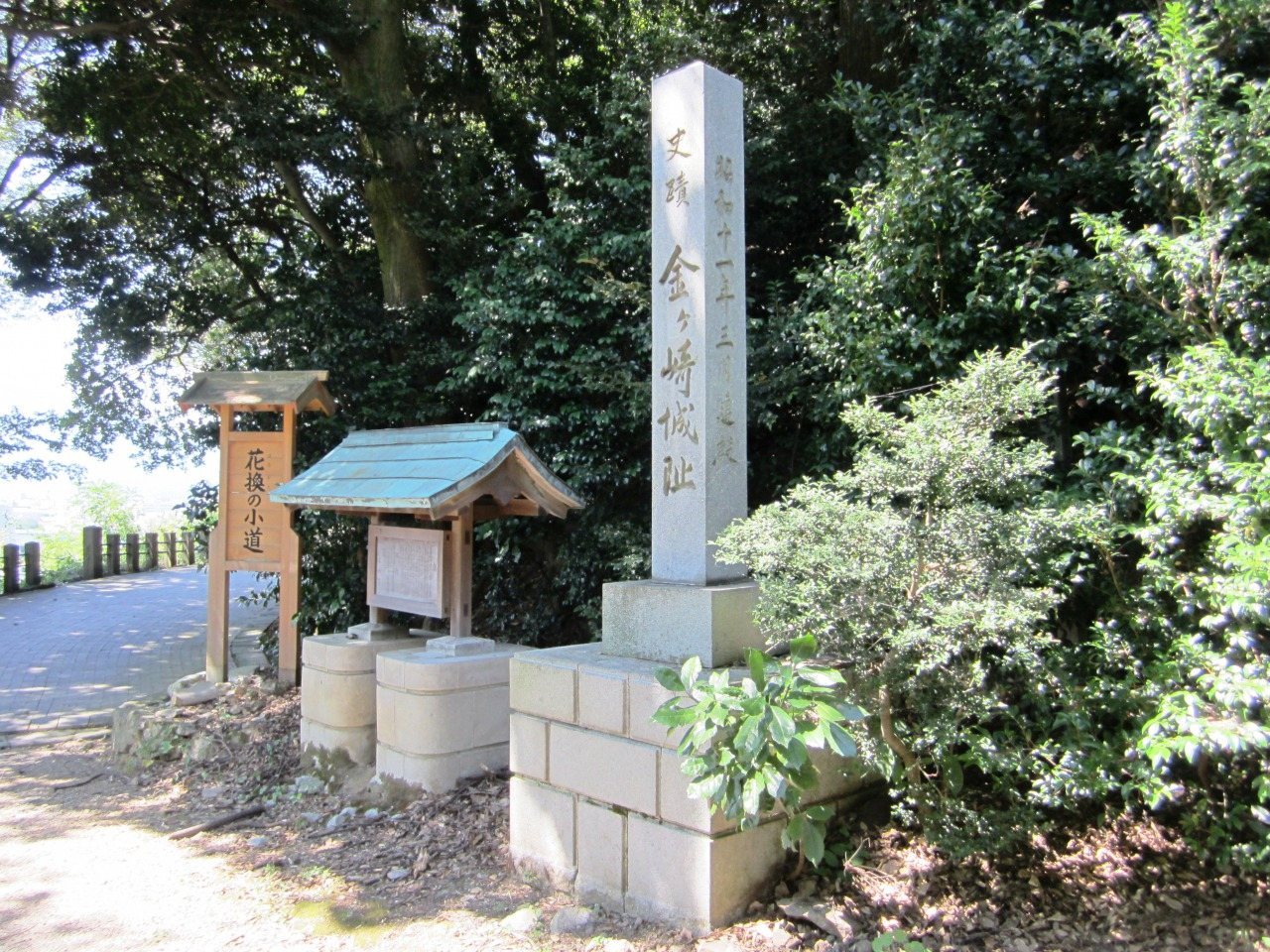
During the Meiji period (1868–1912), Kanegasaki-gu, a Shinto shrine in Japan’s indigenous religious tradition, was established to honor Prince Tsunenaga, who had been captured when the castle fell, and Prince Takanaga, who died there. The ruins have been a National Historic Site of Japan since 1934.
Remains
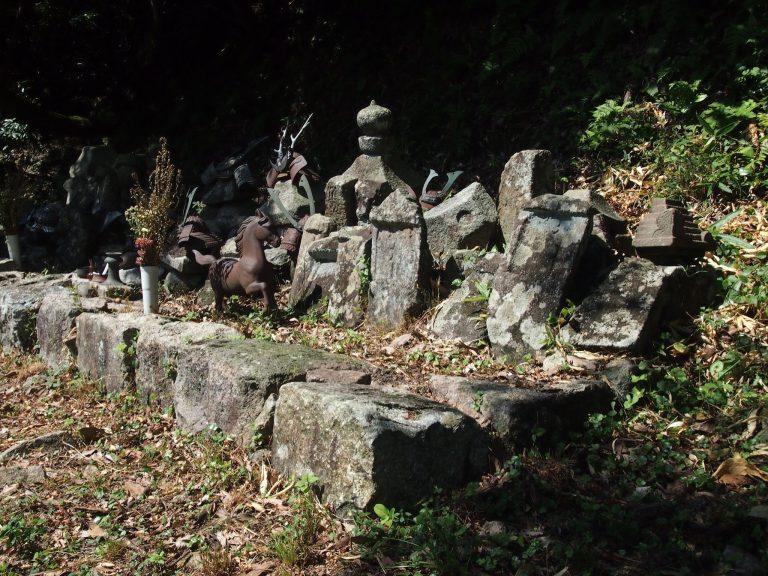
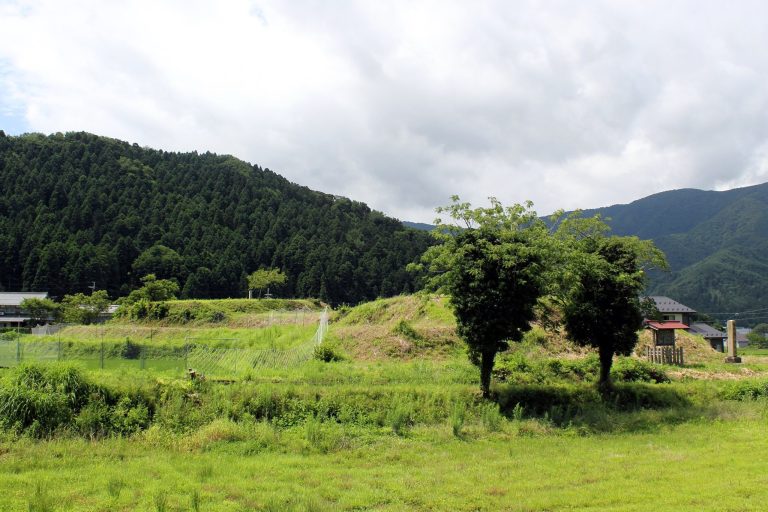
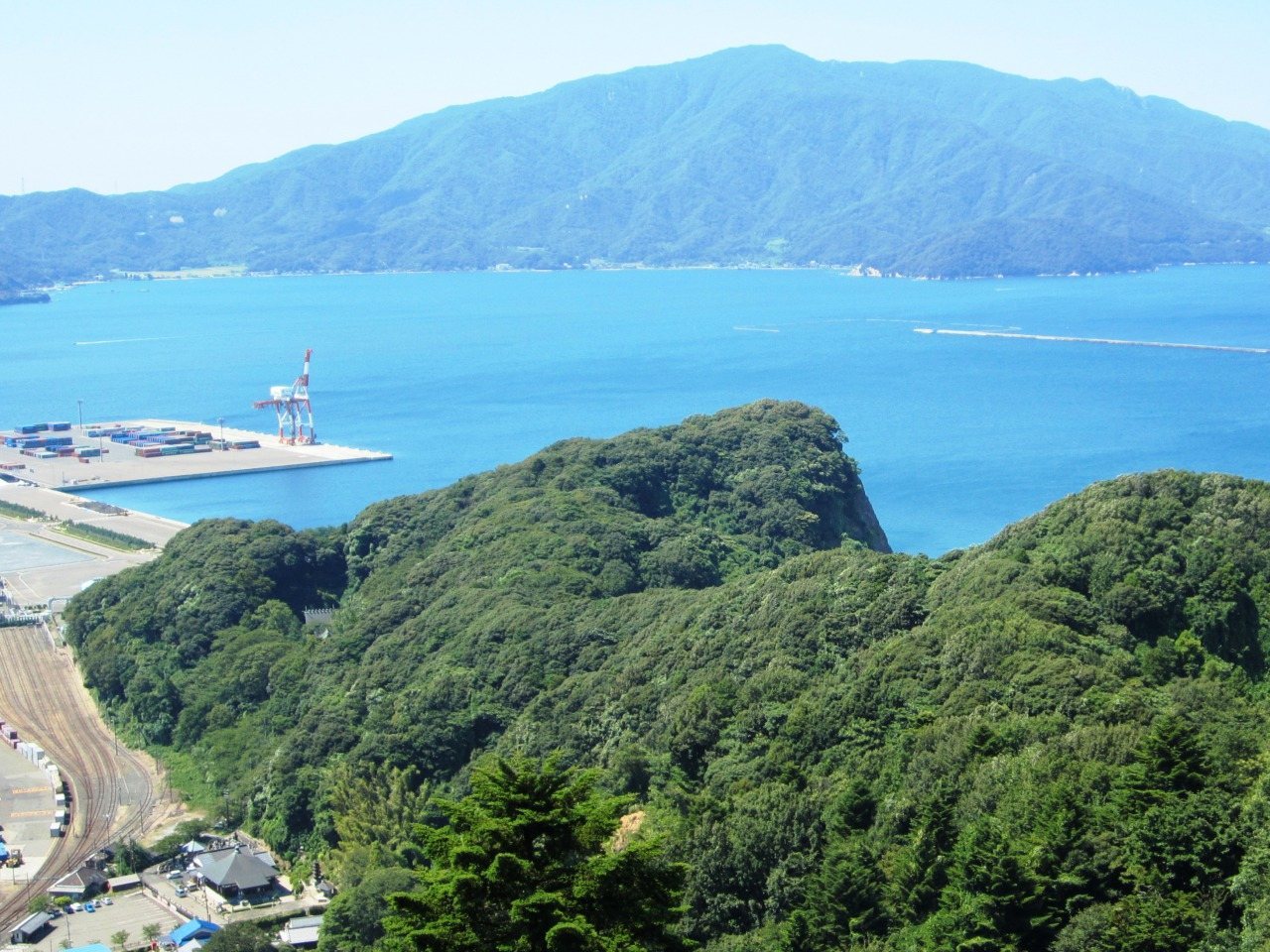
The castle occupied Kanegasaki-yama, an 86-metre hill in northeastern Tsuruga that projects into Tsuruga Bay. Its remains include defensive works and building foundations made with stone and earth, along with traces of moats and gates.
Kanegasaki-yama
Main enclosure and building foundations
The site known as the Moon-Viewing Palace is identified as the main enclosure, the castle’s principal bounded defensive compound. Foundations survive for a central building and a gate.
Defensive works
Other remains include stone and earthen enclosures, meaning bounded defensive compounds, and dry moats, defensive ditches without water. Traces of gates are also present.
Mount Tezutsu
A subsidiary hilltop castle occupied Mount Tezutsu, which rises about 171 metres, and was connected to Kanegasaki along a ridge. Its remains include enclosures and a tower platform, a raised base for a defensive tower. The area is now parkland.
Kanegasaki-gu
The shrine stands near the foot of the castle hill.