Forum Novum: A Roman Civic and Religious Center
Site at a Glance
- Country
- Italy
- Primary era
- Classical
- Eras represented
- Classical, Medieval
- Civilizations
- Papal States, Roman
- Site type
- City
On this page19 sections
History
Roman foundation and civic life
Forum Novum was a Roman settlement at Vescovio, in Torri in Sabina, Italy. Its foundation date is unknown, but evidence places its beginnings no earlier than the late Republic, probably in the second century BCE. The name suggests a new market center, and the settlement developed as a commercial, administrative, and religious focus for the surrounding countryside.
After Rome conquered the Tiber Valley, Forum Novum became a self-governing Roman municipality with civic obligations to Rome, probably during the first century CE under Augustus or his successor Tiberius. It was assigned to the Crustumina tribe, an administrative and voting affiliation. The town was governed by two chief magistrates. Inscriptions confirm its municipal status during the reign of Gordian III (238–244 CE). Pliny the Elder mentions the settlement, and the Liber Coloniarum also associates it with municipal status.
Forum Novum stood on a route used for transhumance, the seasonal movement of livestock between grazing grounds. Its market was active in the fourth century, and finds indicate activity continued into the fifth. Surveys and excavations point to sparse settlement, with relatively few domestic buildings alongside public monuments. This pattern supports an interpretation of Forum Novum as a rural center serving nearby communities rather than a densely inhabited town.
An inscription credits the local landowner and municipal official Publius Faianius Plebeius with building an aqueduct, fountains, and water pipes. It also records that he supplied water from his own property to the baths, which stood on land without its own water supply.
Late antiquity and the medieval settlement
Forum Novum’s political and administrative importance declined in late antiquity, but the establishment of a bishop’s seat around the transition from the fifth to the sixth century maintained its regional role. In the early Middle Ages it was one of three dioceses in Sabina Tiberina, the Sabine area along the Tiber. From the tenth to the seventeenth century, it was the area’s sole diocese. The settlement later took the name Vescovio.
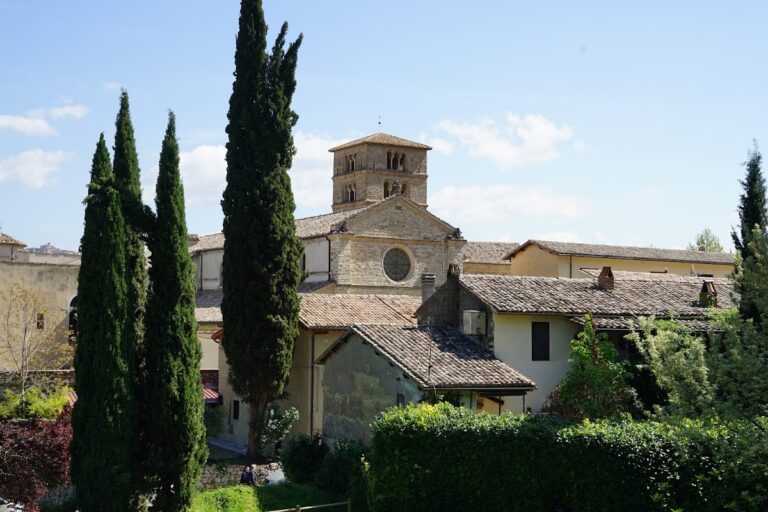
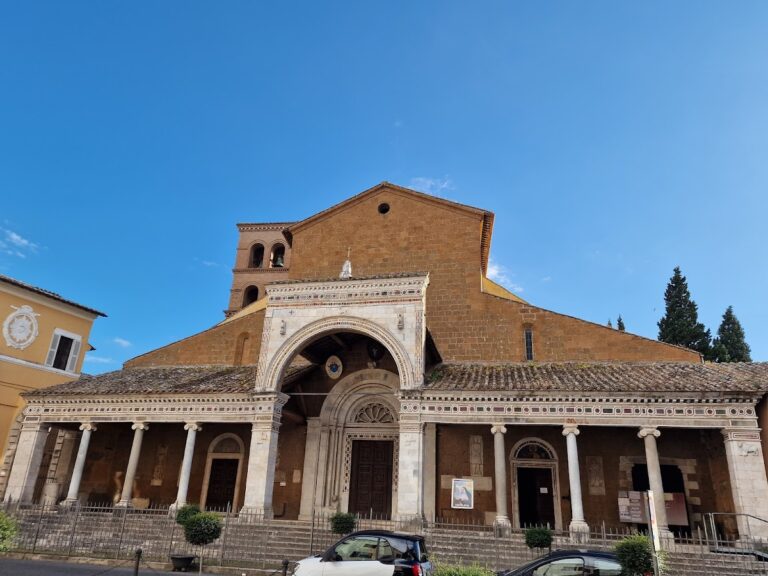
Ninth-century raids destroyed the settlement, particularly the attack of 846. The Romanesque church of Santa Maria della Lode was later built over the ruins using reused Roman building materials. On a nearby hill, the bishop’s castle was abandoned more than once during the Middle Ages. Following its final abandonment in the thirteenth century, it was converted into an Augustinian convent. Forum Novum remains a titular see of the Catholic Church, a continuing diocesan title that does not imply a resident bishop.
Archaeological investigation
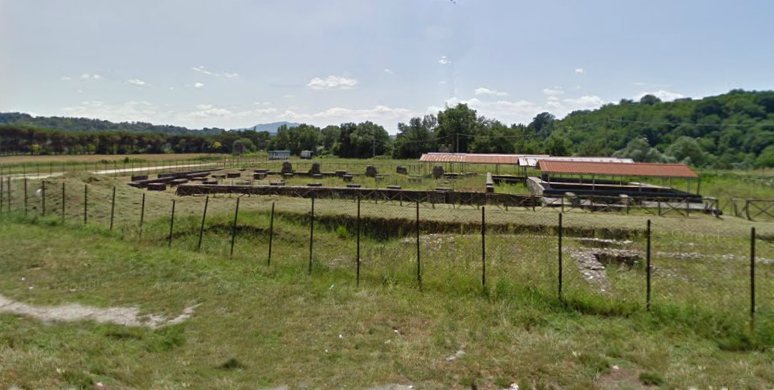
Excavations by the Archaeological Superintendency for Lazio in the late 1970s and early 1980s uncovered the basilica, temple complex, part of the forum, and other buildings. A research project begun by the British School at Rome in 1997 combined geophysical survey, ground-penetrating radar, and excavation. Further work uncovered fountains in 2004 and traced the aqueduct in 2013.
Remains
The site occupies alluvial ground where two streams meet, including the Aia, a tributary of the Tiber. Two secondary roads crossed here and connected with the Via Flaminia and Via Salaria, Roman roads linking communities across central Italy. The remains include civic, religious, residential, and service areas, as well as Roman waterworks and medieval buildings.
Public center
Forum and basilica
Excavations exposed part of the forum and a basilica. These civic buildings form part of the Roman public center, although the surviving information does not establish further details of their layout or construction.
Temple complex
The temple complex included a sanctuary dedicated to local deities, among them Jupiter, Venus, and Mercury, major Roman gods. Other buildings associated with the complex have uncertain functions.
Buildings and services
Commercial and service features
Small shops stood among the domestic structures. Cellars and storage areas also formed part of the settlement, alongside a small port. Together, these remains reflect the range of facilities present at the rural center.
Burial areas
Funerary monuments and a cemetery formed part of the site. They lay beyond the large villa near the center of the settlement.
Villa
The villa covered about three-quarters of a hectare and dates to the first century CE. Its construction was not uniform, and part of the plan may have remained unfinished. It stood outside the settlement’s sacred boundary and beyond the funerary monuments. A pond within the villa may have been used to raise eels. The villa is attributed to Publius Faianius Plebeius.
Finds from the villa area include pottery, fragments of architectural finishes, glass, blades, coins associated with Gallienus (253–268), Severina (270–275), and Diocletian (284–305), and ornamental coins dating to the fourth century.
Baths and amphitheatre
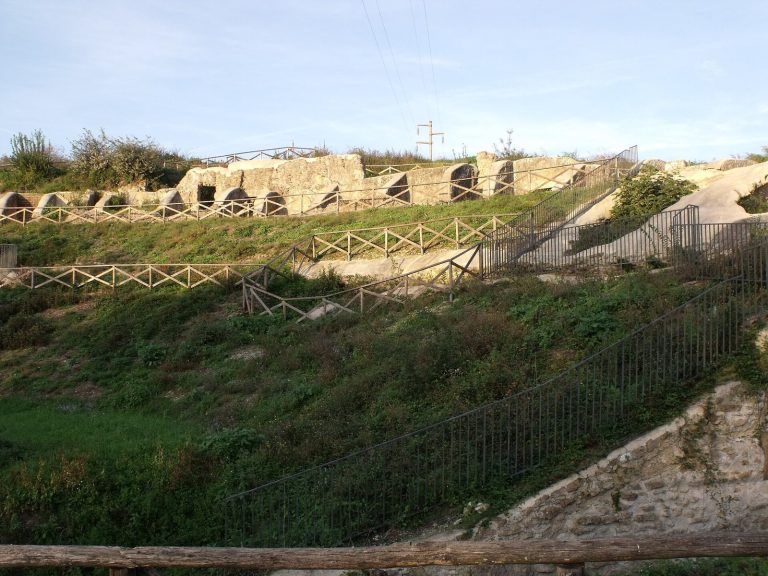
A bath complex has been partly excavated, and a wooden amphitheatre was identified. One aqueduct was intended to supply the bath basin.
Water infrastructure
Aqueduct
The aqueduct was built of Roman concrete. A section remains visible north of the site beside the road to Torri in Sabina. The route is largely preserved and functional.
Water inscription
A large-marble inscription from the early imperial Julio-Claudian period, the dynasty that began with Augustus, concerns the town’s water infrastructure. Its text is arranged in two sections of six lines each. Two copies survive. The more complete is held in the Forum Novum antiquarium at Vescovio. Its right-hand section had been built into the church there since the sixteenth century, while the left-hand section was found on nearby land in 1866. Two fragments of the second copy are held in the church of Santa Maria in Legarano at Casperia.
Medieval buildings
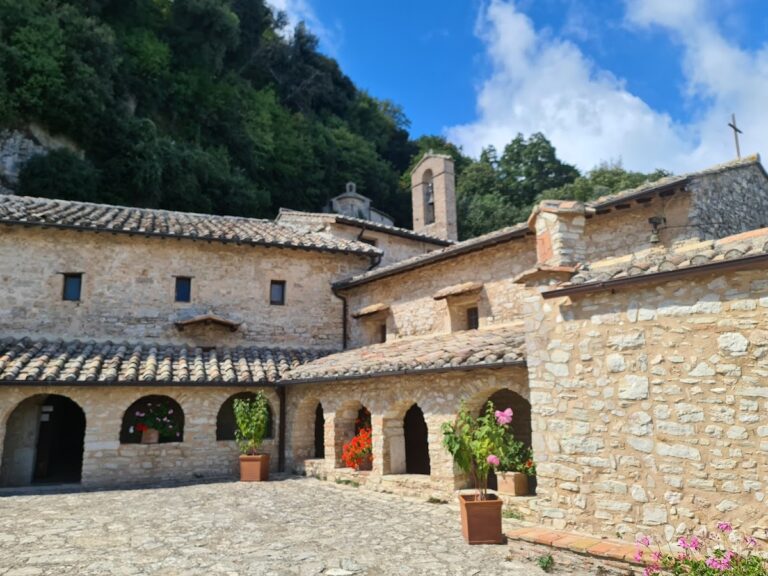
Santa Maria della Lode
The Romanesque church, built in a medieval style associated with rounded arches and massive masonry, stands over the Roman settlement. Reused Roman materials were incorporated into its construction.
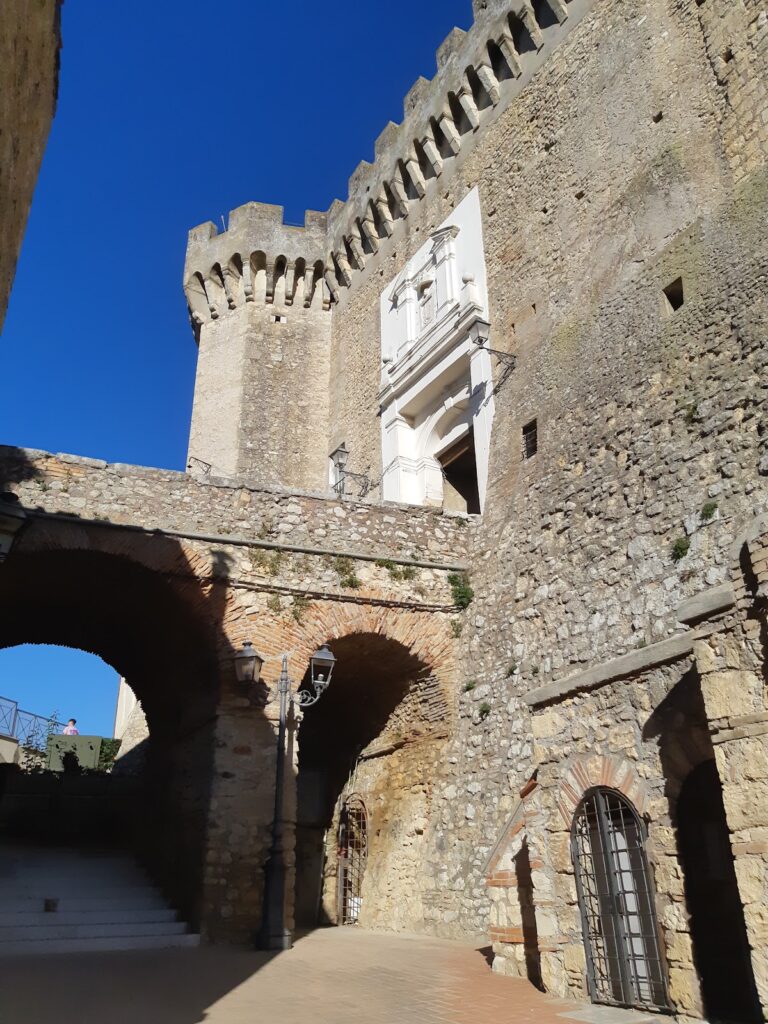
Bishop’s castle
Remains of the bishop’s castle are visible on a hill near the church. The castle was later converted into an Augustinian convent after its final abandonment in the thirteenth century.