Abri du Poisson: A Prehistoric Decorated Rock Shelter in France
Site at a Glance
- Country
- France
- Primary era
- Stone Age
- Eras represented
- Stone Age
- Civilizations
- Unclassified
- Site type
- Civic
- Remains
- Rock Art
On this page9 sections
History
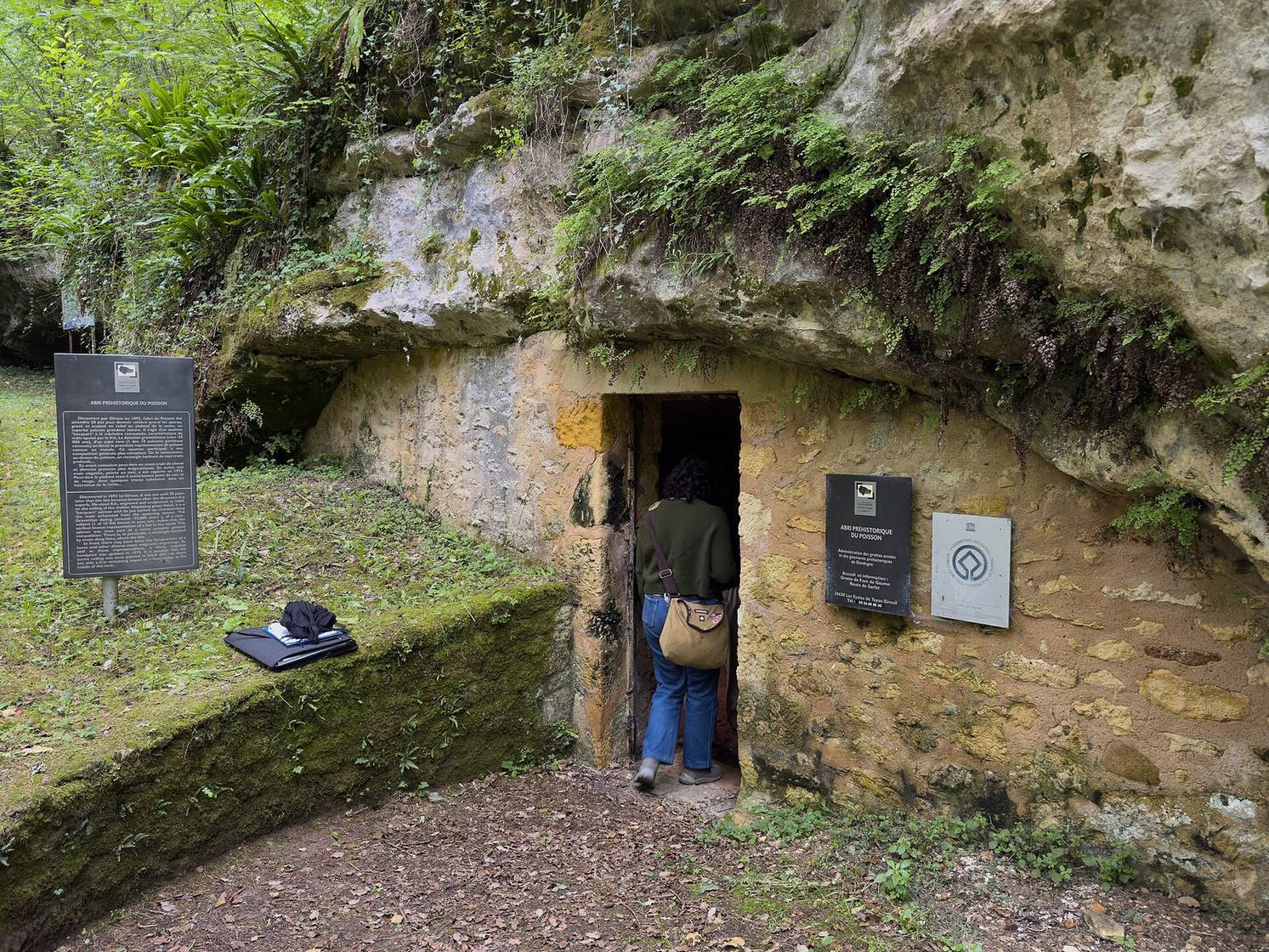
Abri du Poisson is a decorated rock shelter in Gorge d’Enfer near Les Eyzies, France, associated with human occupation during the Aurignacian and Gravettian cultures of the Upper Paleolithic. Its early 20th-century history includes an attempt to remove its prehistoric art, an episode that helped raise awareness of protecting antiquities.
Discovery and threatened removal
Paul Girod found the shelter in 1892 while excavating its floor without a systematic plan. He recognized an Aurignacian layer. Jean Marsan identified the fish carving in 1912, and archaeologist Denis Peyrony later examined material discarded during earlier digging as well as deposits left in place, confirming occupation in both the Aurignacian and Gravettian periods.
After Marsan identified the carving, he and several local residents planned to sell it to Berlin’s Ethnological Museum. The museum’s Prehistoric Department director, Carl Schuchhardt, travelled to the shelter after arranging the proposal with Marsan by letter. Peyrony prevented the carving’s removal. The episode was publicly linked to archaeologist and antiquities dealer Otto Hauser, although he had no part in the plan; Hauser described the carving as a forgery. Separately, he leased archaeological sites around Les Eyzies and sold their finds. Such sales did not require authorization until the end of 1913.
Protection and later research
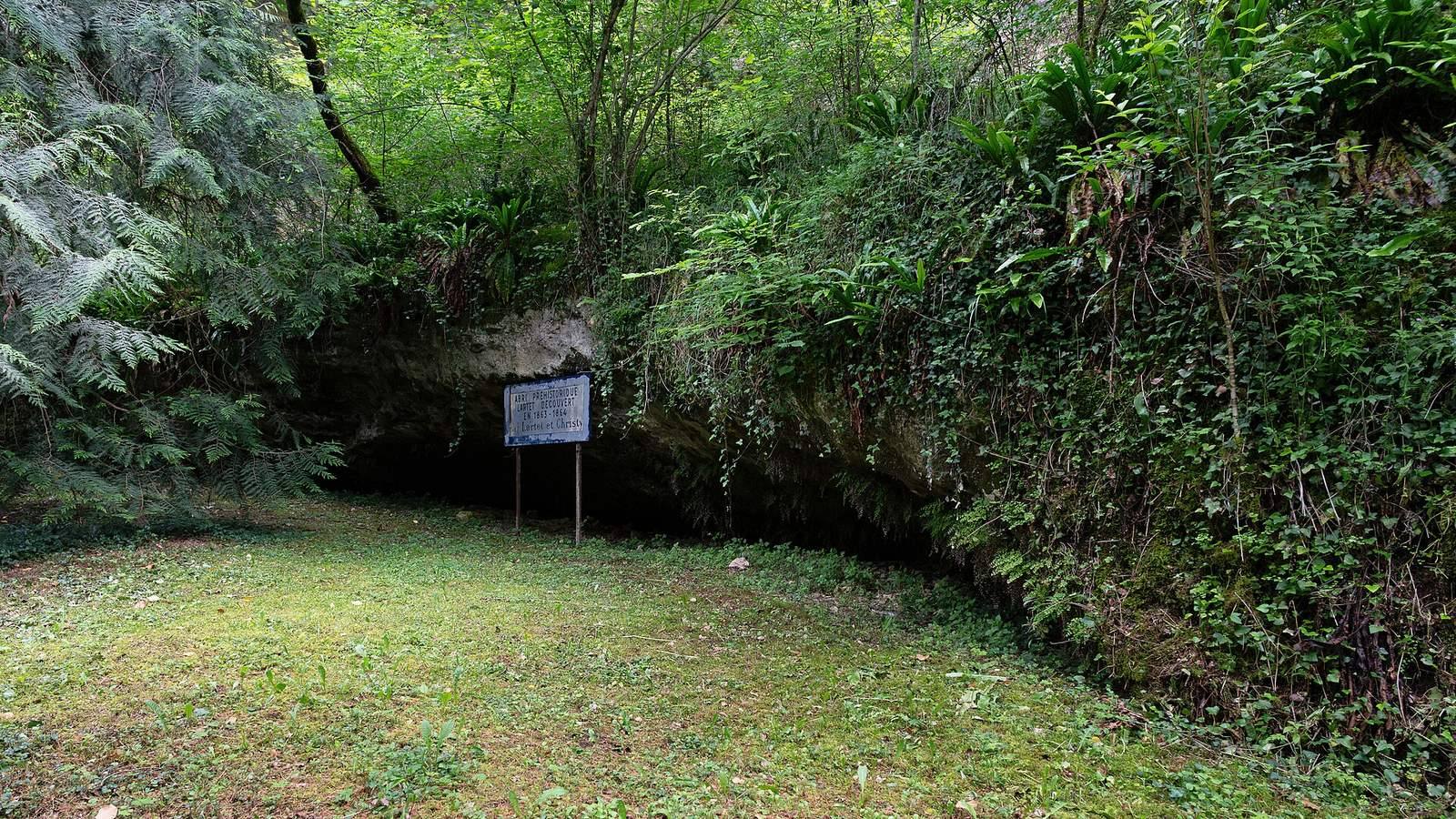
Abri du Poisson and neighboring Abri Lartet received French historic-monument status in 1913, a statutory form of heritage protection. In 1937, two parcels of land at Gorge d’Enfer received the same protection.
Since 1979, Abri du Poisson has been part of the UNESCO World Heritage property Prehistoric Sites and Decorated Caves of the Vézère Valley, which comprises 15 sites. In 2014, the shelter was a scientific research center and remained privately owned.
Remains
Setting and neighboring shelters
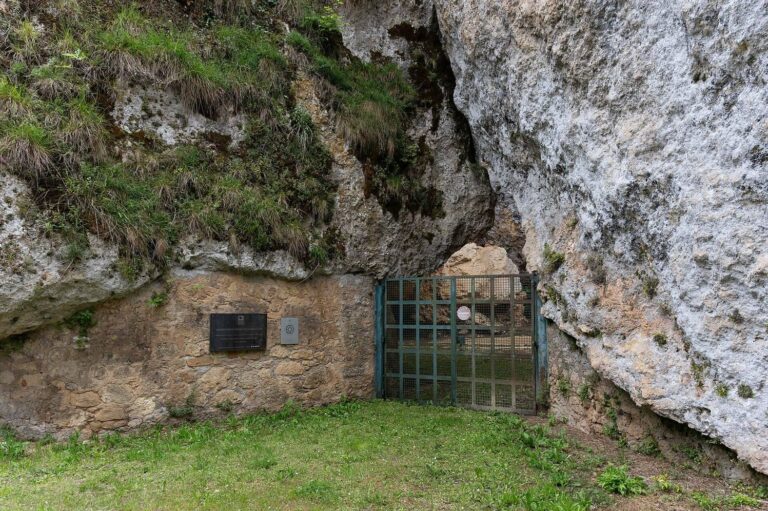
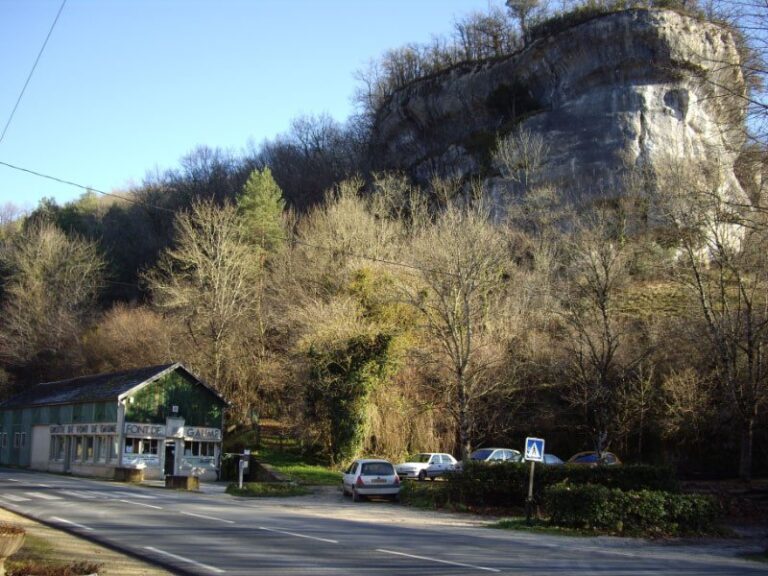
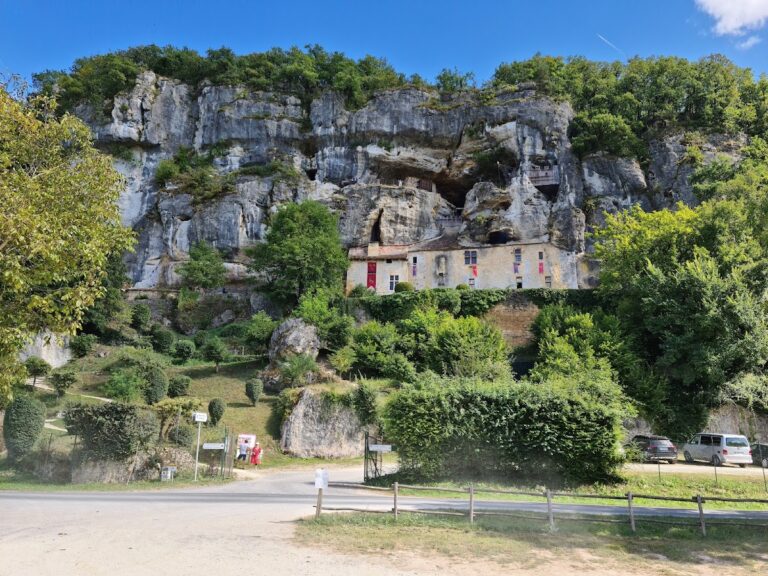
The shelter is in limestone at the foot of the cliff along the northern side of Gorge d’Enfer, a side valley opening east toward the right bank of the Vézère in Dordogne. It is about 75 metres from departmental road D47 and extends for 8 metres. Abri Lartet adjoins it to the west; farther west and higher on the cliff, the Grand Abri partly overlies Abri Lartet. Abri de l’Oreille d’Enfer lies less than 100 metres west and up the valley, while Abri Pasquet is less than 30 metres from the road downstream. Abri Galou opens about 100 metres north of the gorge entrance, and a small cave lies across the valley opposite Abri Lartet. Abri du Bil Bas is farther west, about 200 metres from the road. North of Abri du Poisson, the entrance to Grand Roc cave is about 400 metres away, Laugerie-Basse about 450 metres, and Laugerie-Haute about 850 metres.
Ceiling carving and other rock art
The fish relief
A life-size fish, 1.05 metres long, is carved and engraved into the ceiling in raised relief. Traces of its original red-ochre coloring remain. The image is plausibly Gravettian, dating to about 25,000 years ago, and is considered one of the oldest known fish depictions in the world. It has been interpreted as a salmon after spawning: the lower jaw temporarily takes on a hooked or beak-like form, and the fish’s posture has been associated with a male exhausted by spawning. The image may also point to prehistoric river fishing.
Fish account for about 1% of the animal imagery in Paleolithic rock art, a group that includes sketchy images and forms that only resemble fish; around ten fish representations are known. Around ten salmonid depictions are known, including this one, another at Grotte du Portel, two at Ekain, and a probable trout at Niaux. Fish are more numerous in known prehistoric portable art.
Other engraved and painted images
Other rock art includes a black negative hand stencil, an image made by applying pigment around a hand to leave its outline, and unfinished engraved animal figures. Christian Archambeau and Alain Roussot identified the animal engravings. Holes cut into the surrounding rock during an attempt to detach the fish carving are also still visible.
Archaeological finds
Objects from the Aurignacian layers include blades, spear points with split bases, a perforated baton, and ornaments. A Gravettian layer is associated with Noailles burins, a type of stone engraving tool.