Faringe Church: A Medieval Parish Church in Sweden
Site at a Glance
- Country
- Sweden
- Primary era
- Early Modern
- Eras represented
- Medieval, Early Modern, Modern
- Civilizations
- Swedish
- Site type
- Religious
- Remains
- Church
On this page10 sections
History
Medieval origins and construction
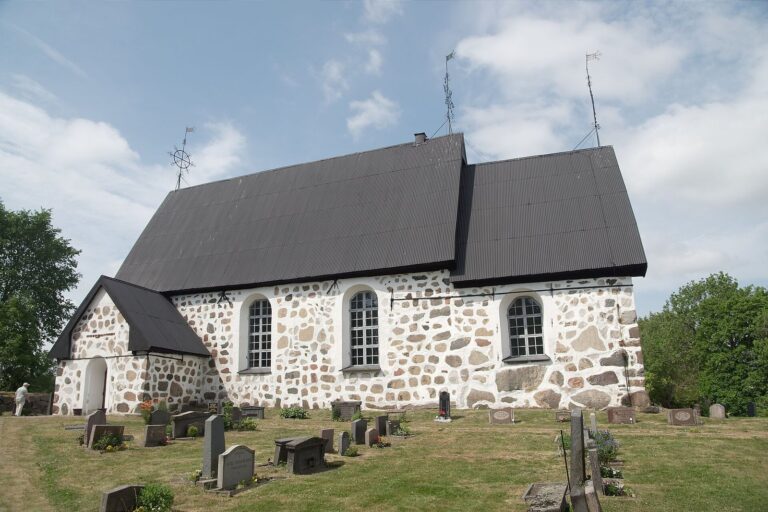
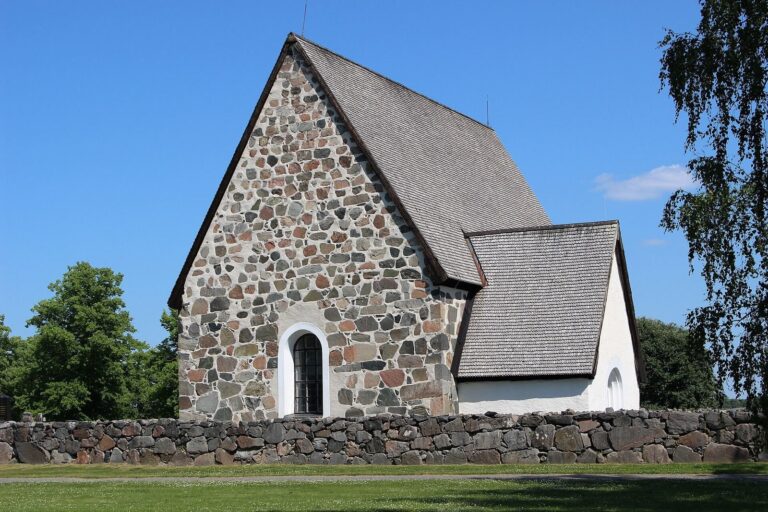
Faringe Church is a late-medieval parish church in Faringe, Sweden. The present building was probably erected around 1500 and consecrated at about that time.
Faringe had its own church by the thirteenth century, but it is uncertain whether that earlier building stood on the present site. The current sacristy was built in 1755 on the foundations of an older one. That earlier sacristy may date to the thirteenth or fourteenth century and may have served an earlier, probably wooden, church. The porch was added after the main church.
Paintings and later changes
In 1515, Lars, a painter and citizen of Uppsala, created wall paintings in the church. The walls and ceilings were whitewashed in the eighteenth century, covering most of the decoration. Before then, Swedish antiquarians Johannes Haquini Rhezelius and Johan Peringskiöld recorded some of the paintings.
Bells, restoration, and organs
The freestanding belfry was built in 1668. Its open structure was enclosed with red-painted boards in 1824, and it was renovated in 1948. The larger church bell was donated in 1629 and recast in 1876; the smaller bell was recast in 1810. During a 1929 restoration led by architect Dag Melin, a gallery front rail found in the belfry was put back in the church, and the enclosed pews were altered.
Johan Lambert Larsson of Ystad built an organ in 1845 with six stops, which select different pipe sounds, one manual (keyboard), and an attached pedal (foot-operated keyboard). P. L. Åkerman & Lunds Orgelfabriks AB renovated it in 1900. Bröderna Moberg of Sandviken built a replacement in 1943 with 15 stops, two manuals, and a pedal, reusing most of the earlier instrument’s stops. Robert Gustavsson Orgelbyggeri AB of Härnösand built the present organ in 1990.
Faringe Church belongs to Faringe parish in the Diocese of Uppsala, a regional jurisdiction of the Lutheran Church of Sweden.
Remains
Church and belfry
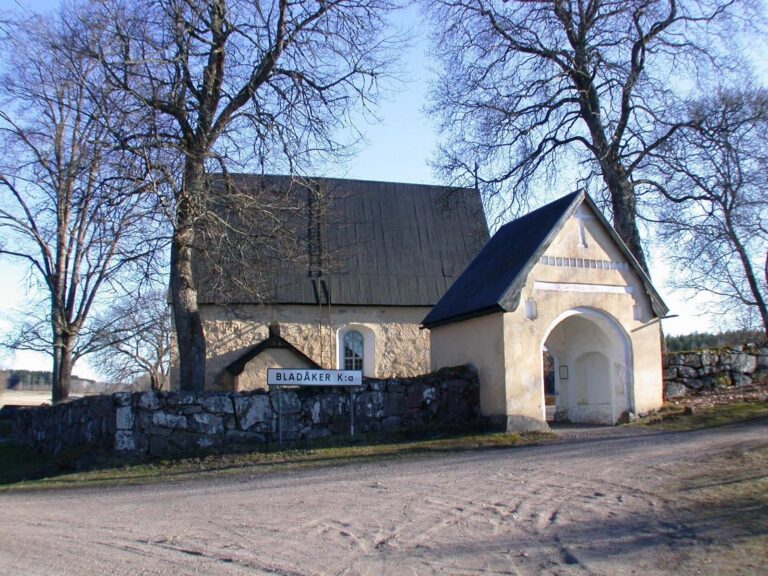
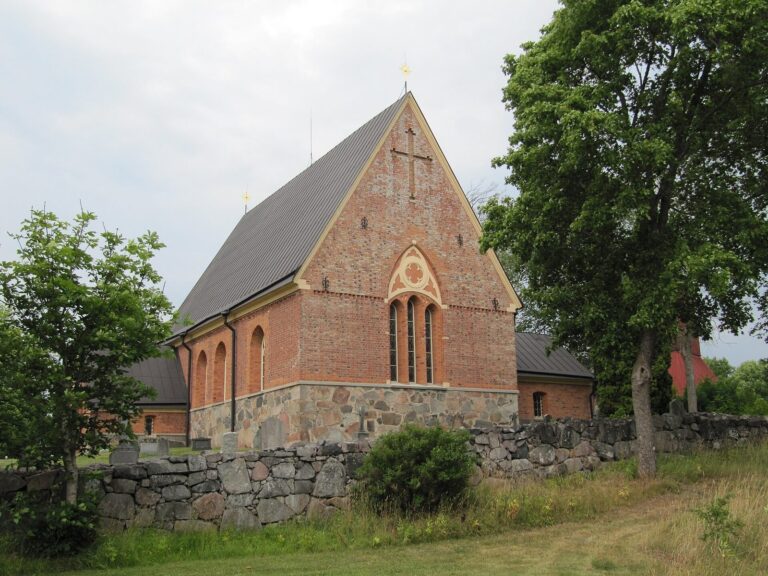
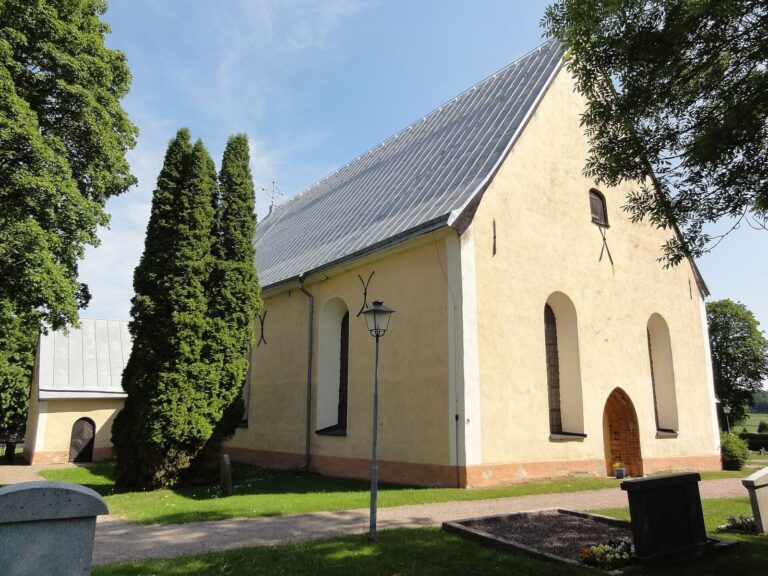
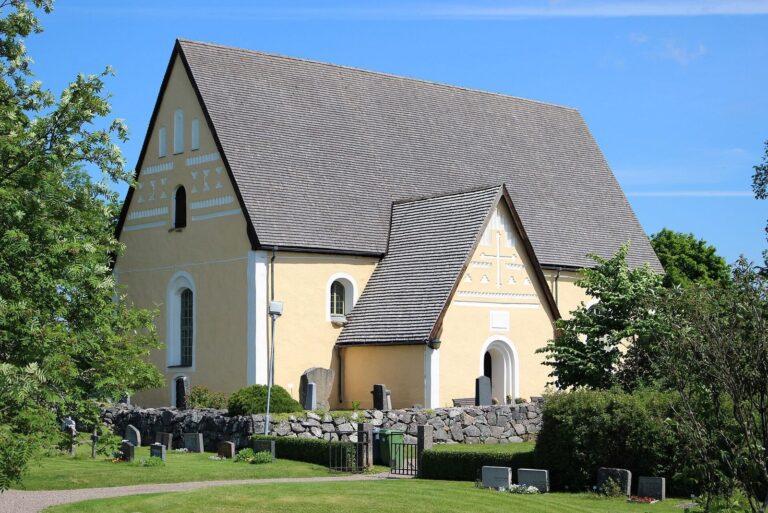
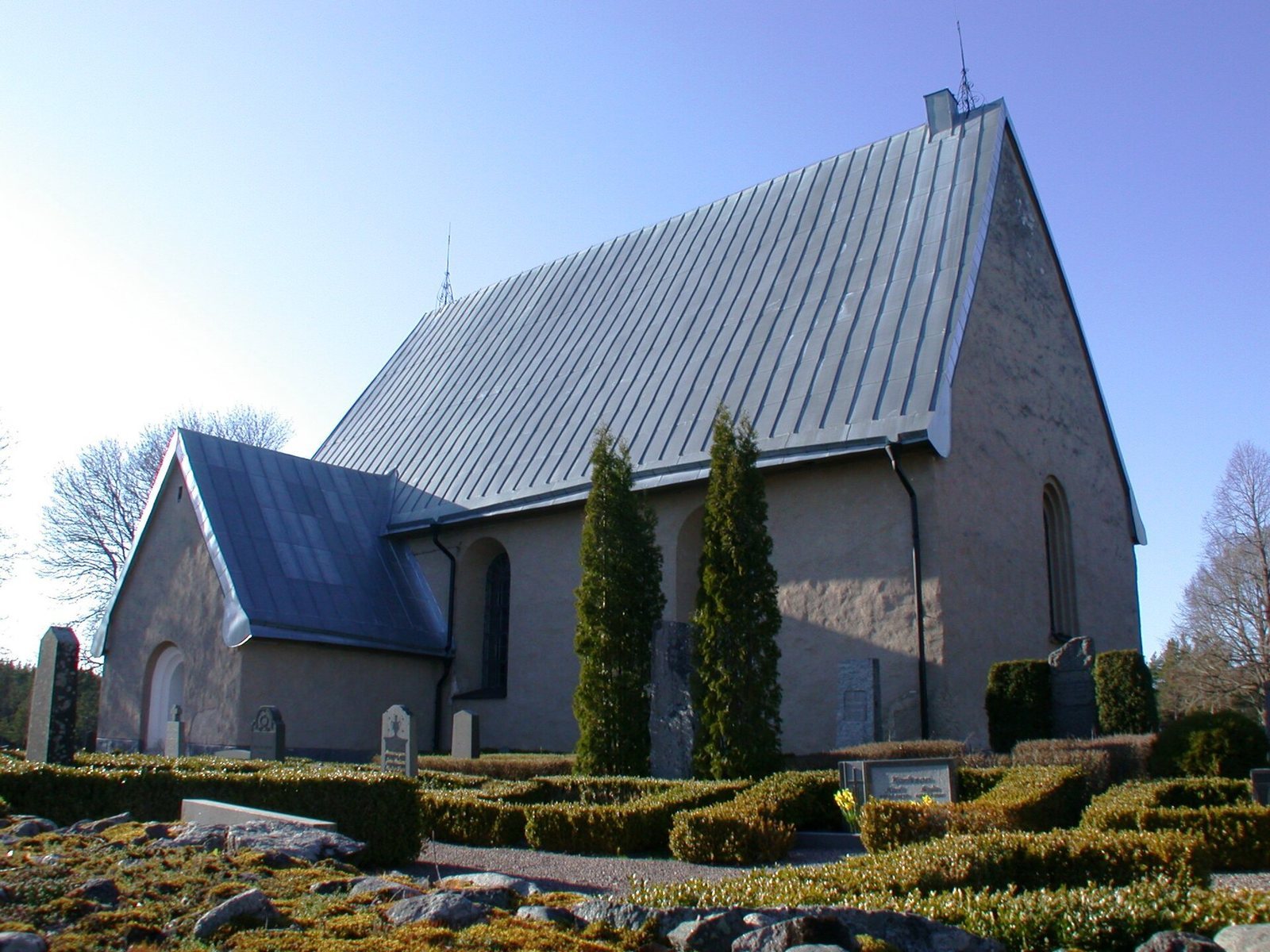
The church has a rectangular nave, the main worship space, and a straight-ended chancel of the same width at the east end. A sacristy is attached to the northeast, and a porch to the southwest. The natural-stone walls are plastered inside and out. The nave and porch have gabled roofs covered in sheet metal, while the sacristy roof slopes on all sides. Vaulted ceilings in the nave and porch date to the church’s construction. The porch’s south doorway remains in use, and original window openings survive in the east and west gables. West of the church, outside the cemetery, stands the separate belfry, now enclosed in red-painted boards. It was originally an open structure with a hood over the bells.
Interior
Wall paintings
Fragments of the wall paintings survive, with the best-preserved examples in the porch. Traces of their motifs remain visible there.
Furnishings and liturgical objects
The church retains a sandstone baptismal font that probably dates to the mid-thirteenth century; its pewter baptismal bowl was donated in 1643. A triumphal crucifix, marking the division between nave and chancel, dates to the first half of the fifteenth century. Other medieval objects include wrought-iron lighting devices, an incense burner, a bell associated with Prime, the first daytime prayer hour in the traditional monastic cycle, and wall-mounted saint sculptures from an altarpiece of the 1470s. The communion chalice combines a medieval middle section decorated with vine leaves and grapes, a late-seventeenth-century foot, and a bowl made in 1805.
The pulpit, made in 1739 by Stockholm sculptor Gottlob Rosenberg, stands on the north wall. Its hourglass stand was purchased in 1800, while an earlier stand from 1686 is kept in the sacristy. The altarpiece painting, The Entombment of Christ, was painted in 1801 by Academy of Fine Arts professor C. W. Swedman; the structure behind the altar was completed in 1802. The enclosed pews date to 1714, and a mid-seventeenth-century gallery parapet, or front rail, was reinstalled in the church.
Organ
The present organ is mechanical and uses slider windchests, which distribute air to the pipes through sliding valves. Its range is 56 notes on the manual and 27 on the pedal.