Rose Island: A Royal Summer Residence and Prehistoric Site in Germany
Site at a Glance
- Country
- Germany
- Primary era
- Modern
- Eras represented
- Classical, Medieval, Modern
- Civilizations
- Duchy of Bavaria, Kingdom of Bavaria, Merovingian
- Site type
- Domestic
- Remains
- Park
On this page14 sections
History
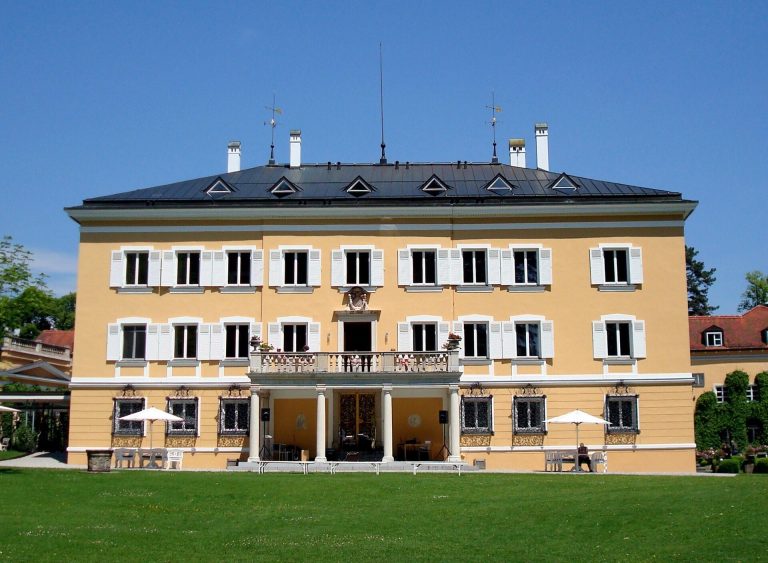
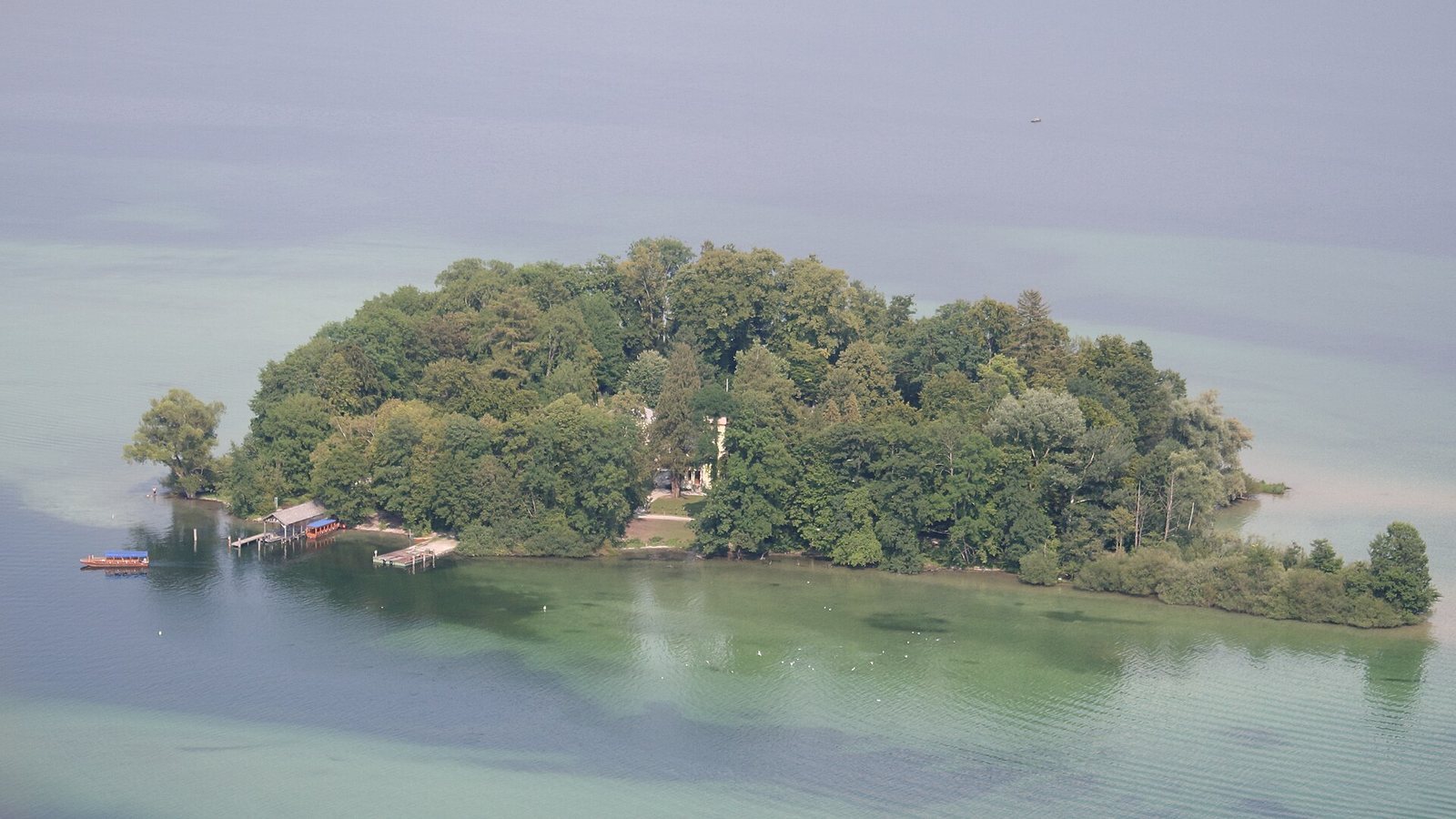
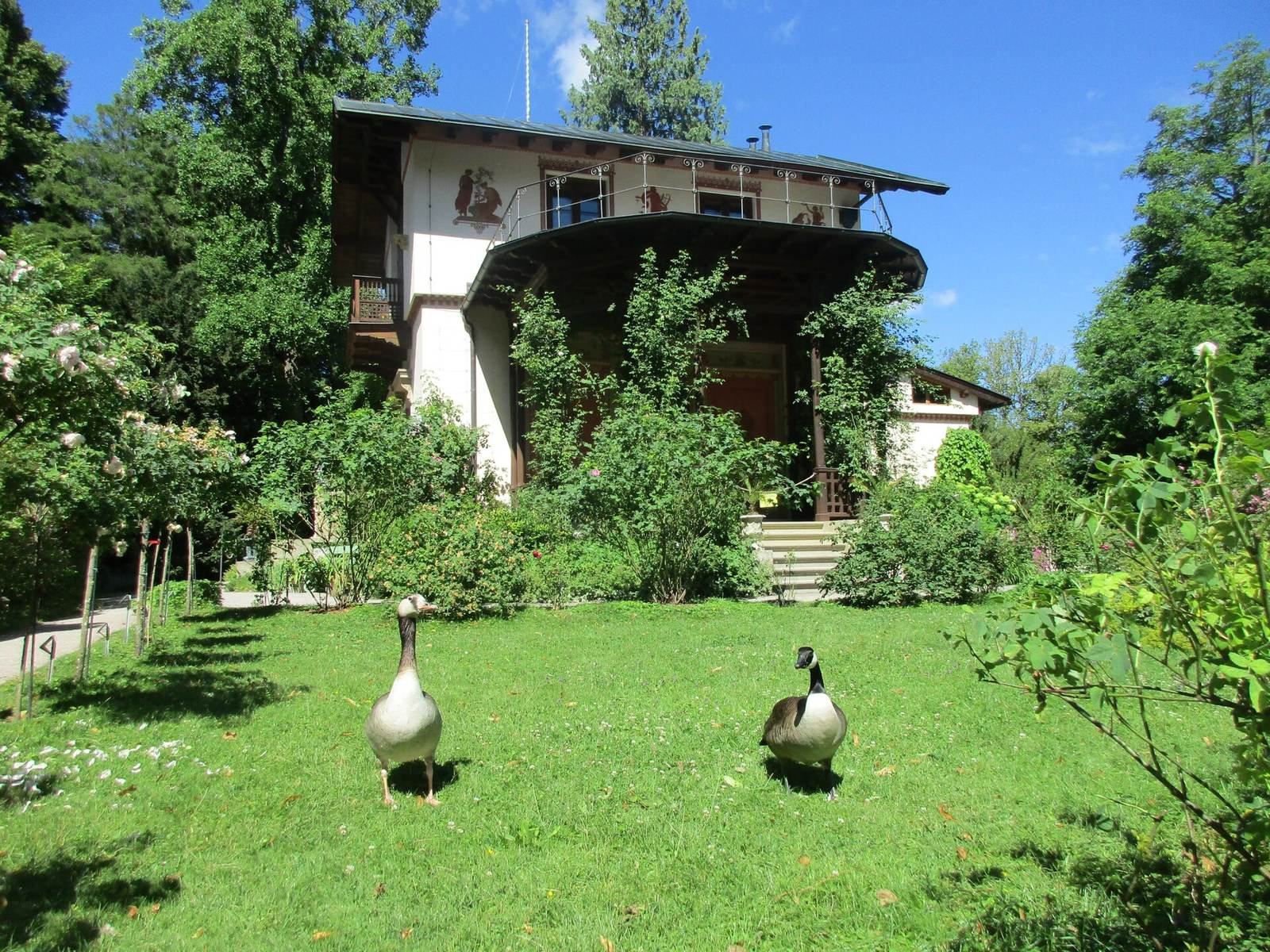
Rose Island is the only island in Lake Starnberg, Germany, with evidence of human activity reaching back to the Neolithic period. It later became a summer retreat for Bavarian royalty. Its villa, completed in 1853 in a Pompeian-Bavarian style, was known as the Casino, meaning a pleasure pavilion.
Prehistoric and early medieval use
Human activity on the island began by the Neolithic period, while its most intensive prehistoric use occurred during the Bronze Age. Whether settlements built on posts near or over water formed a community close to the shore remains uncertain.
A tuff-stone church with a recessed choir, the part of a church around the altar, was built on the island in the seventh century. It probably followed an earlier wooden church.
Ownership before the royal residence
Until the mid-19th century, the island was known as Wörth. In 1545, Duke William IV of Bavaria granted it to the Rosenbusch family of Possenhofen as an inheritable holding. The family kept the island when it sold the Possenhofen estate in 1588. In 1730, the family’s last daughters divided it between the Schattel and de Stock families. Janson de Stock acquired the Schattel share in 1758.
Around 1762, Bavarian nobleman Johann Kaspar Basselet von La Rosée acquired the whole island, then part of the Wörth estate, along with the estates of Feldafing and Possenhofen. His grandson Desiderius Joseph usually lived on the island and died childless in 1834. The heirs sold the wider estate to Duke Maximilian in Bavaria, while King Ludwig I received Wörth. In 1850, King Maximilian II of Bavaria acquired the island from the Kugelmiller fishing family.
The royal retreat
Maximilian II had considered acquiring the island from 1840. He first planned to establish his Maximilianeum scholarship foundation there, but it was instead set up in Munich. He then intended Wörth as a quiet summer residence. Court garden director Ludwig Carl Seitz began planning and laying out the grounds.
Maximilian commissioned architect Franz Jakob Kreuter to build a royal villa. After a dispute over costs, Eduard Riedel took over and completed it in 1853. Landscape designer Peter Joseph Lenné later planned the park, whose grounds became known as Lenné Park.
Maximilian’s son Ludwig II used the island as a secluded retreat and received guests there, including composer Richard Wagner, Prince Paul von Thurn und Taxis, Grand Duchess Maria Alexandrovna, and Crown Prince Friedrich III of Prussia. Ludwig also met his cousin, Empress Elisabeth of Austria, on the island. Her attachment to it was probably the main reason Ludwig continued to maintain it carefully after his own interest declined.
Decline and restoration
After Ludwig II’s death in 1886, the royal family’s interest in the island diminished. The rose garden was renewed between 1899 and 1912, but the Casino and garden then fell into neglect for decades. In 1949, boatbuilder Peter Kugelmüller built a residence on the island. His widow, the writer Brigitte von Tessin, lived there until her death in 2001.
The Free State of Bavaria acquired the neglected island from the Wittelsbach Compensation Fund in 1970. Restoration began in 1997, bringing the Casino and rose garden largely back to their former appearance. The Casino now serves as a small museum. In 2011, Rose Island became one of 111 sites included in the UNESCO World Heritage listing of the Prehistoric Pile Dwellings around the Alps.
Remains
Rose Island measures 233 by 176 metres and covers about 2.56 hectares. It lies 170 metres from the western shore of Lake Starnberg. Accretion and silting have enlarged it over time: it covered 1.3 hectares in the early 19th century and about 1.7 hectares around 1850. The Casino and an oval rose garden form the center of the park, whose grounds include a wooded area, an English-style landscape garden, and a French garden described as post-Romantic German in style.
Archaeological remains
Pottery, objects, and burials
Pottery from the South-East Bavarian Middle Neolithic, dating to the first half of the fifth millennium BCE, and the Münchshöfen culture, from its second half, represents regional Neolithic communities. Bronze Age finds include ceramic and metal objects from the Early Bronze Age through the Urnfield period, a Bronze Age culture associated with cremation burials. Isolated pottery belongs to Hallstatt and La Tène, successive periods of the Iron Age in central Europe.
Nineteenth-century building work uncovered human skeletons buried in soil or in stone cists, which are stone-lined graves. The finds also included flint weapons and Roman coins, jewellery, and tools.
Boat and wooden structures
A dugout boat measuring 13.46 metres dates to the Urnfield period. It was recovered from the island’s western shore. Wooden constructions investigated at the northeastern point date to the middle of the last millennium BCE, but their purpose is uncertain.
Early church
The seventh-century church was built of tuff stone and had a recessed choir. Its surviving west wall and foundations are incorporated into and built over by the gardener’s house constructed in 1853.
Royal villa and grounds
The Casino
The villa was completed in 1853 in a Pompeian-Bavarian style. Pompeian-style frescoes include scenes of Jupiter as an eagle being fed ambrosia and Jupiter as a swan with Leda.
Rose garden and park
The oval garden contained hundreds of tall, fragrant rose bushes. Its wider grounds combine wooded parkland and an English-style landscape garden with a French garden described as post-Romantic German in style.
Glass column
A roughly five-metre-high blue-and-white glass column stands at the center of the rose garden. It bears a sculpture of a girl with a parrot. King Friedrich Wilhelm IV of Prussia gave the column to his cousin Marie of Prussia and her husband, Maximilian II.