Aston Hall: A Jacobean Prodigy House in Birmingham
Site at a Glance
- Country
- United Kingdom
- Primary era
- Early Modern
- Eras represented
- Early Modern, Modern
- Civilizations
- British, English
- Site type
- Domestic
- Remains
- Elite Residence
On this page24 sections
History
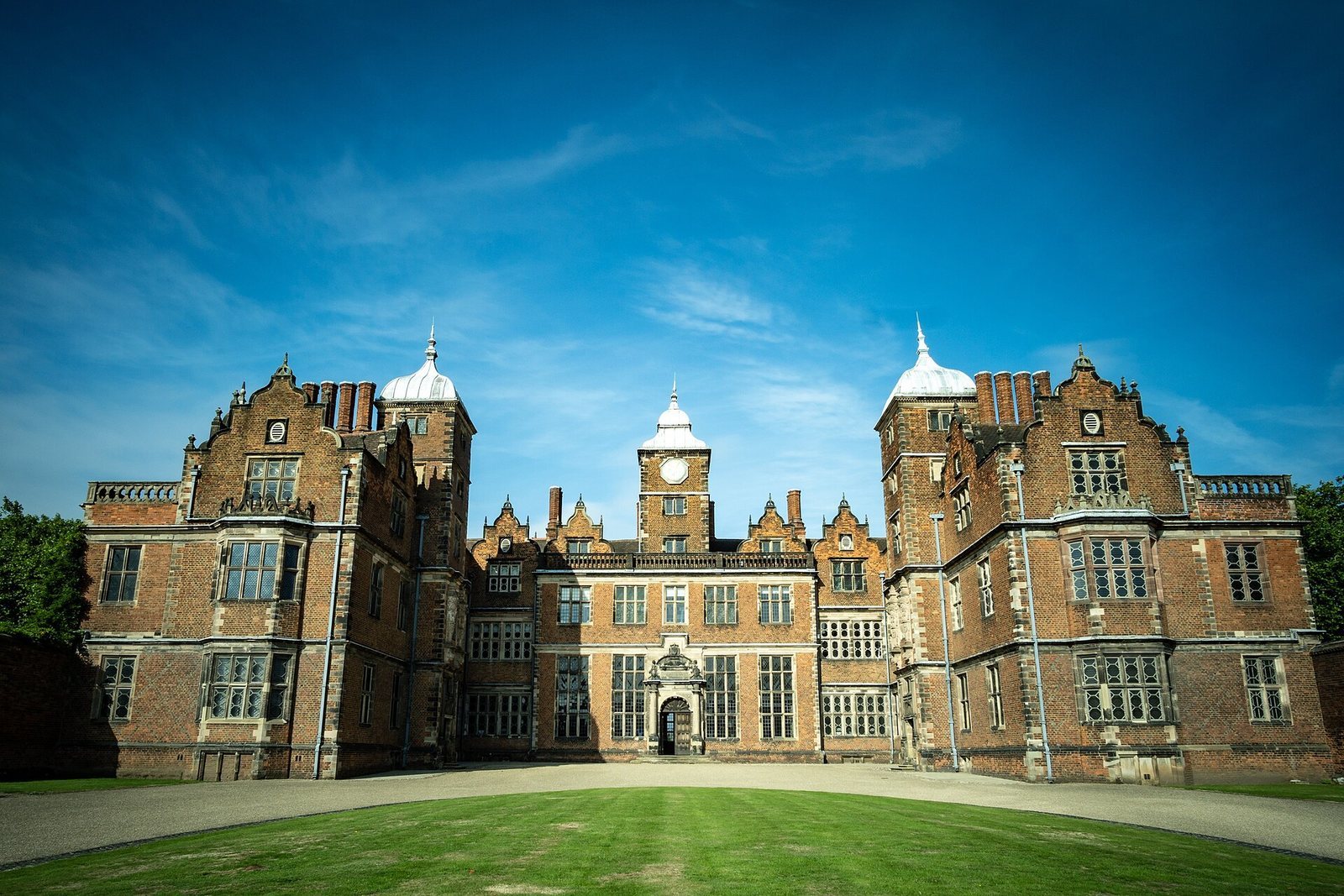
Aston Hall is a Jacobean prodigy house in Aston Park, north of central Birmingham, England, begun by Sir Thomas Holte in 1618 and completed in 1635. Jacobean architecture was the English style of the early seventeenth century; a prodigy house was an ambitious country residence intended to display its owner’s wealth and status through its scale, decoration, and hospitality.
Construction and the Civil War
Holte commissioned the design from English architect John Thorpe and began building in April 1618. He moved into the house in 1631, while work was still continuing, and construction finished in April 1635. Thorpe probably never visited the property.
The Holte family supported the monarchy, although Thomas Holte’s relationship with King Charles I was strained. Charles stayed at Aston Hall on 18 October 1642, shortly before the Battle of Edgehill, an early battle in the English Civil War between royalist supporters of the king and forces supporting Parliament. In December 1643, Parliamentary troops besieged the house and caused severe damage.
From family residence to public museum
The Holtes retained Aston Hall until 1817. When their family line ended, the related Legge family held the estate for a short time. Heneage Legge had no sons, leaving Mary Elizabeth Holte, daughter of Sir Charles Holte, as a possible heir. Her husband, Abraham Bracebridge, could not purchase the house after losing his fortune through poor investments. Aston Hall went to public sale and passed to James Watt Jr in 1817.
American writer Washington Irving visited the hall and drew on it for Bracebridge Hall, a work in The Sketch Book. The name referred to Abraham Bracebridge, husband of the last member of the Holte family to live at Aston Hall. Irving’s stories included Christmas celebrations he encountered there. A custom noted in 1795 allowed servants on Christmas Eve to drink, dance, and sing, and to retire when they chose.
In 1858, the private Aston Hall and Park Company Ltd bought the property to establish a public park and museum. Queen Victoria attended its public opening that year. Financial difficulties led to Birmingham Corporation acquiring the hall in 1864, making it the first historic country house in England to pass into municipal ownership. After Victoria wrote twice expressing surprise about the unpaid balance, the city paid what remained. Aston Hall became one of England’s earliest public museums.
In the late 1870s, a fire damaged the building that housed Birmingham’s public library and the Birmingham and Midland Institute. The city’s art collections and Museum of Arms were temporarily transferred to Aston Hall, where they remained until the present Art Gallery was built in the Council House complex.
Public grounds and later use
The Birmingham Civic Society designed formal gardens for the grounds in 1927, and the city completed them in 1934. Unemployed workers carried out the work using government grants, while the Society paid for a statue of Pan. In 1938, the grounds hosted the Pageant of Birmingham, with about 10,000 performers marking the centenary of the city becoming a borough. In 2011, the city sought old photographs to help with restoration plans for the statue, whose head was missing.
The easternmost part of the grounds was taken for the A38(M) motorway, which opened in 1972 to connect the city centre directly with the M6. Aston Hall’s interiors were renovated toward the end of the twentieth century, retaining their original style, and a further major renovation took place between 2006 and 2009. Birmingham Museums Trust took over management from Birmingham City Council in 2012, and the hall continues as a community museum.
Aston Hall is a Grade I listed building, a designation for structures of exceptional interest, and its grounds are included at Grade II in the national Register of Parks and Gardens. The building received its designation in 1952, and the grounds entered the register in 1986.
Stories about ghosts at Aston Hall include a daughter of Thomas Holte supposedly kept in a tower for 17 years after trying to elope, the governess Mrs Walker appearing in a green dress, and a servant boy named Dick who was said to have hanged himself in the attic after an accusation of theft. The hall’s official guides do not confirm these tales, and it does not actively promote them. In 1820, novelist Maria Edgeworth described Dick’s Garret as haunted. During an early visit, James Watt Jr wrote that he was glad his room was at least a thousand steps away from the ghost.
Remains
The surviving house brings together reception rooms, family rooms, service spaces, and an upper gallery. It stands in grounds now surrounded by an industrial urban setting. Part of the former park became Villa Park, the home ground of Aston Villa, while the hall’s grounds retain formal gardens and other traces of the estate.
Grounds and estate structures
Gardens
South of the hall, Lady Holte’s Garden follows a design example dating from 1699. Other formal gardens feature fountains, terraces, and stone urns. They also contain William Bloye’s statue of Pan, an ancient Greek deity associated with wild and pastoral life.
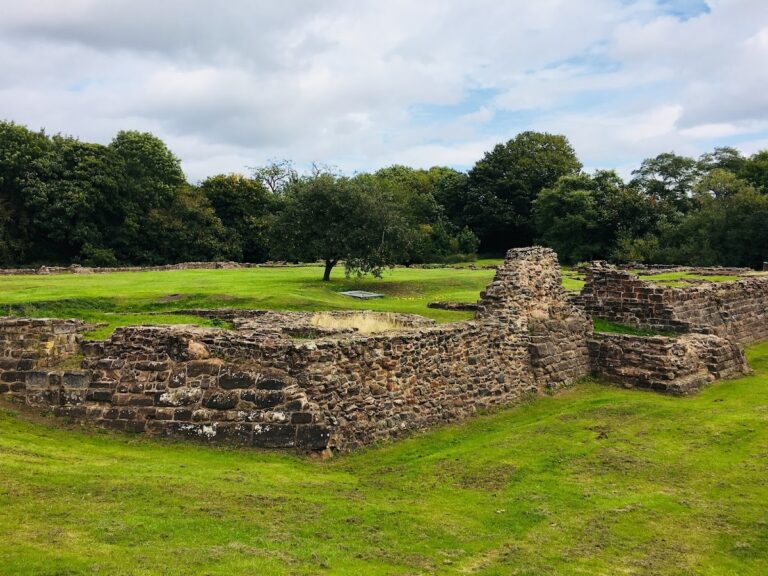
North Range
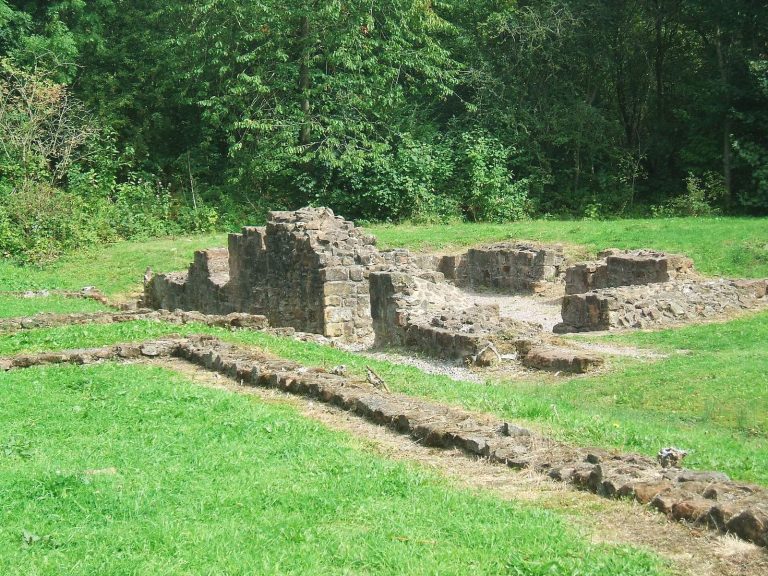
Foundations survive from the estate’s North Range, whose service buildings included spaces for making butter and milk, washrooms, and a well used to store ice. The buildings were demolished in 1869. Renovation work uncovered the well in 2009, after which it was covered again for safety.
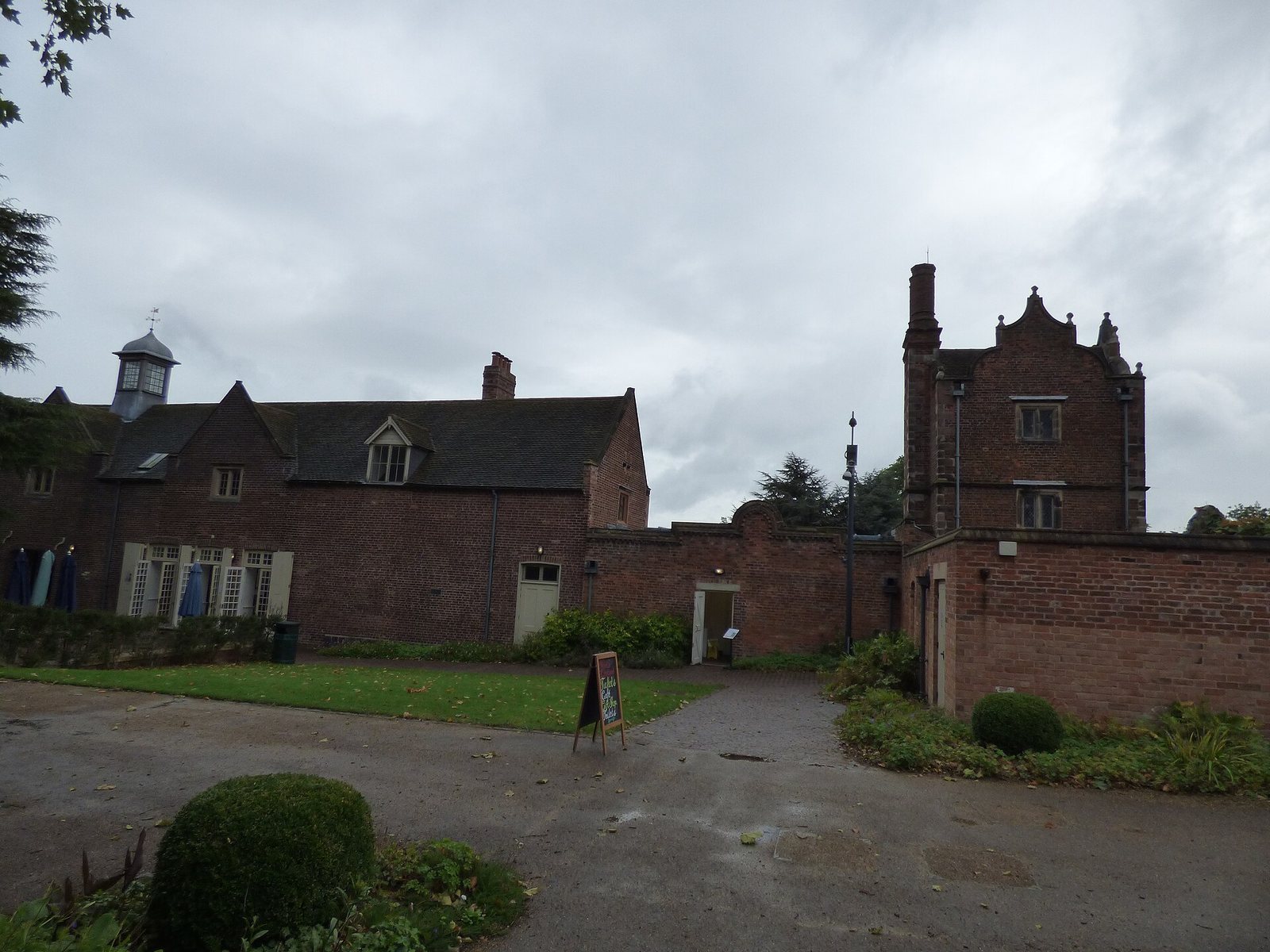
Stables
The former horse stables stand in front of the hall, forming another surviving part of the estate’s service setting.
Ground-floor rooms
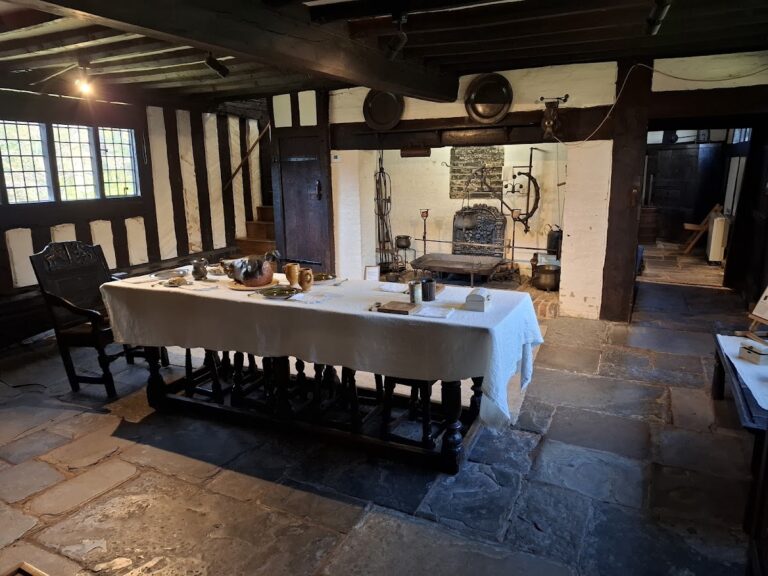
Great Hall
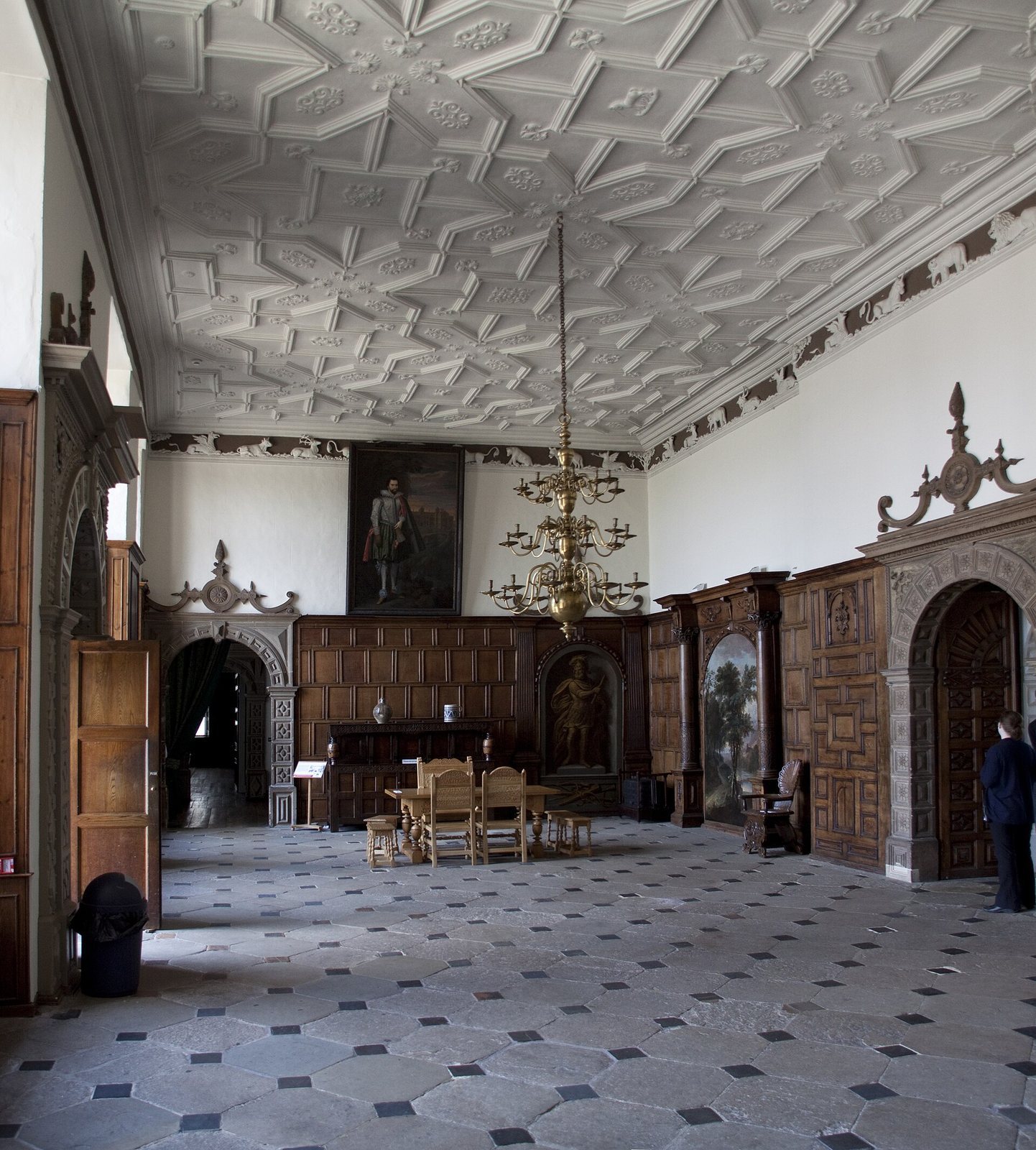
The ground-floor Great Hall has a large central doorway and a fireplace to its right. Its appearance remains broadly as it was in 1722, the year Charles Holte I died. A passage on the left leads to the parlour, and the hall also connects with the house’s other ground-floor rooms.
Parlour and colonnaded room
The parlour contains antique tables and a tapestry. Household matters, including rents, taxes, and political alliances, were discussed there. A colonnaded room adjoins it.
West-side rooms
Charles Holte created several smaller rooms on the west side of the ground floor around 1700. They include a green-painted library, a sitting room with an ornamental fireplace, and a withdrawing room. The Johnson Room takes its name from wall panels once owned by Dr Hector, a physician and friend of writer Samuel Johnson. The room was probably first used as a study or office. Objects there recall the hall’s late nineteenth-century use chiefly as a cabinet of curiosities, including a stuffed tiger.
Service rooms
The ground floor also has a kitchen, pantry, and servants’ hall. Household implements on display include a linen mangle and tongs used for roasting meat or creasing textiles. The house’s oldest piece of furniture is a fourteenth-century chest, originally from the parish church beside Aston Park. The pantry displays silver belonging to the Holte family.
Stair hall and upper rooms
Oak staircase
An oak staircase rises beside the ground-floor living room, with portraits of Holte family members along its walls. During the 1643 siege, a cannonball pierced a window and an open doorway before striking one of the staircase’s balusters. In 1983, remains of illusionistic wall paintings, designed to make flat surfaces appear three-dimensional, were found in the stair hall.
Great Dining Room
Above the living room, the Great Dining Room is the house’s most richly decorated chamber. Plasterwork covers the walls and ceiling, and a horizontal decorative band, or frieze, includes figures such as Godfrey of Bouillon, Alexander the Great, and the legendary King Arthur. A portrait of Charles I and his family hangs above the fireplace.
Orange Room
A corridor that had been blocked is now open again and leads to the Orange Room. The name comes from ceiling decorations resembling orange trees, rather than the room’s color. Its original seventeenth-century plasterwork includes a frieze of unicorns and lions, symbols of the union of England and Scotland. The room once opened onto a balcony and contains an antique bed. A small dressing room with a fireplace stands beside it.
King Charles’s Room
Beyond the small dressing room is King Charles’s Room. Images of mythical animals cover its ceiling, and the room holds armour, equipment, and weapons from the English Civil War.
Withdrawing room
The upstairs withdrawing room served for conversation after dinner. Around 1750, Lister Holte refurnished it with luxurious wallpaper. A large tapestry made by Mary Holte around 1744 depicts Aston Hall within a decorative frame, surrounded by a large fence. The room also contains seventeenth-century furniture.
Great Gallery
A walnut-panelled vestibule leads to the Great Gallery. The passage, including the vestibule, measures 118 metres. Irregular wooden planks cover its floor, while carved panels and paintings decorate the walls beneath an ornamented ceiling. A decorative stained-glass window stands at the far end, and the gallery also has an elaborate fireplace. The space provided room for walking in winter and cooling off in summer.
World Room and bedrooms
Sir Lister Holte used the World Room as his personal library. Around 1700, when the Jacobean style had fallen out of fashion, almost all of its ceiling frieze was destroyed; a small piece remains in a corner. Lister Holte fitted out a nearby dressing room around 1750 with an elegant fireplace and a crocheted rug. The best bedroom contains a bed, fireplace, and mirror, and may have belonged to Anne Littleton, Thomas Holte’s second wife.
Servants’ attic rooms
Dick’s Garret, the uppermost room beneath the roof, was a simple sleeping area for servants, with two small separate rooms for male servants. Other attic rooms served a governess and a butler. Mrs Walker lived in one during the Holte period, and James Watt Jr assigned his butler to it. The attic also holds an old mirror and furniture by British maker and designer George Bullock.
Collections and decoration
Aston Hall’s period rooms display furniture, paintings, textiles, and metalwork from Birmingham Museum & Art Gallery’s collections. Most have historical connections with the house or its residents. Paintings by Godfrey Kneller, Thomas Gainsborough, Peter Lely, Rembrandt van Rijn, and George Romney are also displayed. The Holte family arms, featuring a squirrel, and the Watt family arms, featuring an elephant, appear throughout the house.