Tomioka Castle: A Castle Built to Govern Amakusa
Site at a Glance
- Country
- Japan
- Primary era
- Early Modern
- Eras represented
- Early Modern
- Civilizations
- Tokugawa
- Site type
- Military
- Remains
- Castle
On this page12 sections
History
Tomioka Castle stands on a hill on Tomioka Peninsula in Japan. Japanese lord Terazawa Hirotaka built it between 1602 and 1605 to govern Amakusa, a territory he received after Tokugawa forces prevailed at the Battle of Sekigahara in 1600. That decisive conflict established Tokugawa political supremacy. The castle had no principal tower and was designed around terraced enclosures.
Christian persecution and rebellion
Adam Arakawa, a Christian layman who had served the Arima family, began assisting priests around 1590. When his lord ordered his execution for an offense, a Jesuit missionary intervened and saved him. Arakawa then devoted himself to the church. After the Tokugawa government prohibited Christianity in 1614 and missionaries were sent to Nagasaki, they entrusted him with caring for the church and its congregation. A deputy castle commander at Tomioka pressed him to renounce his faith. Following three months of persecution, Arakawa was tortured and beheaded inside the castle. On 1 June 2007, Pope Benedict XVI approved the beatification of 188 Japanese martyrs, including Arakawa. Beatification is the Catholic Church’s formal recognition permitting a person to be venerated as Blessed.
The Shimabara-Amakusa uprising, a revolt against the shogunate, began on 14 December 1637. Amakusa residents angered by heavy taxes and persecution of Christians joined after peasants in Shimabara killed a local official. They rallied under Amakusa Shiro, a young Christian leader. Tomioka’s commander, Miyake Tobei, led 1,500 troops from the Karatsu domain to fight the rebels at Hondo, where he was killed on 30 December.
On 4 January 1638, rebels attacked the castle and town. Harada Iyo took command after Miyake’s death, and the defenders held out until the attackers withdrew on 10 January. The rebels then crossed the sea to join the besieged force at Hara Castle. The uprising was suppressed there on 12 April 1638.
Domain and shogunal rule
After the uprising, Terazawa Katataka, the second lord of Karatsu, lost control of Amakusa. He died by suicide in 1647, and his family line ended without an heir. The territory, assessed at 42,000 koku, a rice-based measure of land and income, passed to Yamazaki Ieharu, who came from Narawa Castle in Bitchu. This transfer established Tomioka Domain. Yamazaki renovated the castle after taking office; the work was complete by 1641, when he moved to Marugame.
From 1641 to 1664, the shogunate, Japan’s military government, administered Amakusa directly. Its first administrator, Suzuki Shigenari, served until 1653. He argued in Edo that the territory’s assessment of 42,000 koku was too high and should be halved, and later died by ritual suicide. His son Shigesuke succeeded him, but Shigetatsu, Shigenari’s nephew, took over in 1655 because Shigesuke was 13. Shigetatsu served until 1664.
That year, Toda Tadamasa arrived from Tahara with a holding assessed at 21,000 koku, restoring Tomioka Domain. Believing that upkeep of the castle burdened local residents, he ordered the main and second enclosures demolished in 1670. The third enclosure retained the domain office, while the castle itself was abolished. This dismantling later became known as Toda’s dismantling of the castle and was praised as a sound policy.
In 1671, Toda successfully argued that Amakusa should remain under direct shogunal rule. On the day he received appointments as master of ceremonies and commissioner for temples and shrines, he was transferred to the Kanto region. The office in the third enclosure continued as the Amakusa magistrate’s office until the Meiji Restoration. In 1868 it became the office of Amakusa Prefecture. The territory was soon incorporated into Nagasaki Prefecture, transferred to Yatsushiro Prefecture in 1871, and later included in Shirakawa and Kumamoto prefectures.
Excavation and reconstruction
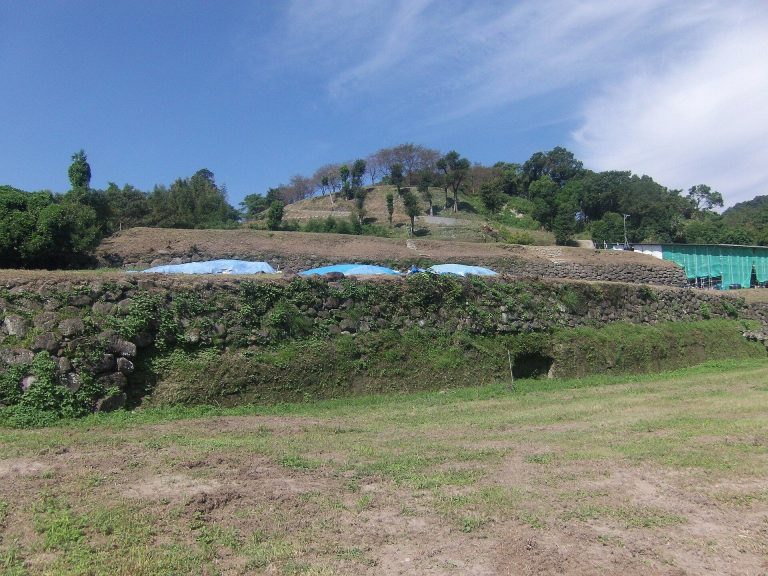
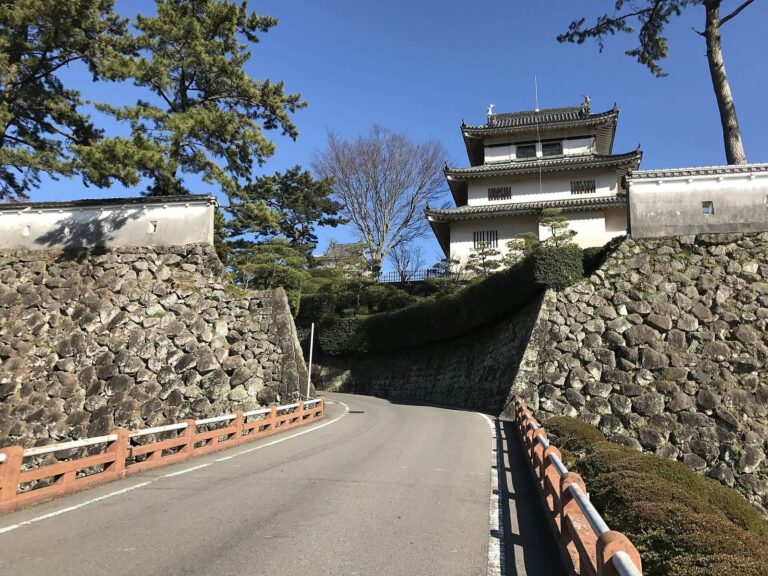
Excavation and reconstruction planning began in 1994, using a castle plan held at Japan’s National Diet Library. Work was completed in March 2005, restoring stone walls and towers.
Remains
Castle layout and defenses
Terraced enclosures and natural barriers
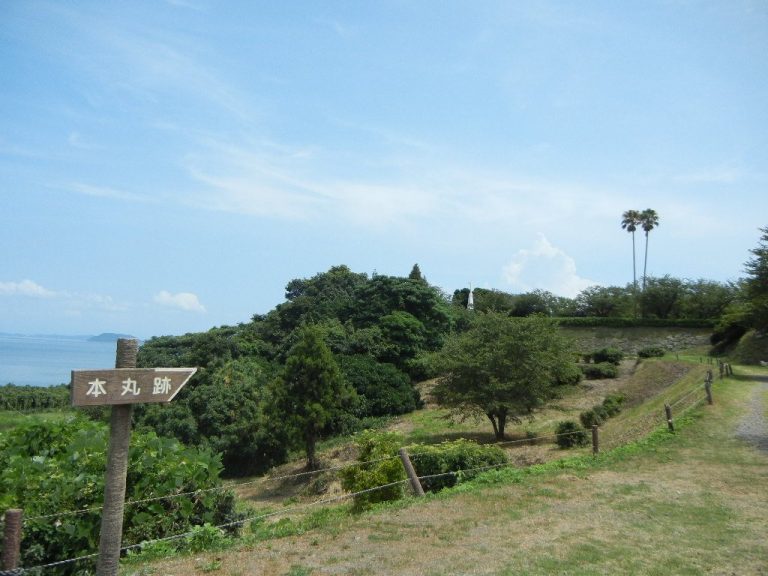
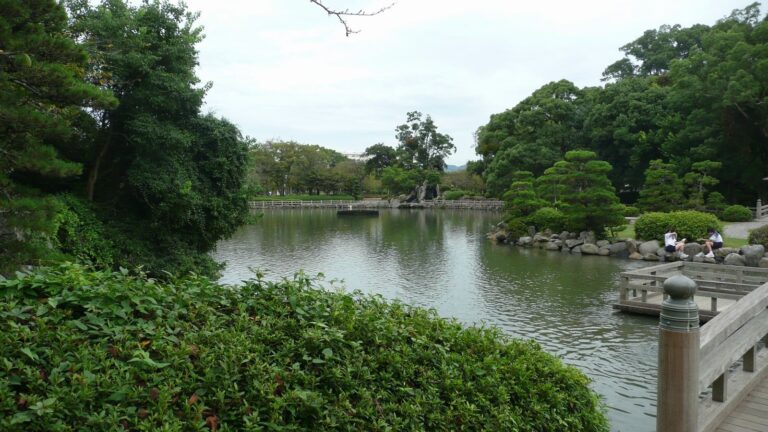
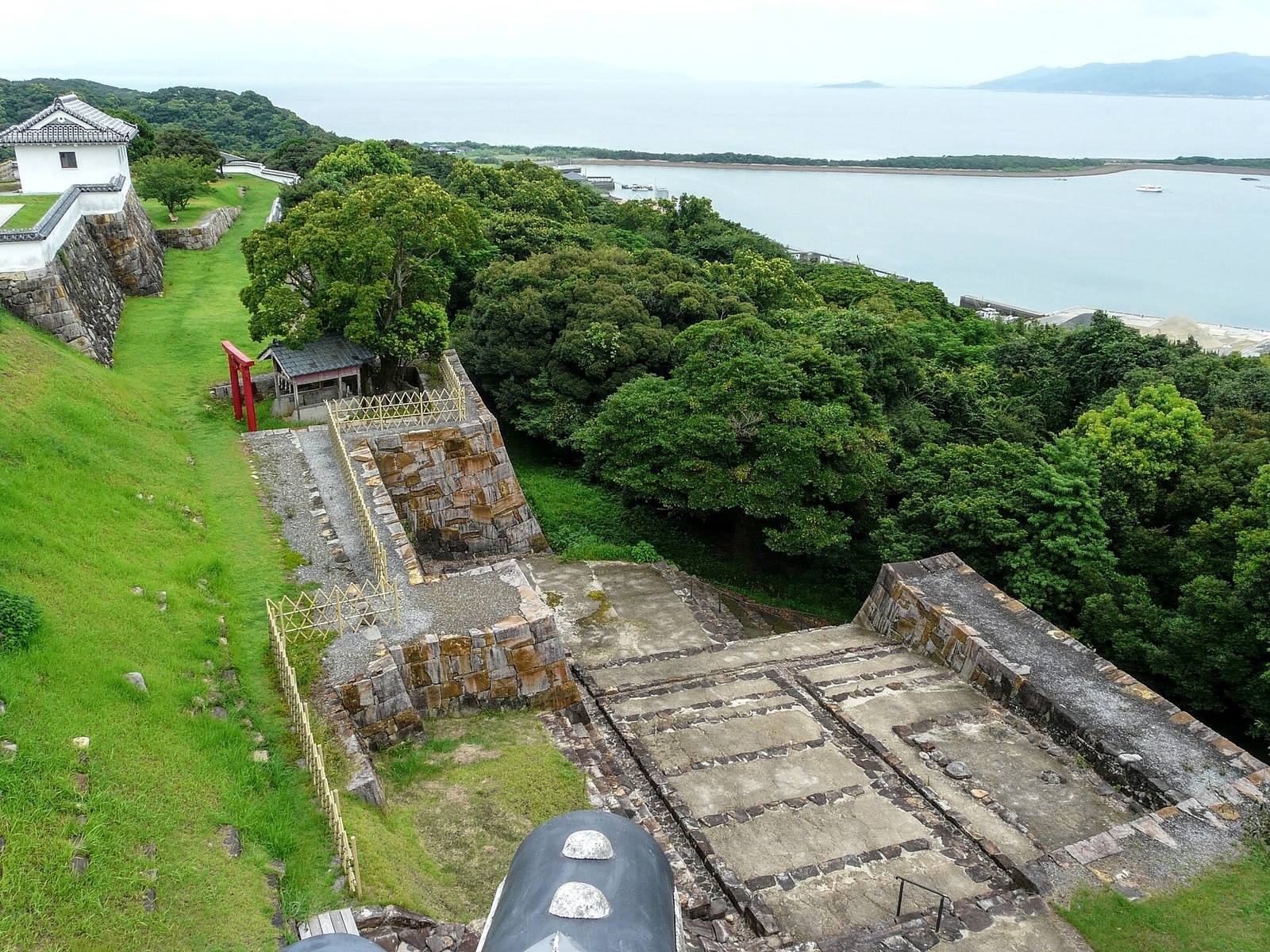
The castle occupied a hill in the southeastern part of Tomioka Peninsula, on the northwest of Amakusa Shimoshima. A sandbar joins the peninsula to the island. Within the hilltop, the castle was arranged in terraces of enclosed areas and had no principal tower. Fukuro Pond lay to the south and served as a moat, while Tomoe Bay lay to the east. A sand spit enclosing the bay formed a natural barrier against attack from the sea, and the sandbar provided the only land approach.
Surviving and reconstructed defenses
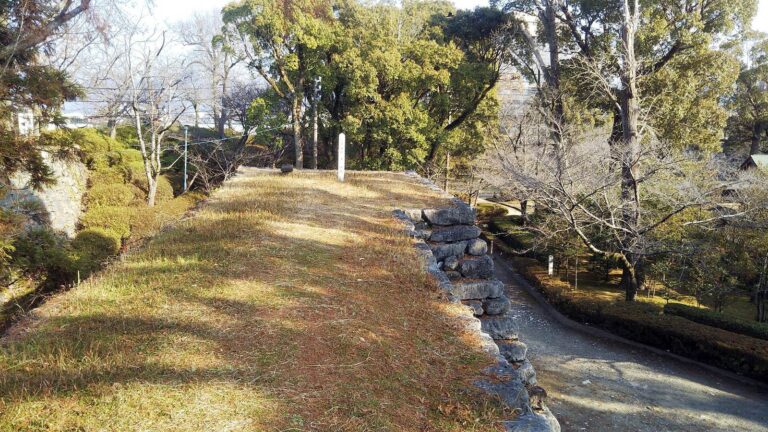
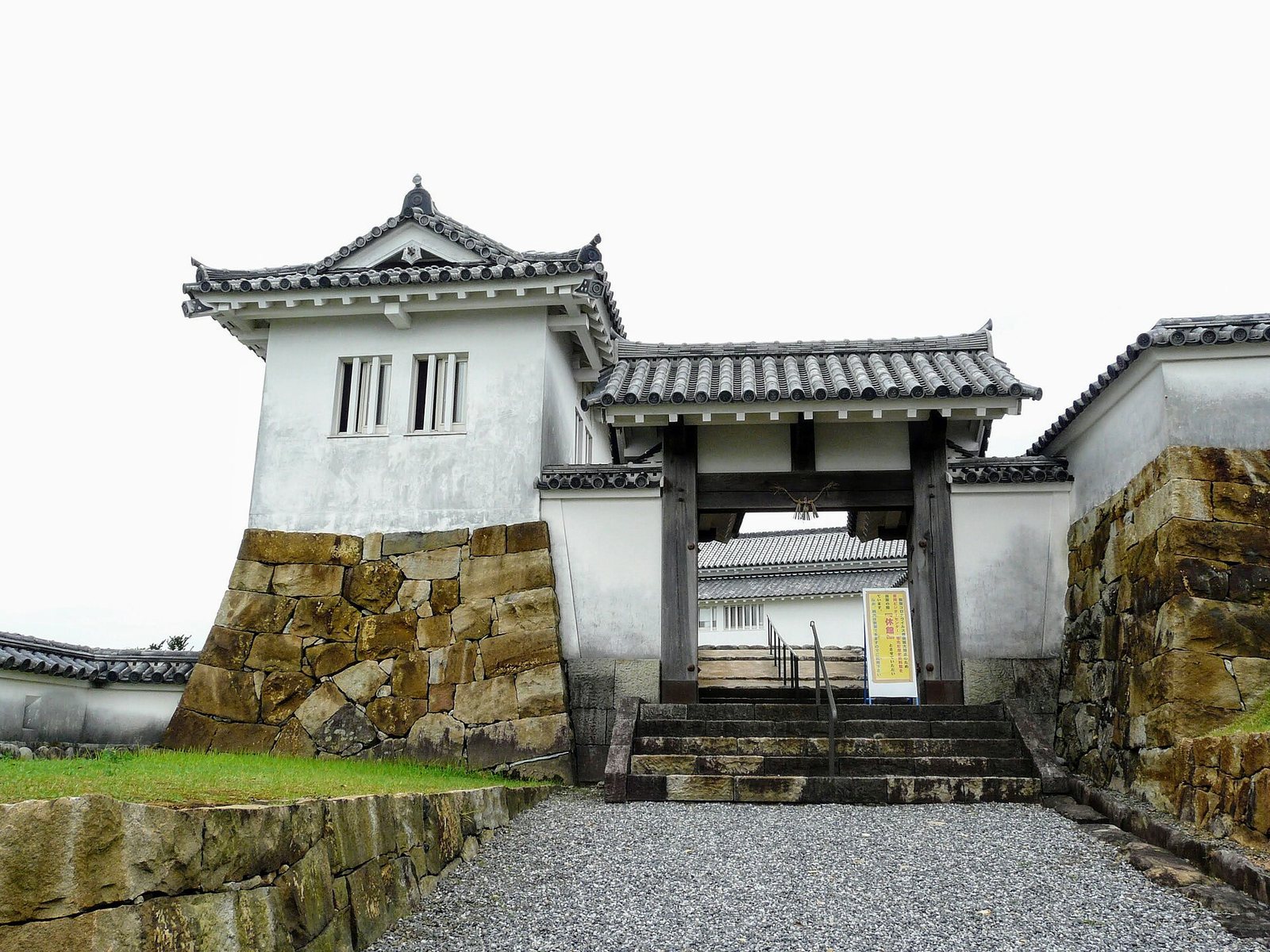
Stone walls and trenches cut along the ridges survive. Reconstructed features include walls, towers, gates, and fences. At the main enclosure, a restored Kōraimon gate has a covered central entrance and smaller roofs to either side. Towers also stand within this enclosure.
Structures and commemorative features
Second enclosure
A tower on the second enclosure houses the Reihoku Town History Museum. Two memorials to Amakusa’s revival stand nearby. One has bronze figures of Suzuki Shigenari and his elder brother Suzuki Shosan, a Buddhist priest who assisted him. The other depicts Katsu Kaishu, a late-Tokugawa naval official and statesman, and Rai Sanyo, a scholar and historian.
Shrine and Adam Arakawa memorial
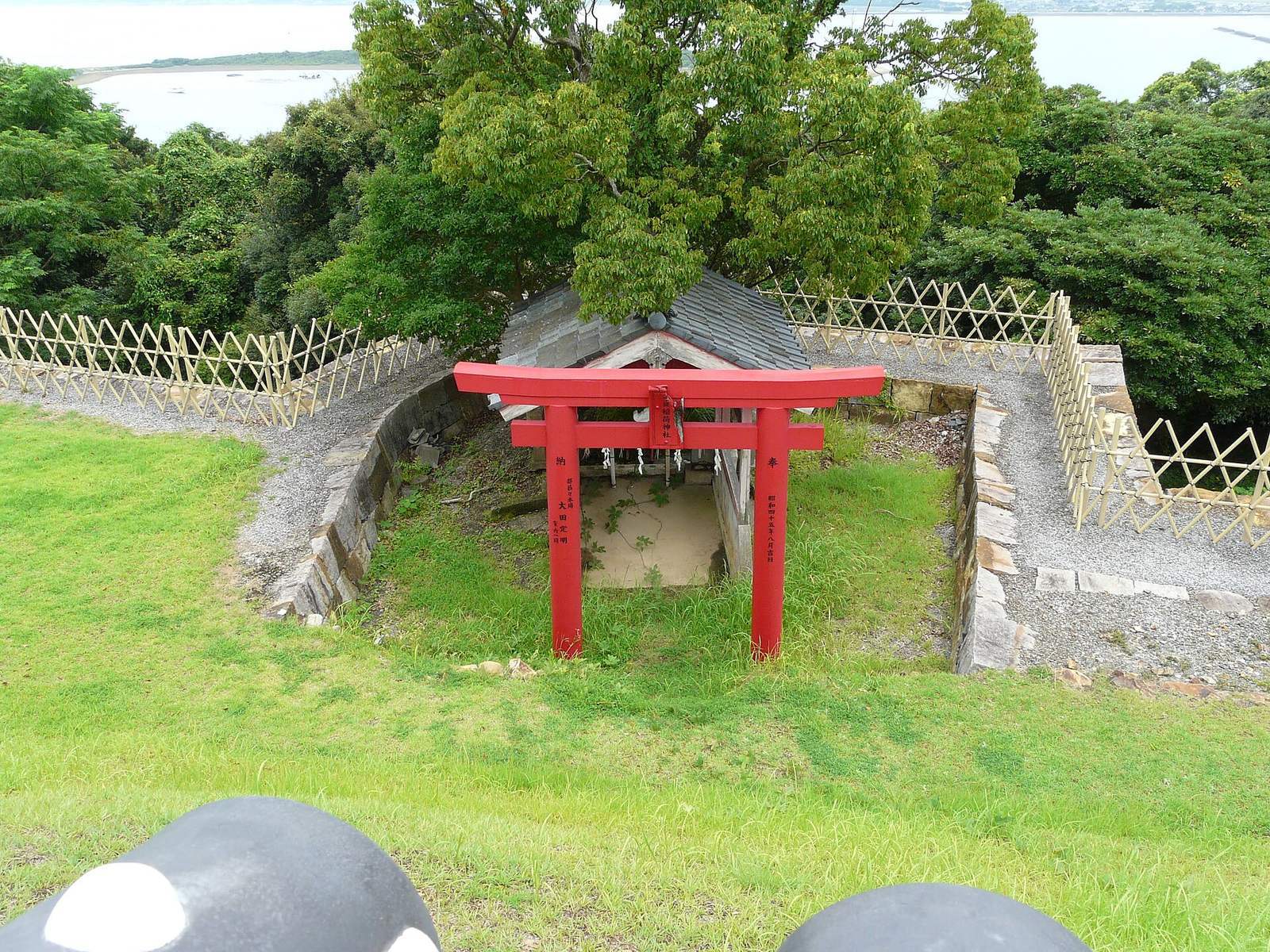
An Inari shrine stands below the second enclosure toward Tomoe Bay. Inari is a Shinto deity associated with rice and agriculture. Below the parking area for the second enclosure is a memorial park for Adam Arakawa, containing three monuments.
Relocated magistrate’s-office gate
The former main gate of the Amakusa magistrate’s office survives at a temple that contains the Suzuki family graves. It stands in a relocated position.