Fortress of Santo Amaro da Barra Grande: A Coastal Defense of Santos
Site at a Glance
- Country
- Brazil
- Primary era
- Early Modern
- Eras represented
- Early Modern, Modern
- Civilizations
- Portuguese
- Site type
- Military
- Remains
- Fort
On this page8 sections
History
Foundation and early attacks
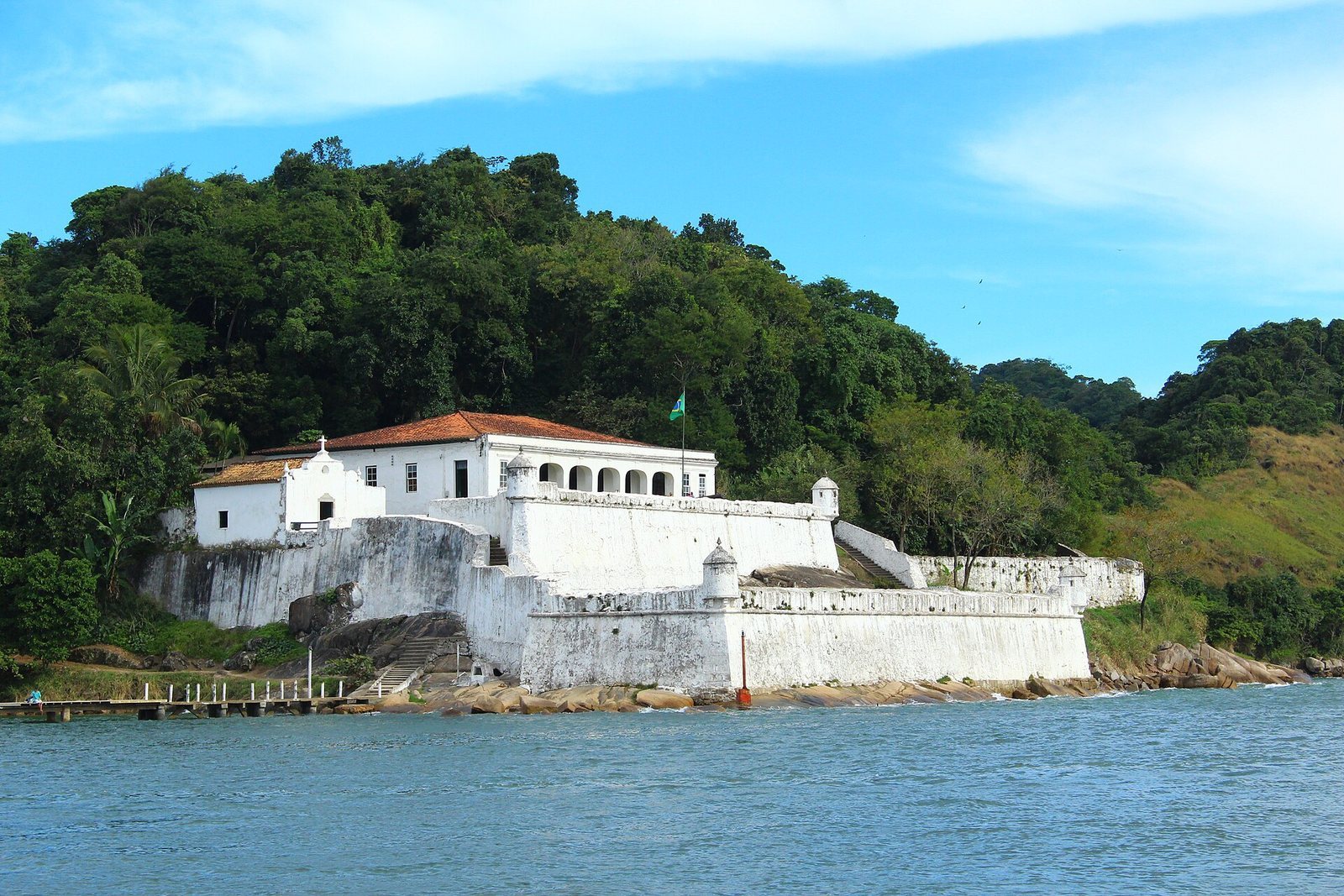
The Fortress of Santo Amaro da Barra Grande is a coastal defense on Santo Amaro Island in Guarujá, São Paulo, Brazil, overlooking the channel to the port of Santos. Portuguese authorities began building it in 1584, during the Philippine Dynasty, when Portugal was ruled by monarchs from the Spanish Habsburg line. The plan is attributed to Italian military architect Giovanni Battista Antonelli.
The fortress followed an attack on Santos in December 1583 by English corsair Edward Fenton. Andrés Higino repelled the assault. Spanish admiral Diogo Flores de Valdés, who was patrolling the Brazilian coast toward the Strait of Magellan against corsairs, ordered Higino to return to Santos with three galleons. Some of the fortress’s artillery came from a galleon captured from corsairs during the events surrounding its establishment.
An 1885 assessment later characterized the defenses as weak and stated that they offered no resistance during English corsair Thomas Cavendish’s attack in 1590. The fortress repelled Dutch admiral Joris van Spielbergen’s attempt to replenish supplies on 3 February 1615. In August 1710, it also turned back French corsair Jean-François Duclerc, who continued on to Rio de Janeiro.
Rebuilding and eighteenth-century defenses
Captain Luiz da Costa de Siqueira took command in 1702, when the garrison consisted of a fort governor and 100 soldiers. A royal order in 1709 called for more troops and heavy artillery from Rio de Janeiro. In 1711, Santos resident Manuel de Castro de Oliveira offered to rebuild and arm the fortress at his own expense in return for rewards. The Crown accepted in 1715, offering him noble status, admission to the Order of Christ, a Portuguese religious and military order, an annual allowance, and an office in Minas Gerais for his son.
Plans for rebuilding included a 1712 design signed by Manuel Pinto de Villa Lobos. Work proceeded under French brigadier and engineer Jean Massé, assisted by sergeant-major Antônio Francisco Lustosa. In 1717, the governor of Santos assigned Luiz Antônio de Sá Queiroga to expand the defenses. The wall was completed in 1721 under Viceroy and Captain-General Vasco Fernandes César de Meneses. The fortress received 32 guns in 1723–1725, followed by repairs in 1731–1732.
Around 1739, Brigadier José da Silva Pais inspected the fortress and other coastal defenses. His plans included a new powder magazine and a chapel on the site of the earlier magazine; the chapel opened in 1742. In 1765, São Paulo governor D. Luís Antônio de Sousa Botelho Mourão, the fourth holder of the Morgado de Mateus hereditary estate, ordered repairs and enlargement because of the fortress’s poor condition. The following year, he ordered the Góis Beach Battery built as an advanced position to strengthen the defenses and exchange fire with Fort Estacada. The Spanish Gate dates to this period.
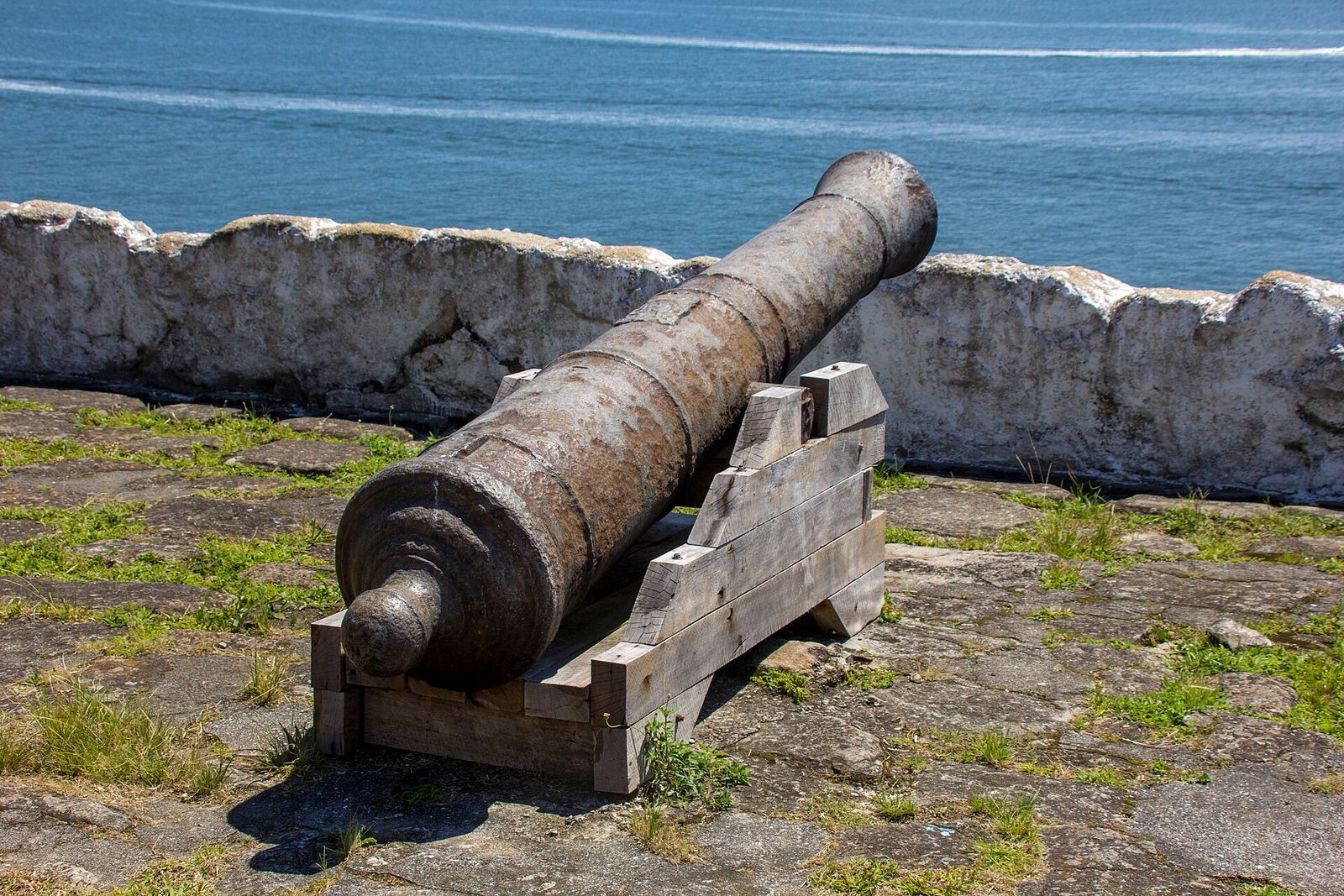
A report from 30 June 1770 counted 28 guns: three rated for 24-pound shot, eight for 18-pound shot, three for 12-pound shot, three for 8-pound shot, and eleven for 6-pound shot. A map of the fortifications from 1847 showed 22 guns.
Nineteenth-century service and damage
The fortress also served at times as a political prison. After repairs in 1885, its batteries exchanged fire with the cruisers República and Palas on 20 September 1893 during the Naval Revolt, a Brazilian naval rebellion of 1893–1894. The fighting damaged the walls. The fortress had come under the Ministry of the Navy in 1889, and its last nineteenth-century works included an unfinished barracks renovation in 1894.
Deactivation and later uses
In 1905, the fortress was disarmed and its equipment transferred to the 3rd Artillery Battalion. A detachment of the 24th Infantry Battalion was quartered there while working on Fort Itaipu. As that fort’s construction advanced, Santo Amaro lost strategic importance and was deactivated in 1911.
During the 1932 Constitutional Revolution, a conflict between São Paulo and Brazil’s federal government, the fortress housed the 3rd Company of the Santos Engineering Battalion and served as a parallax post, an observation position for locating targets by comparing sightlines. Telephones and loudspeakers connected engineers on duty with mined defenses at the entrance to Santos harbor. Batteries for detonating the mines were placed in a fortress sentry box and at points along the channel.
In the late 1940s, the site housed facilities of the former Maritime and Air Police. From 1956, it served as the nautical headquarters of the Santos Military Circle. The federal property and its surrounding area received protection as part of Brazil’s national historical and artistic heritage on 23 April 1964, and São Paulo’s state heritage council also protected the site. In 1990, students from Guarujá campaigned to defend it. A restoration agreement signed in 1993 by the federal heritage institute, the municipality, and the Catholic University of Santos led to restoration of the complex.
Remains
The fortress occupies the southeastern part of Santo Amaro Island between Góis Beach and Santa Cruz dos Navegantes Beach, overlooking Barra Grande, the channel leading to Santos. Its complex includes the Góis Beach Fortlet, the main fortress, the Góis Beach Battery, and the Spanish Gate, which connects the fortress to the battery. The fortress is in good condition.
Defensive works
The documented defenses include a wall, parapets (protective walls), a redoubt (a small defensive strongpoint), a curtain wall (a wall connecting defensive positions), and a powder magazine. Together, these features formed the fortress’s defensive works, while the Góis Beach Battery served as a separate part of the wider complex.
Chapel and mural
The chapel stands on the site of the earlier powder magazine. During the restoration, the family of Japanese-born Brazilian painter Manabu Mabe donated his 20-square-metre mural Red Wind for the chapel.