Kolbäck Church: A Medieval Parish Church in Sweden
Site at a Glance
- Country
- Sweden
- Primary era
- Medieval
- Eras represented
- Medieval, Early Modern, Modern
- Civilizations
- Swedish
- Site type
- Religious
- Remains
- Church
On this page12 sections
History
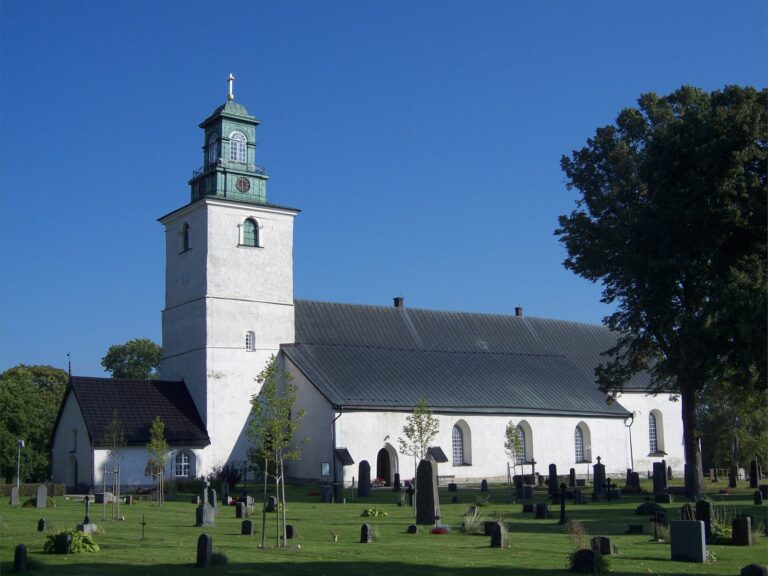
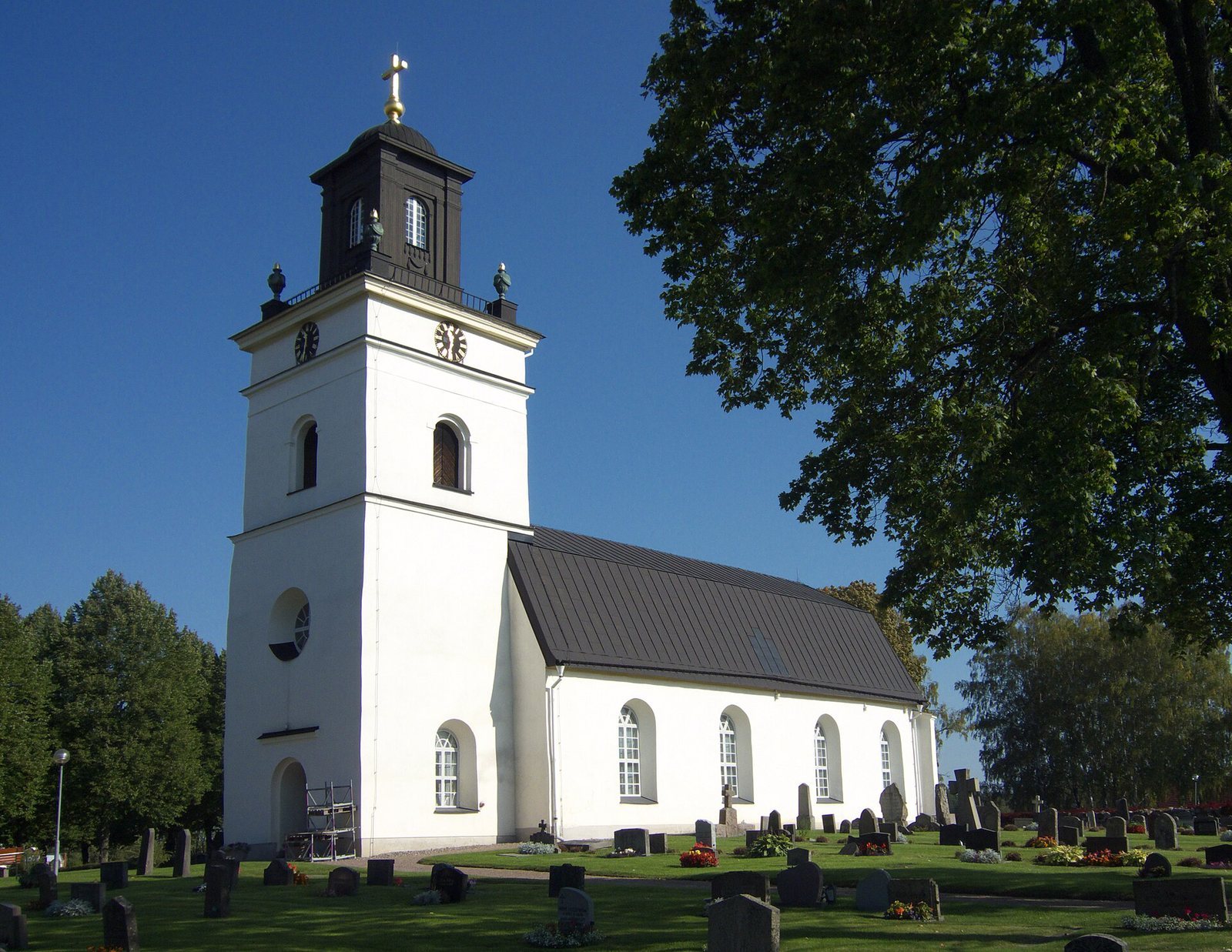
Kolbäck Church stands at the southern edge of Kolbäck, Sweden, and belongs to Hallstahammar-Kolbäck Parish in the Diocese of Västerås, a regional church district within the Lutheran Church of Sweden. It lies about six kilometres south of Hallstahammar. The original Romanesque building, in a medieval European architectural style, was probably erected in the late 12th or early 13th century, and the church was consecrated in the 13th century.
Medieval development
The nave was extended around 1300. During the 15th century, a tower was added at the west end, along with the present chancel, the area around the altar. The church’s western sections incorporate parts of the original building.
Seventeenth- and eighteenth-century changes
In 1658, a chapel on the north side was built for use as a burial place for Esbjörn Mårtensson, who had been ennobled as Reutercrantz, and his descendants. Tie rods spanning the interior were added in the 1730s. New pew furnishings followed in 1752.
On 12 June 1785, lightning set fire to the tower spire. The blaze destroyed the tower, the nave roof, and all the windows, and damaged the interior. Repairs lasted about three years. They replaced the steep medieval roof with a lower, broken-pitch form and put a lantern, a structure at the top of a tower, in place of the burned spire. The lantern was probably designed by Dan Wahlström, a master mason in nearby Strömsholm.
Nineteenth- and twentieth-century renewal
In 1867, metal roofing was used for the first time, replacing the earlier shingles. Architect Bernhard Schill directed the latest major renewal of the interior in 1940.
An organ was in use at the church by the 17th century. In 1840, Pehr Gullbergson of Lillkyrka moved an instrument here from Ramnäs Church and rebuilt it. Made in 1707 by Johan Niclas Cahman of Stockholm, it had eight stops, which control sets of pipes or tones. Furtwängler & Hammer of Hannover built an organ for the church in 1922; it had 18 stops. Olof Hammarberg of Gothenburg built the present organ in 1981.
Remains
The church’s plan brings together a nave, a short chancel with a three-sided eastern end, a north-side extension containing a sacristy and chapel, and a tower at the west. The exterior is finished with smooth plaster and yellowish-white limewash.
Exterior
Walls and windows
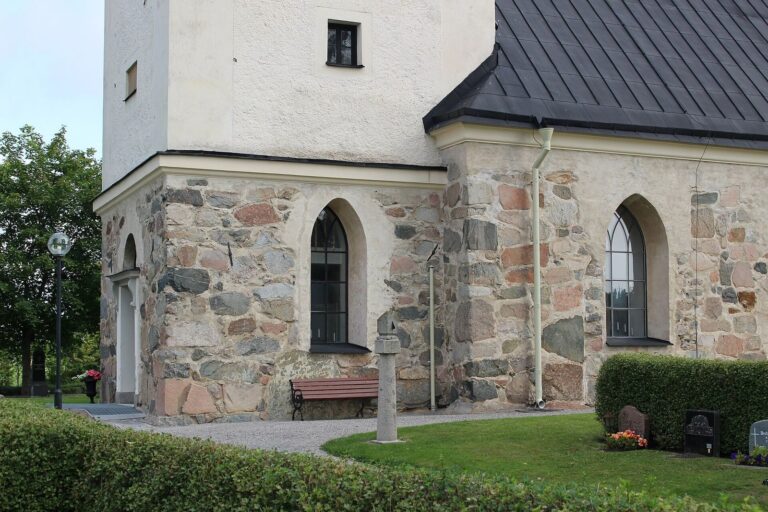
The exterior walls are plastered and limewashed, while the round-arched windows have light-grey wooden frames painted with linseed oil. The western parts of the original church remain incorporated into the present building.
Roof and tower
A sheet-metal covering protects the nave’s broken-pitch roof. The tower has a black-painted lantern topped by a domed roof covered in copper.
Interior and furnishings
Vaults and chancel
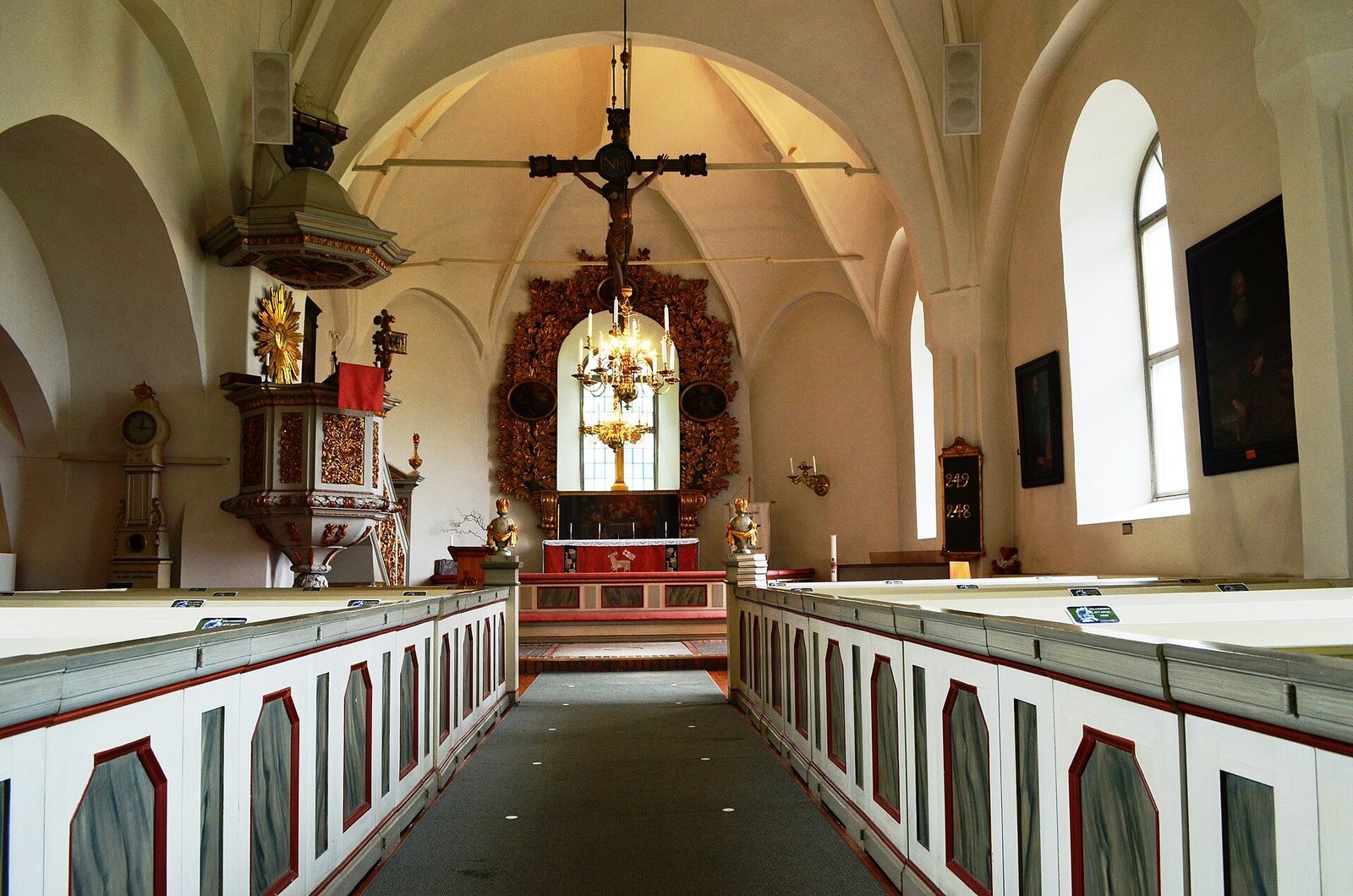
Four star vaults span the interior. Their ribs form star patterns above floors of lacquered boards, and tie rods cross the space. Grave slabs from the 17th and 18th centuries lie in the chancel. Its windows contain matte glass in varied colours and are framed by an ornate Baroque altar ornament, a work in a richly decorated artistic style, with two sculpted trees bearing gilded foliage.
Altar, pulpit, and baptismal area
The masonry altar and three-sided altar rail date to the 1940 renewal. The north chapel has a brick-floored baptismal area. A modern baptismal font, made by an artist from Västerås, carries a “Deer at the Spring” design.
The octagonal pulpit is Baroque in style, with carved acanthus leaves finished in gold. A large ray-like ornament on its backboard surrounds Hebrew letters spelling Yahweh, a name for God in the Hebrew Bible. The present pew fronts have a marbled finish and follow the design of the 1750s furnishings.
Organ
The present mechanically operated organ has a case from the instrument brought to the church in 1840. The case is in Empire style, an early 19th-century form of neoclassical design.