Våmb Church: A Romanesque Medieval Church in Sweden
Site at a Glance
- Country
- Sweden
- Primary era
- Medieval
- Eras represented
- Medieval, Modern
- Civilizations
- Swedish
- Site type
- Religious
- Remains
- Church
On this page16 sections
History
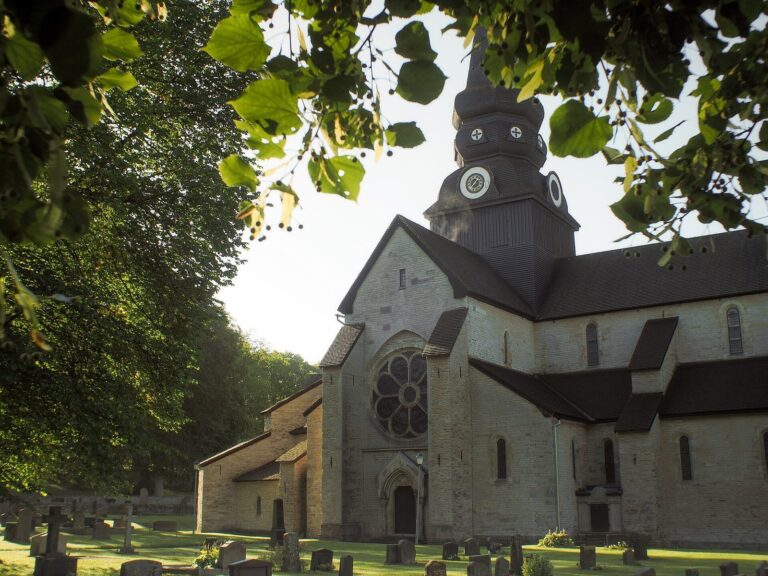
Våmb Church is a Romanesque church near Skövde in Sweden, built in a medieval style known for rounded arches and substantial masonry. The earliest church is generally dated to around the middle of the 12th century, although proposed dates range from 1050 to 1160. It was consecrated during the 12th century. It is described as Skövde’s oldest and smallest church, with room for 50 people.
Foundation and medieval development
Local tradition credits Saint Elin with building the church on her estate at Våmb. Elin was a medieval Swedish saint associated with Västergötland and is its patron saint. The church’s original plan had a nave, the main body of the building, a very short chancel around the altar, and an apse, a recess at the end.
A tower was added in a later building phase, probably around 1200. During the later Middle Ages, builders added two groin vaults in the nave, ceilings formed where two barrel-shaped vaults meet, and a barrel vault, a continuous arched ceiling, in the chancel. A timber porch was built in front of the south entrance, probably in the late Middle Ages or the 16th century.
Repairs and restoration
Repairs to the whole church took place around 1790. The building deteriorated again during the 19th century, and restoration began in the 1890s. In 1897–98, architect Helgo Zettervall oversaw major work. Iron supports strengthened the walls and vaults, much of the interior was replaced, and workers removed the timber porch. Plaster was stripped from the inside and outside to give the church an older appearance.
During architect Axel Forssén’s restoration of 1923–24, the walls were plastered again, and the interior fittings and heating system were altered. Further rebuilding in 1944–45 sought to reverse earlier changes to the interior. Since 2014, the church has belonged to Skövde parish; before then it belonged to Våmb parish. It is part of Skara Diocese, an ecclesiastical district of the Church of Sweden.
Remains
Plan and construction
Overall plan and walls
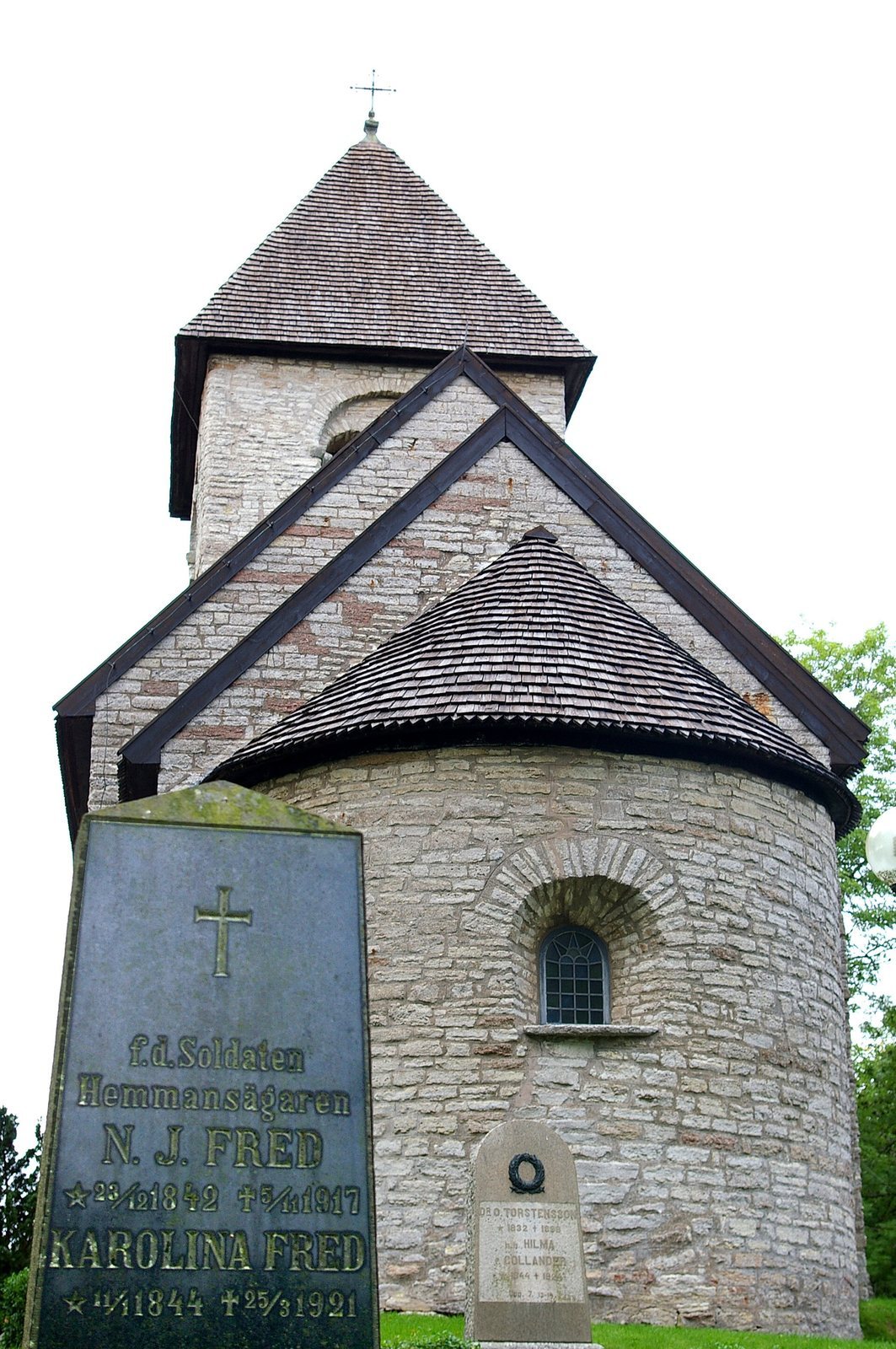
The church is on the eastern slope of Billingen, in Skövde Municipality. Its layout brings together a nave, a notably short chancel, and an apse. The walls are about 1.2 metres thick and consist chiefly of dressed limestone slabs, 9–15 centimetres thick. The stones lie in irregular courses, with joints around 2–3 centimetres wide.
Apse and arch
The apse has an unusual interior arranged in stepped tiers. A triumphal arch, the arch dividing the nave from the chancel, spans about 60 percent of the wall and was probably enlarged.
Entrances and windows
The former main entrance is a round-arched doorway in the nave’s south wall, now blocked with masonry. The nave has large round-arched windows, and the apse window has been rebuilt.
Tower
The tower is made from coarser limestone slabs, and its walls are about 1.3–1.4 metres thick. Its upper section uses a different construction method from the rest of the church. Romanesque openings for bell sound remain, each with a central colonette, or small column. The tower’s original roof was gabled.
Sculpture and furnishings
Baptismal font
The baptismal font, dating to the second half of the 12th century, is made of two sandstone parts and has a drain hole through its centre. Its bowl bears rope-like carved moulding, stylized palm-leaf patterns, and animal and human faces. The font gave its name to the Våmb group, an art-historical category of fonts dated to the late 12th and early 13th centuries.
Medieval sculpture
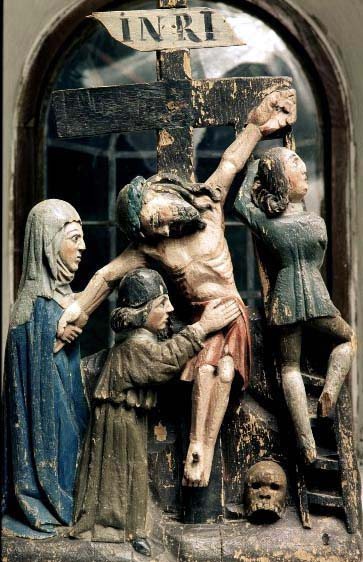
An oak triumphal crucifix, dated to around 1200, hangs above the arch between nave and chancel. Its imagery presents Christ both as victor over death and in physical suffering. A damaged seated oak Madonna, a representation of Mary, dates to the mid-13th century and is 77 centimetres high. Another oak Madonna from Västergötland, 123 centimetres high, dates to the second half of the 15th century and shows Mary standing on a crescent. A 68-centimetre oak sculpture group from the late 15th century stands on the altar before the apse window. Other regional wooden works include a Deposition from the Cross, showing Christ being taken down from the cross, dated to about 1500; a sculpture of John the Baptist from the second half of the 15th century; and another sculpture from the second half of the 13th century.
Pulpit and organ
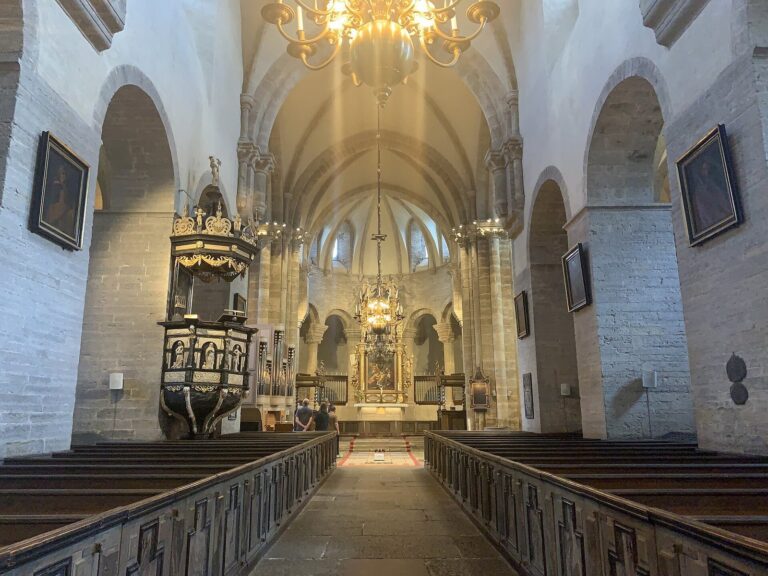
The Baroque pulpit dates to 1773. In the northwest corner, a floor-standing organ and its pipe facade were made in 1996 by Walter Thür Orgelbyggen. The instrument has ten sets of pipes, two hand keyboards, and a foot keyboard.
Setting and associated features
Spring and carved stone
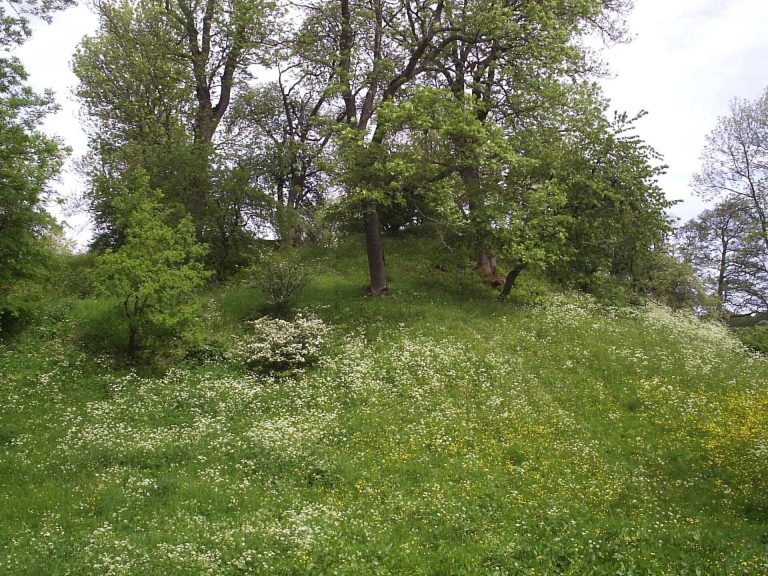
An offering spring named for Saint Elin lies on the slope below the church. A 13th-century lily stone, a carved stone decorated with lily forms, is also associated with Våmb Church.
Historical views
A drawing from about 1670 and a wood engraving dated 1872 depict the church. A view dated 1910 shows the church and a stone-arched bridge over Våmb stream.