Varnhem Abbey: A Cistercian Monastery and Royal Burial Church in Sweden
Site at a Glance
- Country
- Sweden
- Primary era
- Medieval
- Eras represented
- Medieval, Modern
- Civilizations
- Swedish
- Site type
- Religious
- Remains
- Church
On this page12 sections
History
Varnhem Abbey is a former Cistercian monastery in Varnhem, Sweden, founded around 1150 by monks from Alvastra Abbey. The Cistercians were a Catholic monastic order. The abbey church began in the Romanesque style and was completed in Gothic style after a fire in 1234. It later served as a burial place for Swedish kings and nobles.
Christian activity before the abbey
Christian burials at Varnhem began during the 10th century. Radiocarbon dating places the death of the oldest identified Christian man buried there between 780 and 970. A wooden church and a stone church also preceded the monastery. The stone church was built no later than the 1040s and is described as Sweden’s oldest known stone church outside Skåne.
Foundation and medieval growth
The foundation of the abbey is associated with King Eric IX of Sweden and his wife. A wealthy noblewoman named Sigrid, probably a widow, donated the estate to the monks. Queen Christina of Denmark tried unsuccessfully to reverse the gift and take possession of the property.
The earliest surviving written reference to the abbey is a letter of 1248 from Eric the Lisping, a 13th-century Swedish king. Addressed to residents of the parishes of Amnehärad and Visnum, it confirmed that the monks could fish and cut timber in those areas. The monastery also ran a school for children who did not plan to become members of a religious order.
The abbey received backing from the House of Eric, a Swedish royal dynasty, in exchange for burial privileges. Its church became the burial place of Canute I, Eric X, and Eric XI, but not of Eric IX himself. Inge the Elder is linked to a burial there by oral tradition, although his remains may later have been moved to Vreta Abbey. Birger Jarl, his son Eric Birgersson, several bishops of Skara, and members of the De la Gardie family were also buried in the church.
Royal and noble support extended beyond burial rights. Shortly before his death, King Magnus Ladulås gave the abbey extensive woodland near Lake Vättern. Dukes Eric and Valdemar left it 20 marks, a unit of account. The abbots also sent to the papal administration in Rome money collected in Sweden by the Cistercian order.
Fire, rebuilding, and religious change
A fire damaged the abbey in 1234. Birger Jarl and other medieval benefactors helped fund rebuilding, and the church was reconsecrated in 1260. At that time, it was the largest church in Sweden. Another fire struck during the conflict between Albert of Mecklenburg, king of Sweden, and Queen Margaret of Denmark, who also ruled Sweden. The monastery was rebuilt after the damage.
During the Reformation, King Gustav Vasa began transferring monastic resources to the Crown. In 1526 he allowed the monastery to keep royal fines collected on its lands, but a decision the following year assigned its surplus income to the Crown, and the estates were confiscated. In 1528 the abbey was granted to Harald Knutsson Soop. A year later, the king allowed the abbot to resume its administration in return for a payment of 100 marks, a unit of account, in örtugs, a Swedish currency denomination, and half a last, a bulk measure, of oil.
The estate changed hands again over the following years. In 1537 it went to Olof Eriksson, who had to maintain six fully equipped cavalrymen. In 1544 it was granted to Abraham Eriksson Leijonhufvud, with the condition that he support monks still living at the monastery.
Danish forces burned the abbey buildings in 1566 during the Northern Seven Years’ War, a conflict between Sweden and Denmark-Norway and their allies from 1563 to 1570. The church survived that attack. Danes burned the monastery again in 1656, during the wider Northern War of 1655–1660, a northern European conflict involving Sweden.
In the mid-17th century, Queen Christina of Sweden gave the abbey to Chancellor Magnus Gabriel De la Gardie. He restored the church and established a family mausoleum there, while the other monastic buildings fell into decay.
Restoration and present use
Restoration efforts in the 19th century sought to give the church a medieval appearance, but the work was only partly completed. Sigurd Curman’s restoration of the church in 1918–1923 instead retained changes from different periods. The church also formed part of a broader restoration campaign running from 1911 to 1923. Work exposed walls of the former monastery, and excavations in its central area took place in 1921–1929 and again in 1976–1977.
The former Catholic abbey church now serves as an active Lutheran parish church in the Church of Sweden, within Varnhem parish in the Diocese of Skara. It has protected ecclesiastical-monument status under Chapter 4 of Sweden’s Cultural Heritage Act because it was built before the end of 1939.
Remains
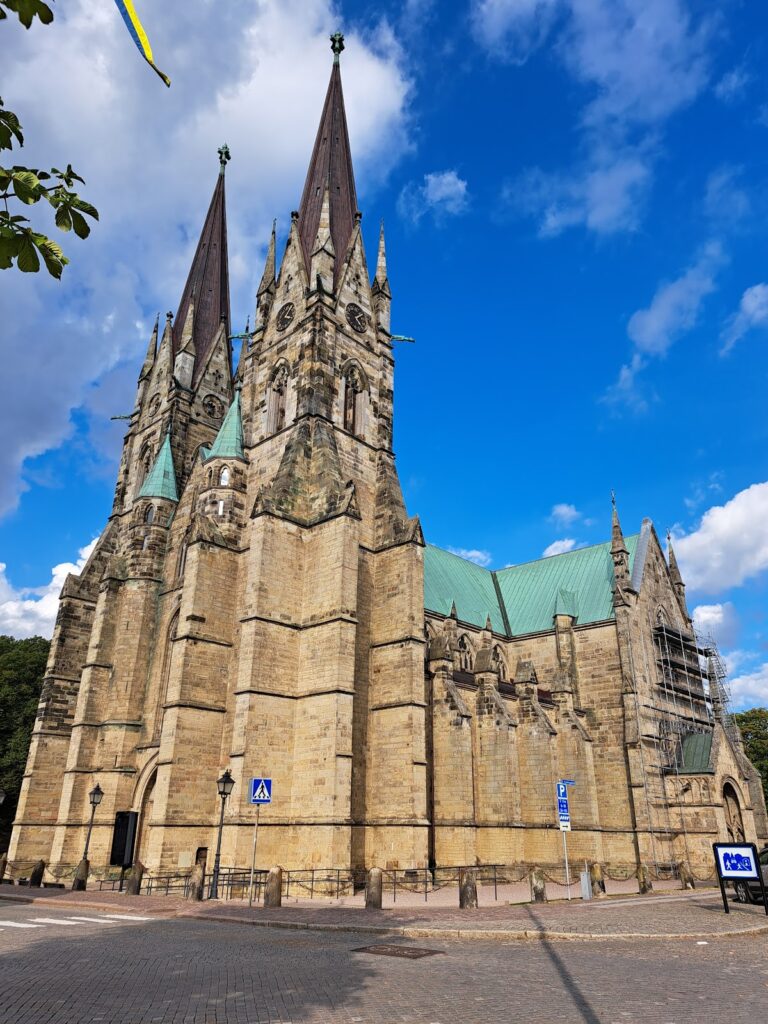
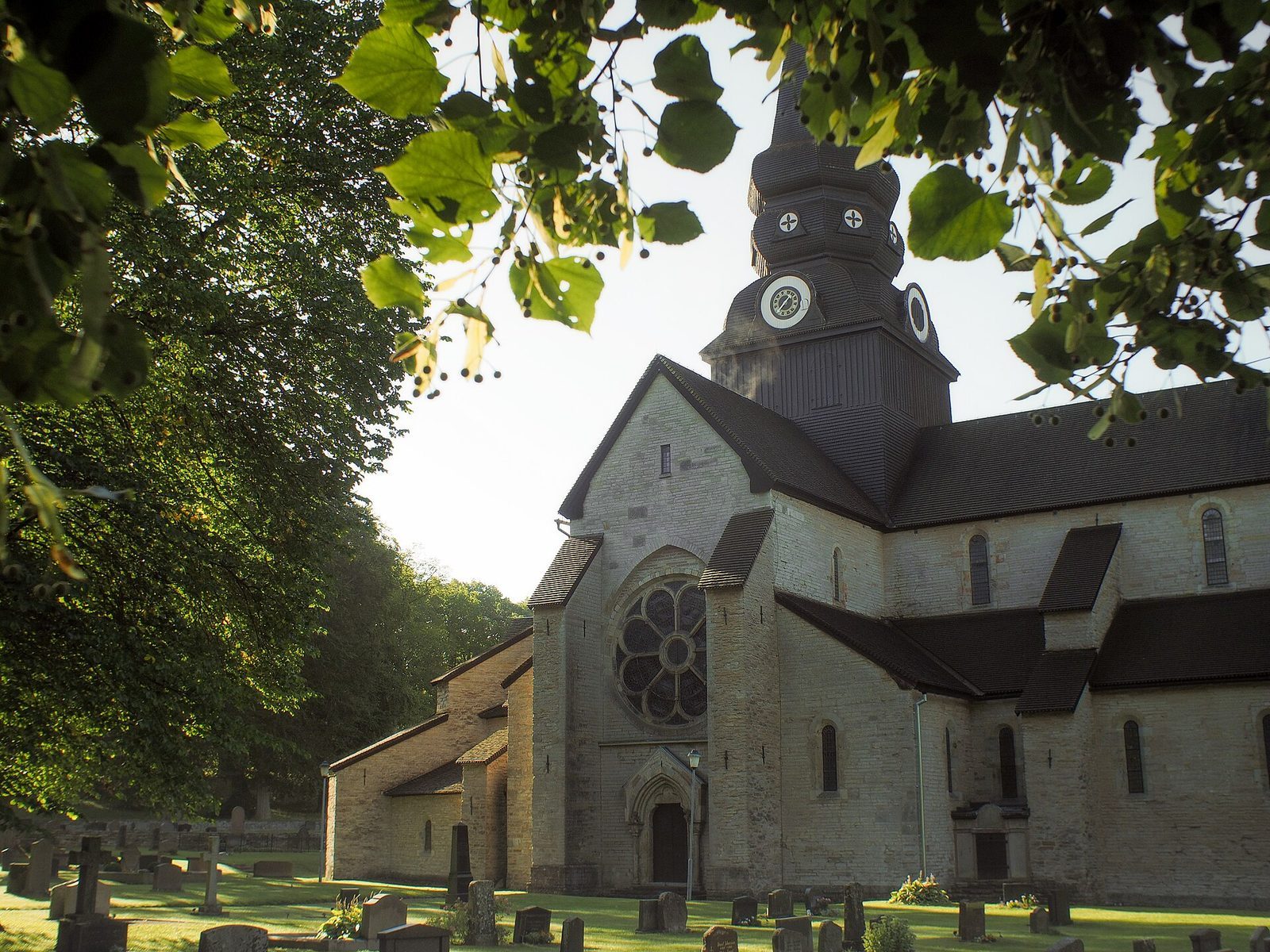
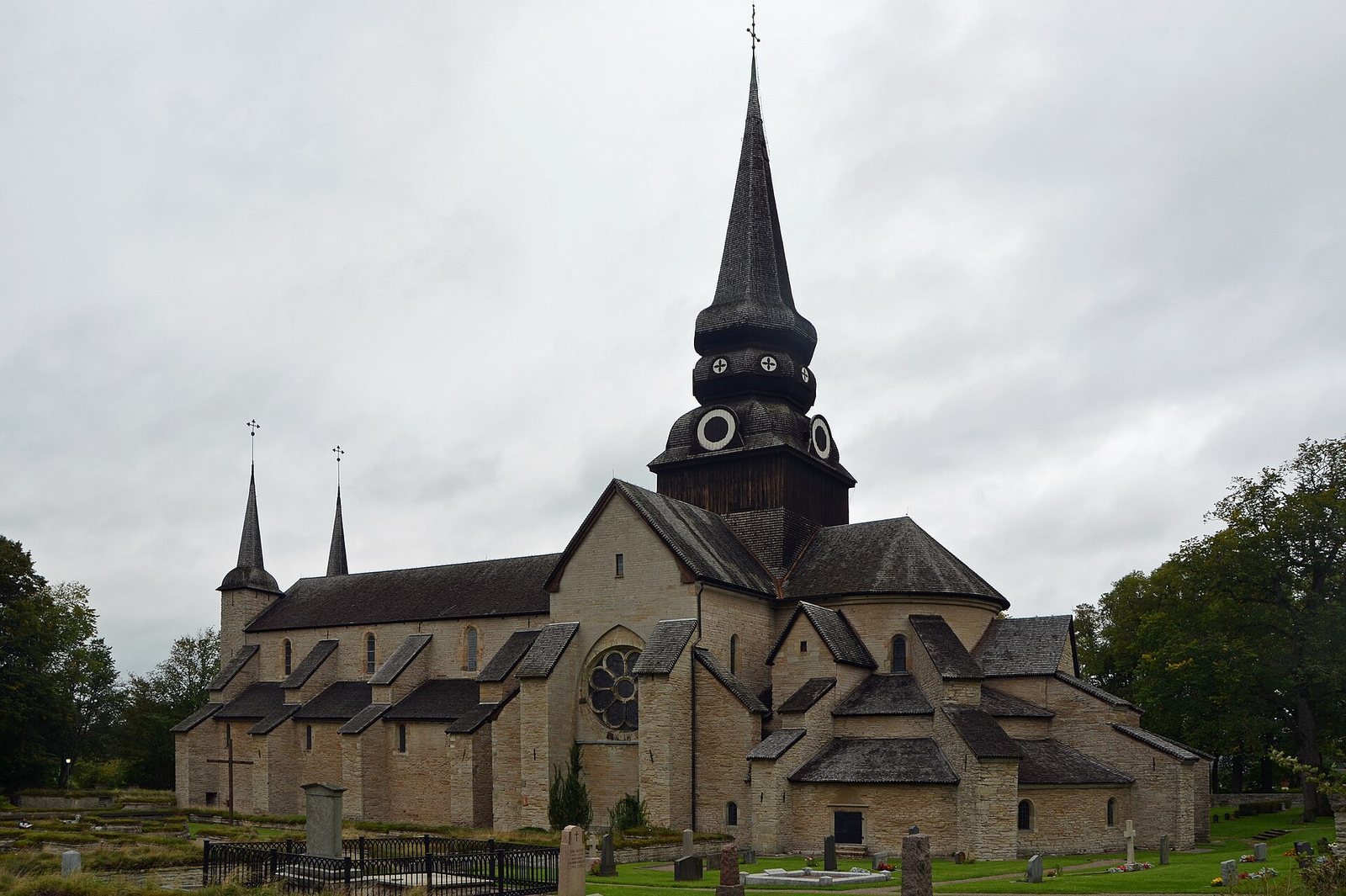
The surviving layout centers on the limestone abbey church, the principal structure among the remains of the monastery. The church stands within the former monastic complex, whose other buildings survive as ruins and exposed foundations.
Abbey church
Plan and choir
The church has three aisles and an ambulatory, a passage running around the chancel and giving access to the surrounding chapels. Its reconstruction followed Cistercian architectural models. The choir design was based on the church at Clairvaux, a major Cistercian abbey in France consecrated in 1174. This form later became characteristic of French Cistercian churches.
Chancel chapels
A ring of chapels survives around the chancel. They were probably intended as burial places for members of King Eric IX’s family, although grave slabs were not installed there until the 16th century. The burials are thought to lie instead in the main nave.
Cross-arms and rose windows
Architect Johan Fredrik Åbom designed a circular rose window for the south cross-arm in the 19th century. In 1889, architect Helgo Zettervall proposed a restoration to give the church a medievalized appearance. The partial work included rebuilding the gables of both cross-arms and completing the rose windows; the medieval stonework dividing the north window into patterns was replaced.
Burial in the nave
A grave in the main nave, opposite the west entrance, was identified in 1922 as that of Birger Jarl and his second wife, Queen Matilda of Holstein. It was opened in May 2002. DNA analysis of teeth in 2007 identified two of the skeletons as Birger and his son Eric Birgersson; the woman’s remains were found not to be related to them.
Other monastic buildings
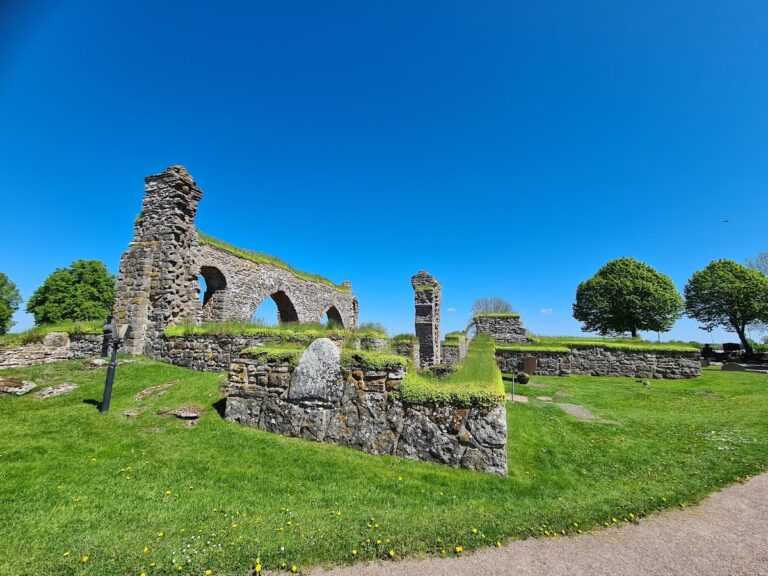
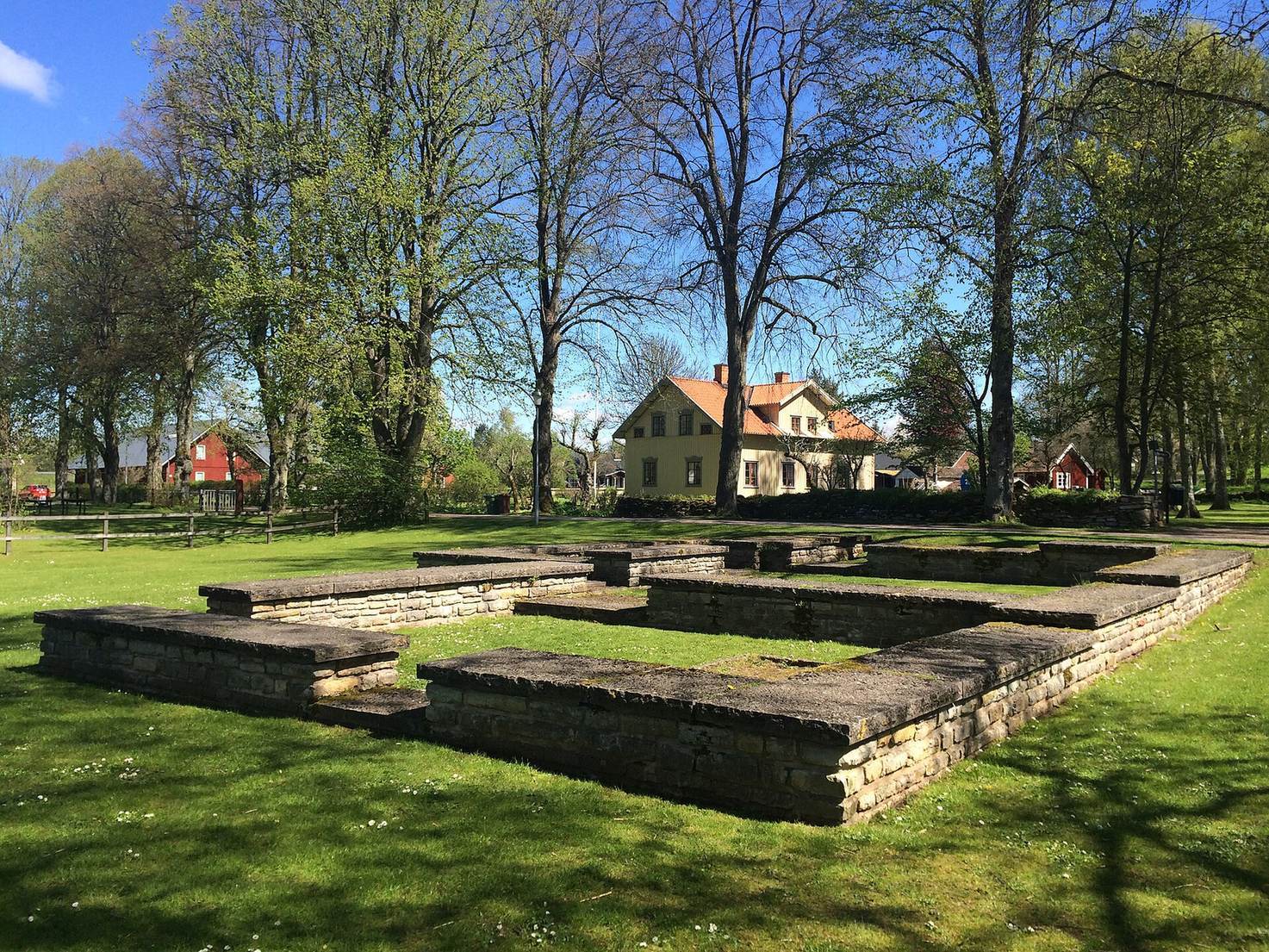
The abbey church is the only monastic building still standing. Ruins and exposed foundations of the other monastery buildings survive around it.