Dilston Castle: A 15th-Century Tower House in Northumberland
Site at a Glance
- Rating
- 3
- Popularity
- Very Low
- Country
- United Kingdom
- Primary era
- Medieval
- Eras represented
- Medieval, Early Modern
- Civilizations
- English
- Site type
- Military
- Remains
- Castle
On this page10 sections
History
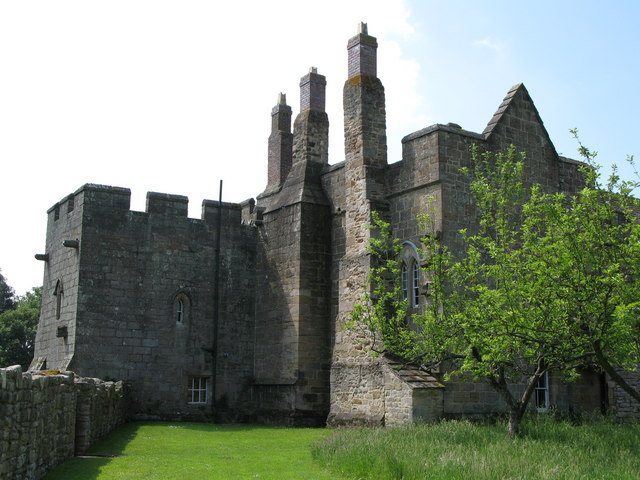
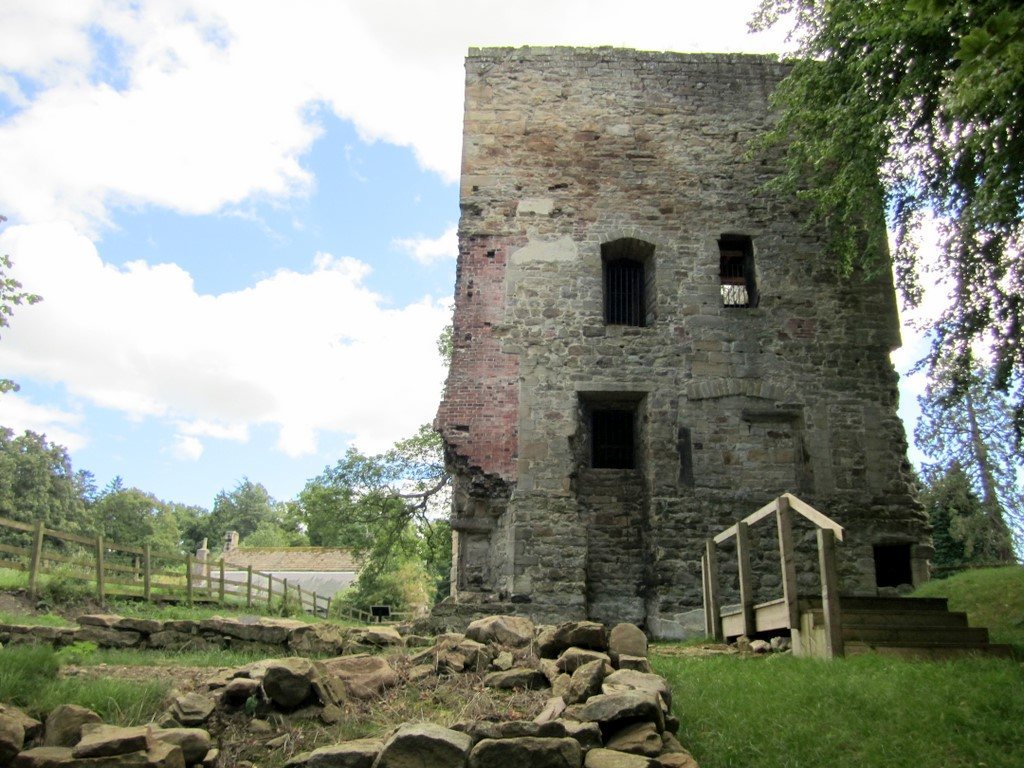
Dilston Castle is a ruined tower house, a compact fortified residence of several storeys, near Corbridge in Northumberland, United Kingdom. Sir William Claxton built its three-storey tower in the 15th century on the site of an earlier pele tower (a fortified borderland residence).
Claxton and Radclyffe ownership
The Catholic Radclyffe family added a private chapel beside the tower in 1616. In 1621, the property passed to the family through Edward Radclyffe’s marriage to the Claxton heiress. The following year, Sir Francis Radclyffe incorporated the tower into a new manor house, Dilston Hall.
Francis Radclyffe, holder of the hereditary title 1st Earl of Derwentwater, supported the Royalist side in the English Civil War, fought between supporters of the Crown and Parliament. The Commonwealth, the republican government that followed the conflict, seized his estates. They were returned to the family in 1660, when the Stuart monarchy was restored.
The 1715 rising and disputed inheritance
In 1709, James Radclyffe, 3rd Earl of Derwentwater, began replacing the old house with a substantial mansion, but the work was never completed. He joined the 1715 Jacobite rising, an attempt to restore the Stuart dynasty to the throne, supporting James Francis Edward Stuart, a Stuart claimant. Convicted of treason, James was executed in 1716. His mother was Lady Mary Tudor, and he was an illegitimate grandson of Charles II, the Stuart king restored in 1660.
A marriage settlement made in 1712 gave James rights to the estates only during his lifetime. After his execution, they passed to his two-year-old son, John. John’s death at age 18 in 1731 placed James’s brother Charles next in line. Charles had fled to France after being attainted for treason, a legal penalty that could deprive a person of rights and property. He returned to support the 1745 Jacobite rising, was captured, and was executed in 1746 under the sentence imposed decades earlier.
Charles’s eldest son, James Bartholomew Radclyffe, known as Lord Kinnaird, was also in the line of succession. A 1731 change to the naturalisation law excluded foreign-born children of people attainted for treason from British subject status, preventing them from inheriting English land. The estates consequently passed to the Crown.
Their ownership was contested through a series of legal measures. In 1723, the Forfeited Estates Commission, which administered property seized by the Crown, offered a future interest in the estates for sale if John died without a son. William Smith paid £1,060 for it. The 1731 Forfeited Estates (Derwentwater Estate) Act later voided the sale: the original agreement had been cancelled and replaced when only two commissioners were present, although four were required, and the property had not been advertised again. The Act ordered the Court of Exchequer to sell the estates, but no sale followed.
Under the 1734 Forfeited Estates (Greenwich Hospital) Act, income from the Crown’s estates, after specified annuities and mortgage interest, was assigned to complete Greenwich Hospital, a charitable institution supporting Royal Navy seamen. A further Act in 1738 addressed difficulties with this arrangement. After Charles’s execution, Lord Kinnaird’s claim was rejected by the hospital commissioners because it had not been made before the Forfeited Estates Commission and they treated him as a foreign national for legal purposes. A compromise under the 1748 Crown Lands (Forfeited Estates) Act provided £24,000 for Lord Kinnaird and £6,000 to be divided among his siblings.
Greenwich Hospital and later ownership
Left unfinished after the 3rd Earl’s execution, Dilston Hall served as the Greenwich Hospital estate steward’s residence and gradually deteriorated. The commissioners ordered its demolition in 1765, leaving the tower and chapel. After Charlotte Maria Radclyffe, 3rd Countess of Newburgh, died in 1755, Lord Kinnaird succeeded as 4th Earl of Newburgh. He lived until 1786.
A later 5th Earl of Newburgh unsuccessfully petitioned for the estates’ return. He received an annuity of £2,500 until his death in 1814, and his widow continued to receive it until 1861. By the 1780s, the estates brought Greenwich Hospital an annual income of £15,000. The hospital retained control until the Greenwich Hospital Act of 1865 transferred the estate to the Admiralty Board, the government body responsible for naval administration. The board then sold it to Wentworth Blackett Beaumont, 1st Baron Allendale.
Preservation and local tradition
The tower and chapel are Grade I listed buildings, the highest listed-building grade in England, and Scheduled Monuments, a designation for nationally important historic structures and archaeological sites. Restoration began in 2001. In 2004, work was supported on The Lord’s Bridge and on conserving the Jacobean range in the grounds.
Local folklore says that the 3rd Earl’s wife haunts the castle, and that Devil’s Water ran with blood either on the day of his execution or on its anniversary. The ballad Derwentwater’s Farewell imagines the Earl’s last words at the scaffold. It is attributed to the English antiquarian Robert Surtees, who composed ballads and presented them as traditional.
Remains
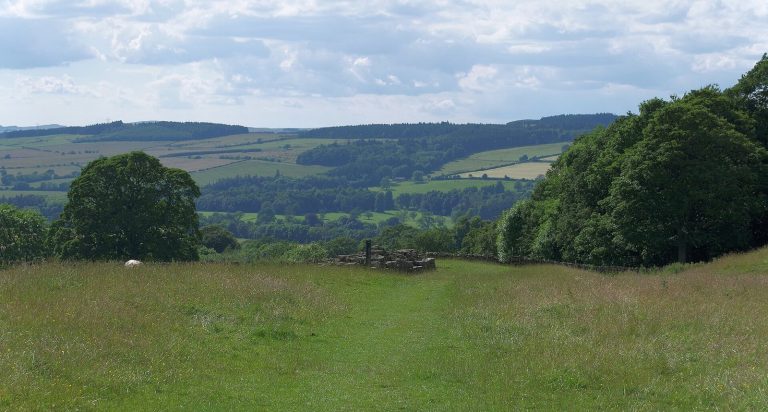
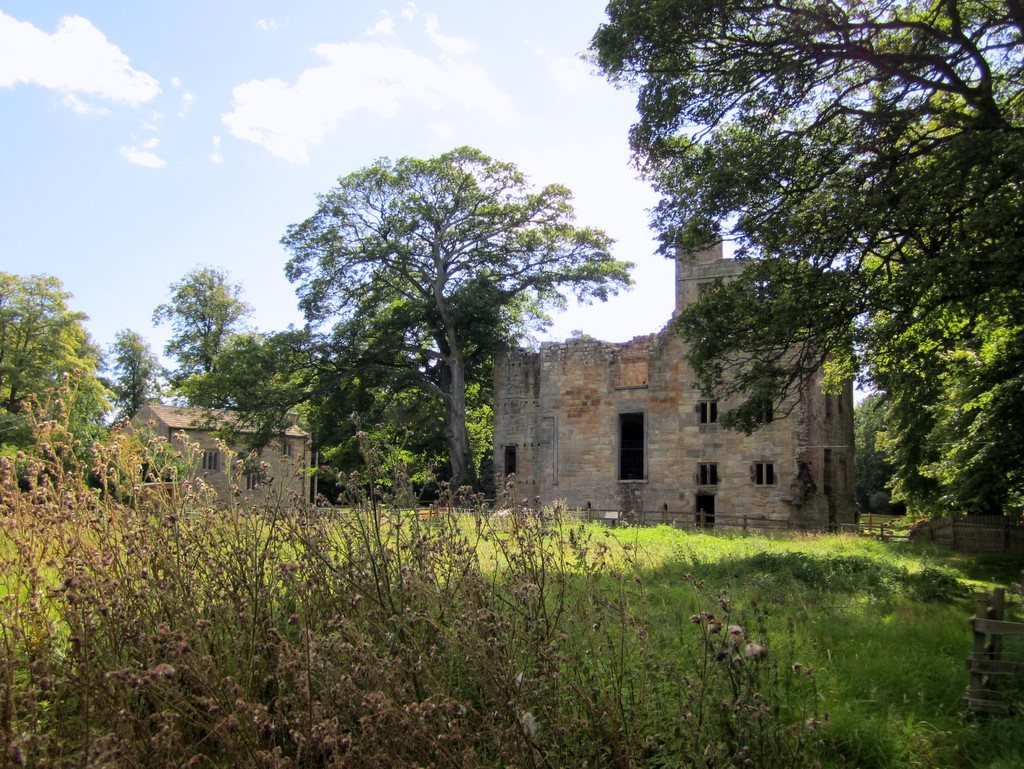
The surviving complex stands on the south bank of the River Tyne, facing Corbridge, with the fast-flowing Devil’s Water and its several tributaries below. Its buildings include a three-storey tower and a separate chapel beside it; historic structures and excavated remains also extend across the surrounding area.
Tower and chapel
Tower
The tower rises three storeys. Restoration gave it a new roof and renewed the mortar between its building joints. The missing upper floor was rebuilt in wood, and the staircase was reconstructed.
Private chapel
The chapel remains a distinct building immediately beside the tower, forming a separate part of the surviving complex.
Grounds and archaeological remains
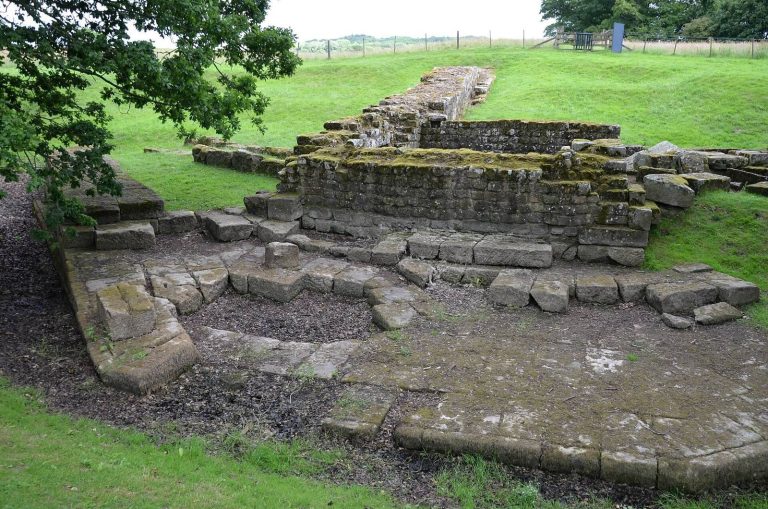
The grounds include a Jacobean range, in the style associated with James I’s reign (1603-1625), with cobbled floors. The Lord’s Bridge, an early 17th-century bridge, lies near the castle. Excavations have revealed remains of Dilston Hall and its 17th-century service range, as well as traces of the medieval manor.