Ledro Pile-Dwelling Settlement: A Bronze Age Lakeside Community in Italy
Site at a Glance
- Country
- Italy
- Primary era
- Bronze Age
- Eras represented
- Stone Age, Bronze Age
- Civilizations
- Unclassified
- Site type
- Domestic
On this page11 sections
History
Occupation and cultural connections
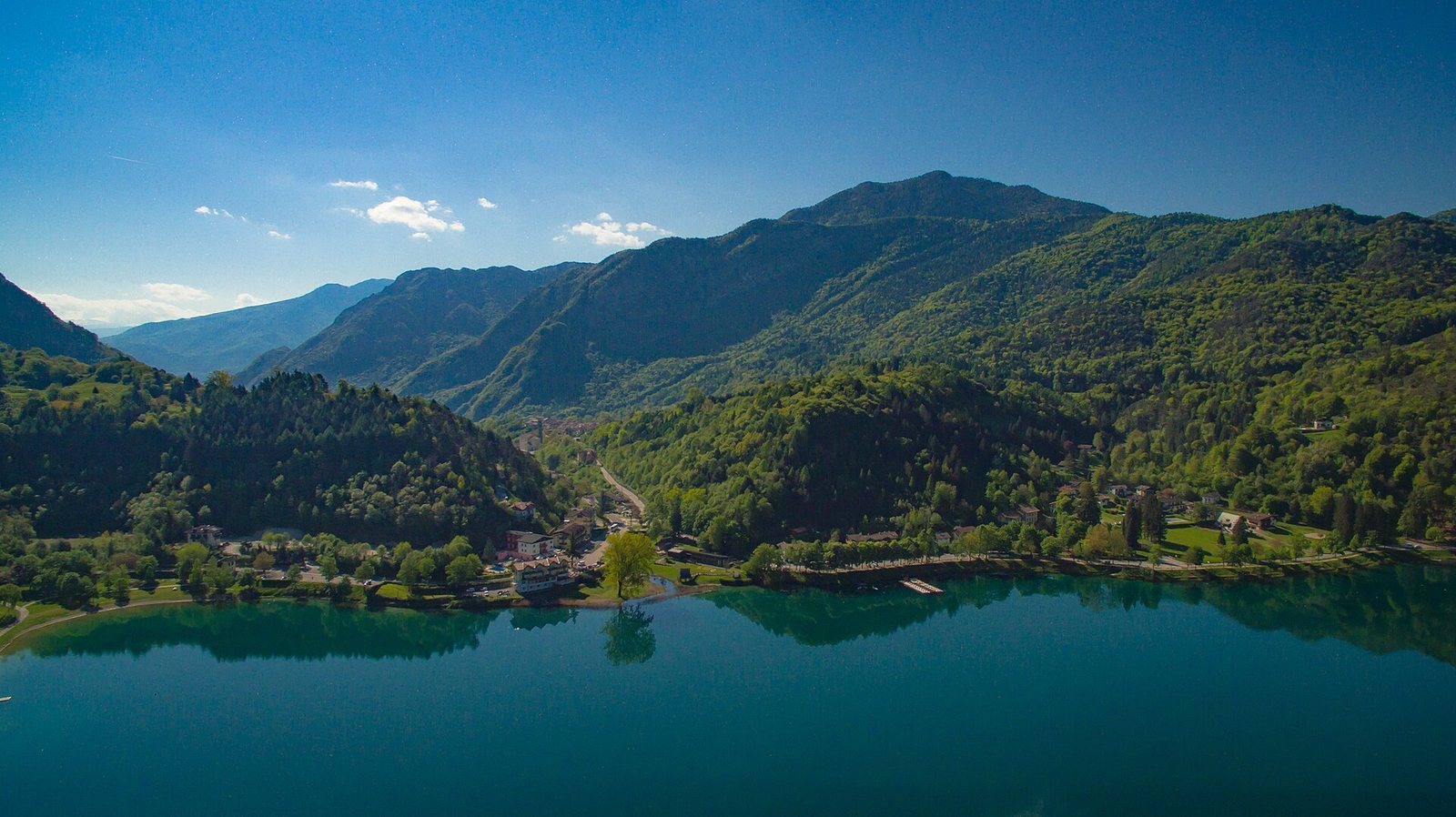
The Ledro pile-dwelling settlement, a prehistoric lakeside community whose buildings included houses supported on timber piles, lies on the eastern shore of Lake Ledro near Molina di Ledro, Italy. It was occupied from about 2200 to 1300 BC, spanning the Final Neolithic, the later part of the Stone Age, and the Early and Middle Bronze Age, successive phases of the period when bronze became widely used. The finds provided an early picture of Bronze Age life in Trentino, a period previously little understood.
Bone finds point to influence from the Bell Beaker tradition, a prehistoric culture recognized through material that spread across parts of Europe, and suggest that occupation began in the Final Neolithic. The sequence of deposits indicates three periods of settlement and at least two fires, which destroyed the community wholly or partly. After a lull with few finds early in the Middle Bronze Age, activity resumed, though less strongly than at Fiavé, to the north. Ledro later developed along its own course and was abandoned for reasons that remain unknown.
Italian prehistorian Pia Laviosa Zambotti once argued that the Polada culture, an archaeological tradition of Bronze Age northern Italy, reached Trentino late because the region lay at its edge. That explanation was later rejected. Ledro has many links with Polada, but differences in building methods and the absence of some characteristic objects point to a community that engaged with the culture only in part. It is the northernmost Polada-associated settlement in the valleys of the southern Pre-Alps; no substantial finds of the classical Polada tradition are known north of Lake Ledro.
Ledro’s pottery also shares features with the third cultural layer at Fiavé, which represents a distinct Early Bronze Age culture. Some of Ledro’s pottery differs from Polada examples, and has been understood as evidence that communities in Trentino were developing new cultural elements rather than simply forming a distant fringe.
Discovery and archaeological investigations
In 1929, engineering work for the Ponale power station lowered Lake Ledro’s level by seven metres and exposed the timber piles. Before investigations began, they were mistaken for remains of a structure controlling the Ponale outflow. Pottery fragments among the piles were initially misread as household refuse submerged by people during an epidemic. Fishermen had already complained that their nets caught on the timber.
The Archaeological Superintendency in Padua, a public authority responsible for archaeological heritage, received news of the finds that year. Its director, Ettore Ghislanzoni, proposed that the piles belonged to a prehistoric settlement and led an excavation at the site’s southern edge. Limited funds during the economic crisis restricted the work to about 500 square metres of a site covering roughly 5,000. The excavation aimed to establish the settlement’s approximate layout and age.
In the winter of 1937, with the lake level 18 metres below gauge zero, Raffaello Battaglia directed a larger excavation across almost all the site not investigated in 1929. Publicity drew people seeking souvenirs, and the Carabinieri, Italy’s national military-police force, guarded the area. Local workers took part; careless handling damaged some finds, and thefts occurred despite the guards. The campaign produced 176 crates of material. Battaglia’s surviving notes were fragmentary, and his excavation report appeared in 1943.
Further excavations took place in the 1950s and 1960s. Work in 1967 sought material for the museum then being developed and examined an area that had slipped away as the lake fell in 1929. Excavations in 1980 and 1983 investigated areas left untouched by Battaglia. From 2003 to 2011, provincial archaeologists examined ground mainly to the north and south of the excavated area, sampled parts of the Ponale outflow, and used radiocarbon dating to estimate the age of organic material. These investigations refined understanding of how the settlement had been built. Ghislanzoni had classified it as a wetland settlement in a 1930 report.
Protection and recognition
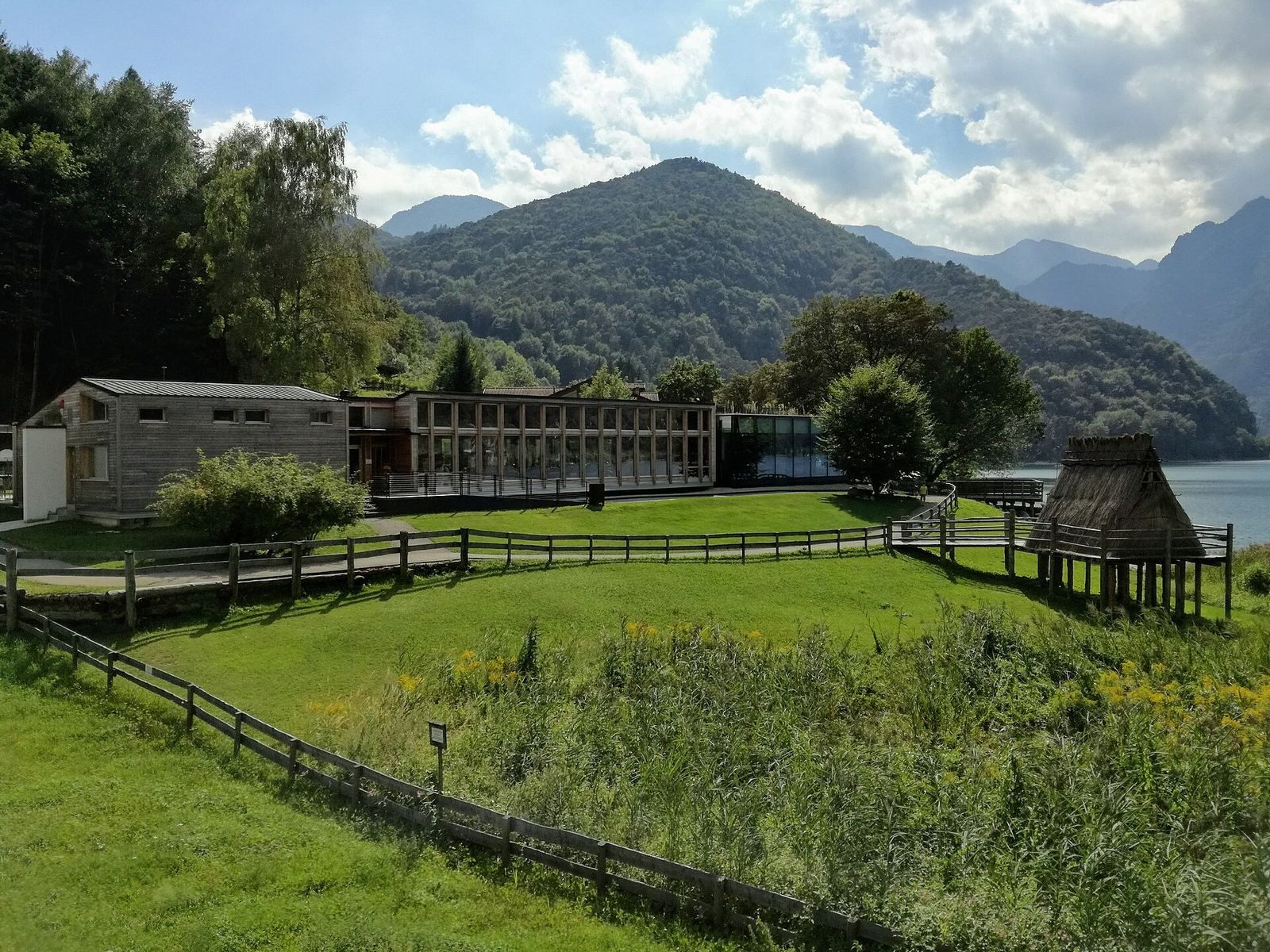
Looting recurred while the area remained freely accessible, and an unknown number of objects were lost. Part of the settlement became an archaeological zone in 1965; after a change to the former municipality of Molina di Ledro’s zoning plan, protection was extended across the site. Construction of a museum began in 1968, partly as a measure against further looting, and it opened in September 1972. In 2011, the Ledro settlement became part of a UNESCO World Heritage listing of 111 prehistoric pile-dwelling sites across six Alpine countries.
Remains
Layout and buildings
The settlement occupies about 5,000 square metres at 651 metres above sea level, around the now-silted Ponale outflow on Lake Ledro’s eastern shore. Its plan is trapezoidal, extending about 160 metres along the lakeshore and narrowing to roughly 20 metres within the streambed. Seven occupation layers represent its successive phases. The buildings used several construction methods, including houses with platforms raised above water. Most surviving piles were set vertically into the ground, and part of a dwelling floor remains. The 1937 excavation exposed about 10,000 piles. Reconstructions of pile dwellings stand at the silted outflow.
Archaeological finds
Pottery, bone and textiles
Pottery fragments and bone objects form part of the settlement’s finds. Textile remains made from both plant and animal fibers are especially numerous. Two garments, a belt and a band, survived almost completely. They are rare examples of Early Bronze Age textiles and exceptional finds for Bronze Age northern Italy.
Wooden remains
Excavations recovered the remains of a dugout canoe, providing another example of the wooden objects preserved at the lakeside settlement.
Bread-loaf idols
Fourteen objects known as bread-loaf idols, small prehistoric objects shaped like loaves, were found at Ledro. Their precise function is not established. Similarities with examples from central, eastern and southern Europe point to contacts over a wide area. Only two other examples are known from separate sites elsewhere in Trentino, and none from nearby Fiavé.
Amber and bronze ornaments
Amber beads at Ledro originated in the Baltic region, and remains of an amber necklace are among the finds. Five bronze diadems were recovered, none bearing traces of fire. One came from Battaglia’s official 1937 excavation; four were found by private individuals or removed illegally. Some later returned to public ownership through donations or purchases.