Scythian Sites
Scythian sites include burial mounds built over furnished tombs, large earthwork enclosures and the stone remains of later towns. This collection reaches from the northern Black Sea region to related steppe cultures in the Altai Mountains and the later Indo-Scythian cities of South Asia. The examples belong to distinct regional societies and centuries, with different forms of settlement and burial.
Primary Function: All
Type: All
Country: All
Popularity: All
Rating: All
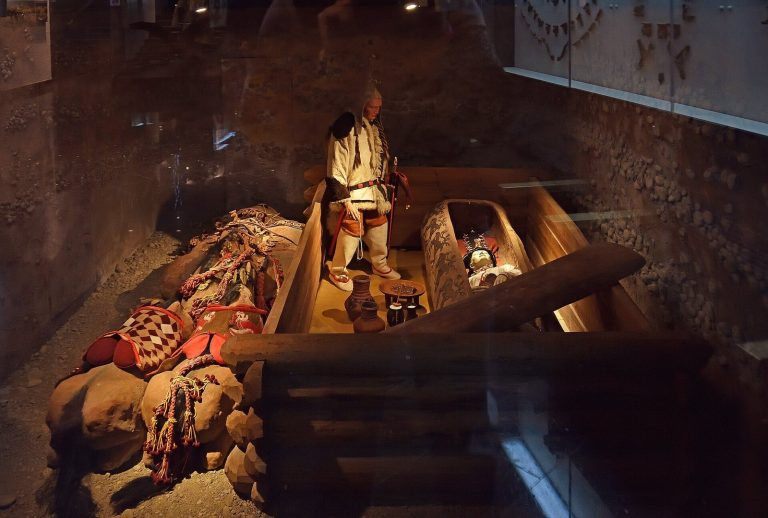
The Pazyryk burials in Russia’s Altai preserve frozen Iron Age tombs, with richly furnished graves, textiles, horse equipment, and tattooed human…
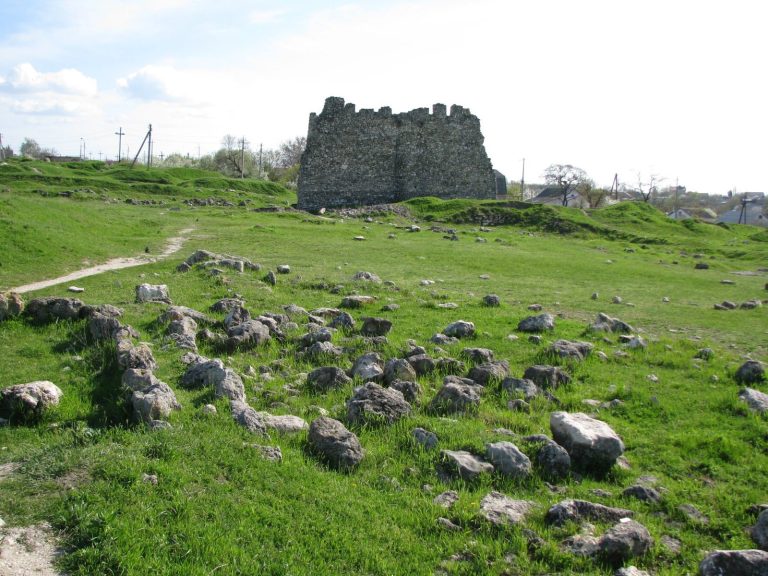
Scythian Neapolis was the fortified capital of the Late Scythian kingdom in Crimea. Its settlement history extended from the second century BC to its…
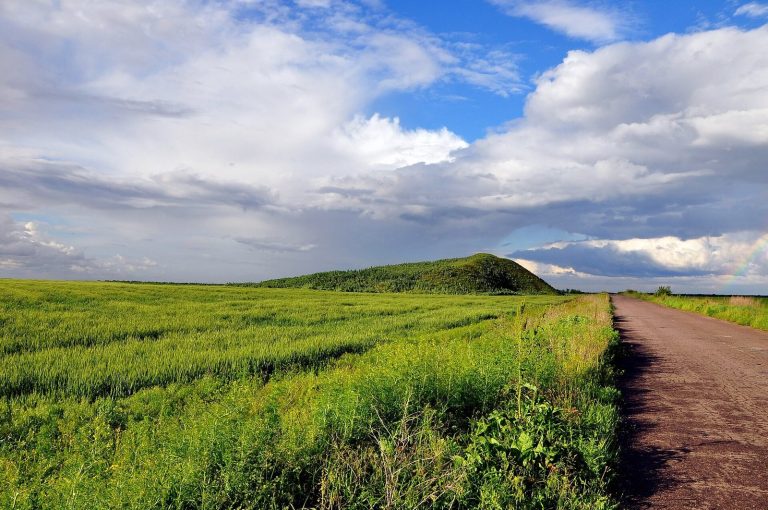
Built between 330 and 310 BC, Oguz is a vast Scythian royal burial mound whose graves combine Scythian and Bosporan funerary traditions. Excavations…
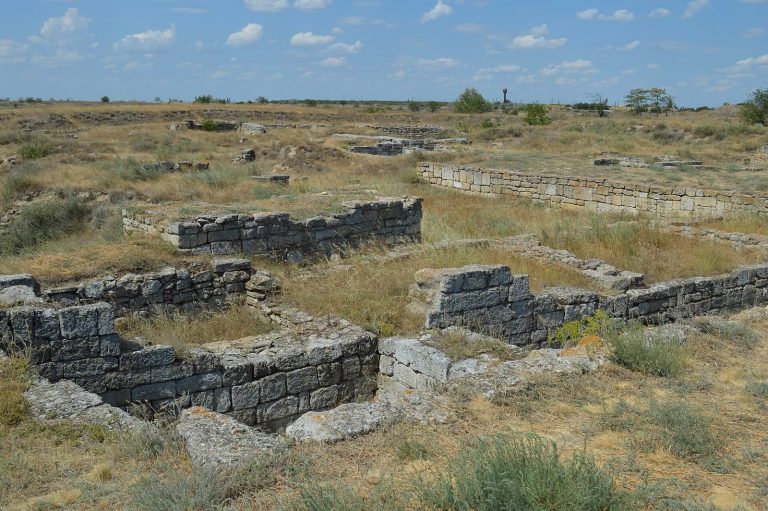
Olbia was a Greek colony founded by settlers from Miletus in 647–646 BC. Its remains preserve evidence of a major Black Sea trading center, mixed…
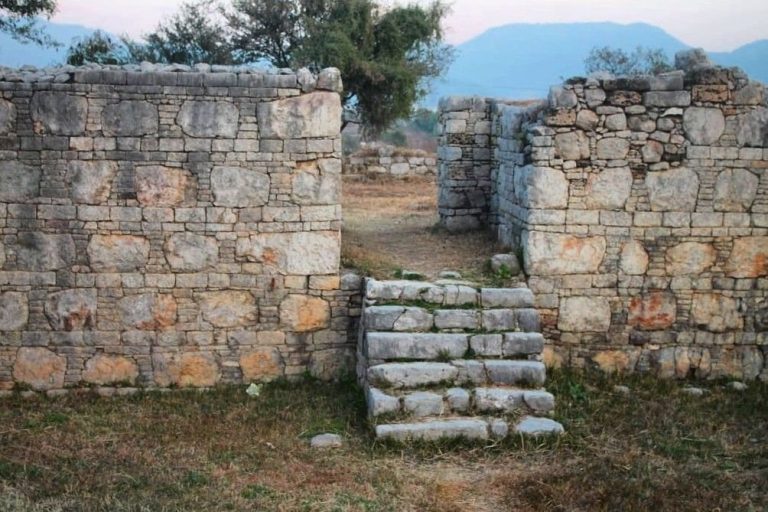
Dharmarajika Stupa, near ancient Sirkap in Taxila, developed from an early Buddhist monument into a major Kushan-period stupa and monastic complex.…
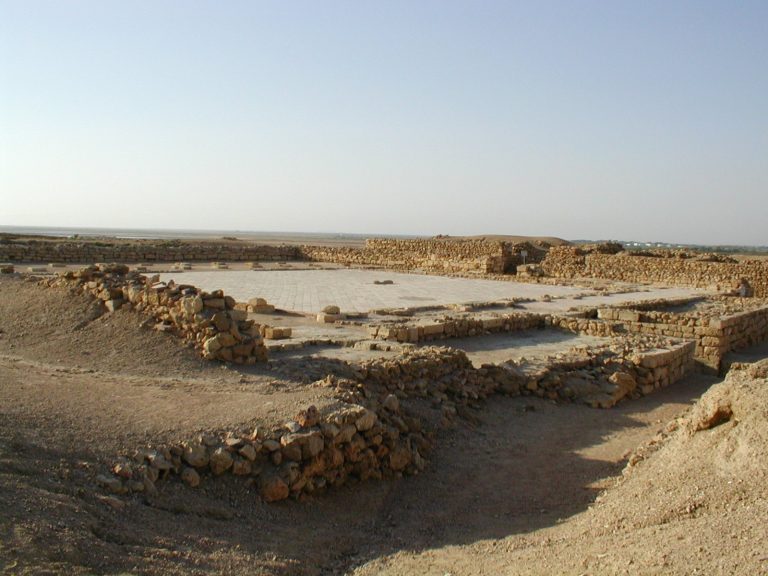
Banbhore was an ancient settlement and prosperous port in Sindh, occupied from the first century BCE to the thirteenth century CE. Its remains…
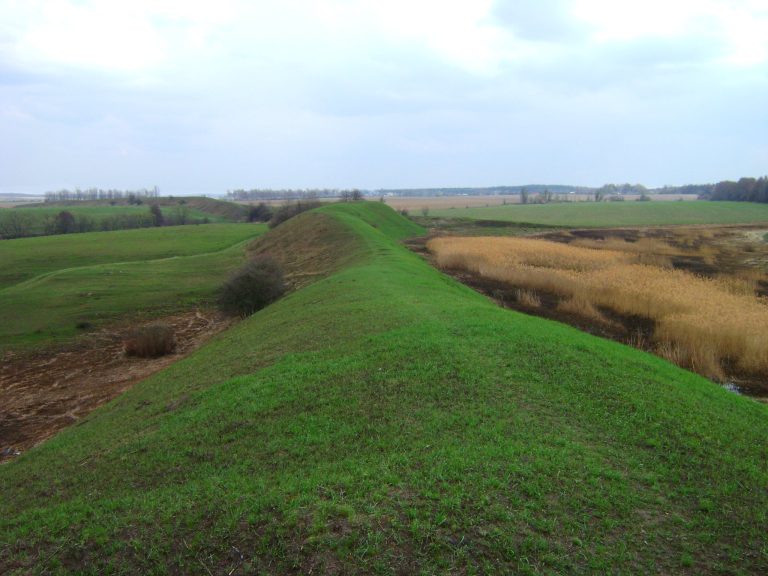
Nemyriv Hill Fort in Vinnytsia Oblast preserves evidence of Trypillia, Scythian, and Slavic occupation, including a large fortified settlement, a…
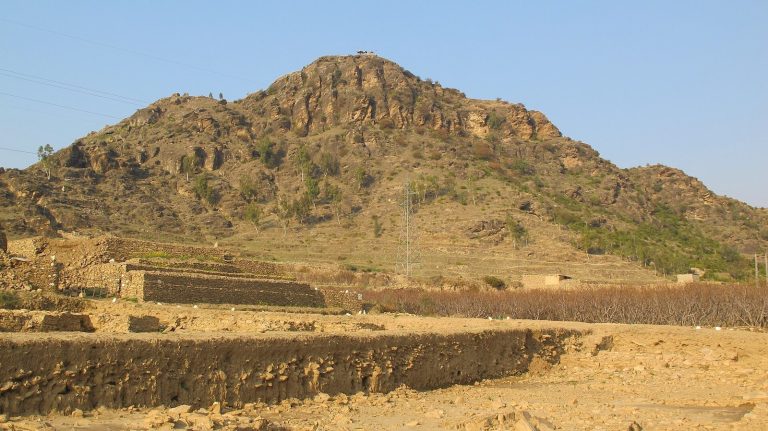
Bazira beneath modern Barikot preserves a long sequence of settlement from the Copper Age through the Ghaznavid period, including Iron Age urban…
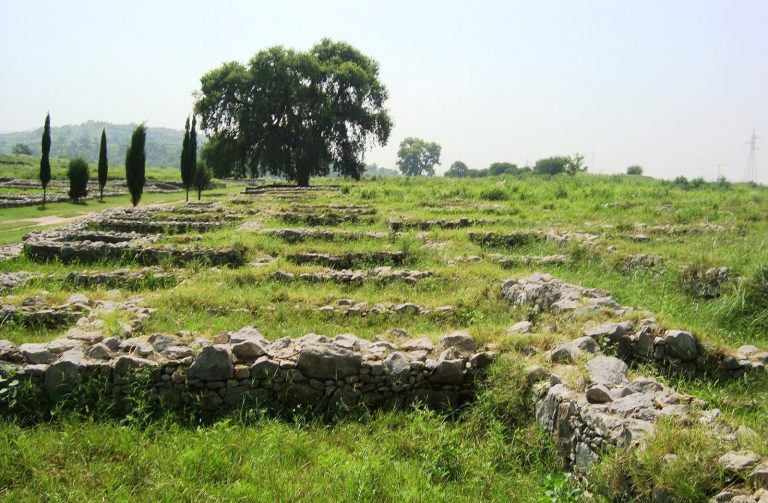
Sirkap was an ancient planned city at Taxila, founded by the Greco-Bactrian king Demetrius and later rebuilt under Indo-Scythian and Indo-Parthian…
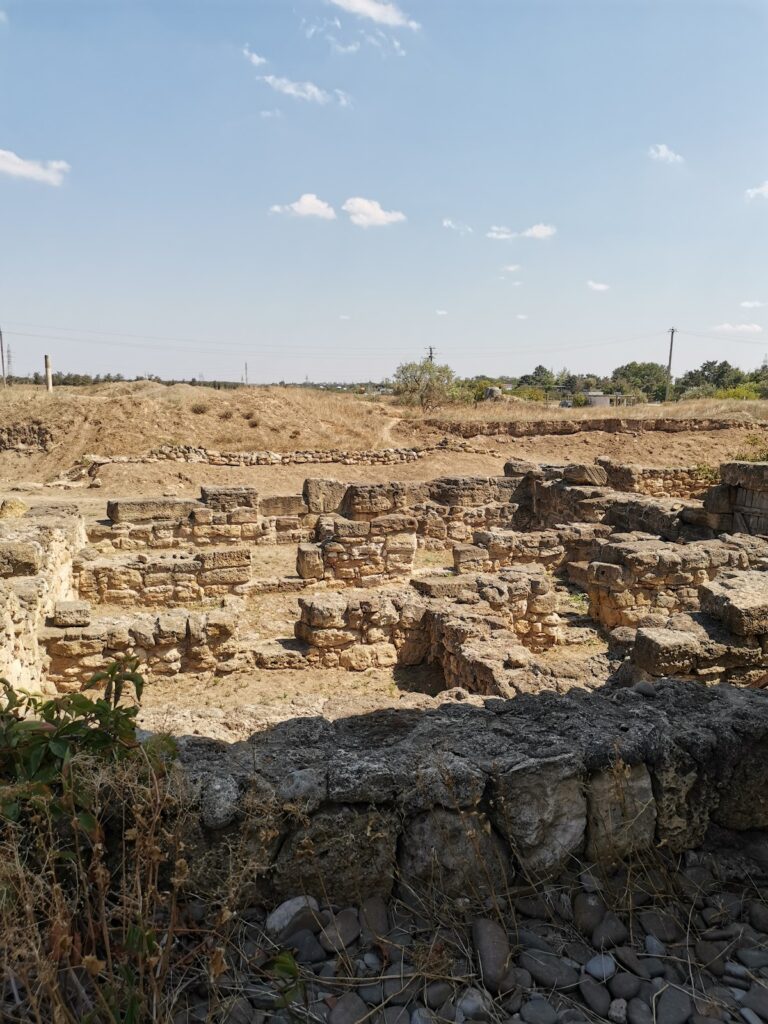
Kara-Tobe Castle was a Greco-Scythian settlement near Saky, occupied from the fourth century BCE to the beginning of the second century CE. Its…
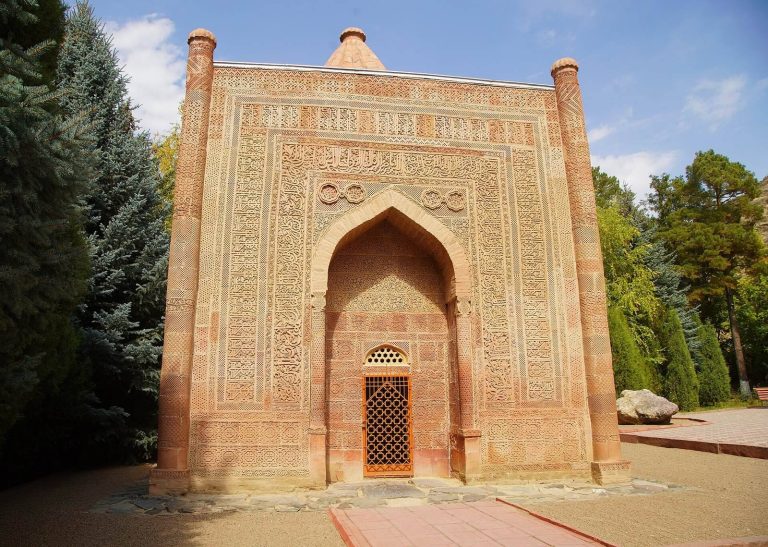
Manas Ordo in Talas Region is a pilgrimage site, museum, and center for the Manas epic, organized around a mausoleum traditionally revered as the…
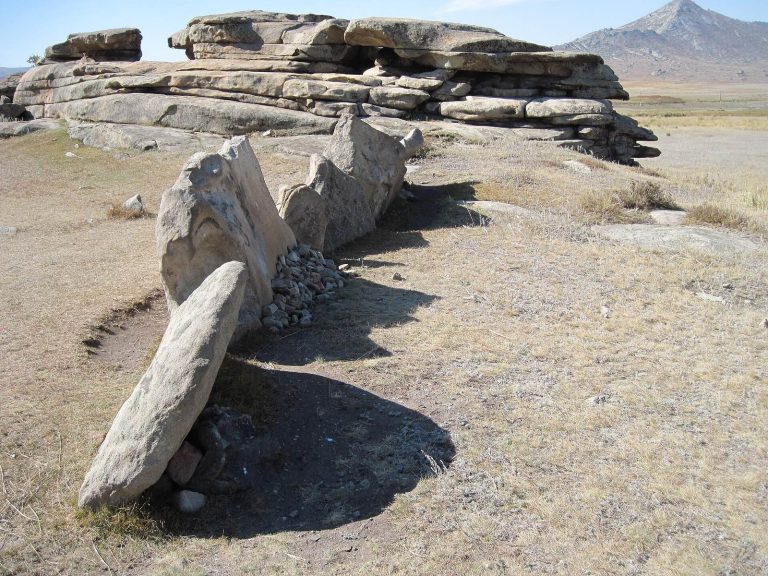
Akbaur is a Bronze Age archaeological site in East Kazakhstan known for its painted grotto, ritual landscape, later Saka settlement, and competing…
For details on how to use the maps, which sites are included, how popularity and ratings are determined, and how sites are classified, see the help page.
On this page4 sections
Burial mounds
A kurgan is a burial mound raised over one or more graves. At Oguz, near Nyzhni Sirohozy in southern Ukraine, a fourth-century BCE mound covered a stone-built tomb reached through a long underground passage. Large dressed blocks formed its chamber and stepped roof. Horse burials and other graves accompanied the central tomb, and excavators recovered elaborate fittings from clothing, vehicles and horse harnesses. The mound was reconstructed in 1988 after archaeological investigation.
The Pazyryk burials lie much farther east, in the Altai Mountains of southern Siberia, Russia. Here stone-covered mounds enclosed log-built burial chambers. Water entering some tombs froze, preserving materials that usually decay: felt, wooden objects, textiles and decorated horse equipment. Many finds were removed to museum collections after excavation. The cemetery belongs to the Pazyryk culture, an Altai Iron Age tradition associated with Scythian cultures and the Saka, Iranian-speaking peoples of Central Asia.
Fortified settlements
Nemyriv Hill Fort, in Ukraine’s Vinnytsia region, occupies a vast enclosure whose earthen defences run for more than four kilometres. Its early Iron Age settlement belonged to farming and stock-rearing communities in the wooded grasslands north of the Black Sea. A more densely occupied inner enclosure contained houses, hearths and storage pits, while much of the larger area remained comparatively open. Imported Greek pottery reached the settlement through trade.
Scythian Neapolis, on a plateau at Simferopol in Crimea, developed into a royal centre of the Late Scythian kingdom during the second century BCE. Limestone walls and towers protected its accessible southern approach. Excavations revealed a palace complex beside the main gate and a mausoleum associated with King Skilurus. Its architecture belongs to a later, urban phase of Scythian history, when rulers and farming communities maintained close relations with the Greek cities around the Black Sea.
Greek and Scythian building phases
At Kara-Tobe, near Saki in western Crimea, successive occupations changed a fortified hilltop. A Greek-Pontic fortress was established during the campaigns of Mithridates VI’s forces against the Scythians in the late second century BCE. Its central tower, courtyards and surrounding rooms formed the core of the stronghold.
Scythians later reoccupied the fortress. Small dwellings and narrow streets grew beside the tower, with additional settlement outside the fortified centre. Excavated rooms and sections of the defensive wall preserve this sequence of military construction and domestic reuse.
Indo-Scythian cities
Sirkap at Taxila, in Pakistan’s Punjab province, carries the collection into South Asia. Indo-Scythian rulers took control of a city founded in the Hellenistic period, and Indo-Parthian rulers followed them. Its excavated main street and perpendicular side streets preserve a grid of urban plots occupied by houses and religious buildings.
Buddhist stupas, monuments associated with the Buddha and the veneration of sacred relics, stood within this street system. The later, Indo-Parthian Double-Headed Eagle Stupa combines Greek-style columns with several forms of shrine facade.
Open the site articles through map markers or grid entries to follow particular burial grounds and settlements. Country and building-type choices help locate different parts of this wide collection, from earthen enclosures to stone-built towns.