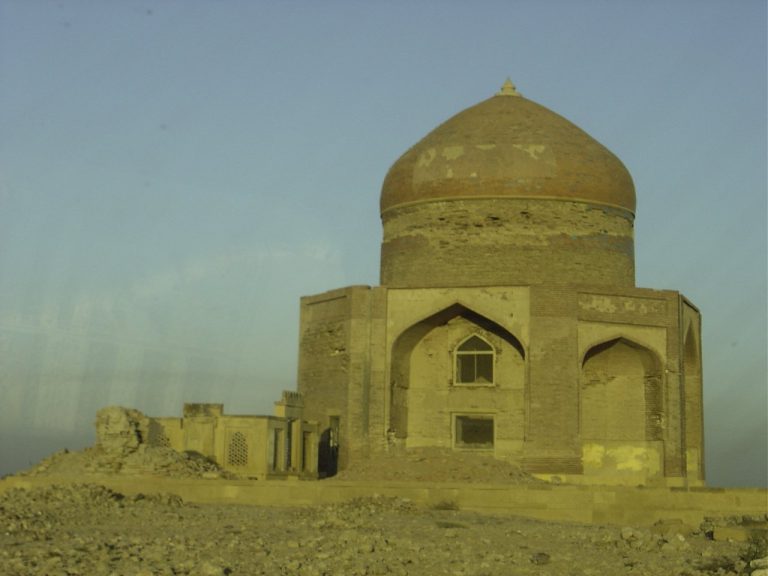
Banbhore: An Ancient Port Settlement in Pakistan
Site at a Glance
- Rating
- 4.4
- Popularity
- Low
- Country
- Pakistan
- Primary era
- Medieval
- Eras represented
- Classical, Medieval
- Civilizations
- Parthian, Scythian, Umayyad
- Site type
- City
On this page8 sections
History
Banbhore is an ancient settlement on the northern bank of Gharo Creek in Sindh, Pakistan, occupied from the first century BCE to the thirteenth century CE. Its earliest phase is associated with Scytho-Parthian rule, followed by Hindu-Buddhist and early Islamic periods. The site became a prosperous industrial and commercial port at the mouth of the Indus, linking regional realms with trade across the Indian Ocean.
Scytho-Parthian and Hindu-Buddhist phases
Banbhore’s archaeological sequence begins with a Scytho-Parthian phase dating from the first century BCE to the second century CE. The Scytho-Parthians were rulers and communities shaped by the interaction of Scythian and Parthian cultures across parts of Central and South Asia. A Hindu-Buddhist phase followed from the second to the eighth centuries CE, during which the settlement continued to develop as a fortified urban centre and trading port.
Early Islamic period
Muslim control began in the eighth century and continued until the thirteenth century. Some archaeologists and historians identify Banbhore with Debal, the Sindhi city conquered in 711–712 by the Arab commander Muhammad bin Qasim after he defeated Raja Dahir, the last Hindu ruler of Sindh. Debal is associated in historical tradition with the Arab conquest, but its identification with Banbhore remains unconfirmed. The site has also been linked with the names Barbari and Barbaricon, though those identifications are likewise unproven.
During the early Islamic period, Banbhore prospered through manufacturing, commerce, and the movement of imported ceramics and metal goods. Its position near the Indus mouth supported connections between the Scytho-Parthian and Indo-Parthian realms and maritime networks across the Indian Ocean. After the thirteenth century, the Indus changed course and the creek gradually silted up, preventing ships from berthing. The population declined and the settlement was abandoned.
Excavation and heritage recognition
Preliminary archaeological work took place in 1928 under Ramesh Chandra Majumdar and in 1951 under Leslie Alcock. Dr F. A. Khan directed extensive excavations and studies from 1958 to 1965, including a major program in the early Islamic settlement. In March 2012, the Culture Department of the Government of Sindh organized the first international conference on Banbhore. Pakistan’s Department of Archaeology and Museums submitted Banbhore for the UNESCO World Heritage List in January 2004. The site is on the cultural tentative list under criteria (iv), (v), and (vi), a status that represents a proposal for possible future inscription rather than World Heritage inscription itself.
Remains
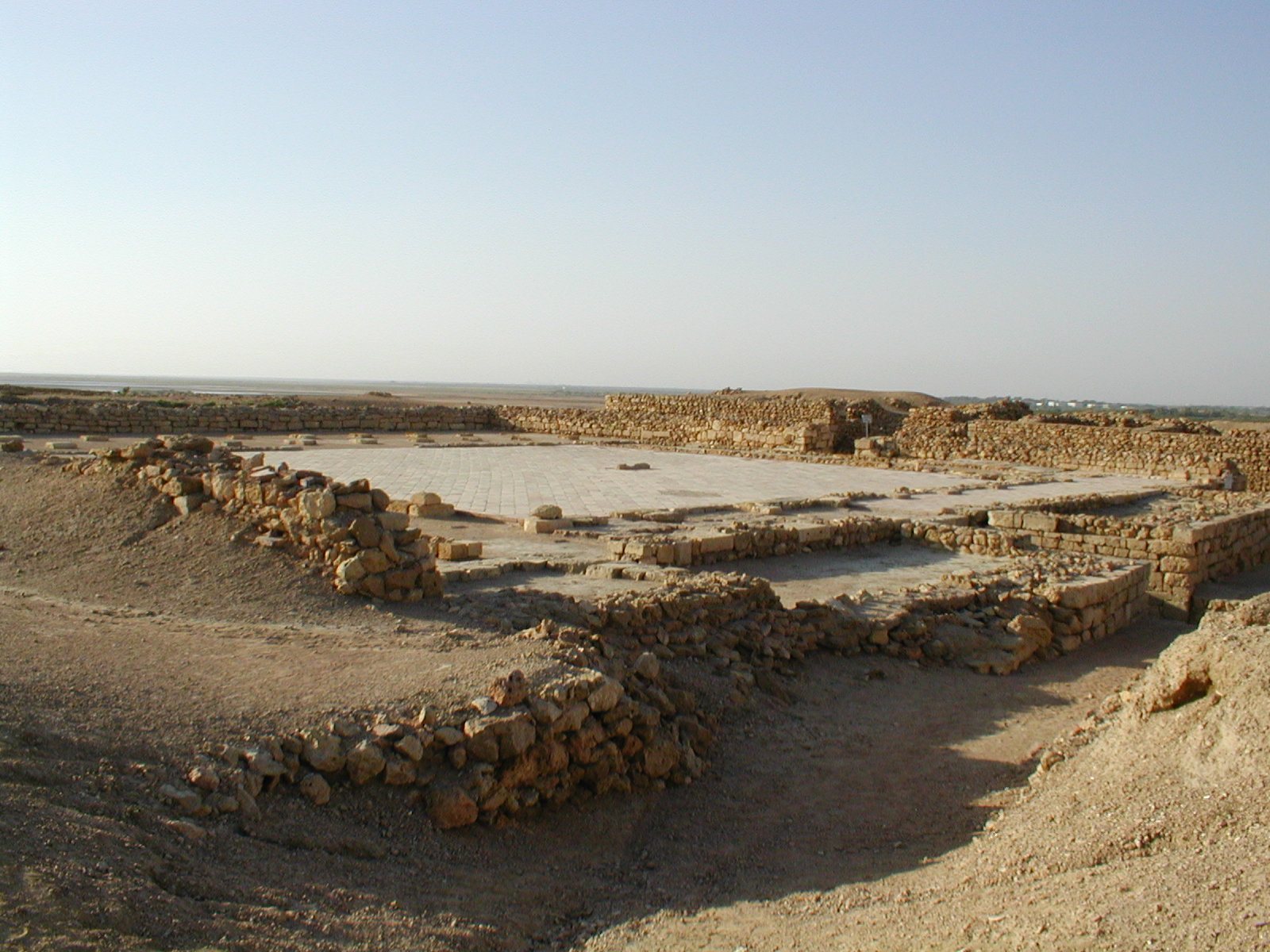
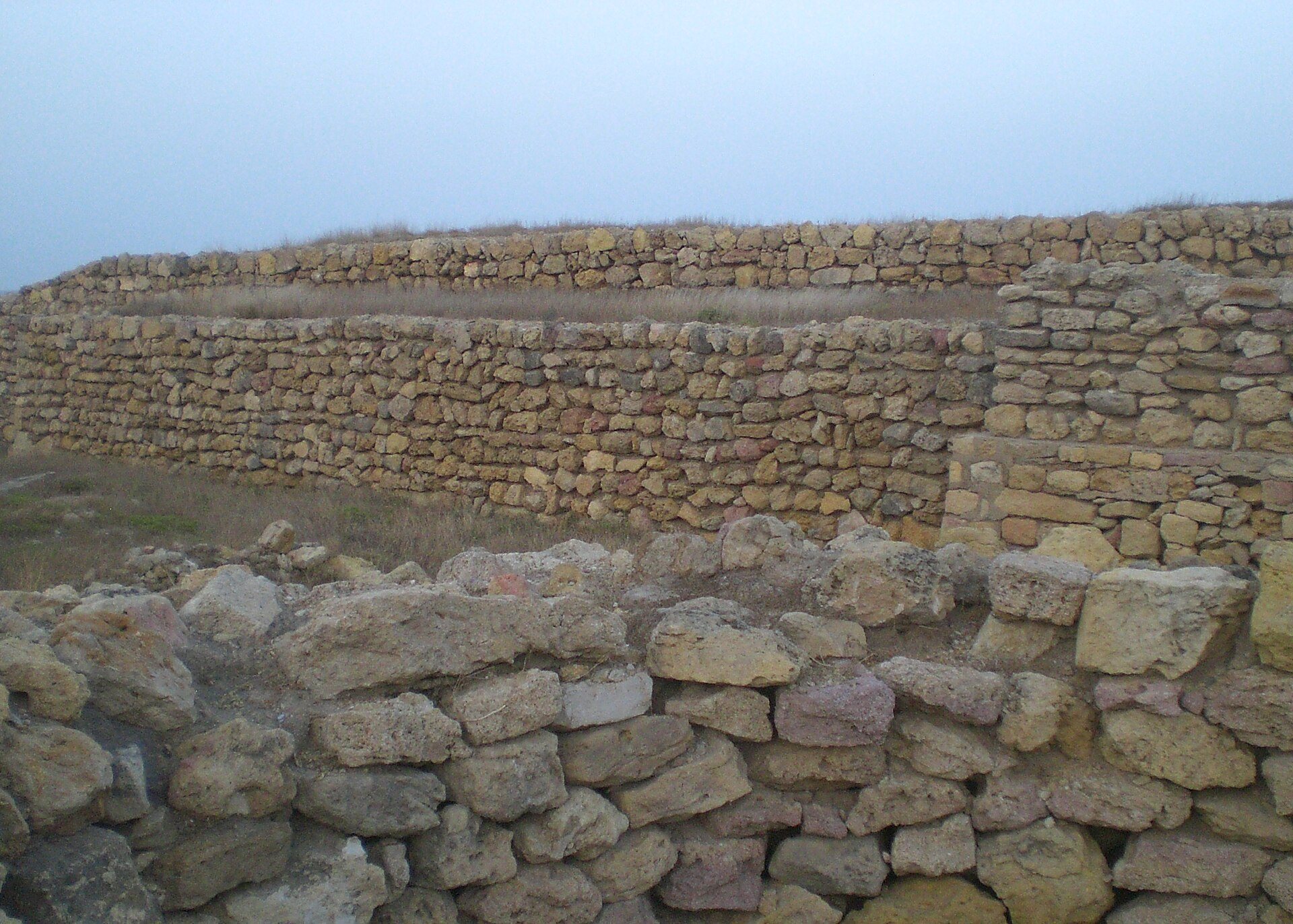
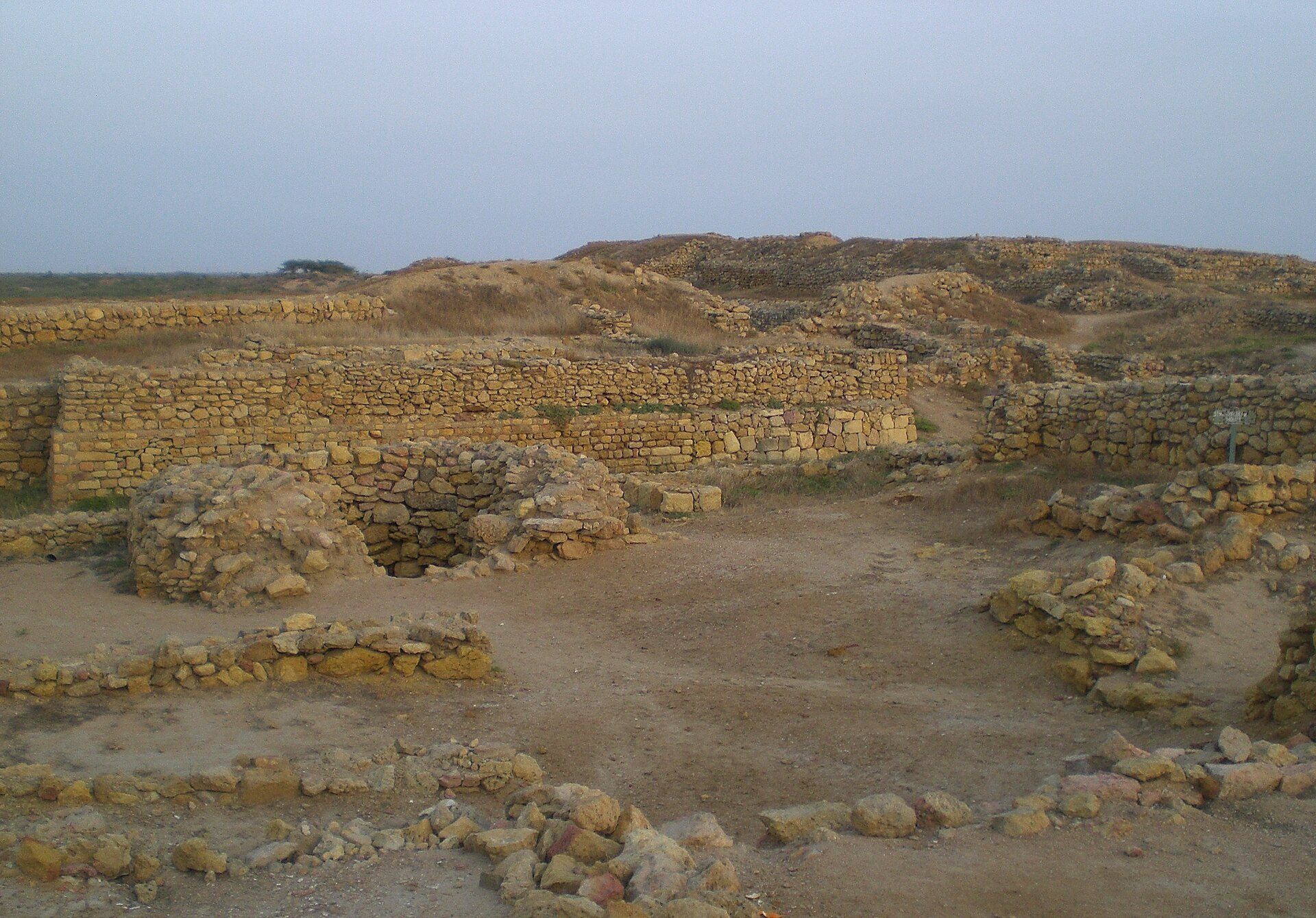
Banbhore’s ruins occupy a fortified area of approximately 14,000 square metres on the northern bank of Gharo Creek, about 65 kilometres east of Karachi. A wall of stone and mud enclosed the settlement, while a substantial stone wall running through its centre divided the enclosure into eastern and western sections. Three gateways to the citadel, the fortified part of the settlement, were uncovered. Houses, streets, and other buildings extended both within and beyond the defensive walls.
Fortifications and earlier buildings
The remains preserve evidence from all three major phases of Banbhore’s occupation. A semi-circular palatial stone building belongs among the surviving civic structures, while a temple may date to the Buddhist period or to an earlier phase. Together with the walls, gateways, streets, and domestic buildings, these remains show the changing form of the settlement before and after the beginning of Muslim rule.
Early mosque
The eastern section contains a mosque with an inscription dated to 727 CE. An inscription is writing carved or fixed onto a durable surface, and this one provides a date for the building. Constructed sixteen years after the Muslim conquest of Sindh, the mosque is regarded as one of the earliest mosques in the region and remains one of its best-preserved early examples. Its remains were discovered in 1960.
Port and industrial areas
A partly submerged port or anchorage structure survives near the settlement. Its solid stone foundation may have supported berthing for cargo vessels, linking the urban remains with Banbhore’s commercial role at the Indus mouth.
Trench 9, excavated in 2017, exposed an industrial area associated with ivory working. About 40 kilograms of ivory fragments were recovered from a workshop considered approximately 800 years old, placing it in the Islamic period. The fragments represent manufacturing waste rather than finished objects. Possible products included rings, jewellery, and unfinished chess-pawn forms, although the precise products remain uncertain. The ivory-working area may have formed part of a wider industrial district. Ivory fragments from this area and from excavations in the 1950s and 1960s indicate Banbhore’s participation in local and international trade during the twelfth and thirteenth centuries.