Mycenaean Cemetery of Aidonia: A Bronze Age Burial Ground in Greece
Site at a Glance
- Popularity
- Very Low
- Country
- Greece
- Primary era
- Bronze Age
- Eras represented
- Bronze Age, Iron Age
- Civilizations
- Ancient Greek, Mycenaean
- Site type
- Burial
- Remains
- Necropolis
On this page40 sections
History
Mycenaean use and the nearby settlement
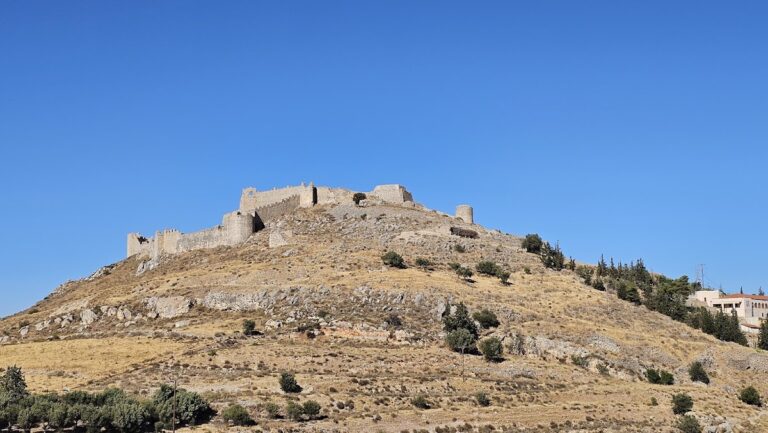
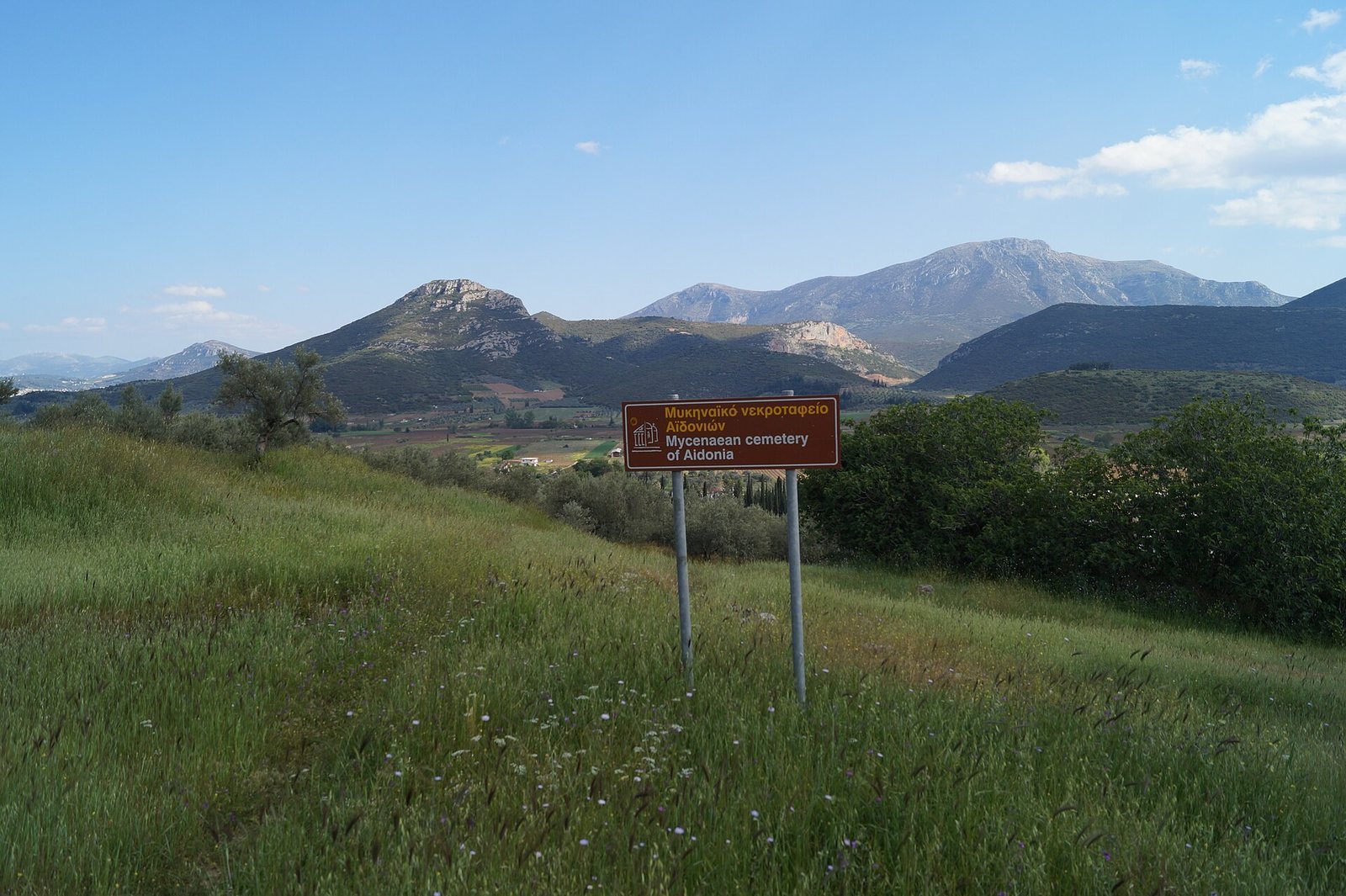
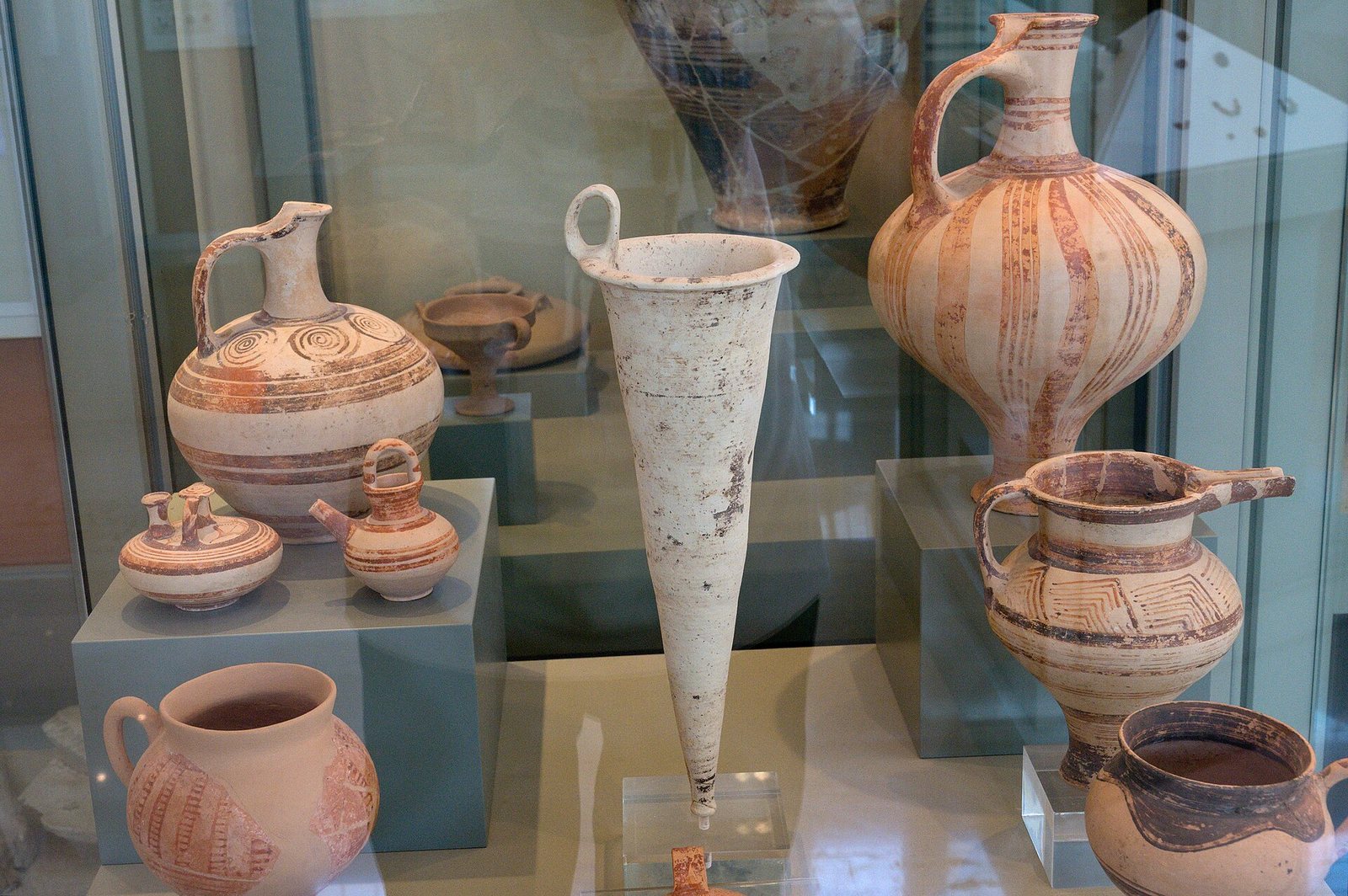
The Mycenaean cemetery of Aidonia, in Greece, was a burial ground used by the Mycenaean civilization from about 1600/1500 to 1100 BC. The Mycenaeans were a Late Bronze Age civilization of mainland Greece. Grave goods indicate that many of those buried at Aidonia held high social rank and had close connections with Mycenae and the wider Argolis, a region in the northeastern Peloponnese. The cemetery’s finds include about 270 ceramic vessels, sherds, and figurines, which also help establish its chronology.
A settlement associated with the cemetery was found in 1999 on a hill opposite the burial ground, about 500 metres away. It was occupied during the Middle Helladic period, the preceding Middle Bronze Age, and during phases of the Late Helladic period, the archaeological sequence used for Mycenaean mainland Greece. The settlement has been tentatively identified with Araithyrea, a place named in Homer’s Iliad, but that connection remains uncertain.
Looting, excavation, and the returned collection
The cemetery came to attention in 1971, when a farmer fell into a field opening created by the collapse of a buried tomb’s ceiling. He began taking objects from the tomb, and other looters later plundered graves systematically. A guard was placed at the site in November 1977. Official excavations began the following June under archaeologist Kalliopi Krystalli-Votsi. By 1980, the team had identified 20 graves; 15 of the chamber tombs had been looted, disrupting the positions of surviving objects and evidence about the sequence of burials. Rescue excavations also took place in 1986.
In 1993, Manhattan art dealer Michael Ward planned to auction a Mycenaean collection. Archaeologist John H. Betts, who introduced its catalogue, described the objects as a coherent group likely to have come from a tomb or cemetery. Greek archaeologists compared them with finds from Aidonia held in the Nemea museum and noted close similarities, including objects thought to have come from the same workshop. Their comparison supported the case that the collection had been looted from Aidonia, and that at least much of it may have come from Grave 7. Ward said the objects had come from a European collector. He agreed in December 1993 to transfer the collection to the Society for the Preservation of the Greek Heritage, which returned it to Greece on 26 January 1996.
Further investigation and study
Surface survey located the associated settlement in 1999, followed by emergency excavations there in 2002. Looting at the cemetery occurred again in 2007 and 2011. Preliminary investigations in 2014–15 preceded renewed excavation from 2016 through the TAPHOS preservation and research project, led by Konstantinos Kissas and the Corinth Ephorate of Antiquities. The work identified seven further graves, numbered 100 to 106. The cemetery’s finds had been displayed at the Archaeological Museum of Nemea from 1984, and since 2000 all finds from Aidonia have been held there.
Genetic analysis of people buried at Aidonia identified mitochondrial haplogroups N1b1a2 in two individuals, K1a2c, U5a1d2b, and R0a1a. Identified Y-chromosome haplogroups were C1a2, J2a, J2a2~ (Y24510), and R1b1a1b-PF7562.
Remains
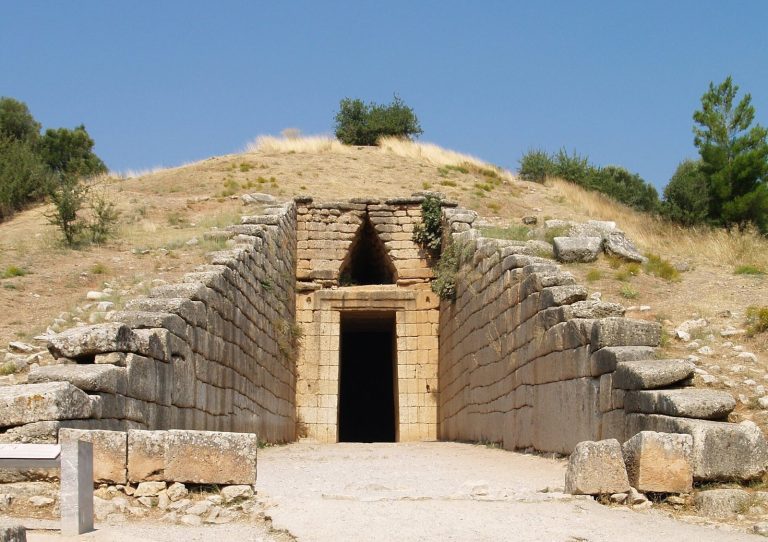
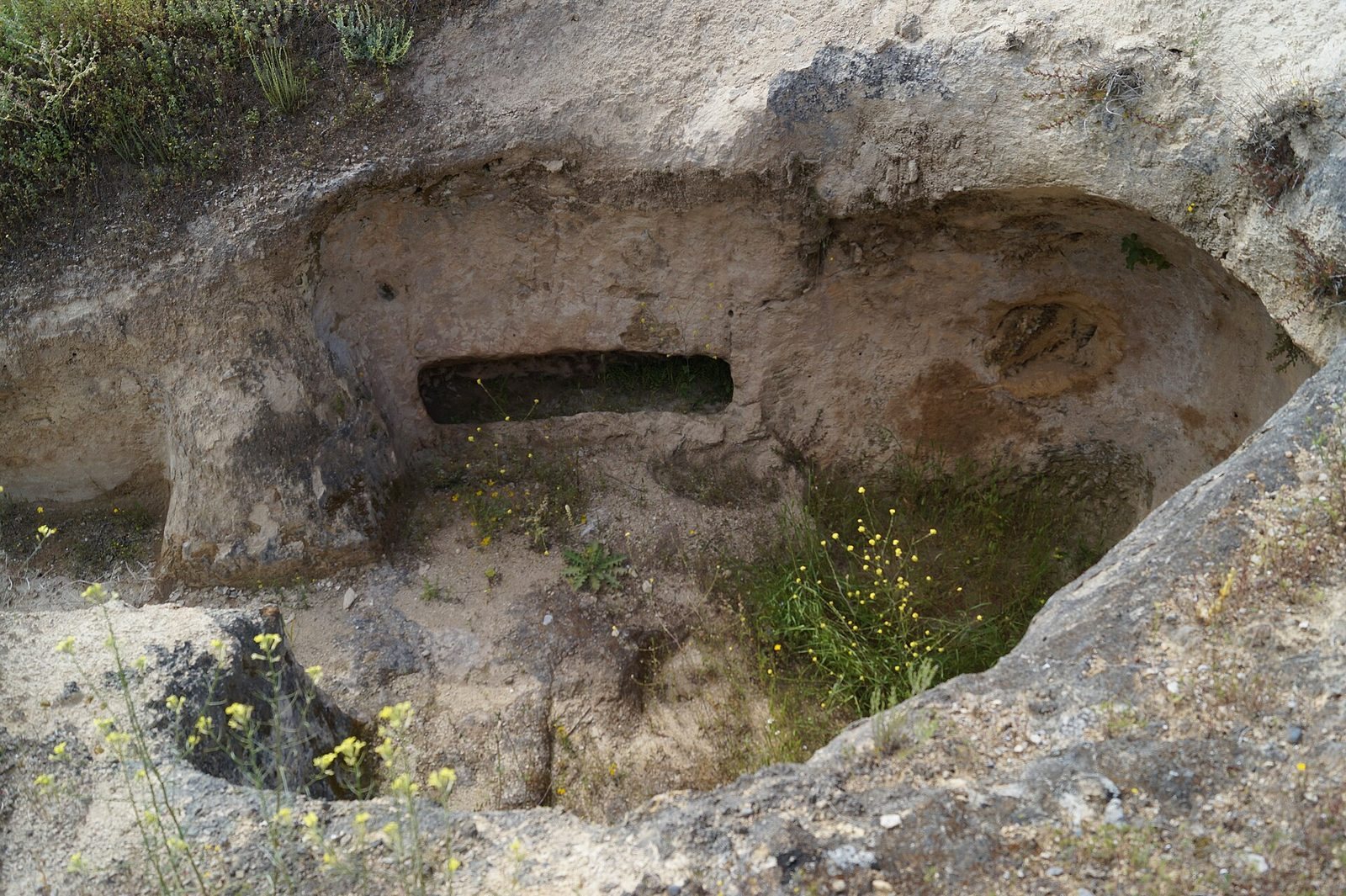
The cemetery includes more than 20 chamber tombs, a shaft tomb, and tombs made up of an approach passage without a chamber. These structures were cut into bedrock. The ground slopes southward, and the approach passages generally run from south to north. The cemetery is divided into upper, middle, and lower sectors, with access from the west; Grave 14 lies apart from the main area to the north.
Most chamber tombs have rectangular rooms with gabled ceilings. Some ceilings include a carved ridge beam intended to resemble the roof structure of a house. Tombs were reused: remains and offerings from earlier burials could be shifted aside or moved into burial shafts, which were often covered with stone slabs. Some chambers have rock-cut benches for offerings or niches for burials, and entrances or niches could be sealed with rough stones. A dromos is the approach passage to a tomb, while a stomion is the entrance passage into its chamber.
Upper-sector chamber tombs
Grave 13
Grave 13 consists of an approach passage about 8 metres long that ends at a false door. Grave 6 lies about 25 metres to its southeast.
Grave 6
Grave 6 has an approach passage about 7.25 metres long, with walls that slope slightly inward. Its entrance passage measures about 1.60 metres high, 0.60 metres wide, and 1.15 metres long. Beyond it, a rectangular chamber measuring 3.40 by 3.20 metres has a gabled ceiling. Large niches at floor level occupy the north, west, and east sides. Three burial shafts, each about 0.30 metres deep, contained burials; an additional shaft in the western niche was empty. Although looters entered the tomb in the 1970s, recovered pottery dates its use to the 15th–13th centuries BC. Finds also include bronze tweezers and a bronze needle. The lowest stones of the wall that once blocked the entrance survive.
Grave 15
About 5 metres south of Grave 6, Grave 15 has an approach passage roughly 8 metres long, with walls that slope inward more sharply near the top. Its entrance passage is about 1 metre long, and the gabled chamber measures approximately 4 by 5 metres. A small niche is cut into the north wall and two very small ones into the west wall. Clay used in antiquity to seal a crack in the rock still preserves the repairer’s fingerprints. Four shallow burial shafts were found in the chamber.
Despite looting, finds from Grave 15 include a jug with a cut-off spout, a stirrup jar, and a shallow, one-handled cup. A stirrup jar is a vessel with stirrup-shaped handles and a narrow spout. The tomb also yielded two Phi-type and three Psi-type figurines, labels based on the figures’ resemblance to Greek letters; alabaster and ivory small containers; an ivory spindle; two seals; and jewellery. The personal ornaments include a glass-bead necklace, a crescent-shaped steatite pendant, carnelian and faience beads, a gold ring, and small steatite objects known as conuli.
Grave 7
Grave 7 lies about 12 metres east of Grave 15. Its approach passage is approximately 9.5 metres long, with inward-sloping walls. The roughly rectangular entrance measures about 1 metre wide, 1.90 metres high, and 1 metre long. Rough stones originally blocked the entrance passage; looters removed its upper part to get inside. The rectangular chamber measures about 5 by 3.75 metres and reaches 3 metres in height. It has a gabled ceiling, a large niche on the west side, and three shallow burial shafts.
The western shaft beside the doorway escaped looting. It contained valuable goods from a secondary burial dated to the 14th–13th centuries BC: three gold signet rings, a further gold ring, a silver-and-iron ring, 16 gold-foil rosettes, and other gold ornaments. Beads were made of glass, steatite, and faience. The burial also included seal stones of carnelian, agate, and lapis lazuli, conuli, a jug with a cut-off spout, two Phi-type figurines, and an animal figurine.
Grave 20
Grave 20, the easternmost tomb in the upper sector, is about 10 metres east of Grave 7. Its approach passage is 7.20 metres long and leads to a circular chamber about 3 metres in diameter. The ceiling collapsed in antiquity, and the grave remained unlooted. A secondary burial at a depth of 3 metres included five iron earrings. About a metre below it, the primary burial, dated to Late Helladic IIIA in the 14th–13th centuries BC, was accompanied by four stirrup jars, painted and plain jugs, a painted three-handled storage jar, a miniature jug, and three Psi-type figurines.
Grave 1
Grave 1 lies about 5 metres southwest of the southern end of Grave 20. Its approach passage is about 3.50 metres long, followed by an entrance passage roughly 0.50 metres long. The circular chamber measures about 4 metres across, and a bench is cut into its western side. Objects left by looters include a plain storage jar, a miniature alabaster vessel, and conuli, dating to the 14th–13th centuries BC.
Grave 17
About 5 metres southwest of Grave 1, Grave 17 may be the tomb into which the farmer fell in 1971. Its approach passage was about 3–4 metres long. The collapsed rectangular chamber measured approximately 3 by 2 metres. A large niche at floor level in the north measured about 2.50 by 2 metres, while a niche in the west wall was just large enough for a body.
Grave 8
Grave 8 is about 5 metres west of Grave 17. Its approach passage is roughly 10 metres long; a curved lintel marks the entrance, whose passage is only about 0.50 metres long. The rectangular chamber measures about 3.50 by 5 metres and has a gabled ceiling. Objects left by looters date to the 15th–13th centuries BC and include pottery, a lentoid carnelian seal, biconical faience beads, an ivory pomegranate-shaped amulet, ten conuli, steatite beads shaped like papyrus, and amethyst beads.
Chamber and shaft tombs in the central area
Grave 9
Grave 9 has the cemetery’s longest approach passage, about 14 metres. Construction of Grave 10 appears to have cut into and joined this passage. An elaborate entrance and a short entrance passage, about 0.50 metres long, lead to a rectangular chamber measuring 4 by 5 metres. Its gabled ceiling has a carved ridge beam, and a carefully cut burial shaft lies beside the doorway on the right. A gold-covered ivory rosette ornament, a bronze needle, a bronze arrowhead, and fine pottery date the tomb to the 15th–13th centuries BC. Its elaborate construction and the quality of the surviving objects have led to the suggestion that it was the cemetery’s richest grave.
Grave 10
The entrance to Grave 10 is about 9 metres southwest of Grave 9. Its approach passage is roughly 9 metres long, and its entrance front resembles that of Grave 9. A short entrance passage, about 0.50 metres long, opens into a rectangular chamber with a curved rear wall, measuring about 5 by 3.50 metres. A burial shaft lies in the centre. At its northeast corner the chamber connects with Grave 9’s approach passage; two openings on the west connect with Grave 11. These connections were probably unintended. Pottery dates Grave 10 to the 14th–13th centuries BC.
Grave 11
About 7 metres west of Grave 10, Grave 11 has an approach passage about 8 metres long and an entrance passage 0.75 metres long. Its chamber resembles Grave 10’s but is smaller, measuring 4.50 by 3 metres. Two openings into Grave 10 were made during that tomb’s construction. Cutting marks remain visible on the chamber’s rear wall. Bones and fine pottery lay on the floor, alongside bones moved aside from earlier burials.
Grave 12
Grave 12 is a shaft tomb between the approach passages of Graves 10 and 11. It measures 3.40 metres long, 1.55–1.60 metres wide, and 5.25 metres deep, and escaped looting. A headless horse skeleton at a depth of 1.25 metres has been interpreted as a sacrifice. At 3 metres down, a niche measuring 2.85 metres wide, 1.50 metres deep, and 1.25 metres high held a skeleton behind a rough fieldstone wall. Two further burials lay below the horse, and each of two shafts at the bottom contained a body. The rich goods point to a family tomb used from the 15th to 13th centuries BC.
Grave 18
Grave 18 lies about 7 metres north of Grave 11 and is collapsed and poorly preserved. Its approach passage is about 2 metres long, and its chamber measures approximately 2 metres long by 1 metre wide.
Grave 16
About 5 metres north of Grave 18, Grave 16 preserves roughly 2 metres of its approach passage and an entrance passage about 0.75 metres long. Its collapsed chamber measured around 4 by 4 metres, with benches cut into the side walls. Finds include conuli, steatite beads shaped like papyrus umbels, a small stirrup jar, a squat alabaster vessel, a handmade miniature water jar, and a bronze chisel.
Grave 5
Grave 5, about 8 metres west of Grave 16, dates to the 15th century BC. Its approach passage is about 5 metres long, and its entrance passage about 1 metre. The rectangular chamber measures about 4 by 5 metres, with part of it collapsed. A continuous bench is cut into the chamber wall, and five burial shafts pierce the floor. Finds include conuli, steatite papyrus-umbel beads, a spherical carnelian bead, and a gold bead combining lily, ivy-leaf, and spherical shapes.
Grave 4
Grave 4 lies about 6 metres west of Grave 5 and dates to the 15th–13th centuries BC. Its approach passage is 4 metres long and 1.10 metres wide. The entrance passage measures 1 metre long, 0.95 metres wide, and 1.50 metres high; a wall of rough fieldstones blocked it. The rectangular chamber is 3 by 4 metres and 2 metres high. Remains of eight people were found on the floor, with conuli, steatite papyrus-umbel beads, three Tau-type figurines, small and large one-handled cups, two jugs, two drinking cups, a short bronze sword, and a bronze awl.
Lower-sector and detached tombs
Grave 19
In the lower sector, about 15 metres south of shaft tomb 12, Grave 19 dates to the 14th–13th centuries BC. Its approach passage is 7 metres long and its entrance passage 1 metre. The rectangular chamber measures 3 by 4 metres and ends in a curved north wall. Finds include three small stirrup jars, a pouring vessel, and conuli.
Grave 2
The approach passage of Grave 2 begins 2 metres east of Grave 19. It is 8 metres long and leads through an entrance passage 1.50 metres long to a chamber shaped like Grave 19’s but smaller, measuring 3 by 3.25 metres. Offerings date its use to the 14th–13th centuries BC. They include conuli, steatite papyrus-umbel beads, two lentoid seals, a biconical steatite pendant, an obsidian arrowhead, painted and plain jugs, and a squat alabaster vessel. One seal, made of hematite, shows a bull attacked by a lion.
Grave 3
Grave 3 lies 3 metres east of Grave 2 and dates to the 14th–13th centuries BC. Its approach passage is 8 metres long and about 1.50 metres wide. An entrance passage about 1 metre long leads into a rectangular chamber measuring 4 by 6 metres. The chamber has a gabled ceiling with a ridge beam and a side chamber at floor level on the west. Its finds include three small stirrup jars, a pear-shaped stirrup jar, a plain jug, three small alabaster vessels, four Phi-type figurines, two bronze cleavers, a bronze sword, an obsidian arrowhead, conuli, steatite papyrus-umbel beads, and a biconical faience bead.
Grave 14
Grave 14 lies apart from the main cemetery area, north of Grave 13. Its approach passage ends in a false door. A horse skeleton and the lower jaws of 14 other horses were found in the passage, evidence interpreted in connection with sacrificial practice. A comparable practice has been identified at Tholos Tomb A in the cemetery of Fourni on Crete.
Graves identified in later investigations
Grave 104
Grave 104 was found beneath a rock overhang west of Grave 3. Around 3 metres of deposits, accumulated from the Iron Age to the present, had protected it from looting. This chamber tomb has a short, wide approach passage and an elliptical chamber up to 6 metres across. Four burial shafts cut into the floor were covered with single stone slabs. They held at least six burials from the Early Mycenaean period, 1650–1400 BC, the earliest burials identified in the cemetery. The chamber resembles a tholos, a circular tomb with a beehive-like chamber, but is not identified as one. The tomb continued in use from 1400 to 1200 BC, when bodies were placed on the chamber floor with simpler offerings. Its ceiling collapsed sometime after 1200 BC.
A warrior burial in the western shaft included bronze knives, daggers, swords, tools, arrowheads of bronze, obsidian, and flint, jewellery, beads of several materials, bronze pins, and seal stones. Two of the tools had gold handles. The eastern shaft held a plaster-covered offering table marked by burning, four small vessels with similar marks, an ivory vessel, and a lentoid seal showing a cow suckling its calf. About 50 vessels were found in the chamber, including three large palace-style storage jars dating to about 1500 BC. Two had been repaired after breaking with lead clamps.
Grave 102
East of Grave 104, Grave 102 is a small chamber tomb of the Late Mycenaean period, 1350–1200 BC. Looters entered it several times from 2007, removing only the upper stones that blocked its entrance passage. The small, square chamber held one body and may have been intended for a single burial with few offerings.
Grave 103
Grave 103 lies in the lower sector and was partly disturbed, while some burials remained intact. It belongs to the transition from shaft tombs to chamber tombs and was used over an extended period, from Late Helladic II to IIIB, about 1500–1200 BC. Activity at the tomb also occurred in the Geometric and Archaic periods, successive periods of ancient Greek history after the Bronze Age. Its approach passage is about 10 metres long; a short entrance passage leads to a chamber 4.74 metres wide, about 4 metres deep, and 2.30 metres high. A central burial shaft measures 1.05 by 2.50 metres.
The earliest burials, dated to Late Helladic I–IIA, about 1600–1450 BC, were two people laid on their backs at the bottom of the shaft, one with the head to the south and the other to the north. A man and a woman were later buried above them. The woman wore a necklace of yellow and blue glass beads. The man had a forehead fracture consistent with a blow from a blunt object and was accompanied by a bronze sword and a carnelian seal. Weapons, a balance scale, a large mirror, and pottery lay at their feet. This arrangement follows shaft-tomb burial practice rather than the later custom of placing bodies on the chamber floor. After Late Helladic IIB, the shaft was cleared to just above the pair, and its contents were moved into the chamber and shafts in the approach passage.
In later burials, bodies were placed on the chamber floor. After decomposition, bones and offerings were transferred to the central shaft; other remains were piled against the rear wall to free space. A smaller western shaft, 0.50 by 1 metre, held the remains of two women. The older woman may have died from a blow to the back of the head. Their sole offering was a deliberately broken clay ladle dated to Late Helladic IIIA1, 1400–1375 BC; it may have been used to mask the smell of decomposition with perfume. Stone slabs closed the shaft.
The latest burial lay near the chamber’s centre, with the body on its back and the head to the north. A hearth built over its upper body in the Geometric period left only the lower body in place. An amphoriskos, a small amphora, dated to Late Helladic IIIB2, 1250–1200 BC, provides the latest date for use of the chamber as a tomb. Conuli were arranged around the body and may have weighted clothing or a covering cloth. Three stirrup jars formed a semicircle around it, with a small alabaster vessel between the legs; the vessels may have held scented substances. One interpretation proposes that decomposition marked a transition from life to death, after which the bones could be moved.
Grave 100
Grave 100 was found in 2015 south of Grave 17, in the middle sector. The chamber tomb has collapsed and was looted, but three burial shafts in its floor remained undisturbed and contained seven burials. People were interred there from Late Helladic II, about 1500 BC.
Grave 101
Adjacent to Grave 100, Grave 101 was under excavation from 2016. Its approach passage and entrance passage were exposed during the initial work.
Grave 105
Grave 105 was found about 6 metres south of Grave 17. Its approach passage is roughly 4.50 metres long, and a wall still completely blocks the entrance passage. The intact chamber held two primary burials and bones from 14 other people. Four stirrup jars, a pouring jug, conuli, and clay figurines date it to the Mycenaean palatial period, Late Helladic III, about 1400–1200 BC.
Grave 106
Grave 106 lies about 6 metres east of Grave 105. Its approach passage is approximately 5.50 metres long, and its collapsed chamber is elliptical and up to 6.20 metres across. Iron Age and Byzantine deposits had concealed it from looters. The tomb contained nine primary burials, as well as secondary burials on the chamber floor and in burial shafts. It was used for burials from the 15th to 13th centuries BC. Finds include pottery vessels, clay figurines, and conuli.
The returned collection and signet rings
The Aidonia collection
The collection returned to Greece comprised 312 objects, mainly dating to the 15th–13th centuries BC. It included two gold signet rings, three other finger rings, three seal stones, 13 gold ornaments, 25 gold beads, a gold button, and 234 beads from two necklaces made of amethyst and white and light-blue glass. Other finds included amber, amethyst, carnelian, faience, and glass beads, nine steatite conuli, a conglomerate pestle, and a bronze awl.
Gold signet ring MN 1005
Made about 1500 BC, gold signet ring MN 1005 is described as one of the largest known Mycenaean rings. It weighs 24.3 grams, and its oval face measures 3.3 centimetres wide by 2.1 centimetres high. The scene shows a chariot drawn by two horses. The driver holds the reins in the right hand and a switch in the left. The image has been compared with that on gold ring NAMA 240 from Grave IV of Grave Circle A at Mycenae, a funerary enclosure containing Bronze Age burials.
Gold signet ring MN 1006
Also made about 1500 BC, gold signet ring MN 1006 weighs about 10 grams and has an oval face measuring 1.75 by 2.9 centimetres. Its surface is decorated with three rows of granulation, a technique that uses small attached metal granules. The ring depicts two women in Mycenaean dress in a religious scene. The woman on the left holds a papyrus plant in her right hand and raises her left hand to her neck; the woman on the right holds a lily in her left hand and raises her right hand to her neck. The scene has been compared with images on two signet rings from the first burial shaft in Grave 7.