Abu Mena: A Late Antique Christian Pilgrimage Center in Egypt
Site at a Glance
- Popularity
- High
- Country
- Egypt
- Primary era
- Classical
- Eras represented
- Classical, Medieval
- Civilizations
- Byzantine, Roman
- Site type
- Religious
- Remains
- Sanctuary
On this page18 sections
History
Abu Mena was a Christian town, monastery complex, and pilgrimage center in Egypt, about 50 kilometres southwest of Alexandria near New Borg El Arab. Its original foundation dates to the late 4th century, during Late Antiquity, the transition between classical antiquity and the Middle Ages. By the end of that period, it had become Egypt’s leading Christian pilgrimage center, drawing people who sought healing, miracles, and divine favor.
Origins and pilgrimage traditions
Menas of Alexandria, an early Christian martyr, was killed in the late 3rd or early 4th century. Traditions differ over the details of his burial and the founding of a church at the site. In a common account, a camel carried his body from Alexandria into the desert beyond Lake Mareotis, then refused to go farther. Its attendants took this as a sign and buried him there. The tomb was later said to have been forgotten and miraculously rediscovered.
A healing tradition tells of a shepherd whose sheep recovered from a skin disease after bathing in a nearby spring. The shepherd then mixed dust from the shrine with water and used it to treat sick sheep and people. News of the cures spread, bringing pilgrims to the site. One tradition says that Constantine I, the Roman emperor, sent his sick daughter Constantina to the shepherd, where she discovered Menas’s remains, and that Constantine ordered a church built. Another assigns that order to Zeno, a late-5th-century Eastern Roman emperor. Archaeological dating places Abu Mena’s original foundation in the late 4th century.
Expansion in Late Antiquity
By the late 4th century, Abu Mena was an important pilgrimage center. During the reign of Arcadius, an Eastern Roman emperor, the local archbishop wrote to him that the small church could not accommodate the crowds. Arcadius ordered a major expansion of the church facilities, the first of three such expansions. Pilgrimage continued to grow, and Abu Mena became Egypt’s leading Christian pilgrimage center by the end of Late Antiquity.
Pilgrim services and destruction
Around the middle of the 6th century, the port town of Philoxenite was established on the southern shore of Lake Mareotis to serve people traveling to Abu Mena. Built over a Roman settlement, it offered a place to stop and stay temporarily. Its construction is believed to have been financed by Philoxenos, a prominent figure in Byzantine politics.
Abu Mena was destroyed during the early Muslim conquests in the mid-7th century, as Muslim rule expanded across the region.
Excavation and conservation
The first archaeological excavations took place from 1905 to 1907. A later, long-running excavation program by the German Archaeological Institute concluded in 1998.
UNESCO inscribed Abu Mena as a World Heritage Site in 1979 in recognition of its importance to early Christianity. Agricultural development intended to reclaim land raised groundwater levels, and the site was added to the List of World Heritage in Danger in 2001. Emergency work included trenches and pumps, sand placed around the bases of especially endangered structures, and a fence to deter encroachment. Abu Mena left the danger list in 2009, but groundwater later continued to rise and damage monuments. The site was listed again and removed in 2025. A 2018 assessment identified housing, site management, planning weaknesses, and water as pressures. Conservation efforts have included drainage systems and community-engagement programs, alongside Egyptian government emergency plans to address groundwater.
Remains
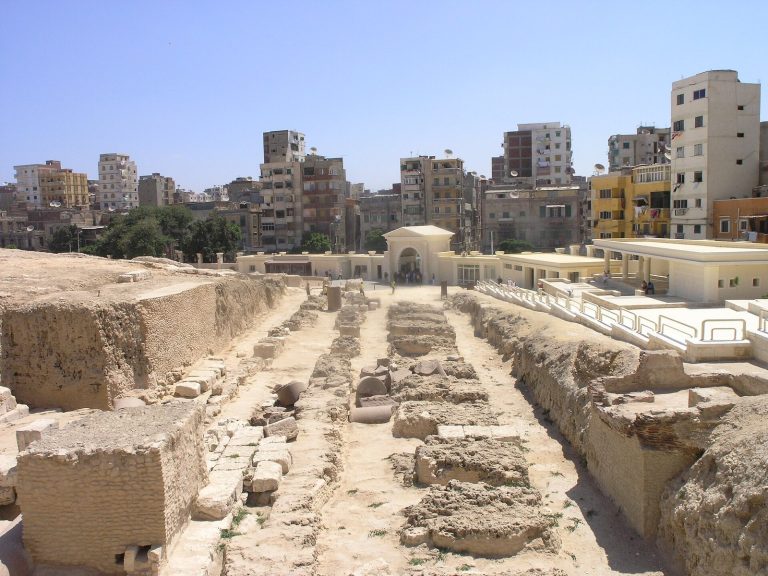
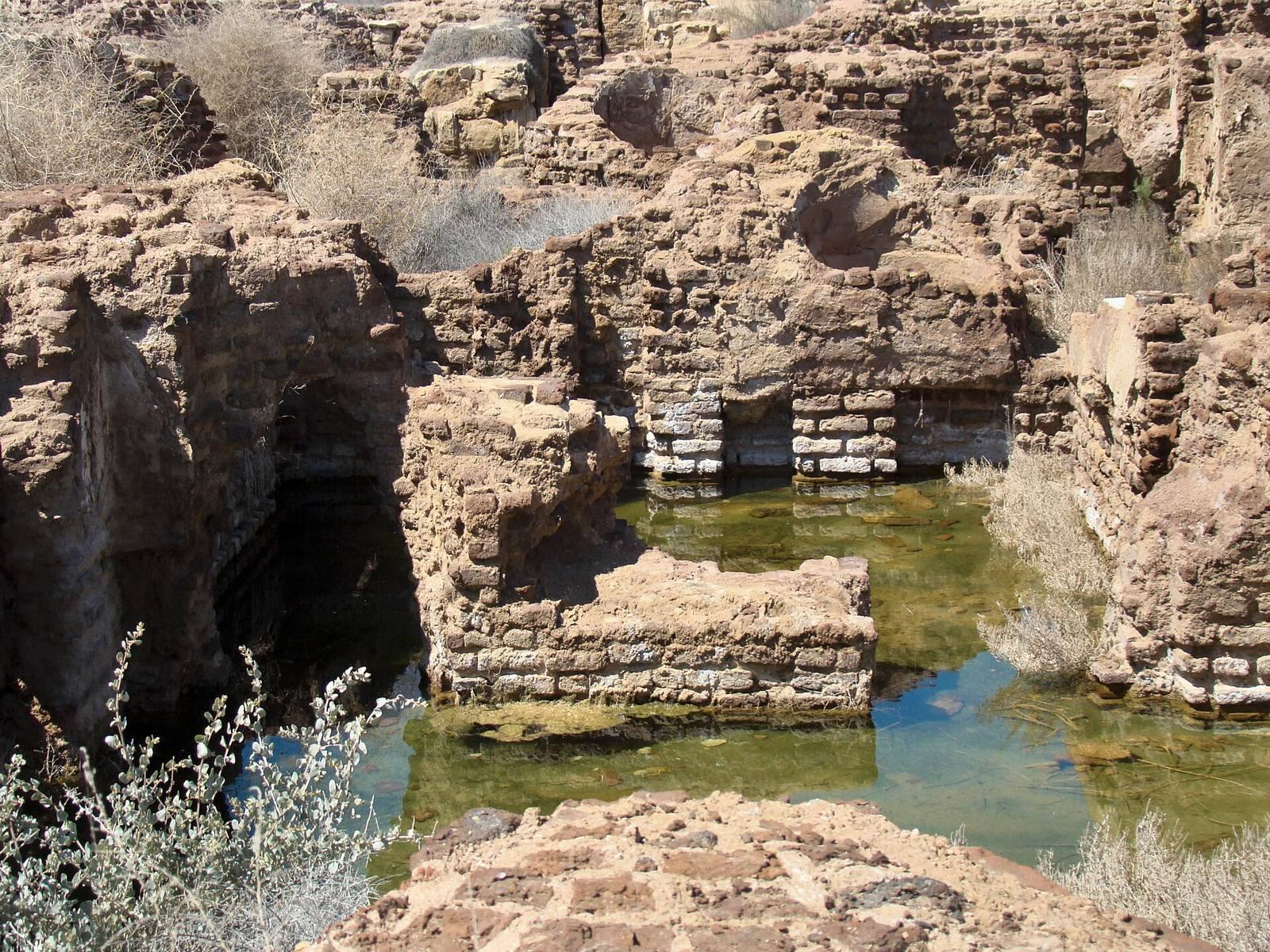
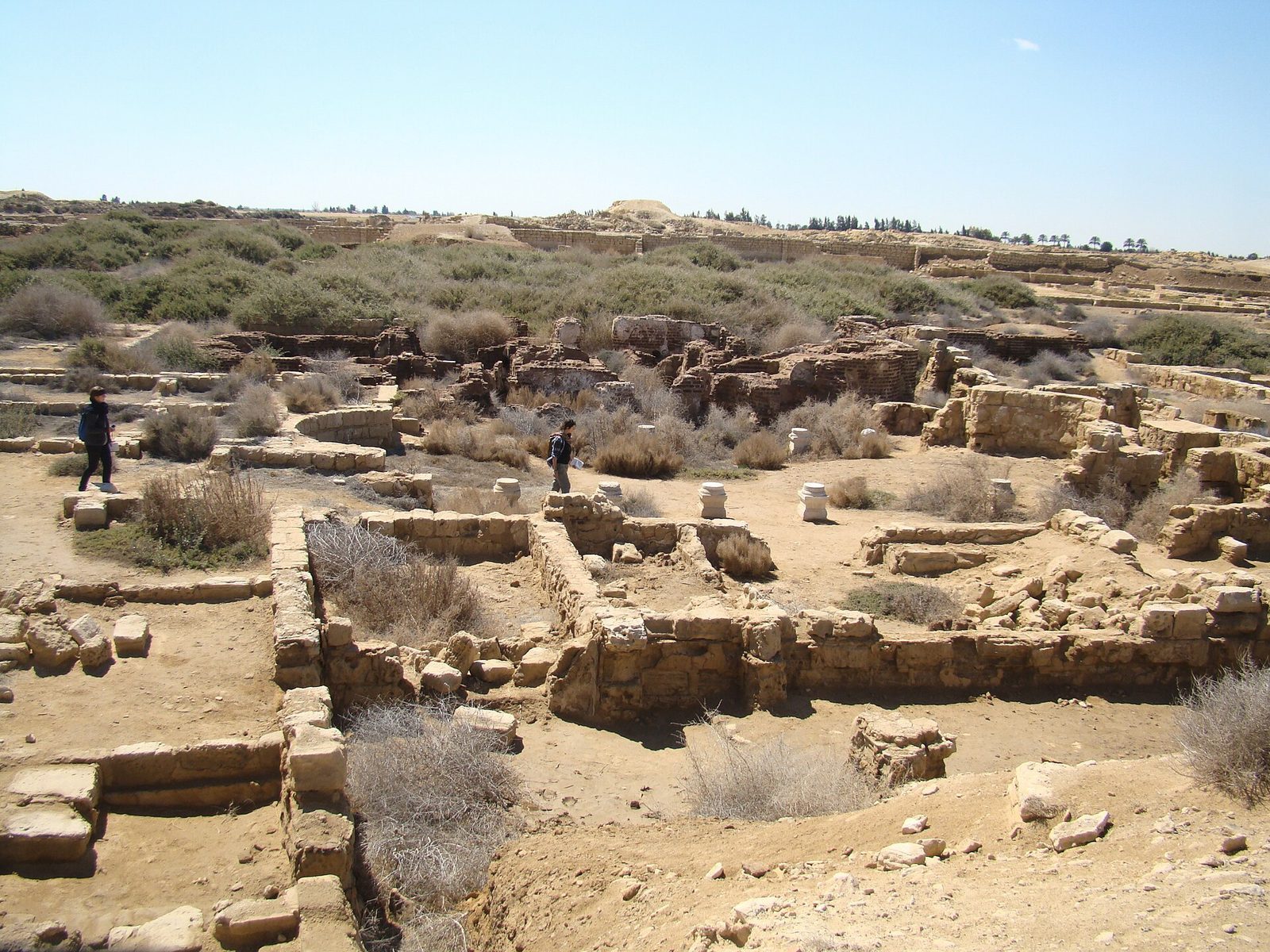
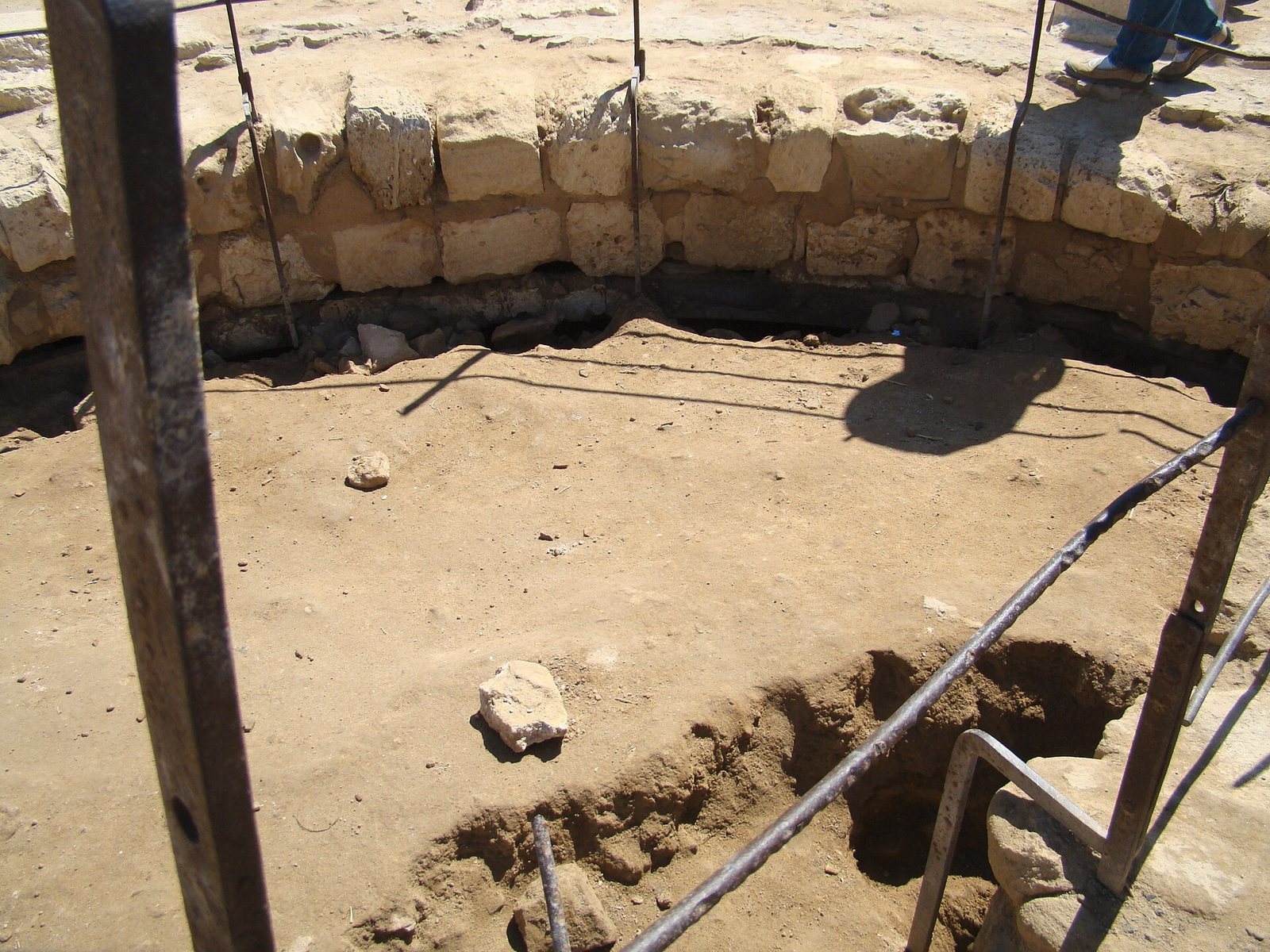
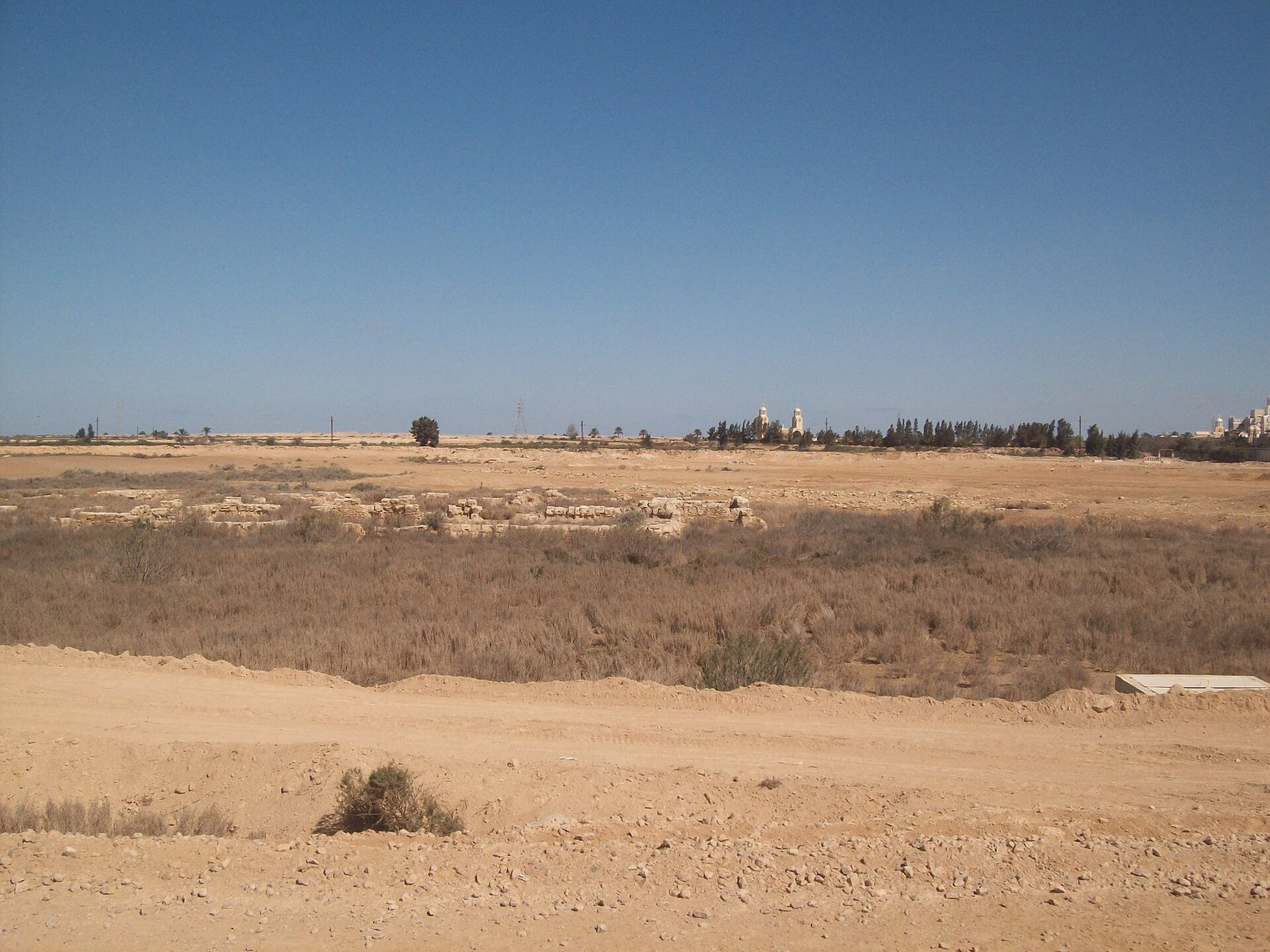
The excavated site includes foundations for most of its major buildings, with the plan of the Great Basilica clearly discernible. Its remains encompass churches, pilgrim accommodation, monastic buildings, baths, and facilities for producing wine. The hard clay beneath the site can support buildings when dry but becomes unstable when wet. Rising groundwater has contributed to the collapse of cisterns and other structures, while subsidence has created large cavities that threaten buildings above them.
Churches and related structures
Great Basilica
The Great Basilica, a large church building, is one of the major structures whose foundations remain clearly identifiable. Its plan can still be traced in the excavated remains.
Neighboring church
A second church stood beside the Great Basilica and may have housed the remains of Menas. Its possible role links the church complex to the saint’s veneration.
Baptistery
A baptistery, a building or space for Christian baptism, stood beside the site of the original church. Its construction developed through at least three phases.
Roman baths
Roman baths were also found among the excavated structures at Abu Mena.
Pilgrim and monastic facilities
Pilgrim dormitory
A large dormitory accommodated poor pilgrims, with separate quarters for men and for women and children.
Monastic residence
A building complex south of the Great Basilica is thought to have served as the residence of the monastery’s abbot.
Pilgrim reception building
The large reception building, called a xenodocheion (a lodging and reception place for travelers and pilgrims), may originally have been a cemetery.
Production and pilgrimage objects
Wine presses
A complex of wine presses with underground storage rooms dates to the 6th and 7th centuries.
Menas flasks
Small terracotta vessels known as Menas flasks were sold to pilgrims for carrying holy water or oil for holy lamps. They bear impressed images of the saint and date to roughly the century and a half before the mid-7th century. Thought to have been made around Abu Mena, the flasks have been found widely across the western Mediterranean and are important to iconography, the study of images and their meanings.