Taposiris Magna: A Ptolemaic Religious and Funerary Site
Site at a Glance
- Rating
- 4.5
- Popularity
- Low
- Country
- Egypt
- Primary era
- Classical
- Eras represented
- Classical
- Civilizations
- Ptolemaic
- Site type
- Religious
- Remains
- Temple
On this page15 sections
History
Taposiris Magna is a Ptolemaic religious and funerary site on the Taenia ridge near Borg El Arab, Egypt, founded by the Macedonian-Greek ruler Ptolemy II Philadelphus between 280 and 270 BC. Its name means “Great Tomb of Osiris,” referring to Osiris, the Egyptian god associated with death, resurrection, and the afterlife.
Foundation and religious role
After Alexander the Great conquered Egypt in 332 BC and established Alexandria, Taposiris Magna became associated with the religious festival of Khoiak. This fourth month of the ancient Egyptian calendar was connected with ceremonies for Osiris and Sokar, a funerary deity especially linked with the necropolis of Memphis. The Ptolemaic dynasty, a Macedonian-Greek ruling house that adopted Egyptian royal and religious traditions, continued to govern Egypt until the death of Cleopatra VII in 30 BC.
The Greek historian Callisthenes stated that Alexander visited the city while traveling toward the Siwa Oasis. This has supported the possibility that a settlement existed at the location during the Hellenistic period, although the later foundation of the Ptolemaic site is associated with Ptolemy II. Plutarch identified Taposiris Magna with an Egyptian temple in the city.
Harbor, settlement, and later occupation
The settlement stood beside a navigable branch of the ancient Lake Mariout, which has since dried out. Its harbor may have helped connect Egypt and Libya. Western traders could potentially have reached the site by water before continuing by caravan, while goods from Libya may have been shipped to Taposiris and carried onward to inland Egyptian cities. This interpretation remains disputed. Wine from the surrounding region was famous in antiquity.
The ancient settlement remained occupied from the second century BC until the seventh century AD. Its cemetery included several burial traditions and forms, reflecting the long use of the site across the Hellenistic, Roman, and late antique periods.
Exploration and the search for a royal burial
Napoleon’s arrival in Egypt in 1798 was followed by a French architectural survey whose results appeared in Description de l’Égypte. Twentieth-century excavations began under the Italian Egyptologist Evaristo Breccia. Archaeological work has continued since 1998, including a radar survey completed in 2002 to examine the temple and its surroundings without immediate excavation.
Much recent work has focused on the possibility that Cleopatra VII and Mark Antony were buried at Taposiris Magna. Kathleen Martínez proposed that they were first buried in Alexandria and later secretly reburied at the site by Egyptian priests. The proposed connection remains unconfirmed. Excavations by Martínez, Egypt’s Supreme Council of Antiquities, and later the Universidad Nacional Pedro Henríquez Ureña in Santo Domingo have produced burials and objects that continue to inform the investigation.
Excavation was halted in 2013 amid unrest, but Martínez later received permission to resume work. The site was also affected by the Second Battle of El Alamein, during which unexploded bombs and the charred remains of Italian and New Zealand soldiers were found in its tunnels. In January 2021, Egyptian-Dominican researchers announced burials containing mummies with golden tongues and gold-leaf tongue amulets. These objects were intended to allow the dead to speak with Osiris in the afterlife.
Work continued in 2024 and 2025. A foundation plate bearing Greek and hieroglyphic inscriptions indicated that the temple was dedicated to Isis, the Egyptian goddess associated with kingship, protection, motherhood, and magical power. This evidence gives the temple a distinct identification from its older association with Osiris. In 2025, excavation of a water tunnel discovered in 2022 led to the identification of a sunken port in the Mediterranean Sea off the coast, with ship anchors and pottery among its archaeological material.
Remains
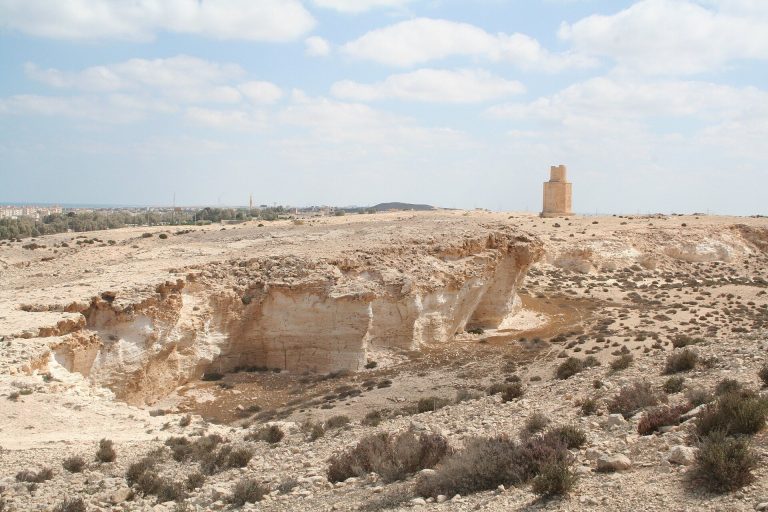
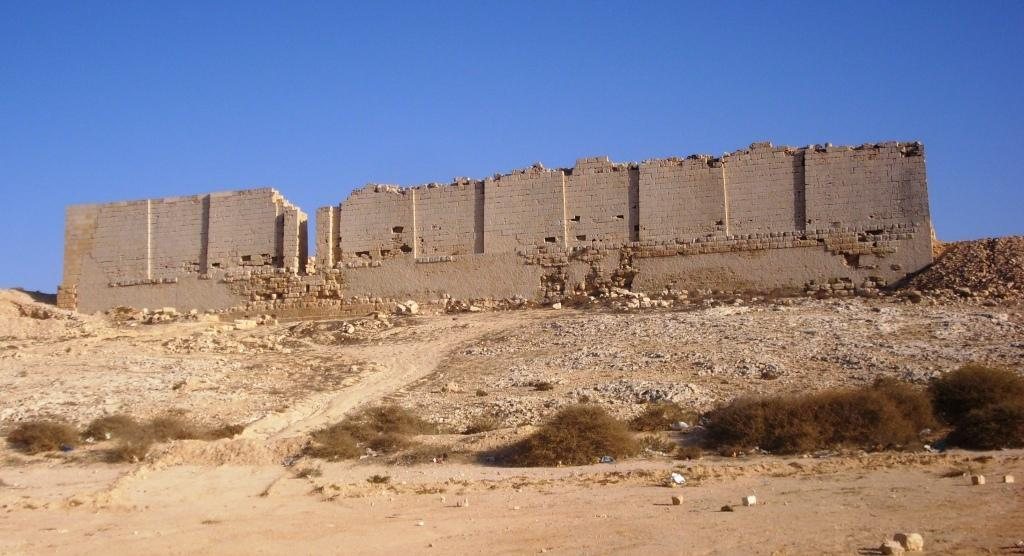
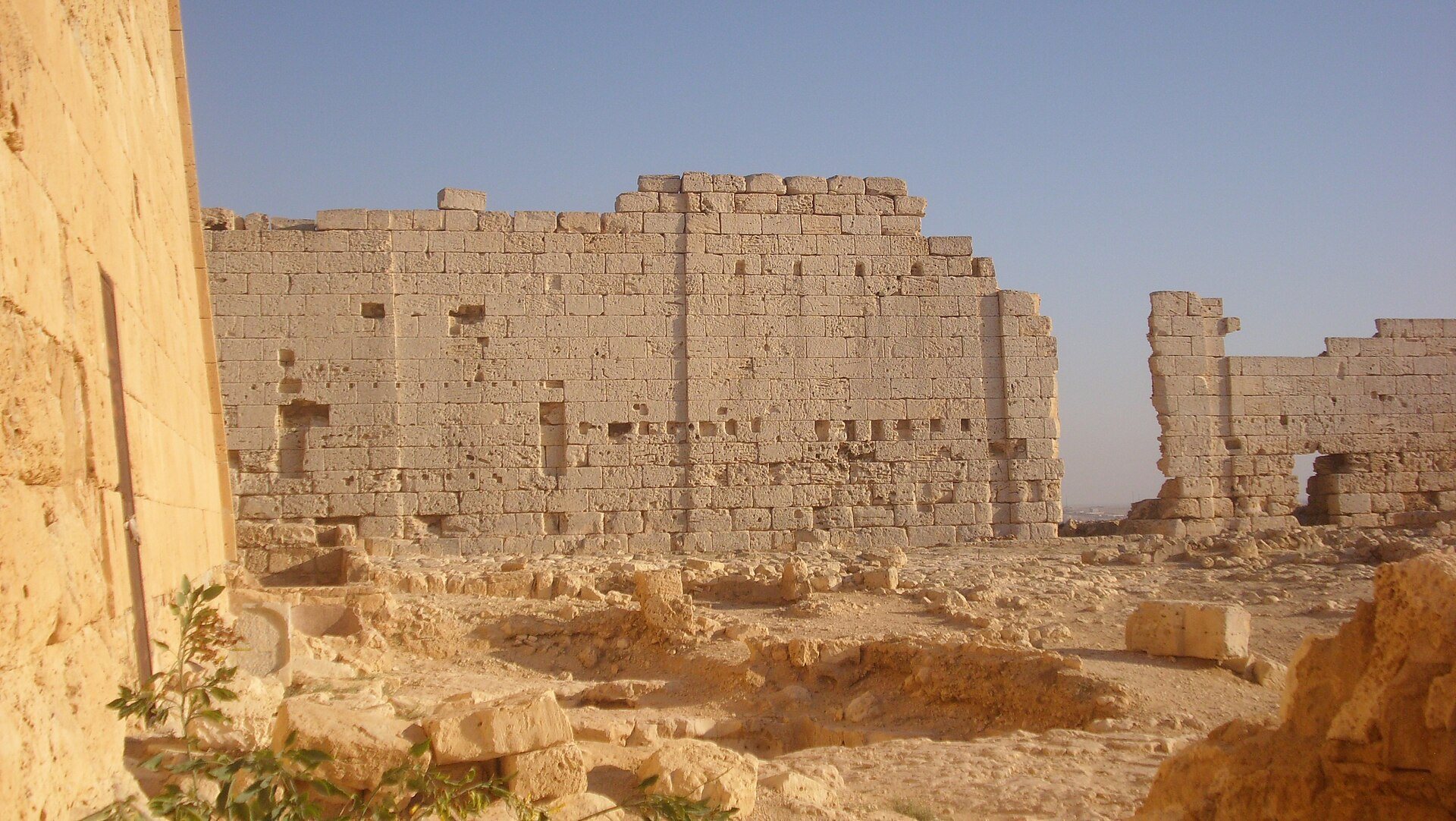
Taposiris Magna occupies a limestone ridge that separates the Mediterranean Sea from Lake Mariout, about 48 kilometres west of Alexandria. The ridge rises approximately 14 metres above sea level. The principal monuments are the remains of a temple and the Tower of Abusir, while private and public buildings, cisterns, churches, and a large necropolis extended around them. Both major monuments were partly restored during the 1930s.
Temple and ridge monuments
Temple of Isis and Osiris
The temple, traditionally identified as a sanctuary of Osiris, stands at the centre of the archaeological area. Its possible connection with the burial of Cleopatra VII has made it a focus of modern excavation. A foundation plate found during work in 2024 or 2025 carries Greek and hieroglyphic inscriptions identifying Isis as the temple’s deity, revising the older identification while preserving the site’s strong association with Osiris.
In 2010, excavators found a large headless granite statue of a Ptolemaic king, an original temple gate, and limestone foundation stones linked with the entrance. The statue shows the ruler in traditional Egyptian form, wearing a collar and kilt, and may represent Ptolemy IV. One foundation stone indicates that the entrance was lined with sphinxes resembling those used in pharaonic-period architecture.
Tower of Abusir
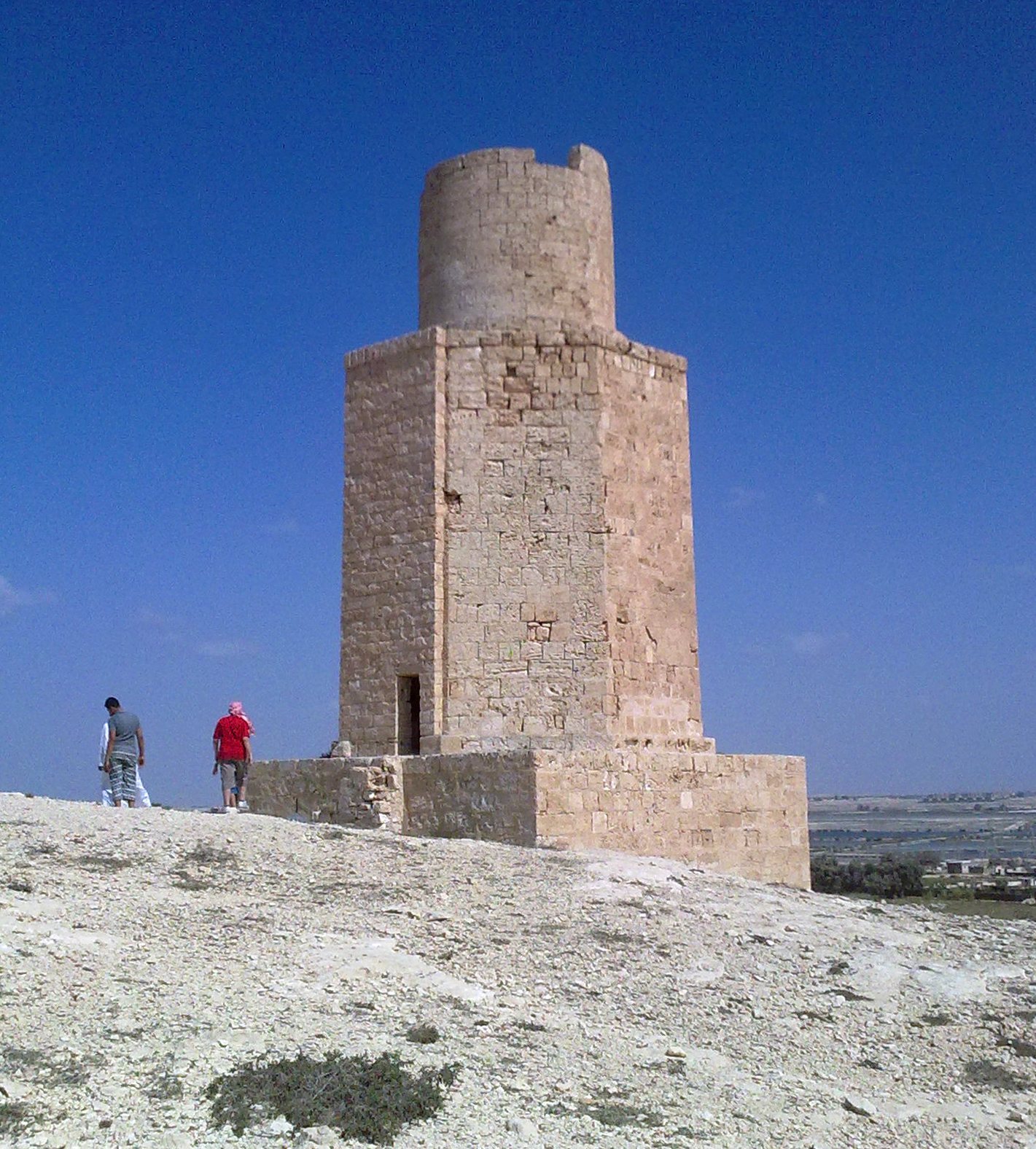
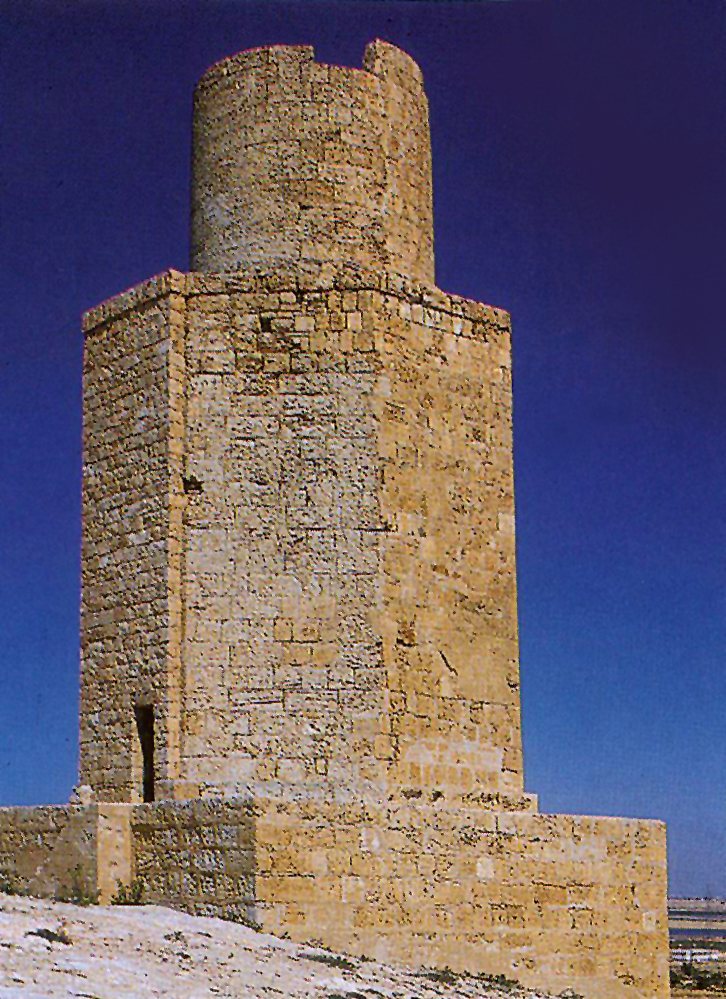
The Tower of Abusir was used as a guide when the Lighthouse of Alexandria, known as the Pharos, was reconstructed. A 1974 assessment concluded that the tower was neither a lighthouse nor a watchtower. It was probably built during the Ptolemaic period after the Pharos and functioned as a funerary monument. The structure was partly restored during the 1930s.
Underground waterworks and coastal port
Water tunnel
A tunnel beneath the temple was discovered in 2022. It lies 20 metres below ground, measures approximately 2 metres in height, and extends for about 1,305 metres. Its purpose was to carry water to thousands of people. Its underground engineering has been described as closely or identically resembling the Tunnel of Eupalinos on Samos, an ancient water tunnel built for water supply.
Sunken port
Excavation of the underground water system in 2025 led to the discovery of a sunken port in the Mediterranean Sea off the coast of Taposiris Magna. Ship anchors and pottery were among the material recovered from the port.
Necropolis and burials
Tombs behind the temple
The necropolis behind the temple contained 27 tombs. Twenty were formed as vaulted sarcophagi, partly underground and partly above ground. The other seven consisted of stairways leading to simple burial chambers. Ten mummies were found inside the tombs, including two with gilded decoration. The cemetery also included sarcophagi, pyramids, columns, and pilasters, rectangular supports projecting partly from walls.
Several deep shafts were found inside the temple, and three appear to have been used for burials. Their possible role as tombs for important individuals remains uncertain. A separate group of Greco-Roman burials contained mummies whose faces were turned toward the temple, an orientation interpreted as possible evidence for a significant royal burial within it.
Objects from the burials
Burials excavated in 2021 included mummies with golden tongues and gold-leaf tongue amulets. One mummy wore a crown decorated with the horns of Hathor and a cobra representing Wadjet. Another had gilded decoration in the form of a broad necklace. The tongue ornaments expressed the belief that the dead needed to speak with Osiris in the afterlife.
Statues, coins, and other finds
Excavations attributed to Martínez’s expedition produced coins depicting Alexander the Great, a sculpted head identified as Cleopatra VII, and 22 coins bearing Cleopatra’s image. Other discoveries included numerous amulets, a headless Ptolemaic statue, and a distinctive bust of a man with a cleft chin resembling known depictions of Mark Antony. Together with the tombs and temple remains, these objects have shaped the continuing investigation of Taposiris Magna’s religious and funerary roles.