Jublains museum: An Archaeological Museum of Roman Jublains


Site at a Glance
- Rating
- 4.5
- Popularity
- Low
- Country
- France
- Primary era
- Classical
- External website
- Open
- Eras represented
- Bronze Age, Iron Age, Classical, Medieval
- Civilizations
- Merovingian, Roman
- Site type
- Museum
On this page7 sections
History
Jublains museum is an archaeological museum in Jublains, France, opened on 27 June 1995 to present the area’s archaeological heritage. Its collections include material from the ancient Roman site of Jublains, whose sanctuary, fortress, and theater form the central focus of the museum’s later interpretation.
From Regional Collections to a Roman Focus
The museum’s original collections covered archaeological discoveries from across the Mayenne, extending from the earliest prehistoric periods to the sixteenth century. Some of the objects on display came from earlier excavations at Jublains, while others were deposited by the museums of Laval and Mayenne. The exhibition design was partly revised in 2002.
The museum was later devoted exclusively to the Roman period. It holds the Musée de France designation, a French legal status for museums whose collections are recognized as being of public significance.
Remains
Roman Site Collections
Sanctuary and Religious Finds
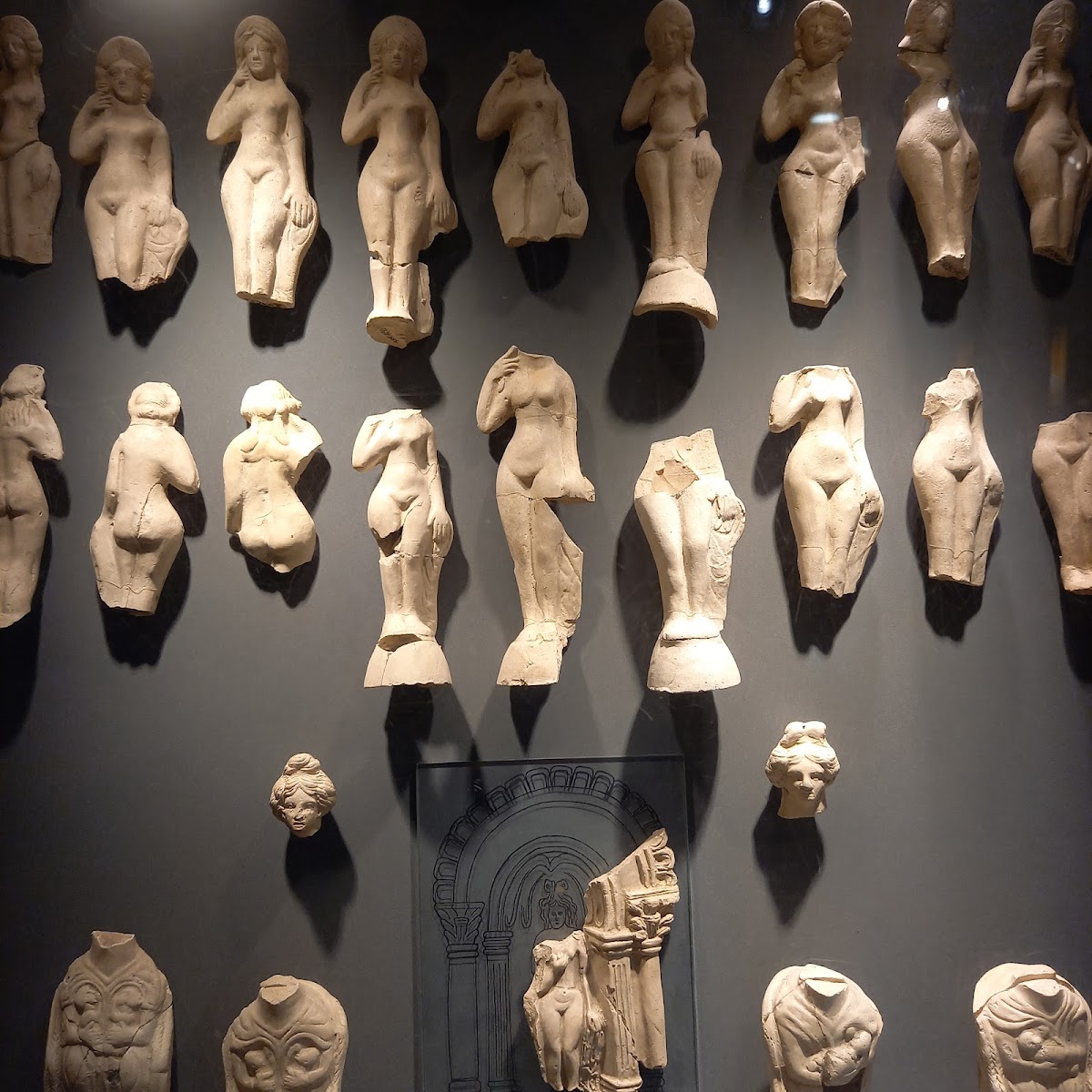
The museum presents objects from the sanctuary of ancient Jublains, including ex-votos, offerings made to a deity or sanctuary to fulfill a vow or express religious dedication. Among them are a group of fibulae, ancient brooches used to fasten clothing, and terracotta votive statuettes. The displays also include coins from the sanctuary of Juvigné and a limestone head of a mother goddess.
Theater, Fortress, and Urban Model
Finds from the theater include a fragment of its dedicatory inscription, dated to the second half of the first century AD. A pillar decorated with masks was discovered in the fortress and is displayed in the museum. A scale model represents the ancient city quarter between the forum, the central public space of a Roman town, and the sanctuary.
Other Archaeological Objects
The collection also reaches beyond the principal Roman buildings. It contains Bronze Age bracelets dated to approximately 1500–1200 BC and an Iron Age sword. Painted plaster depicting a bird is displayed alongside a fragment of a mosaic discovered in 1776. Merovingian belt plaques and fibulae represent the period of the Frankish Merovingian dynasty, which generally extended from the fifth to the eighth centuries.