Killyleagh Castle: A Long-Inhabited Norman Castle and Country House

Site at a Glance
- Rating
- 4.6
- Popularity
- Low
- Country
- United Kingdom
- Primary era
- Early Modern
- External website
- Open
- Eras represented
- Early Modern, Modern
- Civilizations
- British, English
- Site type
- Domestic
- Remains
- Castle
On this page12 sections
History
Killyleagh Castle is a castle and country house in Killyleagh, Northern Ireland, United Kingdom, established by the Normans in the late twelfth century. Sir John de Courcy built fortifications here in 1180 after the Anglo-Norman conquest of Ireland. The site formed part of a defensive network around Strangford Lough and is believed to be one of the oldest inhabited castles in Ireland, with occupation continuing to the present.
Norman foundation and Gaelic control
Sir John de Courcy was a Norman knight who established power in eastern Ulster. His fortifications at Killyleagh protected lands taken from the native Irish and helped guard against attacks by Irish clans and Viking forces. The early stronghold therefore belonged to a wider system of Norman military control around Strangford Lough.
By 1602, Killyleagh was controlled by Con O’Neill of Clandeboye, a Gaelic lordship in North Down. O’Neill led an unsuccessful attack on English soldiers and was imprisoned. His wife then negotiated with Hugh Montgomery, a Scottish aristocrat, for his pardon. King James I granted the pardon but divided O’Neill’s lands among three parties. The territory extending from Killyleagh to Bangor passed to James Hamilton, who later became 1st Viscount Claneboye.
The Hamilton residence and the 1649 siege
A map of 1625 shows Killyleagh as a residence with one tower on its south side. Around that time, James Hamilton moved from Bangor to Killyleagh, constructed the courtyard walls, and enlarged and improved the castle. The property has remained associated with the Hamilton family since the early seventeenth century.
James Hamilton’s son, the 1st Earl of Clanbrassil, added a second tower. As a supporter of the Stuart monarchy and Charles I, he turned Killyleagh into a royalist stronghold during the Wars of the Three Kingdoms, a series of civil and political conflicts that affected England, Scotland, and Ireland in the seventeenth century.
In 1649, forces commanded by Oliver Cromwell besieged the castle. Cromwell was the parliamentary military and political leader who led a campaign in Ireland that year. His troops used artillery from the land and from a vessel on Strangford Lough. The gatehouse was destroyed and the castle suffered heavy damage. The earl fled, leaving his wife, children, and the remaining garrison behind, and Parliament fined him for the return of the castle and his lands.
Rebuilding and the inheritance dispute
After the Restoration of the monarchy, Henry Hamilton, 2nd Earl of Clanbrassil, recovered Killyleagh. He rebuilt the castle in 1666, reconstructing the towers and repairing the north wall. Most of the fabric that survives today derives from this rebuilding campaign.
Henry married Lady Alice Moore, daughter of the Earl of Drogheda, in 1667. Their only child died in infancy. Alice destroyed an earlier will that would have divided the estate among five Hamilton cousins and persuaded Henry to make a new will in 1674, leaving Killyleagh to her. Henry died unexpectedly in 1675, apparently from poisoning and possibly arsenic. Alice died two years later, leaving the estate to her brother.
The inheritance dispute lasted about twenty years. A copy of the earlier will was eventually discovered, although all five cousins had died by then. James Hamilton of Neilsbrook had directed that the estate be divided between his daughter Anne Stevenson and his younger brothers, Gawn and William Hamilton. In 1697, the probate court awarded Gawn and William the main house and two towers, while Anne received the bawn, a fortified enclosure protecting a residence or castle, and the gatehouse. Gawn and William had to create a new entrance on the north side to reach their portion of the property.
Nineteenth-century transformation and later history
William Hamilton died without children in 1716, and the castle then passed through successive generations of Gawn Hamilton’s descendants. Gawn’s great-grandson, Archibald Hamilton Rowan, was an Irish nationalist and member of the United Irishmen, an organization founded in the 1790s. After returning from exile in America, he lived at Killyleagh from 1806 to 1834.
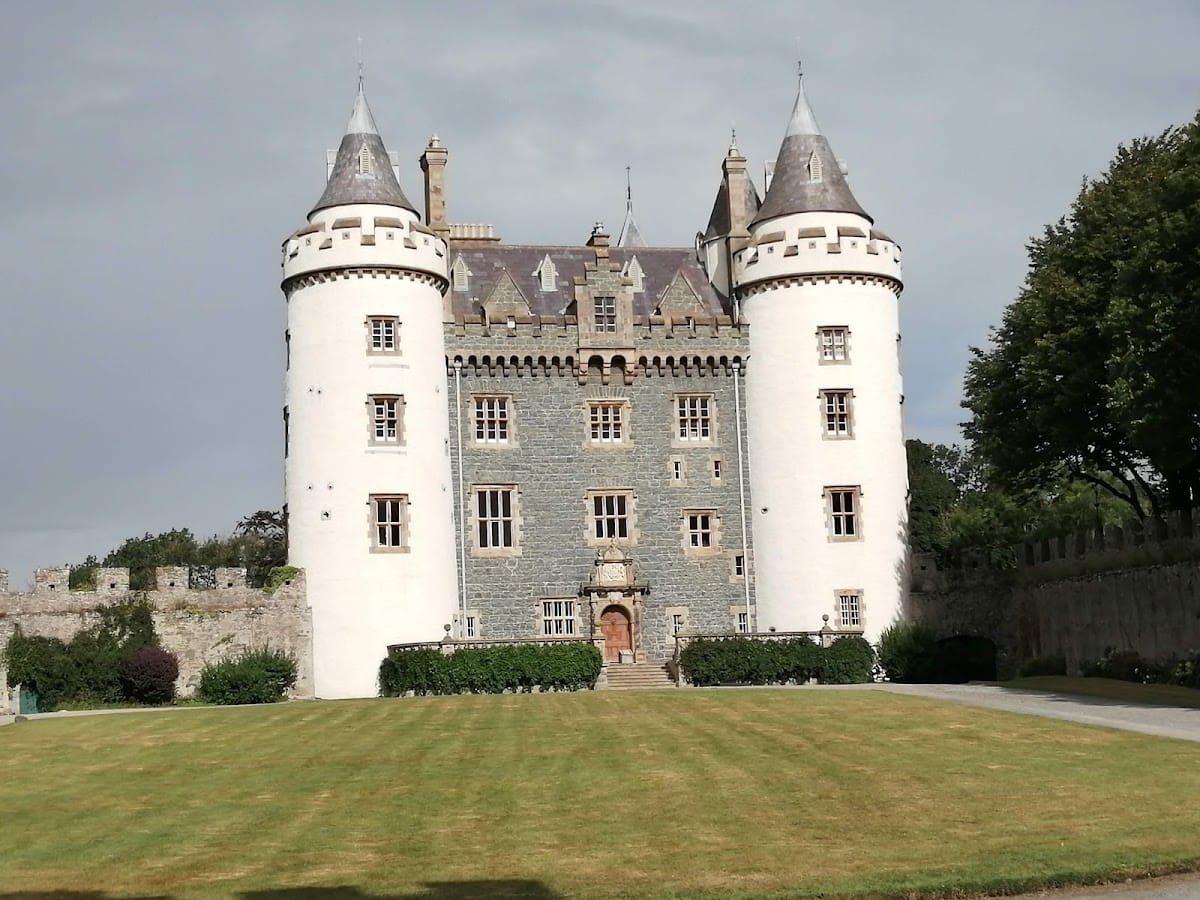
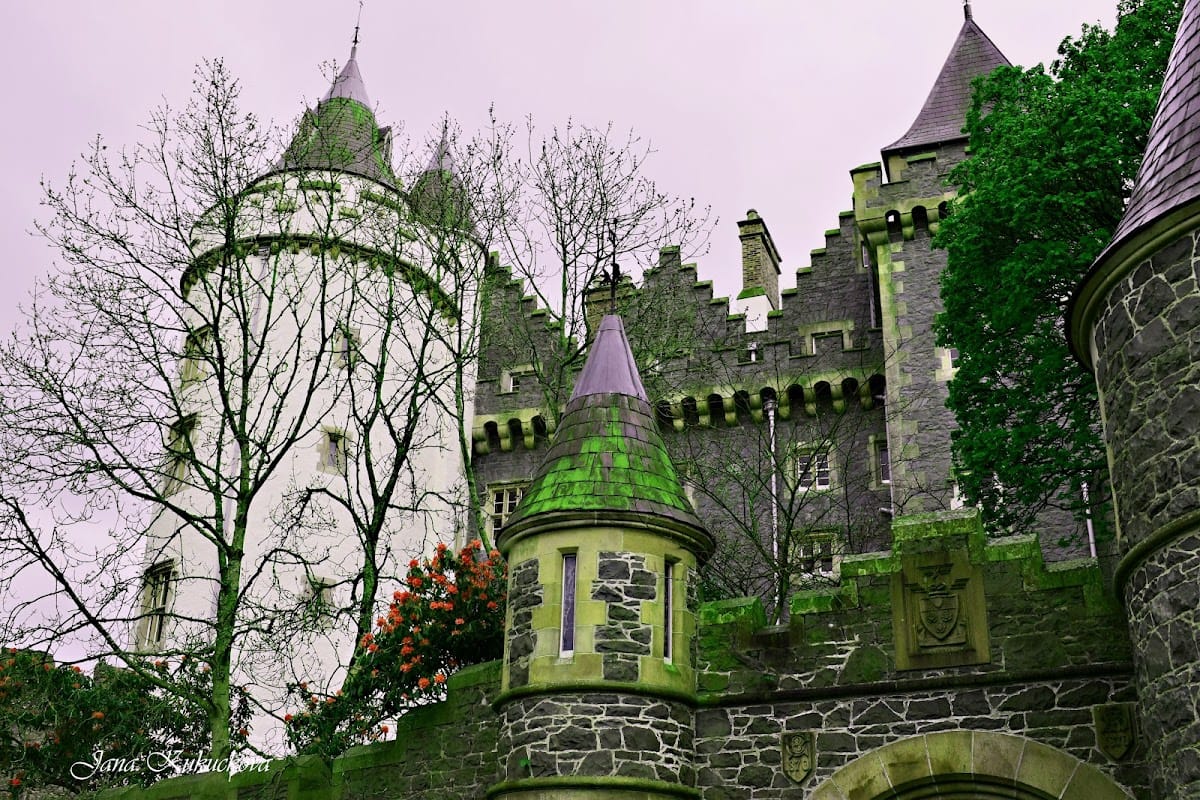
From 1850, Archibald Rowan-Hamilton and his wife employed Sir Charles Lanyon, an architect and engineer known for major works in Ireland, to renovate the castle. Lanyon re-encased the exterior while retaining the original windows and doors. He added turrets, an imposing doorcase, and candle-snuffer-shaped roof projections, creating the romantic nineteenth-century silhouette associated with the building.
Anne Stevenson’s branch descended through James Stevenson and Dorcas, later 1st Baroness Dufferin and Claneboye, to Frederick Temple-Blackwood, 5th Baron Dufferin and Claneboye. In 1860, the 5th Baron transferred the bawn and gatehouse to the Hamiltons and commissioned a replacement gatehouse designed to harmonize with the main castle. He added Hamilton to his surname before marrying his distant cousin Hariot Georgina Rowan-Hamilton in 1862.
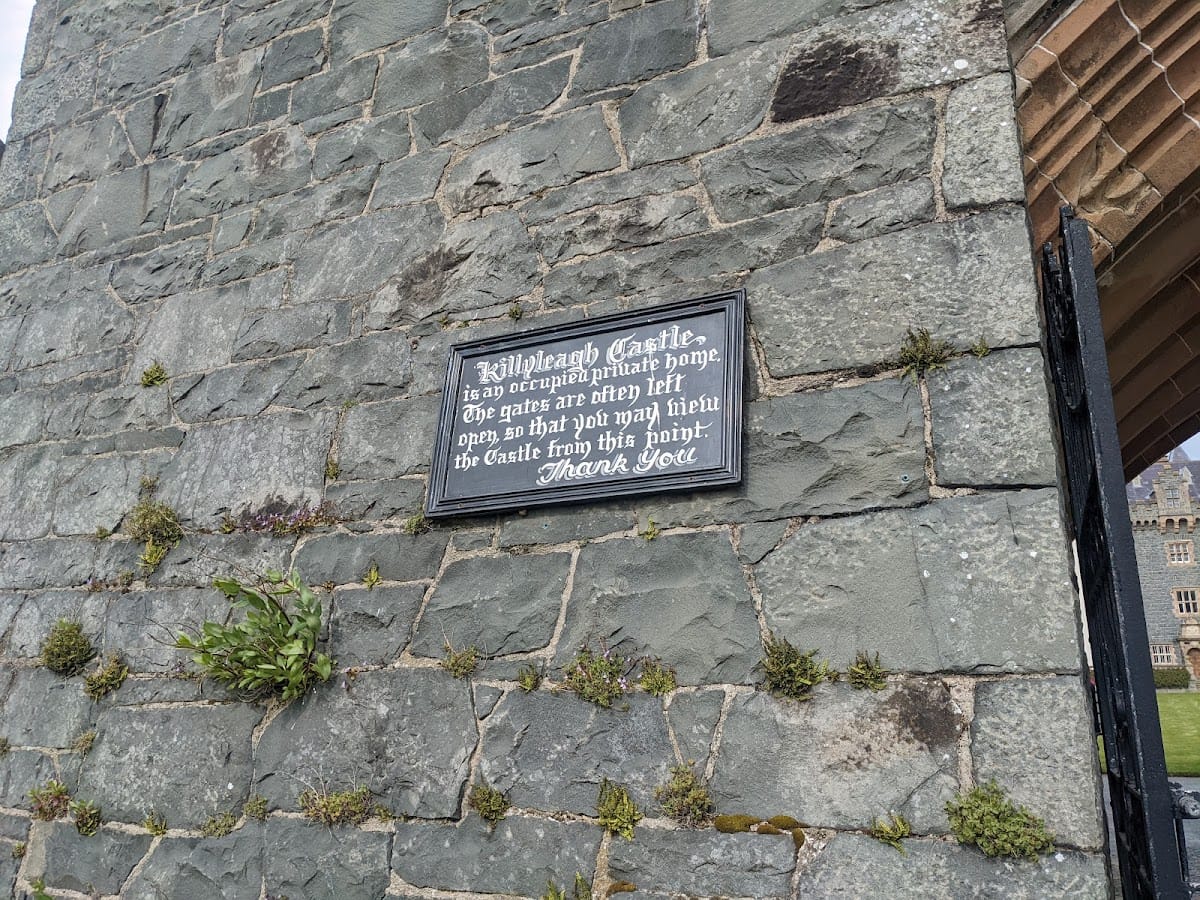
The Irish Republican Army attacked Killyleagh Castle during the early 1920s. The castle remains privately owned and is the home of Gawn Rowan Hamilton and his family. It is also a Grade A registered building.
Remains
Killyleagh Castle presents the appearance of a Loire Valley château rather than an Irish tower house. Its surviving complex combines two corner towers, a residential block, courtyard walls, a long fortified bawn, and a gatehouse. The physical form reflects the seventeenth-century rebuilding after the siege, the division of the estate in 1697, and the romantic alterations carried out in the nineteenth century.
Main castle
Towers and residential block
The early seventeenth-century residence had a single tower on its south side, as shown on the 1625 map. The 1st Earl of Clanbrassil added a second tower, while the 2nd Earl rebuilt the towers and repaired the north wall after the damage of 1649. Two corner towers and the main residential block now form the principal castle. The surviving fabric is predominantly associated with the 1666 reconstruction, although its exterior was later reshaped by Lanyon.
The northern circular tower contains vaulted rooms, while its Georgian counterpart has pentagonal rooms. Lanyon retained both sets of rooms during his alterations. Inside the residential block, the drawing room, dining room, and library interconnect and face south towards the garden. Heavy plasterwork by Mr. Fulton forms part of the interior decoration.
Courtyard, bawn, and entrances
Courtyard walls and northern entrance
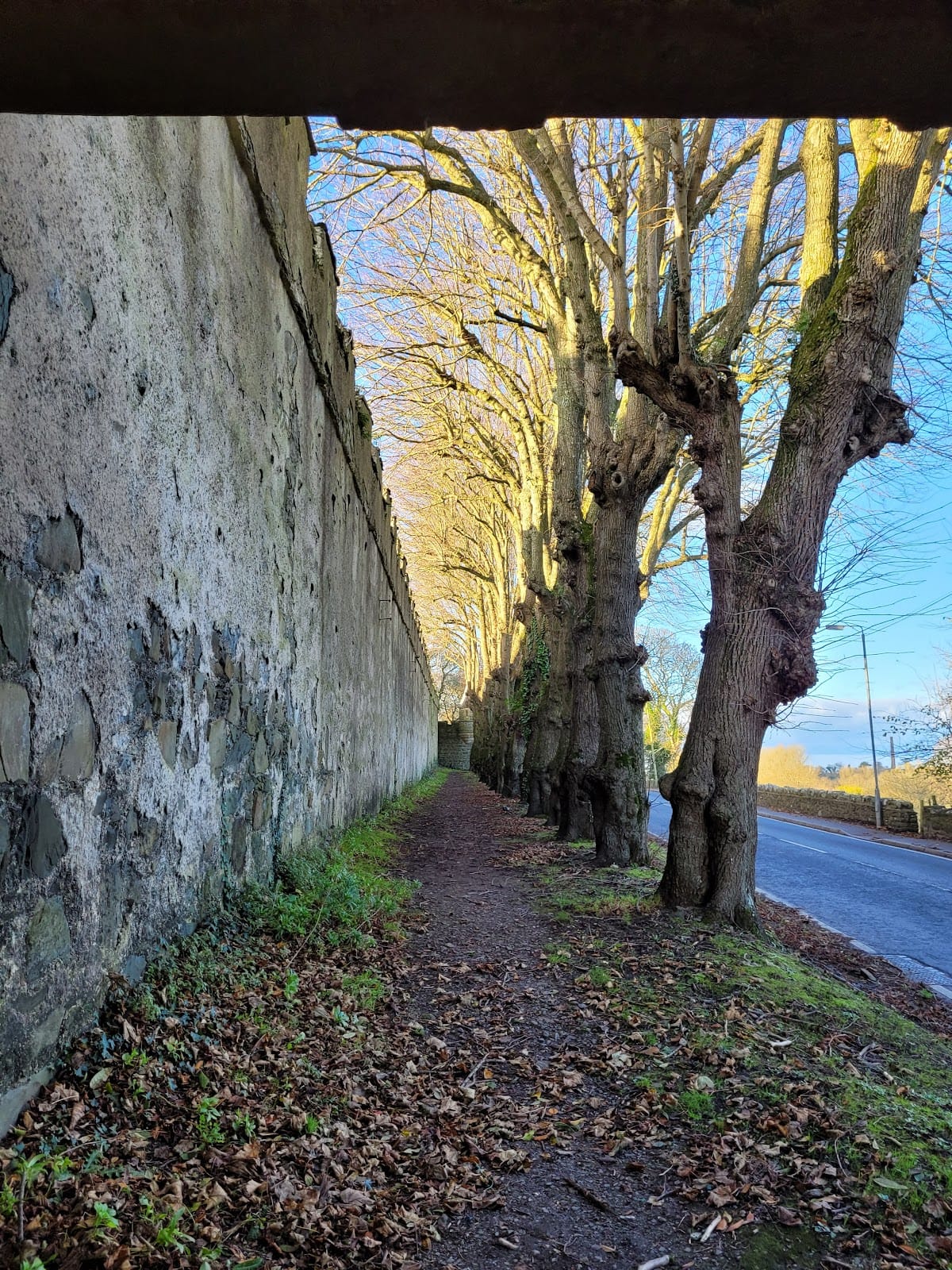
James Hamilton built the courtyard walls around 1625 as he enlarged the residence. After the 1697 inheritance settlement, Gawn and William Hamilton controlled the main house and two towers, while Anne Stevenson received the bawn and gatehouse. The brothers consequently opened a new entrance on the north side, giving access to their part of the divided property.
Bawn and gatehouses
The long bawn lies in front of the castle and was historically separated from the main house by the inheritance division. Its gatehouse was destroyed during Cromwell’s 1649 siege. In 1860, the 5th Baron Dufferin and Claneboye transferred the bawn and gatehouse to the Hamiltons and commissioned a replacement entrance building. Benjamin Ferrey designed this baronial gatehouse as part of the nineteenth-century architectural program, giving it a form intended to harmonize with the main castle.
Nineteenth-century exterior
Lanyon’s work preserved the original windows and doors while placing a new exterior skin over the earlier building. Turrets, the large doorcase, and candle-snuffer-shaped roof projections altered the castle’s outline without removing the vaulted and pentagonal room arrangements inside the towers. These additions account for much of the romantic silhouette visible in the surviving castle today.