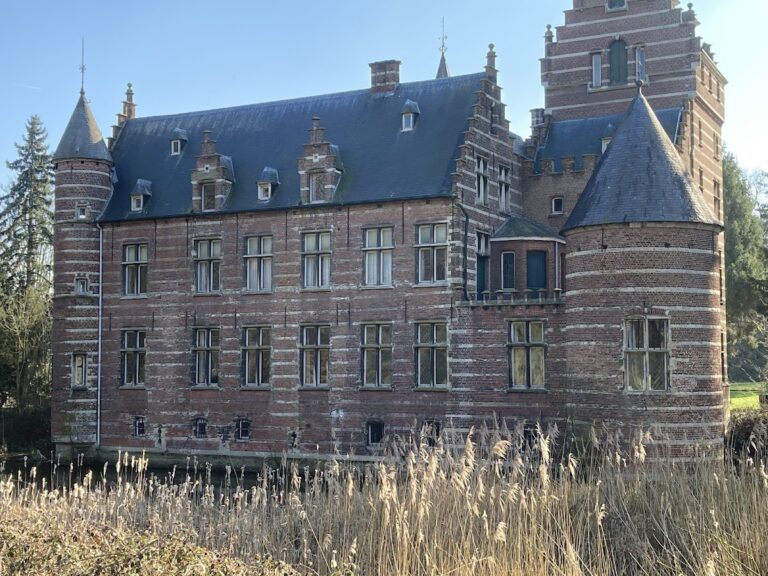
Kasteel Cortewalle: A Moated Castle in Belgium
Site at a Glance
- Rating
- 4.4
- Popularity
- Medium
- Country
- Belgium
- Primary era
- Medieval
- External website
- Open
- Eras represented
- Medieval, Early Modern, Modern
- Civilizations
- Belgian, County of Flanders, Duchy of Burgundy
- Site type
- Domestic
- Remains
- Castle
On this page12 sections
History
Kasteel Cortewalle is a moated castle in Beveren, Belgium, built in the early fifteenth century in the Flemish Renaissance style by the Triest family. Regarded as one of the oldest castles in the Waasland region of East Flanders, it developed from a residence known initially as Hof ter Walle, later shortened to Cortewalle and also associated with the earlier name Ten Wallen.
Origins and the Triest family
Joost Vijdt enlarged the castle and left it to his cousin Joos Triest. The property then remained connected with the Triest family for centuries. Cortewalle is traditionally regarded as the probable birthplace of Antonius Triest, a Catholic prelate who became the fifth bishop of Bruges in 1616.
Goubau and Brouchoven de Bergeyck ownership
In the seventeenth century, Cortewalle passed to the Goubau family. Joannes Francis Goubau acquired it in 1671, and the property later entered the hands of the counts of Brouchoven de Bergeyck through a marriage in 1787. The Brouchoven de Bergeyck family retained the estate until the mid-1960s and lived at the castle until 1960.
Charles de Brouchoven de Bergeyck began an extensive campaign of alteration and enlargement in 1856. The work removed the earlier Renaissance windows with stone cross divisions, renewed the entrance portal in the neo-Gothic style, and substantially changed the interiors. The eighteenth-century coach house was enlarged and provided with a Neoclassical orangery, while an ice cellar and accommodation for the gardener and stableman were added in the park.
Charles’s only daughter, Alix, married her cousin Florimond de Brouchoven de Bergeyck in 1869 and brought the property into the marriage. Charles de Brouchoven de Bergeyck (1801–1875) and Florimond de Brouchoven de Bergeyck (1839–1908) are associated with the nineteenth-century changes that gave the castle much of its present appearance.
Late alterations and the end of private residence
Between 1908 and 1910, the last count, Charles René de Brouchoven de Bergeyck, carried out further work. Three ground-floor wings were enlarged on the courtyard side, reducing the courtyard by nearly half, and the interiors were thoroughly renovated and modernized. These interventions completed the principal transformation of the residence during the family’s ownership.
After the death of the widowed countess Joséphine Cornet d’Elzius de Peissant in 1960, the castle ceased to be inhabited. The heirs auctioned the household contents in 1961. Part of the family archive was lost, while other material became dispersed among family members. In the mid-1960s, the Brouchoven de Bergeyck family sold the castle, park, and outbuildings to the municipality of Beveren.
Municipal ownership and preservation
Beveren has used the main house for exhibitions, concerts, and other cultural events. The estate has been protected as a monument since 8 September 1971. Restoration campaigns from 1979 to 2008, including major work in the 1980s and in 2007–2008, broadly returned the castle to the appearance it had under the last count. His former hunting-dog kennel was restored in 2009.
The dispersed family archive began to be reassembled after the family association issued a call in 1997. The municipality concluded a loan agreement with the family for the collected archive in 2000, and the Diocese of Ghent loaned an additional section in 2005, formerly held by Saint Paul’s Seminary. Since 2001, municipal staff have organized, inventoried, and made the archive accessible. The attic now houses a local-history museum operated by Het Land van Beveren, while the castle also contains the Brouchoven de Bergeyck family archive.
Remains
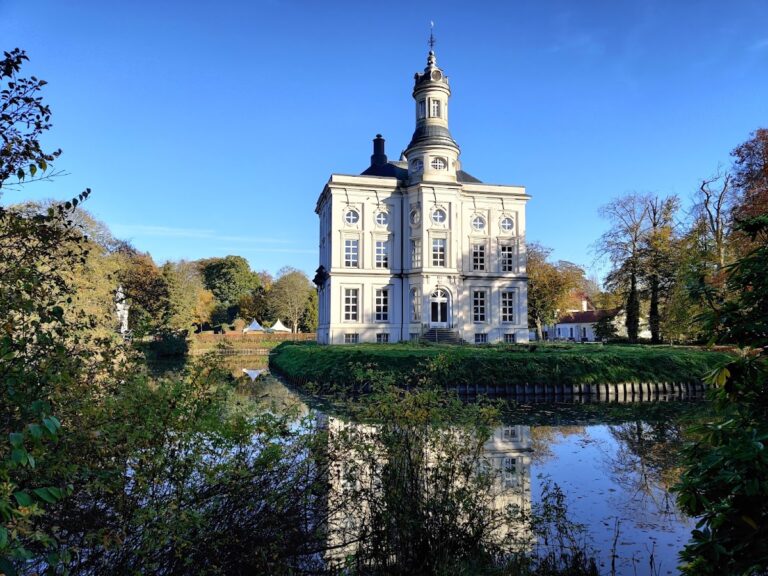
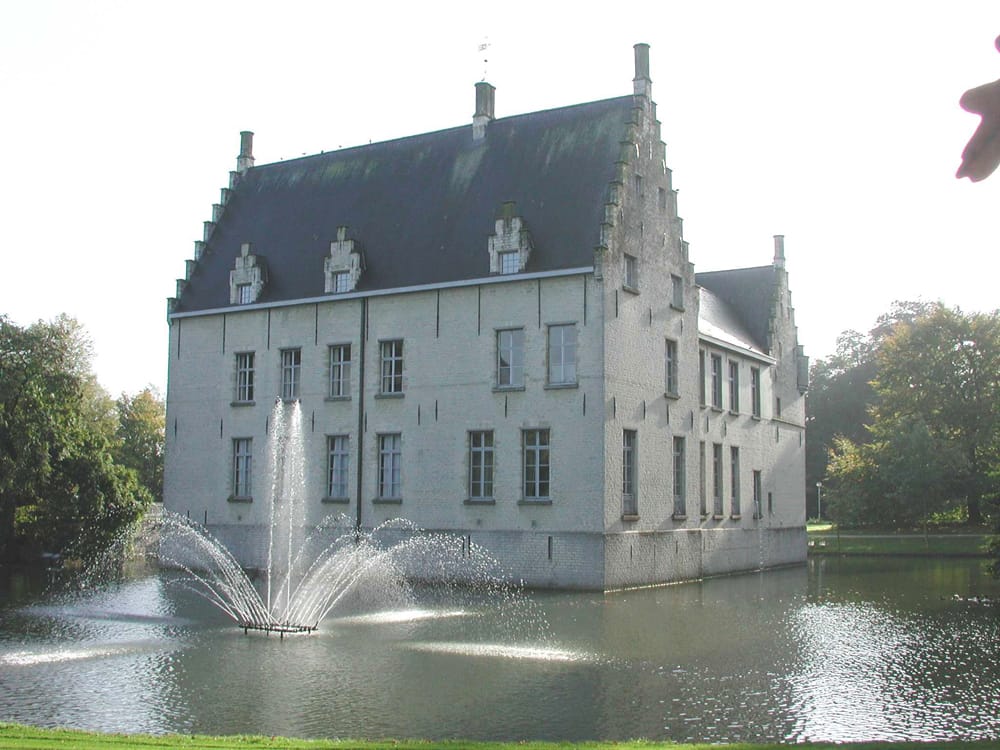
Kasteel Cortewalle occupies a small estate formed by a four-winged manor house surrounded by water, a former coach house with an adjoining orangery, and an approximately 10-hectare landscape park. The manor house stands directly in the surrounding pond, while its enclosed quadrangular plan preserves the arrangement of a former water castle, a fortified or residential complex enclosed by a water-filled moat.
Park and estate buildings
Approach and landscape park
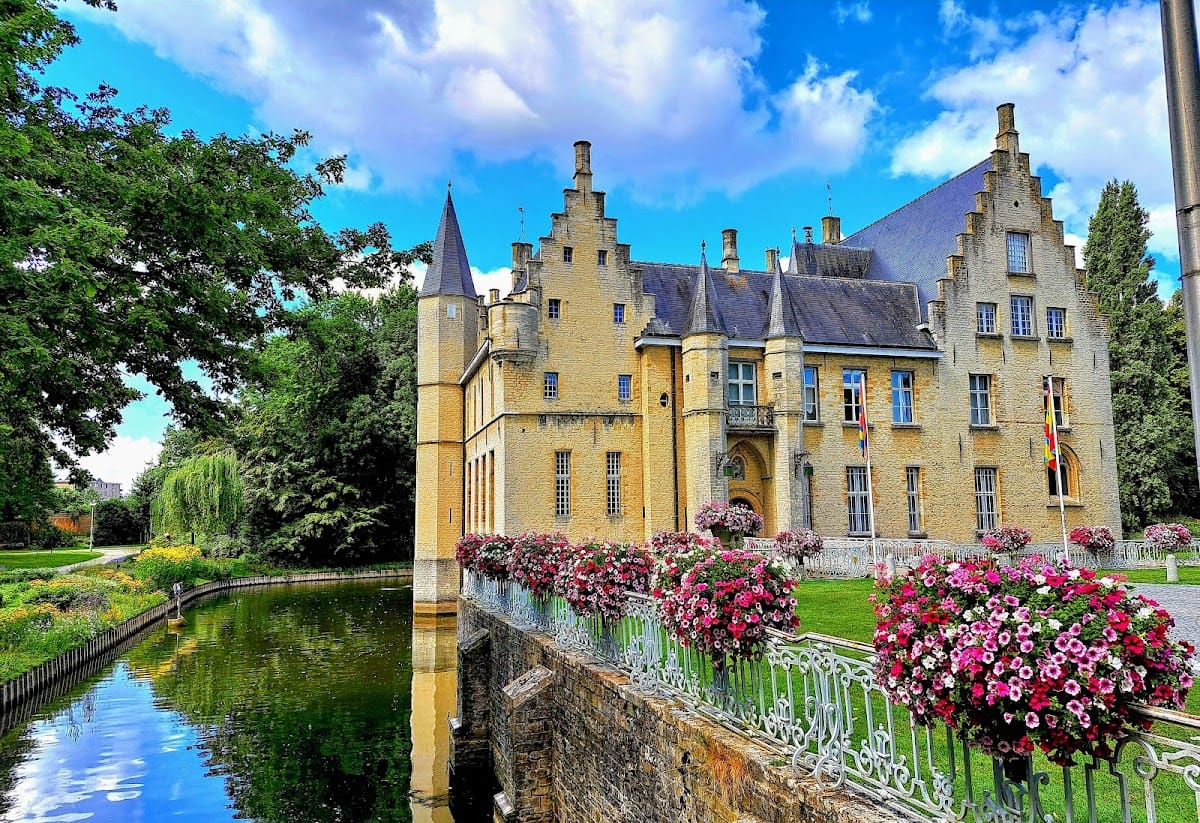
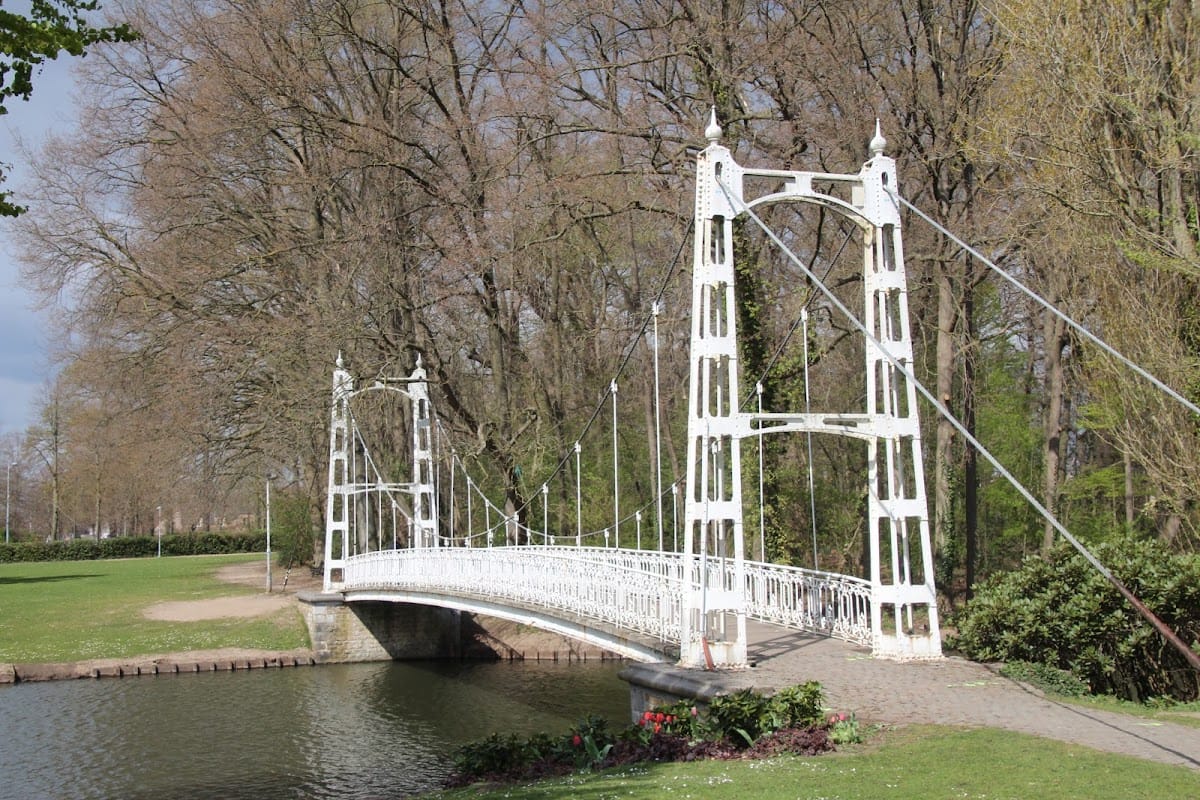
The park is reached from the coach-house island by an iron suspension bridge dating from about 1905. It is arranged as a landscape garden, with lime trees, English oaks, and beeches joined by exotic specimen trees including Japanese katsura, common Judas tree, and American sweetgum. A 350-metre beech avenue approaches the grounds from the southwest and ends at a wrought-iron gate. Its bluestone piers carry lion-head decoration and vases.
Coach house and orangery
An island northeast of the manor house contains the former coach house, its adjoining orangery, and a large circular flower bed. The single-storey coach house is built of brick on a bluestone base and has a slate-covered hipped roof with bluestone corner pilasters. Its original round-arched carriage doors have been converted into windows, but their form continues to indicate the building’s earlier purpose. The three-bay central projecting section is crowned by a triangular pediment containing a circular oculus. The former coach house and orangery now serve as a restaurant.
Moated manor house
Exterior and plan
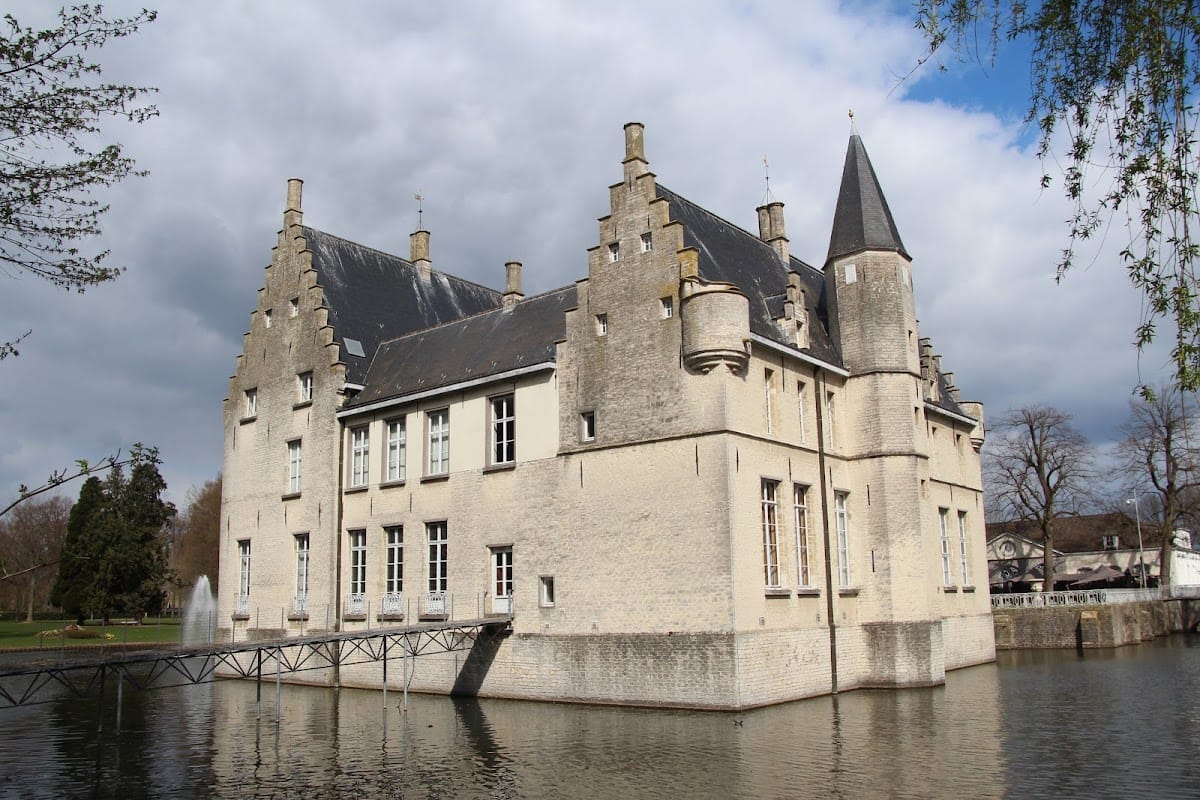
The manor house is built of white sandstone, with its walls rising directly from the pond. Two parallel two-storey ranges with stepped gables form the southeast and northwest wings. Two lower connecting wings on the southwest and northeast complete a closed rectangle around a small rectangular courtyard.
The south wing contains part of the oldest building fabric and may date from 1416. An octagonal stair tower projects from the centre of its outer side, while the upper corners retain the beginnings of two small turrets. The main entrance lies in the northeast wing, where a pointed-arch portal is flanked by two narrow octagonal turrets with pointed roofs. All the manor-house roofs are covered with slate shingles. Pointed-arch windows in the northwest wing identify the position of the castle chapel.
Interior rooms and collections
The interiors largely belong to the nineteenth and early twentieth centuries. They contain paneling, elaborate joinery, and stucco decoration. A black-and-white chequered marble floor occupies the vestibule, and a stained-glass dome lights the entrance hall.
The Verlatzaal, named after the Belgian painter Charles Verlat, contains his hunting-scene paintings and a white-marble fireplace. The Blue Room is identified by its blue damask wall covering, while the Flemish Room has stained-glass windows with heraldic designs. The attic museum’s most valuable exhibited object is an Aubusson tapestry measuring approximately 9.5 by 6 metres. The restored former kennel for the count’s hunting dogs is another surviving feature of the estate.