Puruchuco: An Ychma and Inca Palace and Administrative Center in Peru
Site at a Glance
- Rating
- 4.5
- Popularity
- Low
- Country
- Peru
- Primary era
- Medieval
- External website
- Open
- Eras represented
- Medieval, Early Modern
- Civilizations
- Inca
- Site type
- Civic
- Remains
- Palace
On this page13 sections
History
Puruchuco is an archaeological site in the Ate District of Lima, Peru, begun by the Ychma during the Late Intermediate Period, approximately between the tenth and fifteenth centuries. It functioned as a religious-administrative center and later served as the residence and administrative headquarters of a local curaca, a community ruler who governed territory and managed production. During the Inca occupation, which began around the mid-fifteenth century and continued into the early sixteenth century, the complex was expanded and remained in use.
Ychma and Inca administration
The Ychma were a pre-Inca culture associated especially with the Rímac and Lurín valleys. When the Inca incorporated the central Peruvian coast into Tawantinsuyu, the Inca Empire, the lower Rímac, Lurín, and Chillón valleys became part of the province of Pachacamac. This province was divided into four districts, and Huaquerones was one of the important centers in the Rímac Valley. Puruchuco continued to serve local curacas within this administrative system.
The palace supported several connected activities. It housed the curaca and his family, received and processed resources, and organized their redistribution. One part of the complex was reserved for religious activity, while the arrangement of its sectors corresponded to a ceremonial calendar. The architecture combines Ychma traditions from the Rímac and Lurín valleys with Inca features, including trapezoidal doorways associated with important Inca buildings.
Abandonment and archaeological work
Puruchuco was abandoned after the fall of the Inca Empire. The wider Puruchuco-Huaquerones complex included ramped pyramids and one of the largest known Inca cemeteries on the central coast. Nearby centers included Puruchuca, Cajamarquilla, Huaycán de Pariachi, and San Juan de Pariachi.
Francisco Iriarte Brenner began restoring the palace and protecting the archaeological zone. Arturo Jiménez Borja continued the work from 1953 to 1960, consolidating walls and installing roofs. The intervention has been described as controversial. A site museum was established in 1960 to preserve and study Puruchuco and its finds. It was later named the Arturo Jiménez Borja-Puruchuco Site Museum in his memory. Jiménez Borja died in 2000 and was buried beside the museum.
Excavations in the large cemetery during 1999 and 2000 recovered the remains of approximately 2,000 men, women, and children who lived more than 500 years ago, together with nearly 60,000 artifacts, valuables, food remains, and everyday tools. The cemetery may contain the remains of up to 10,000 people and included individuals from at least ten social classes. In 2004, another excavation uncovered approximately 70 people in disorderly graves. One individual was identified as the earliest known victim of a firearm in the Americas, while many skeletons bore cuts and punctures from iron weapons.
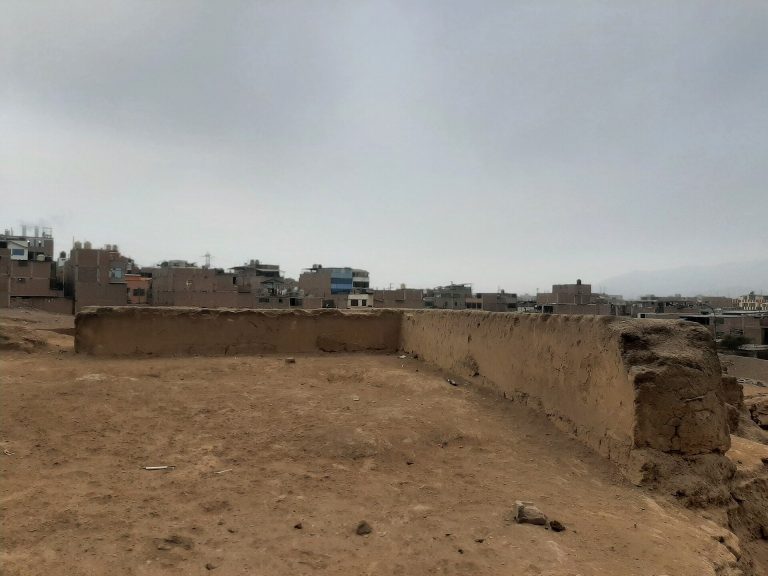
In 2004, the Cerro Mayorazgo archaeological zone, including the Puruchuco palace, was declared Cultural Heritage of the Nation. Several structures at and around Puruchuco have since deteriorated, while archaeological locations in the surrounding areas have suffered severe vandalism and destruction from graffiti and construction.
The name Puruchuco
The name Puruchuco has more than one proposed interpretation. One explanation derives it from Quechua terms associated with a gourd plant or vessel and land, giving the approximate meaning “land of the gourd.” Another connects the name with a feathered headdress or ornament used in Inca puberty-initiation ceremonies.
Remains
The palace
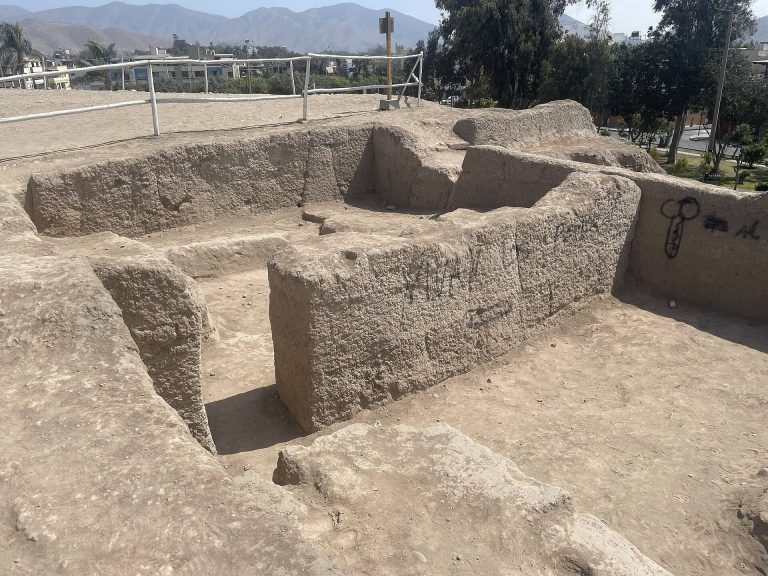
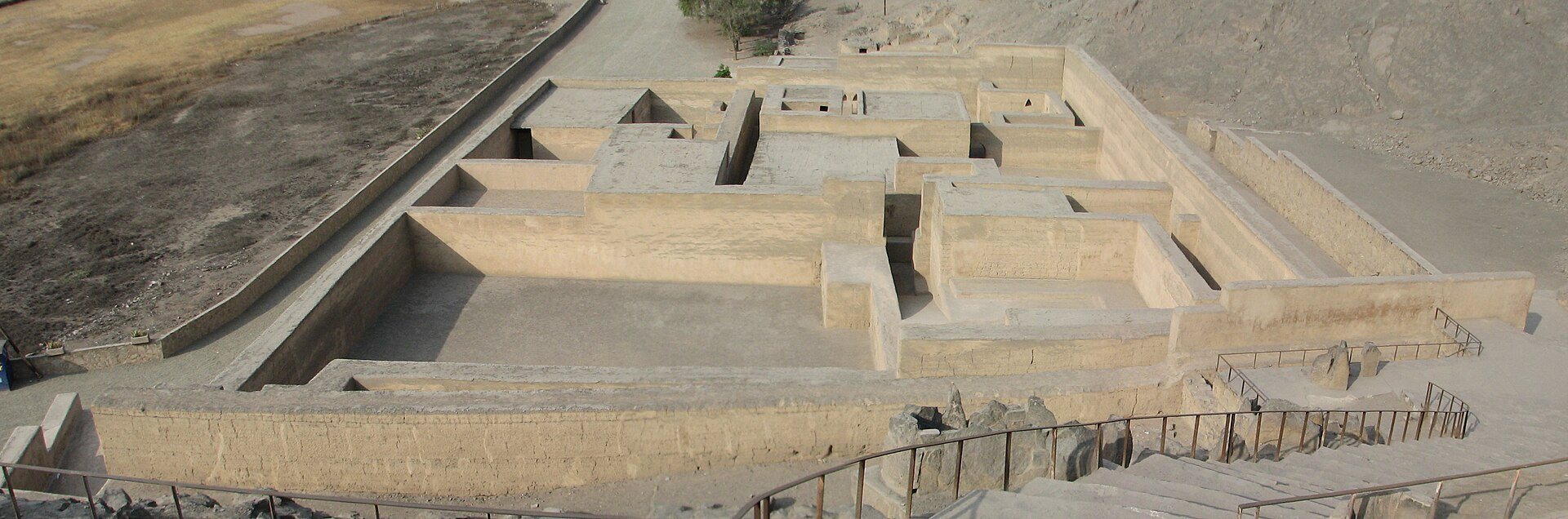
The principal surviving building is an enclosed palace combining open courtyards, ramps, platforms, and controlled natural lighting. Its spaces form a sequence of connected areas with clear architectural planes. The layout reflects Ychma building traditions that continued under Inca rule, while trapezoidal openings between major and smaller sectors show later Inca influence.
Entrance and public sector
A high exterior wall surrounds the palace. Its single entrance stands at a corner and is reached by a steep ramp leading into a hall. The hall opens on one side toward a long, narrow dead-end passage and on the other toward a second entrance to a large inner courtyard.
The largest sector contains this courtyard and a platform reached by a ramp along one side. The platform gives access to the other sectors and served as the principal setting for public activities.
Residential and ceremonial sectors
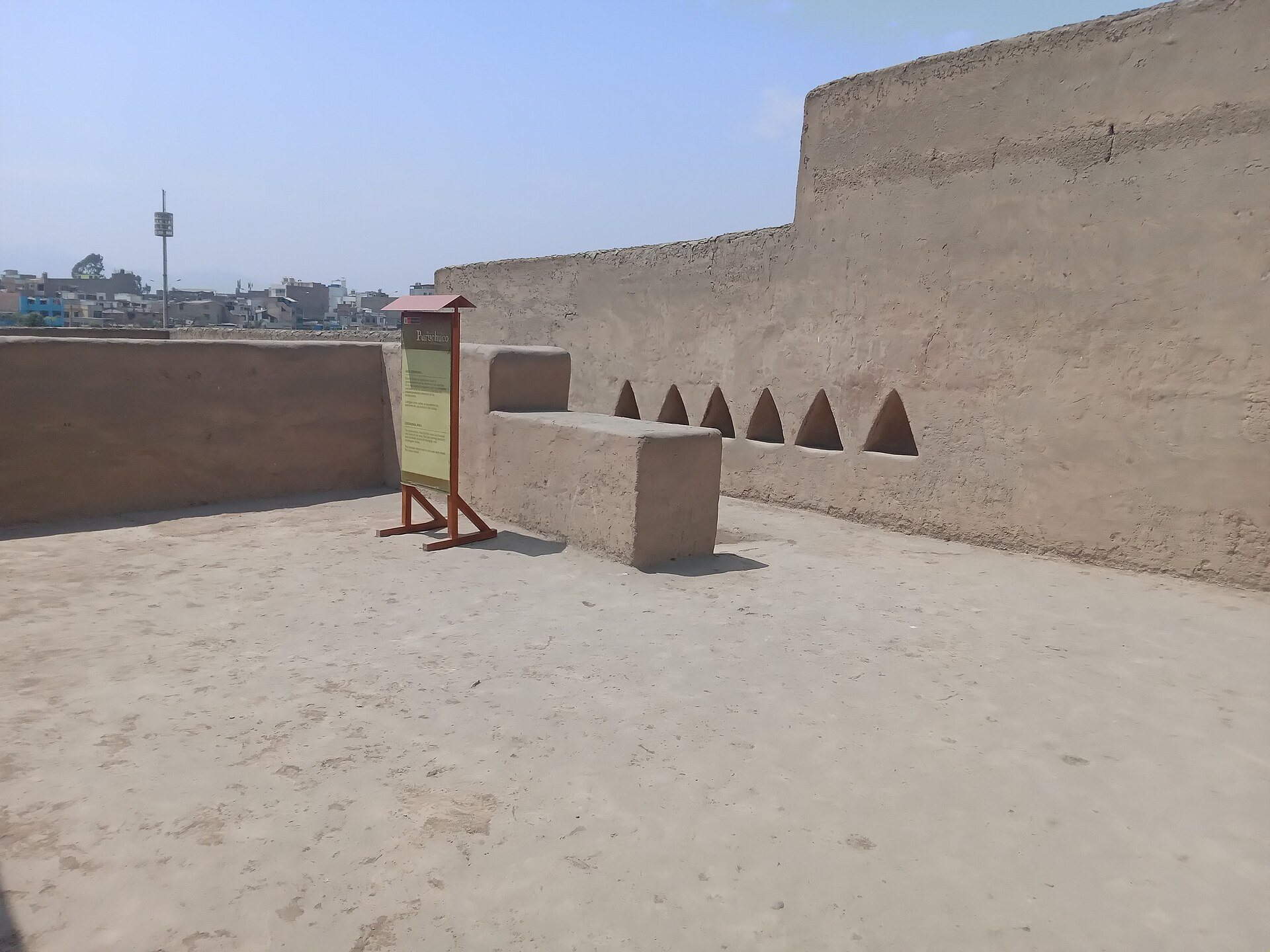
The residential sector contains a kitchen and rooms for everyday domestic life. A separate ceremonial sector includes six triangular niches cut into a wall. These may have served as markers or reference points for astronomical measurements. Their form is described as unique in Lima and has become a symbol associated with Puruchuco.
Food preparation area
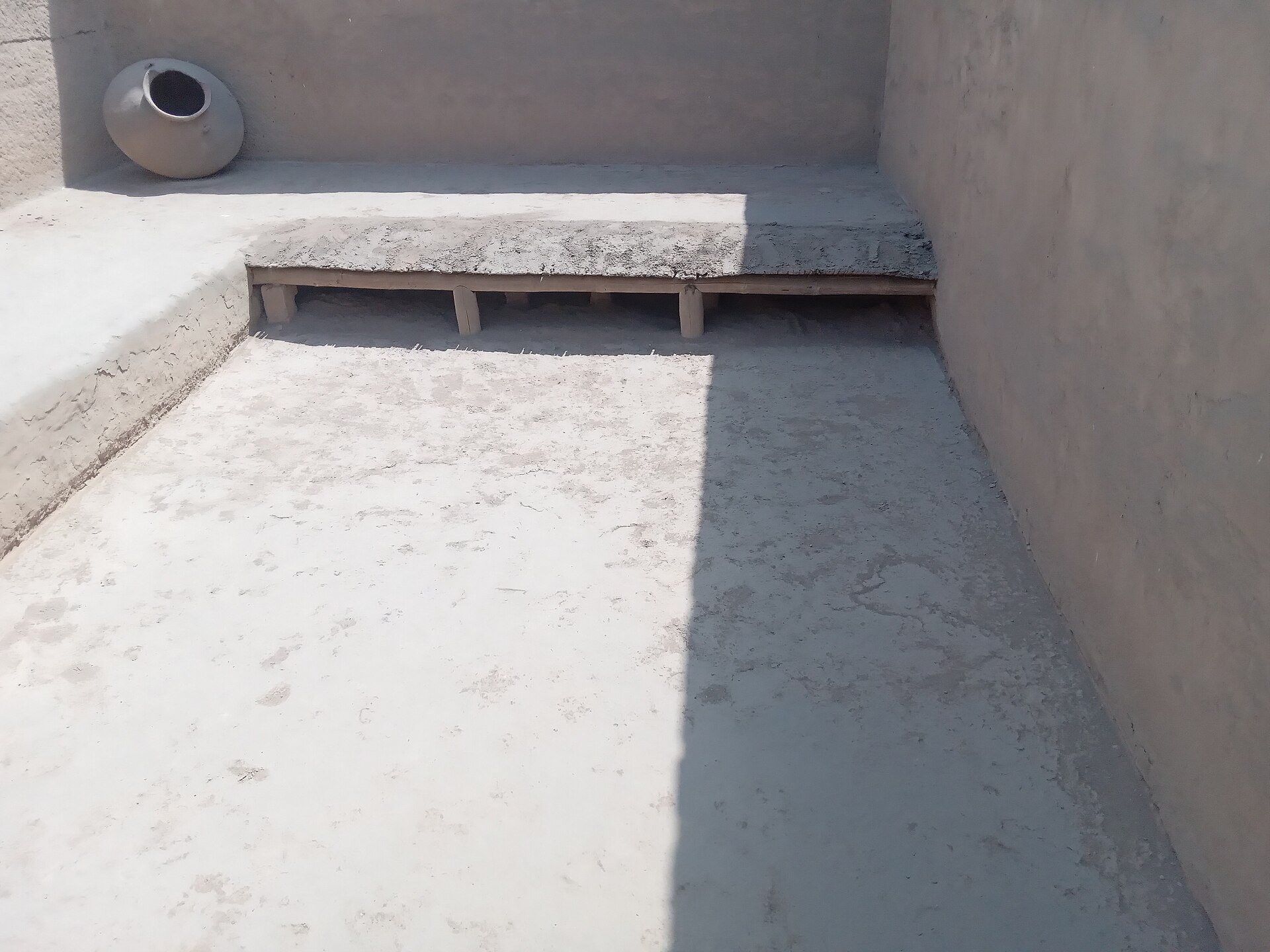
The fourth sector is arranged around a small courtyard and a terrace. Remains of maize and stone tools used to grind grain were found on the terrace, indicating its use in preparing and storing perishable foodstuffs.
Huaquerones cemetery
Mausoleums and burial bundles
The Huaquerones sector surrounding the palace contained pyramids with ramps and an extensive cemetery. Stone-built mausoleums stood close to the palace, including one found intact in 1956 and later excavated.
The cemetery contained large mummy bundles, wrapped funerary packages holding human remains and sometimes additional individuals or burial goods. Some bundles held as many as seven people and weighed up to 180 kilograms. Several combined adults and children and were wrapped in layers of raw cotton and fine textiles. Approximately 40 bundles had false heads, sometimes covered with wigs, attached to burials associated with the Inca elite.
The Cotton King burial
A burial known as the “Cotton King” was wrapped in approximately 150 kilograms of fine textiles and wore a feathered headdress. A child, food, pottery, furs, and other objects accompanied the individual.
Site museum
The site museum has four exhibition rooms containing material from Puruchuco and nearby archaeological areas. The general room includes quipus, systems of knotted cords used for numerical and administrative information, a large model of the palace, a neonatal funerary bundle, agricultural products, and the curaca’s large feather headdress. A textile room presents garments, textiles, and weaving tools, while a metals room contains elite objects and tools used to produce them. A fourth room is used for temporary exhibitions. The collections include objects restored, conserved, and prepared for exhibition.