Catacombs of Lima: The Underground Ossuaries of San Francisco
Site at a Glance
- Rating
- 4.6
- Popularity
- Medium
- Country
- Peru
- Primary era
- Early Modern
- External website
- Open
- Eras represented
- Early Modern
- Civilizations
- Spanish
- Site type
- Burial
- Remains
- Catacomb
On this page10 sections
History
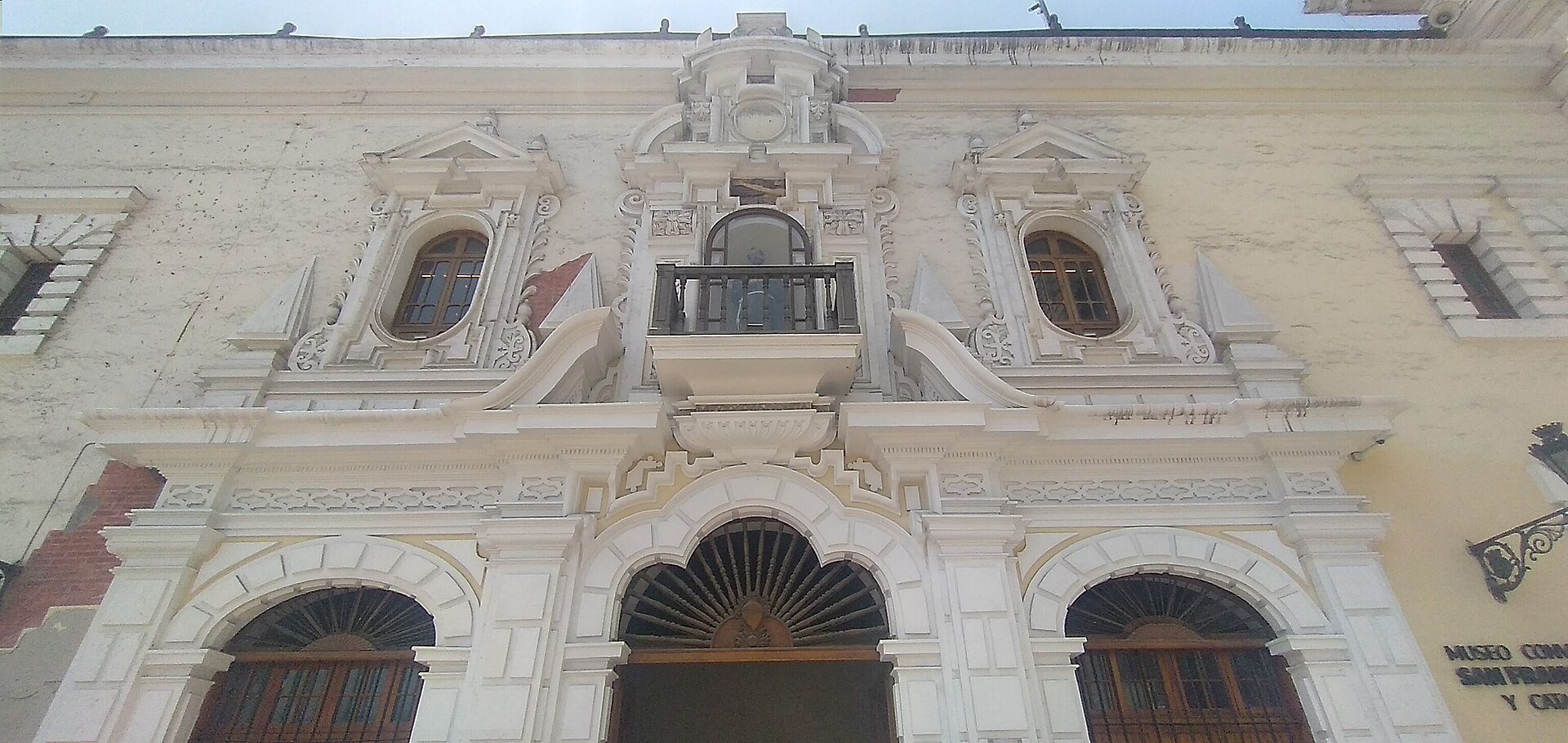
The Catacombs of Lima are an underground network of burial chambers beneath the Basilica and Convent of San Francisco in Lima, Peru. Built within the Spanish colonial complex founded in 1546 and administered by the Franciscan Order, the crypts served as burial spaces and helped protect the church during earthquakes.
Colonial cemetery and reconstruction
Burials continued through most of the Spanish colonial period. Legal use of the crypts as a cemetery ended in 1810, by which time approximately 25,000 bodies had been deposited there. Some interments reportedly continued until the middle of the nineteenth century. The underground spaces served religious brotherhoods, benefactors, wealthy families, and patrons associated with the church.
A major collapse in 1656, attributed to defects in the original construction, led to the restructuring of part of the church. The central crossing and nave were excavated, while openings and passages were made through the walls of previously separate burial vaults. These works connected the older vaults with one another and with newly excavated spaces. The Portuguese architect Constantino de Vasconcellos directed this reorganization in 1672. After the church was completed that year, no new burial vaults were opened.
In about 1770, Viceroy Manuel de Amat y Juniet, the monarch’s representative in the Viceroyalty of Peru, planned to enlarge the underground cemetery with additional pits for bodies and royal coffins. The project was not completed. After the Peruvian War of Independence, General José de San Martín prohibited burial in the catacombs through a decree of 1821. The measure formed part of a wider move toward secular cemeteries outside religious precincts, and the crypts were subsequently closed.
Burials and later interpretation
The complex is associated with the burials of several religious and colonial figures. They include Constantino de Vasconcellos; García Sarmiento de Sotomayor, Viceroy of Peru and Count of Salvatierra; Manuel de Oms, 24th Viceroy of Peru and Marquess of Castelldosrius; Friar Juan Gómez; Friar Ramón y Tagle y Bracho, son of the Marquesses of Torre Tagle; and Friar Andrés Corso. García Sarmiento de Sotomayor was buried in 1659, Manuel de Oms on April 24, 1710, and Ramón y Tagle y Bracho in 1780. Corso died and was buried in the convent in 1620.
Vasconcellos’s tomb disappeared in 1805 during a remodeling campaign begun by the priest Matías Maestro. Friar Juan Gómez is remembered in Ricardo Palma’s Peruvian Traditions. The catacombs also contain the burial of Friar José Francisco de Guadalupe Mojica, a Mexican opera singer and Hollywood film actor who later entered the Franciscan Order. He died in Lima on September 20, 1974.
Rediscovery and heritage status
The catacombs remained closed until the twentieth century. Around 1947, access was gained to blocked passages and galleries, followed by excavation, cleaning, and lighting work. The underground complex opened to the public as a museum in 1950. Archaeological and historical investigations began in 1983 and continued afterward, with attention to identifying and dating the human remains. Further discoveries reported in 2024 revealed previously unknown catacombs approximately 400 years old.
The Catacombs of Lima form part of one of the principal heritage monuments in Lima’s historic centre. UNESCO inscribed the historic centre as a World Heritage Site on December 9, 1988.
Remains
The surviving complex consists of tunnels, galleries, crypts, burial vaults, ossuaries, and connecting passages beneath the Basilica and Convent of San Francisco. Its total extent has not been established. The present route includes flat vaulted ceilings and semicircular arches constructed with brick, calicanto, and mortar. Calicanto is a lime-based material described here as a mixture of lime, sand, and egg white.
Burial chambers and ossuaries
Seismic shafts
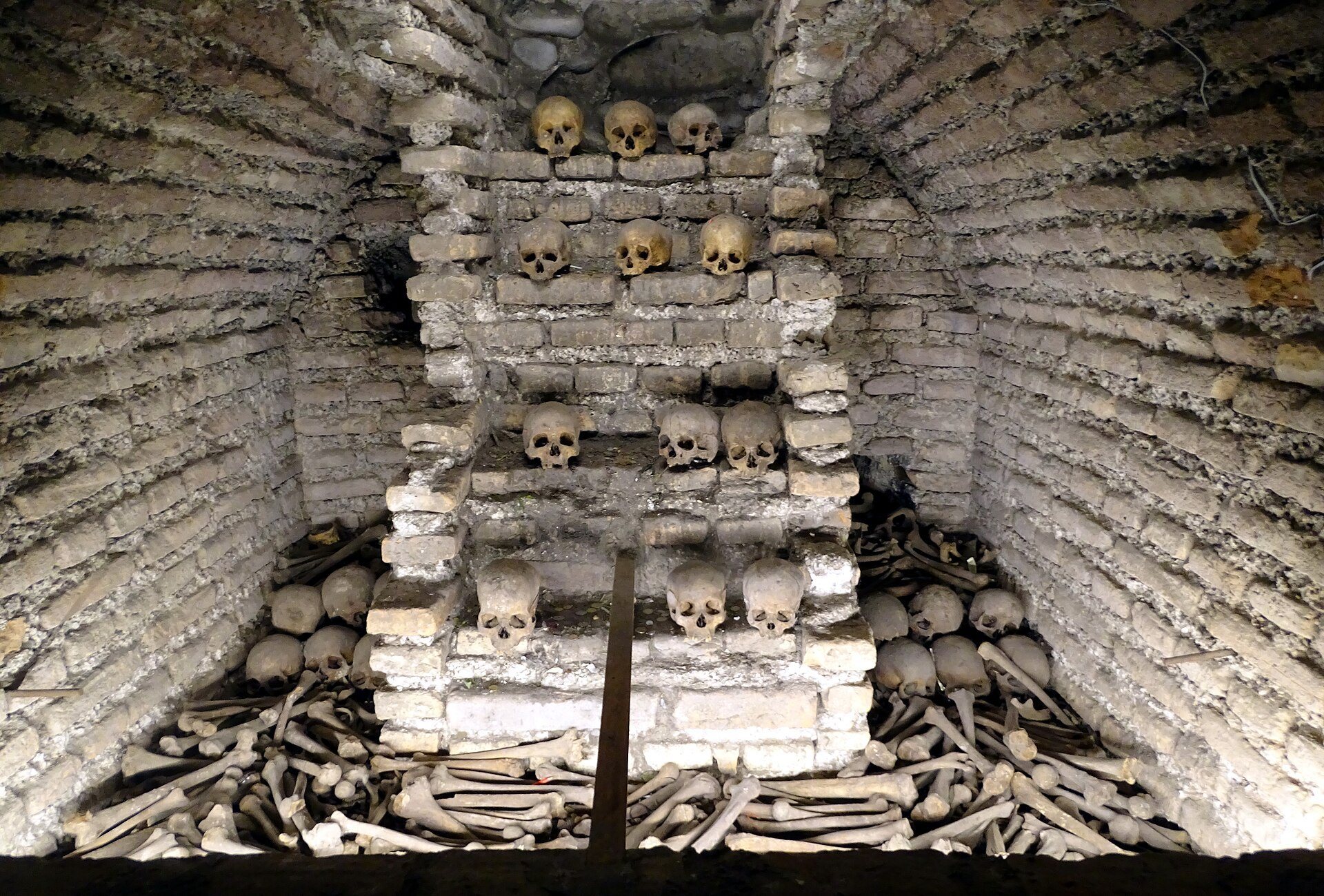
Five deep shafts hold human bones from Lima’s viceregal-era underground cemetery. Each is approximately ten metres deep. They functioned as ossuaries, places where human bones were deposited, and as seismic spaces intended to help protect the earlier building during strong earthquakes.
Burial pits and vaults
Rectangular burial pits descend approximately four metres below ground, and some contain skeletal remains associated with historical individuals. The burial vaults were built with brick, calicanto, and mortar. Vaults beneath the side altars and lateral naves occupied small chapels and served religious brotherhoods, benefactors, wealthy families, and patrons.
Before the collapse of 1656, these vaults were separate and could not be reached from one another. The later openings and passages through their original walls created connections between the earlier chambers and the newly excavated spaces. Other galleries remain unopened and inaccessible to the public. The crypt of the Venerables contains the burial associated with Friar Juan Gómez, while Friar Andrés Corso, one of the founders of the Convent of the Barefoot Franciscans in the Rímac, is also buried in the complex.
Wider underground network
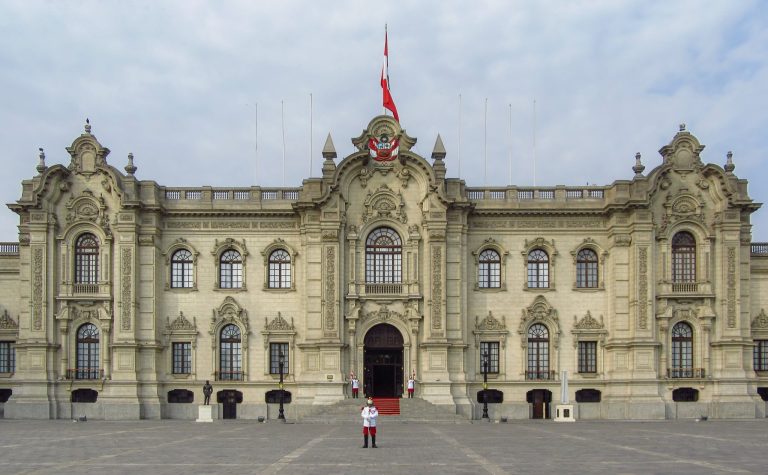
The spaces extend beyond the convent complex, although their full connections remain uncertain. Possible links have been proposed with the Government Palace, the Legislative Palace, the Alameda de los Descalzos on the opposite side of the Rímac River, the Puente de Piedra, the Casa de Aliaga, the Desamparados station, and possibly the port of Callao.
Attempts to map the entire underground complex in 1981 concluded that its total area could not be established. A crypt that may have served as an ammunition depot was also found. Another interpretation associates that chamber with the former Desamparados Church. The tunnels may have been intended to protect local inhabitants from piracy and to safeguard valuables, but their exact function remains partly uncertain.
Human remains and museum use
Human bodies and bones remain in the burial vaults, rectangular pits, and five deep shafts. Together they represent the contents of Lima’s viceregal-era underground cemetery. The catacombs now function as a museum displaying these ossuary remains within the surviving network of chambers and passages.