Gamal Eddin Youssef Istadar Mosque: A Mamluk Mosque and Madrasa in Cairo
Site at a Glance
- Rating
- 4.9
- Popularity
- Very Low
- Country
- Egypt
- Primary era
- Medieval
- Eras represented
- Medieval
- Civilizations
- Mamluk
- Site type
- Religious
- Remains
- Mosque
On this page5 sections
History
Foundation under Jamal al-Din Yusuf
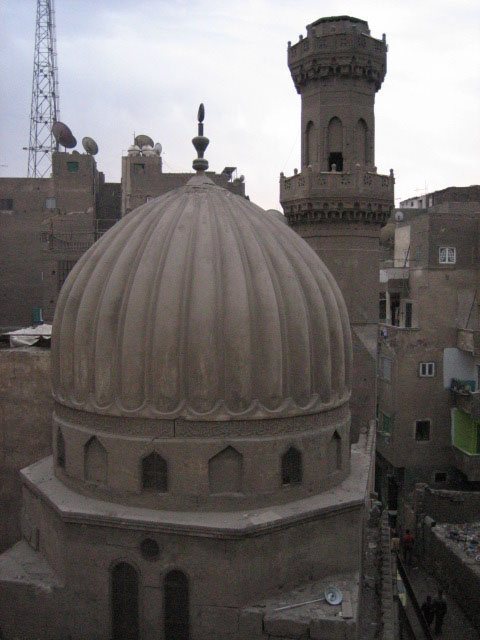
Gamal Eddin Youssef Istadar Mosque is a Mamluk Islamic mosque and madrasa in Cairo, Egypt, founded and built in 1407 by Emir Jamal al-Din Yusuf al-Ustadar. A madrasa was an institution for Islamic religious and legal education, and this one taught the four principal Sunni schools of jurisprudence: Hanafi, Maliki, Shafi’i, and Hanbali law.
Jamal al-Din served under Sultan An-Nasir Faraj, one of the rulers of the Burji Mamluk dynasty, the later Mamluk ruling house of Egypt and Syria. Born in Al-Bireh in Palestine to a preacher, he grew up memorizing the Quran. After his father’s death, he moved to Cairo in 1368 and entered state service. He eventually became an ustadar, a senior court official responsible for the sultan’s household establishments, including kitchens, attendants, expenditures, and clothing.
Confiscation and attempted destruction
In 1409, Sultan An-Nasir Faraj imprisoned Jamal al-Din, seized his wealth and properties, and had him severely tortured in an effort to discover where his money was kept. Jamal al-Din was eventually executed by beheading.
The mosque stood on land that Jamal al-Din had appropriated from religious endowments, or waqf, properties legally dedicated to charitable or religious purposes. After his execution, An-Nasir Faraj tried to demolish the building. A qadi, an Islamic judge or legal official, prevented its destruction, although Jamal al-Din’s name was erased from the mosque.
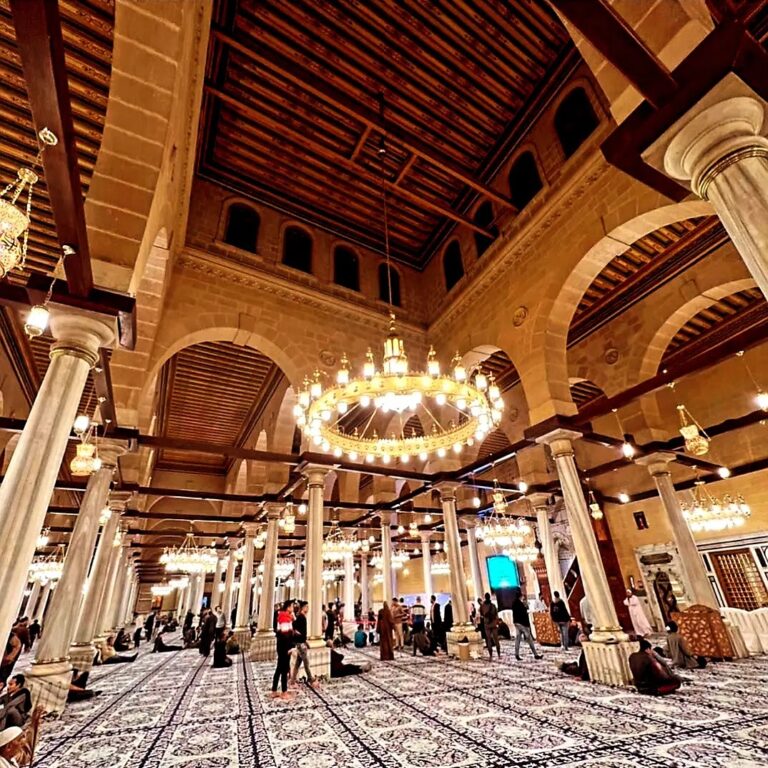
A restoration campaign was completed in 2001. The building continues to serve as both an active mosque and a madrasa.
Remains
Layout and religious architecture
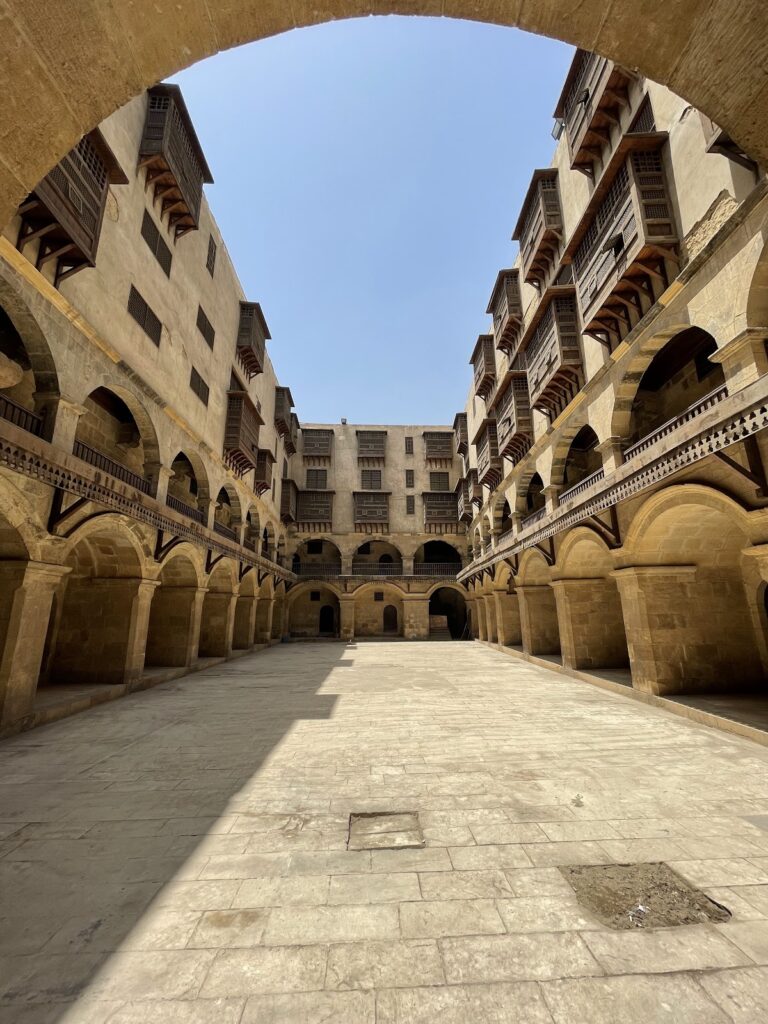
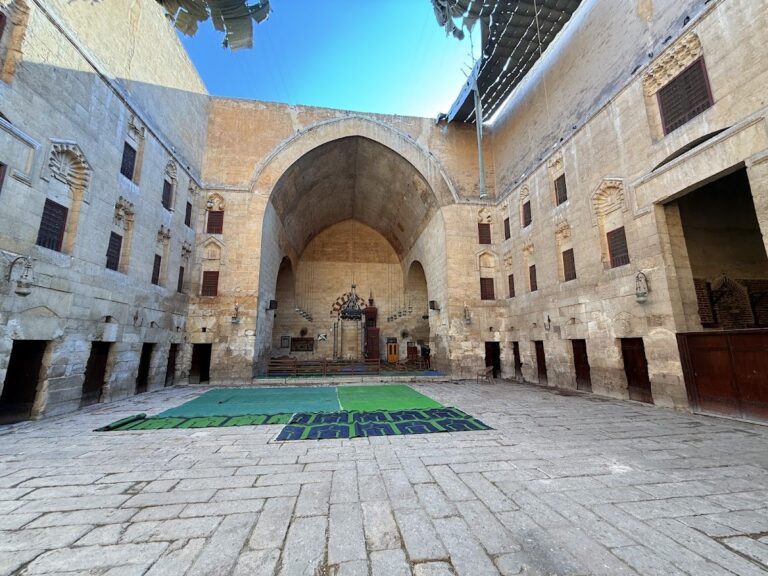
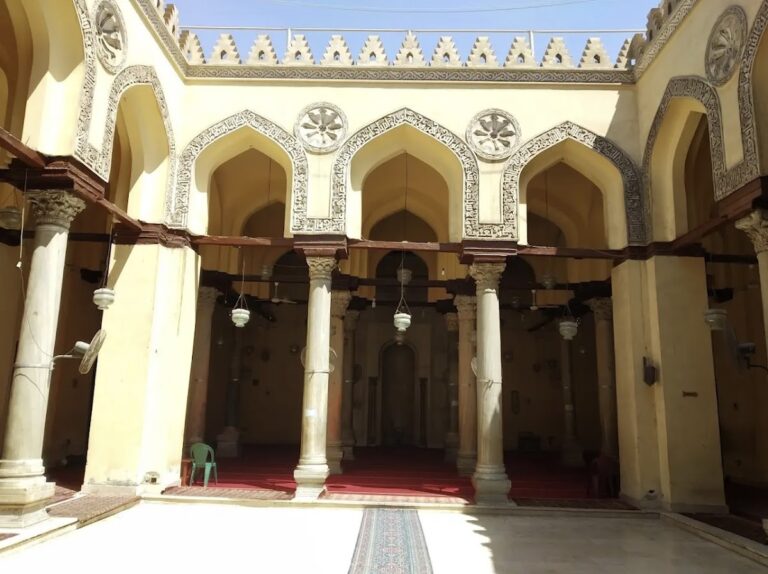
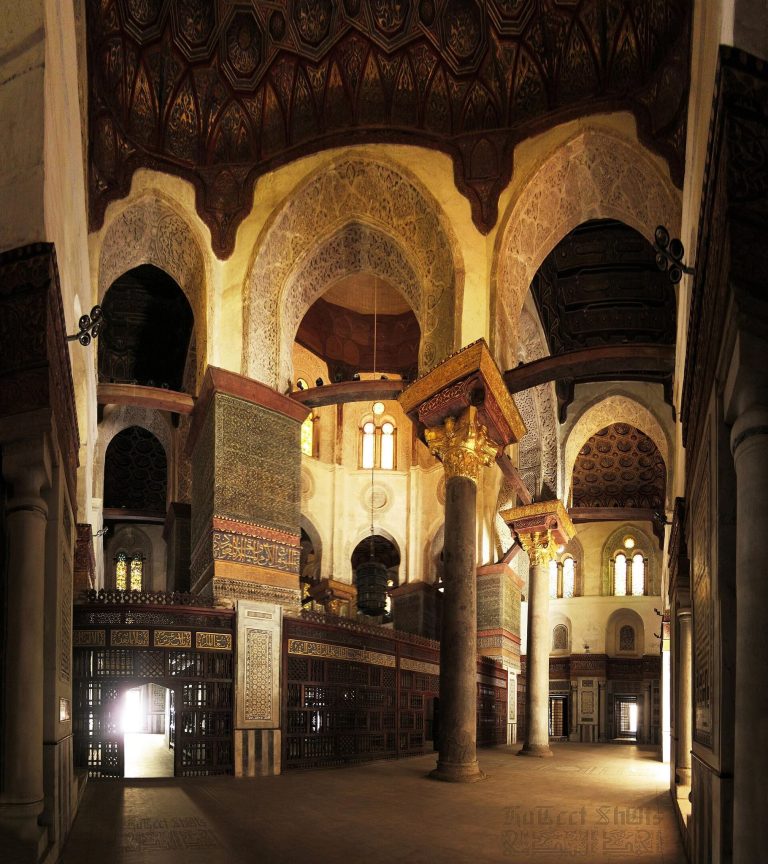
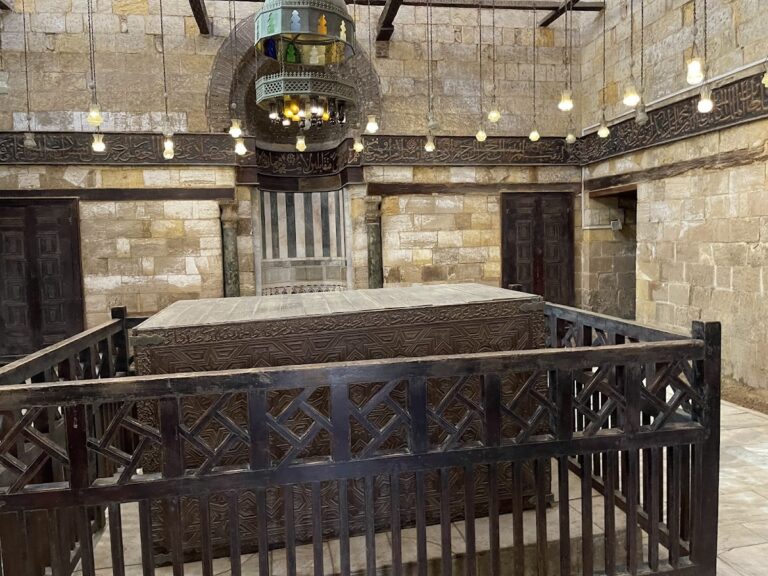
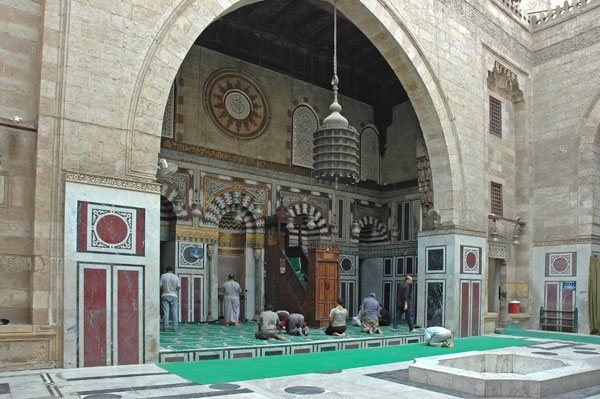
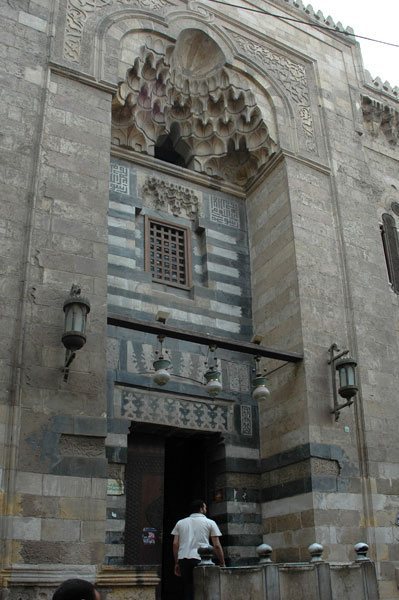
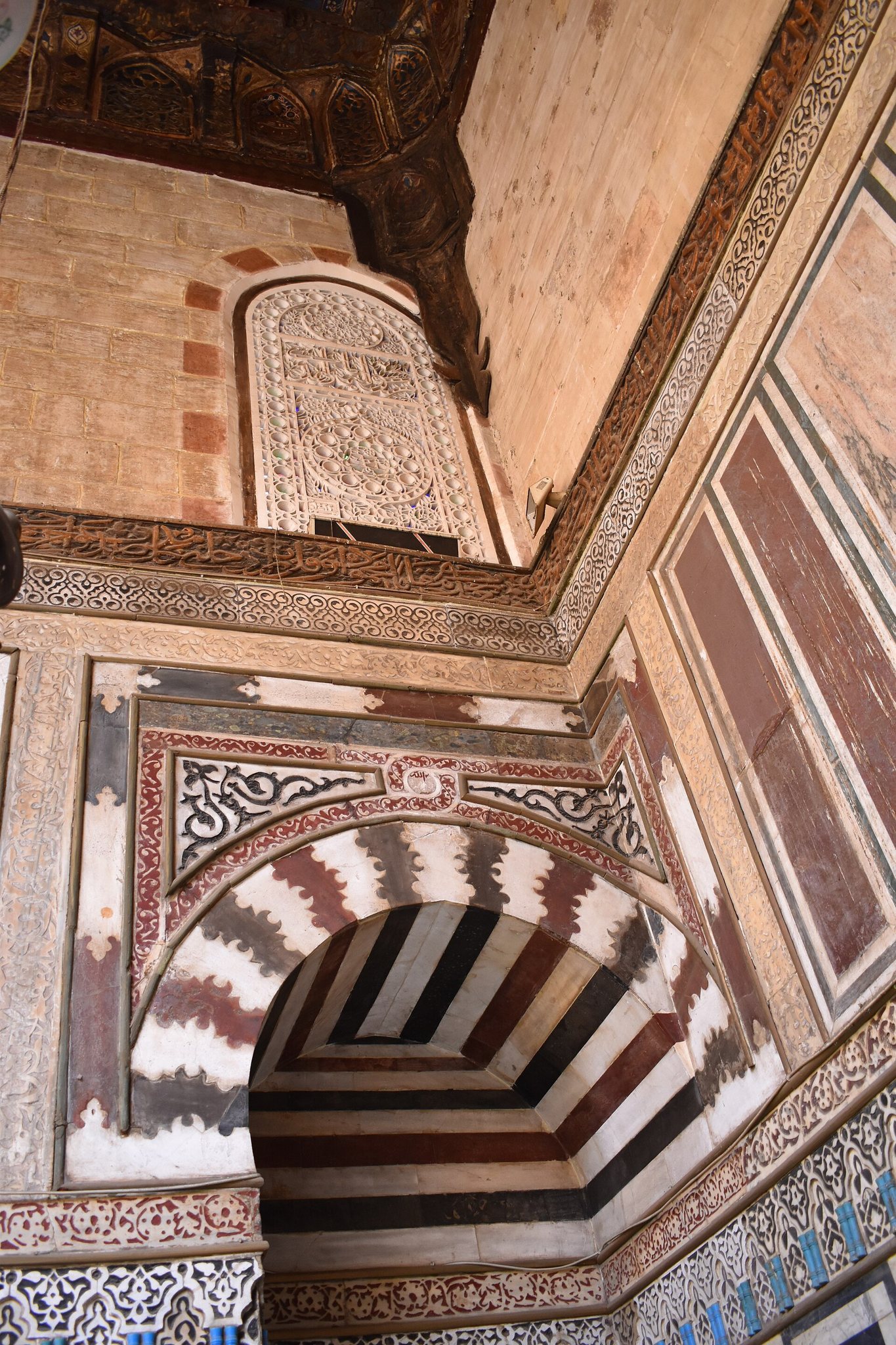
The mosque-madrasa stands in Islamic Cairo on Al-Tambakshiya Street, beside Habas al-Rahb Street to the southeast. It is also described as occupying Al-Tambakshiya Lane, which branches from Al-Gamaliya Street. Its Mamluk design was strongly influenced by the Mosque-Madrassa of Sultan Barquq, associated with the founder of the Burji Mamluk dynasty. The complex includes one dome and one minaret, while the qibla wall is identified as part of the mosque. A qibla wall is oriented toward the Kaaba in Mecca, the direction toward which Muslims pray.