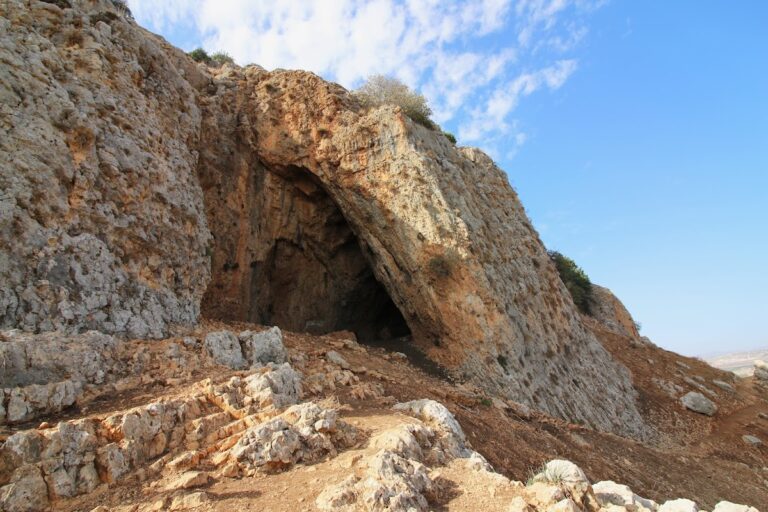
Khirbat Shema: A Roman and Byzantine Jewish Settlement in Israel
Site at a Glance
- Rating
- 4.3
- Popularity
- Very Low
- Country
- Israel
- Primary era
- Classical
- Eras represented
- Classical
- Civilizations
- Byzantine, Roman
- Site type
- City
On this page12 sections
History
Khirbat Shema is an archaeological site containing a large Jewish settlement at the foot of Mount Meron in Israel. Occupied during the Roman and Byzantine periods, the settlement was active from approximately AD 180 until the early fifth century, around AD 417 to 419. Its remains include residential and industrial quarters, a synagogue, ritual baths, Jewish burial caves, and a probably Roman mausoleum.
Identity and Jewish settlement
Several researchers have identified Khirbat Shema with ancient Teqoa of Galilee, a place distinguished from Teqoa in Judea. This identification remains unconfirmed, while a separate proposal connecting the site with Kfar Shami is not generally accepted. Rabbinic texts describe the proposed Galilean Teqoa as a major source of olives and olive oil.
The site is also traditionally regarded as the burial place of Shammai, a leading Jewish sage of the late Second Temple period and the principal opponent of Hillel the Elder in a famous legal and interpretive rivalry. Excavation findings do not confirm this association. The settlement’s buildings and material remains instead reveal a substantial Jewish community with domestic, industrial, religious, and funerary areas.
Roman and Byzantine phases
Coins and other finds place the main occupation from about AD 180 into the early fifth century. The settlement was destroyed by an earthquake. Its synagogue probably began in the second or third century, was later damaged by an earthquake, and was rebuilt for use during the fourth and fifth centuries. Another earthquake destroyed the building in the sixth century.
Research at Khirbat Shema and at other Upper Galilee sites also contributed to the study of early Galilean synagogue design. The excavated buildings at Khirbat Shema and two comparable sites followed the broadhouse plan, in which the principal dimension runs across the building rather than along the long axis of a basilica.
Excavation and interpretation
Excavations led by the American archaeologist Eric M. Meyers from 1970 to 1972, on behalf of the American Schools of Oriental Research, exposed more than six acres of the settlement, including adjacent buildings and surrounding village areas. By 1974, the excavation team numbered as many as 80 people. More than 4,000 artifacts were recovered, including coins, glass, plaster, ceramics, stone, bone, jewelry, and organic remains. These materials have been used to establish the settlement’s chronology and to examine its history.
Remains
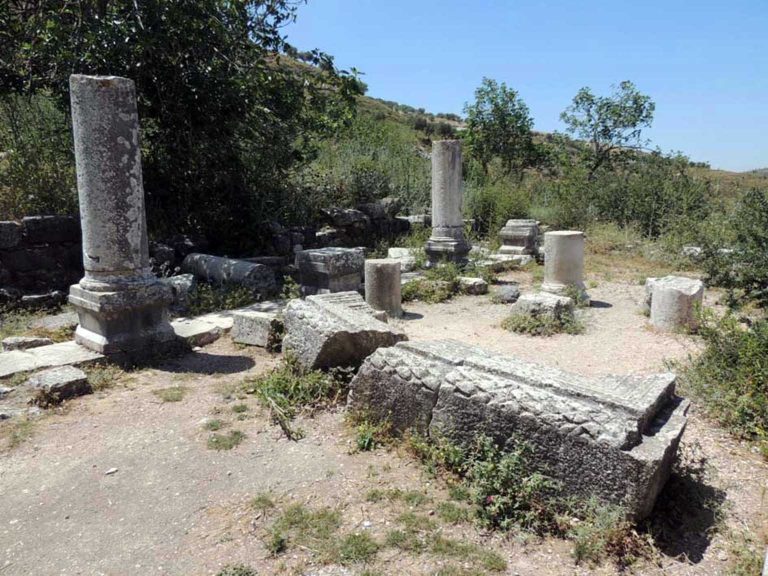
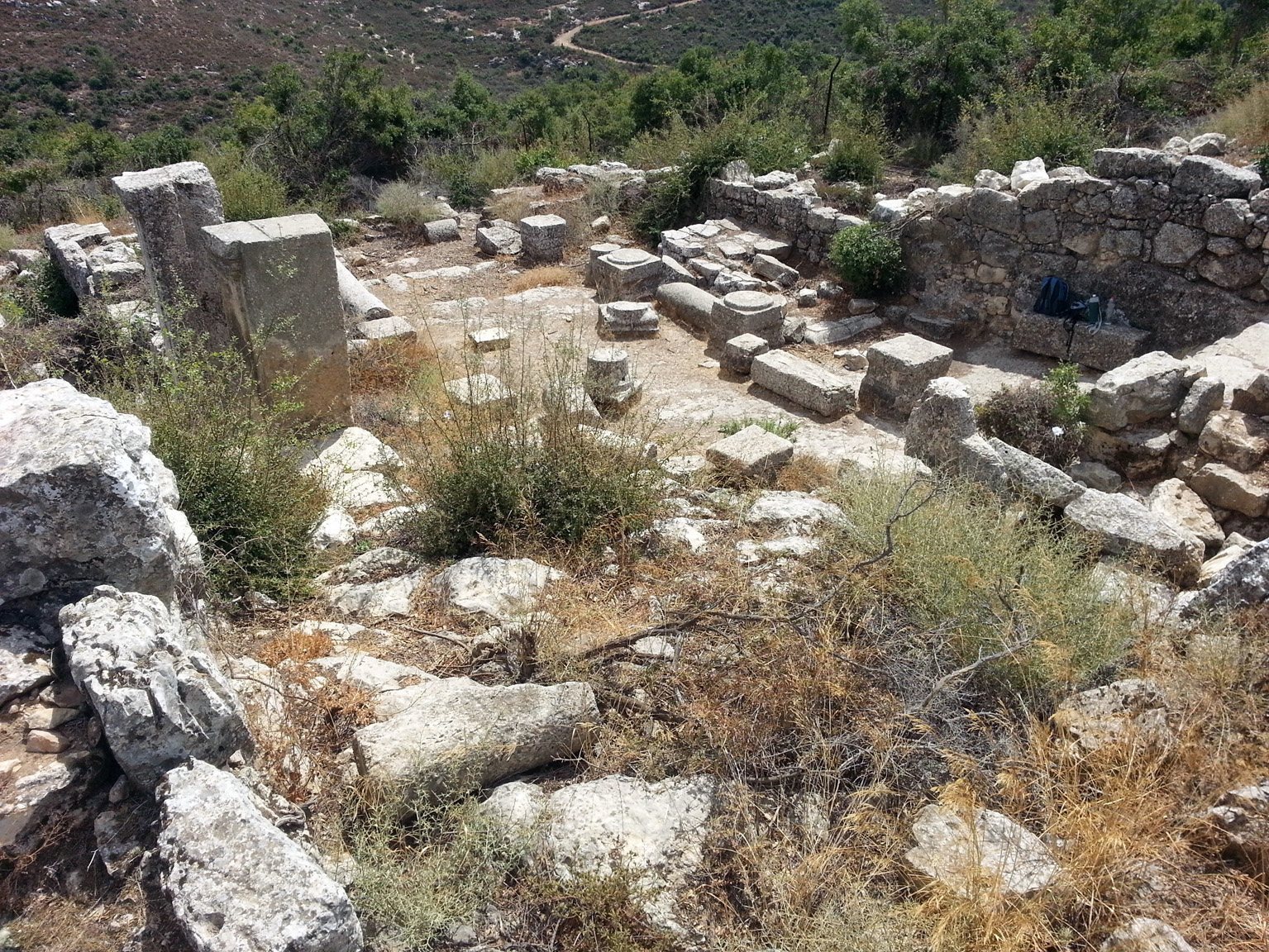
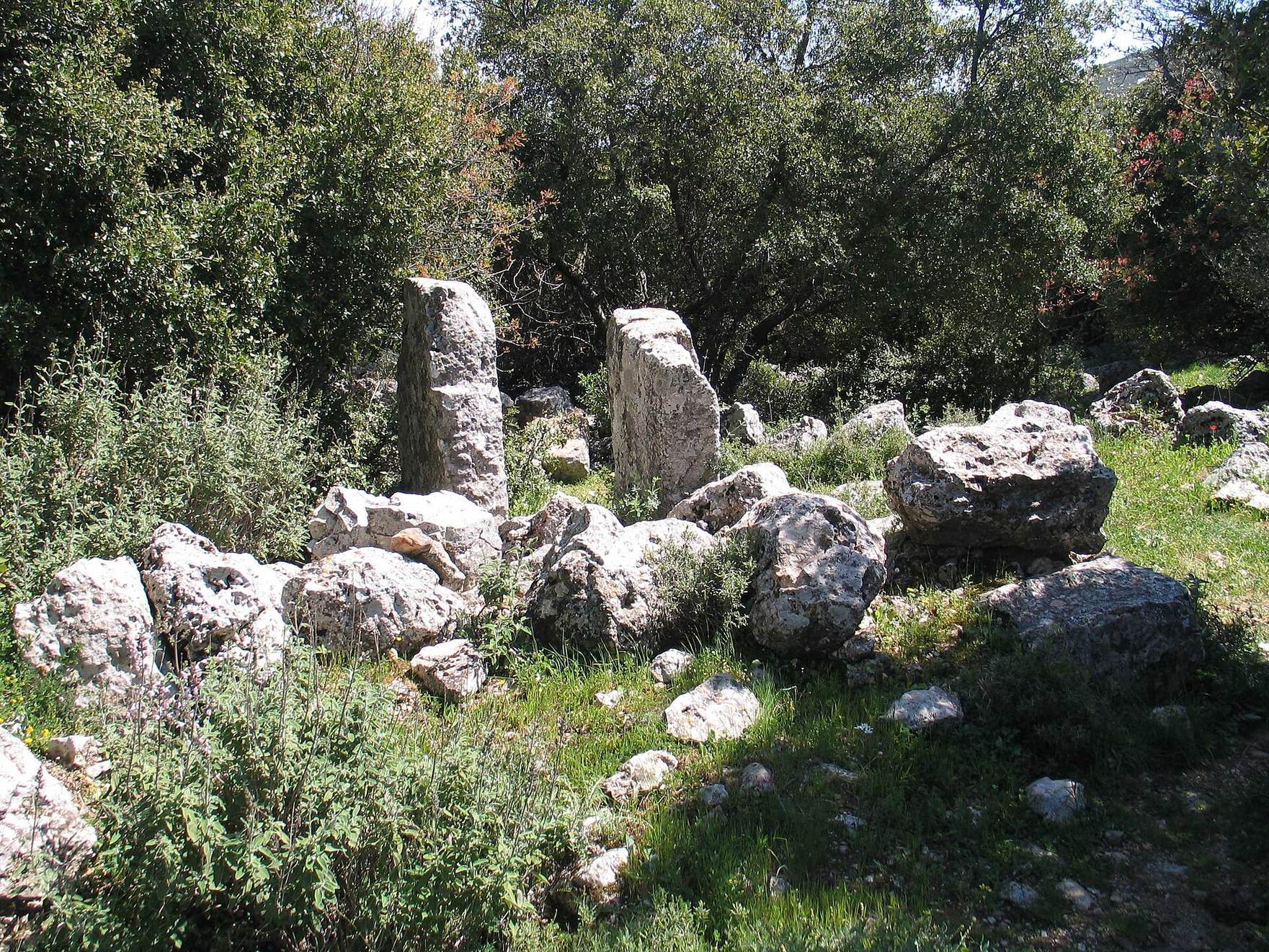
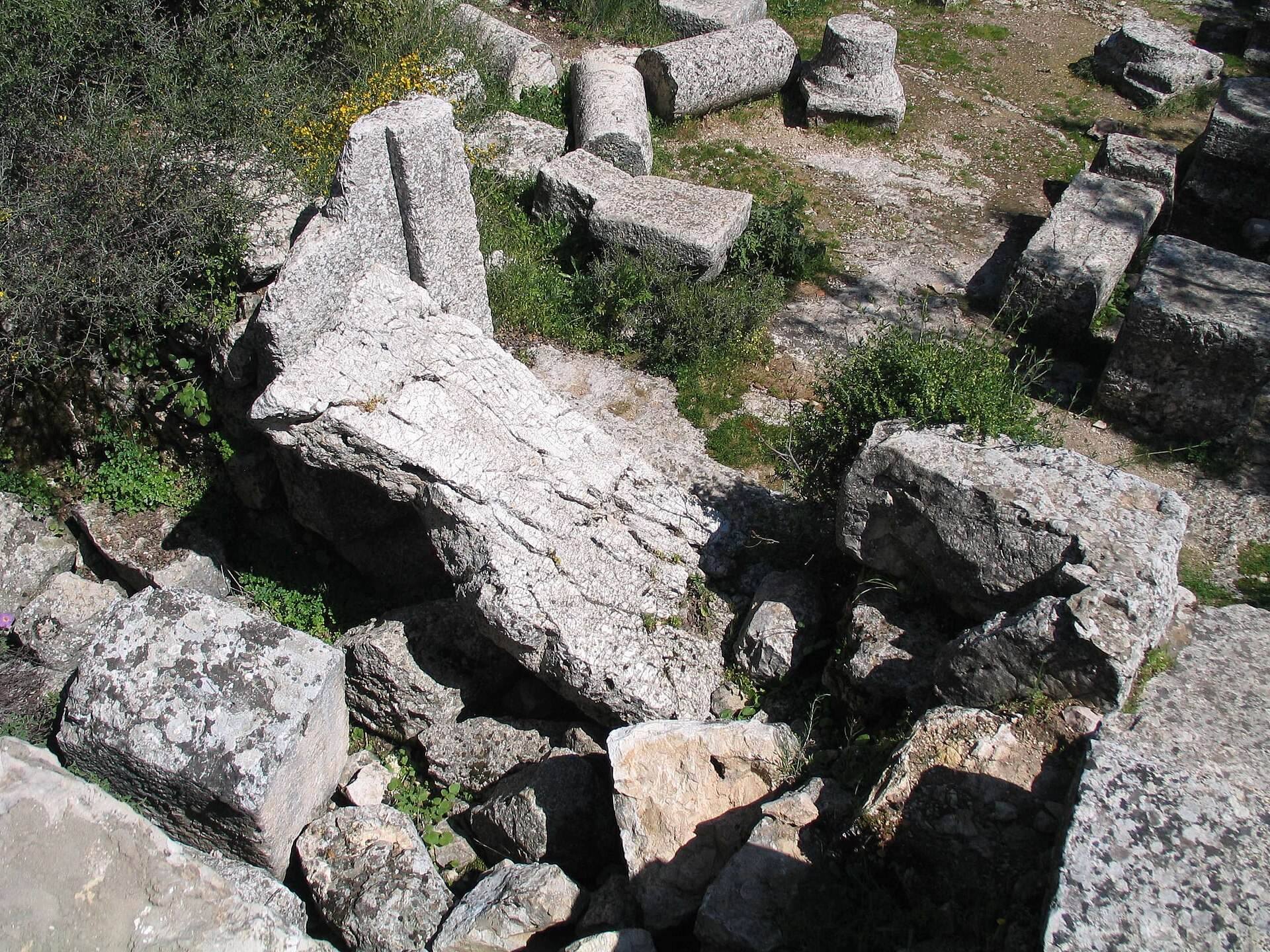
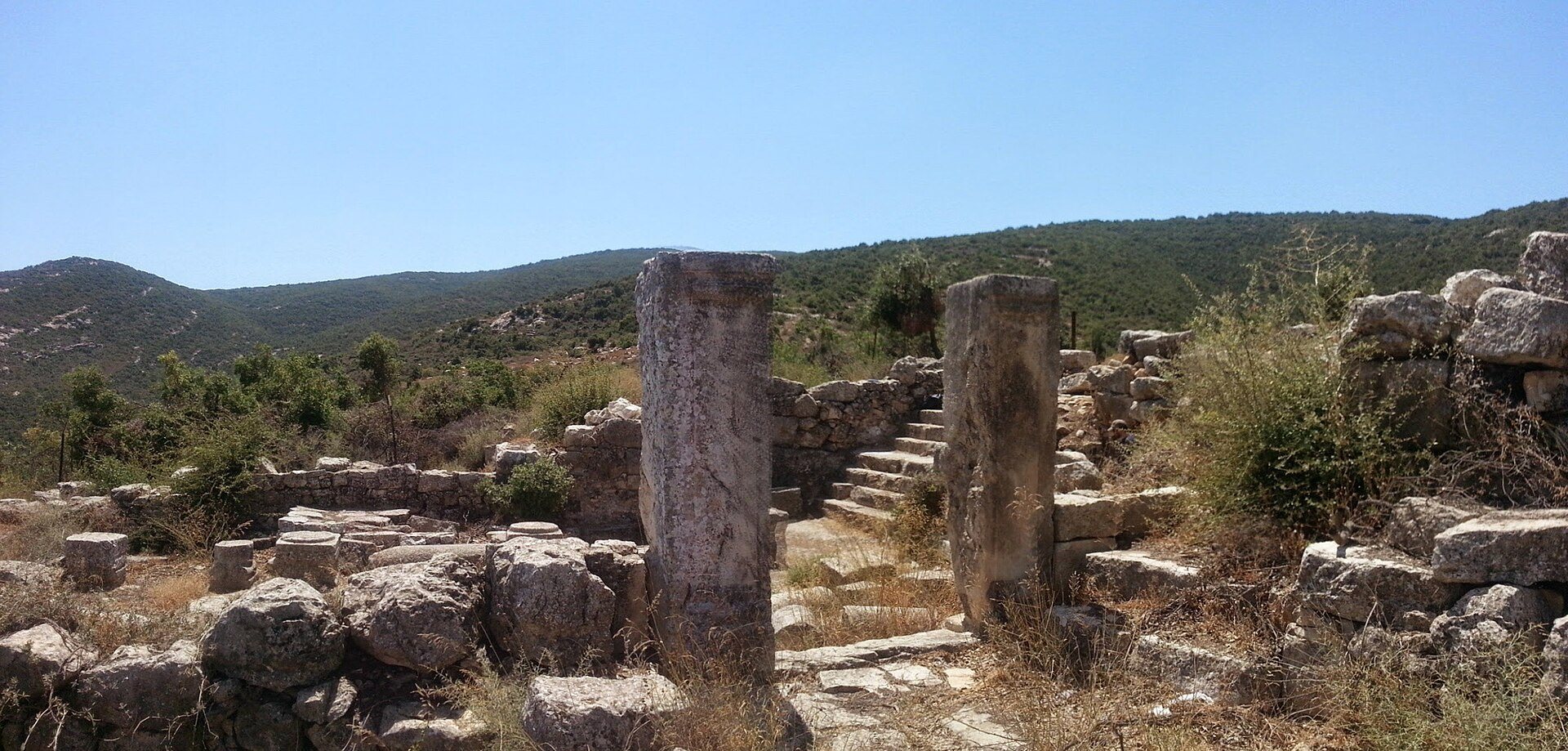
Khirbat Shema is now a ruined settlement spread across a village area with religious, residential, industrial, and funerary remains. The excavated buildings include a broadhouse synagogue, two ritual baths, numerous burial caves, and a large mausoleum probably dating to the Roman period.
Synagogue and ritual facilities
Broadhouse synagogue
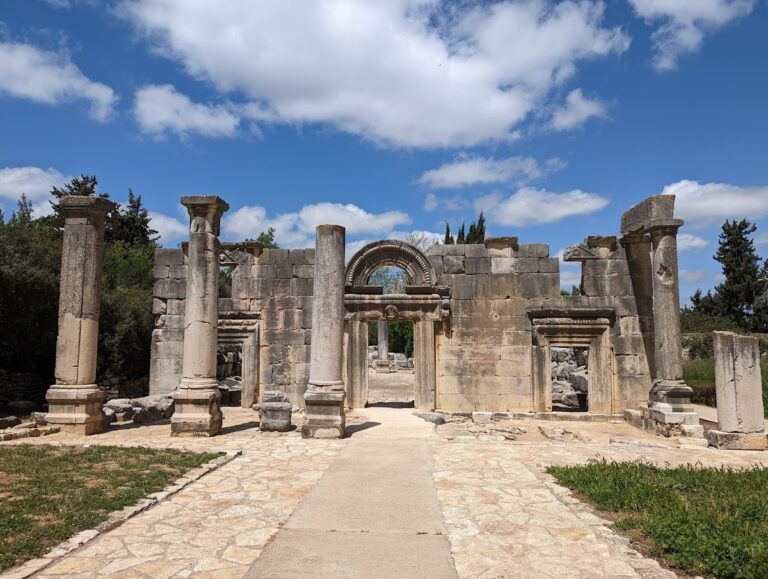
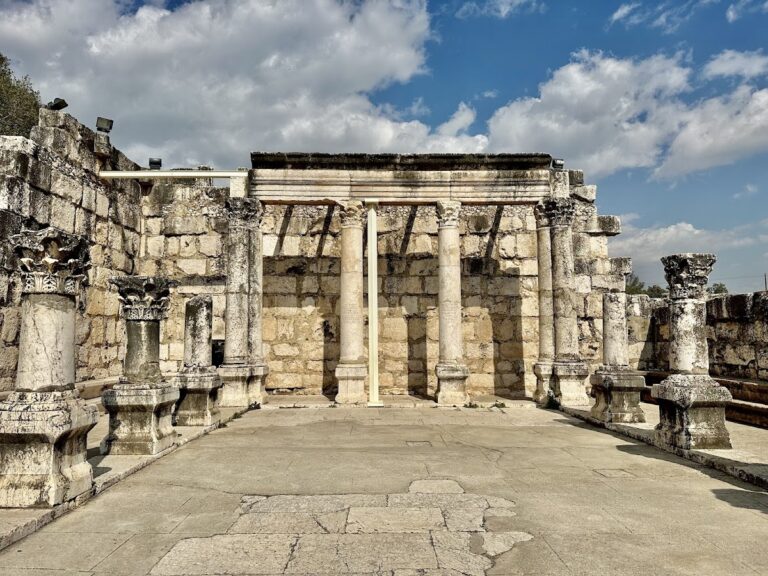
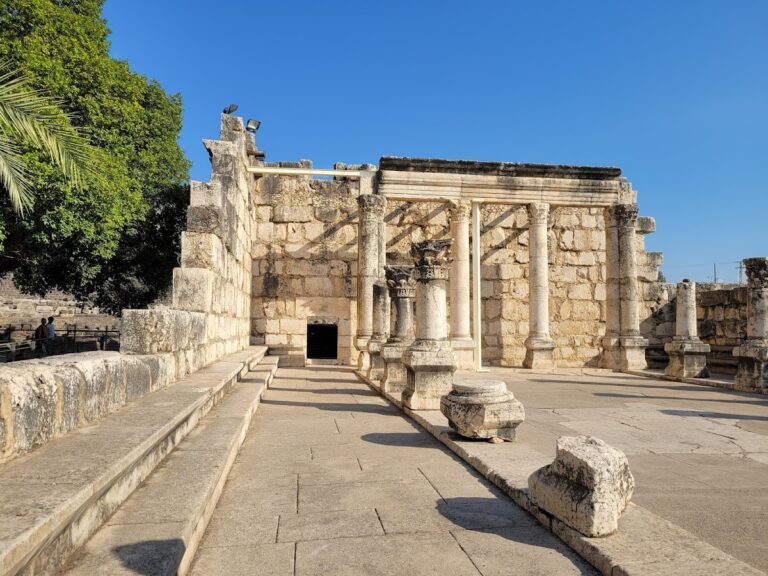
The synagogue is a broadhouse structure considered unusual for its region and period. Its foundation walls are nearly two feet thick, and a staircase about ten feet wide led to the entrance. The entrance lintel carries an eagle, while another gate has a lintel decorated with a seven-branched menorah. Inside, surviving rows of columns indicate the former position of the ark, and a stone bench provided seating for worshippers.
A stairway descends into the building and probably led to the women’s section. Several underground chambers were also recorded within the synagogue. The building contained a mikveh, a Jewish ritual bath used for immersion in water.
Ritual baths
A second mikveh lies on the eastern slope of the site. Seven steps cut into the rock lead down to the bath. Above it are a basin for collecting rainwater and a separate settling basin that allowed sediment to collect before the water entered the bathing installation.
Burial structures
Rock-cut burial caves
Thirty-one rock-cut burial caves surround the ancient settlement. Their burial niches follow Jewish funerary practices and indicate the extent of the community’s cemetery. The caves form part of the wider settlement landscape alongside the synagogue, domestic buildings, industrial quarters, and other tombs.
Roman mausoleum
The excavated area includes a large mausoleum, a substantial burial structure intended to contain one or more tombs. It is probably Roman in date and stands with numerous additional tombs near the settlement.
Two-story burial structure
A two-story structure about four metres long stands near the site. Its lower level contains recesses for the dead and stone headrests. Local tradition identified it as the tomb of Shammai and his wife, while nearby caves were associated with the burial of Shammai’s disciples. The structure is not regarded as a Jewish burial cave because its form does not correspond to that burial practice, and the surrounding settlement already contains rock-cut Jewish burial caves.