Precinct of Mut: An Ancient Egyptian Temple Complex at Karnak
Site at a Glance
- Rating
- 4.3
- Popularity
- Low
- Country
- Egypt
- Primary era
- Bronze Age
- Eras represented
- Bronze Age, Iron Age, Classical
- Civilizations
- Egyptian, Kushite, Ptolemaic, Roman
- Site type
- Religious
- Remains
- Sanctuary
On this page15 sections
History
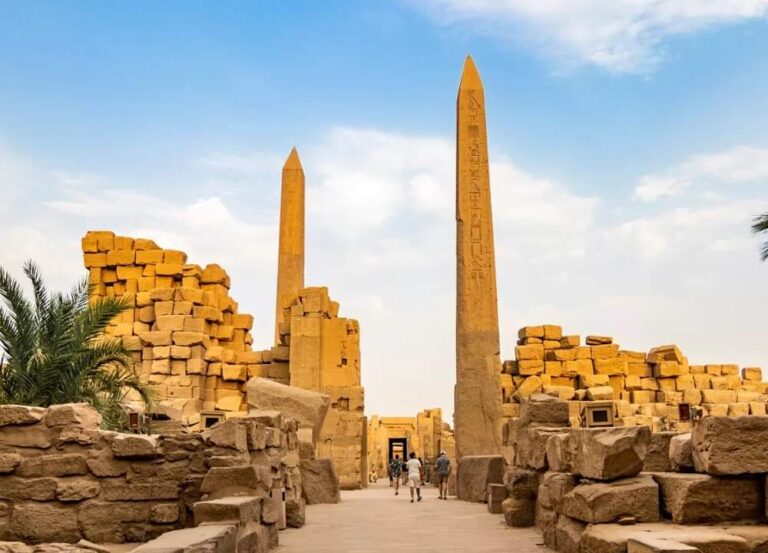
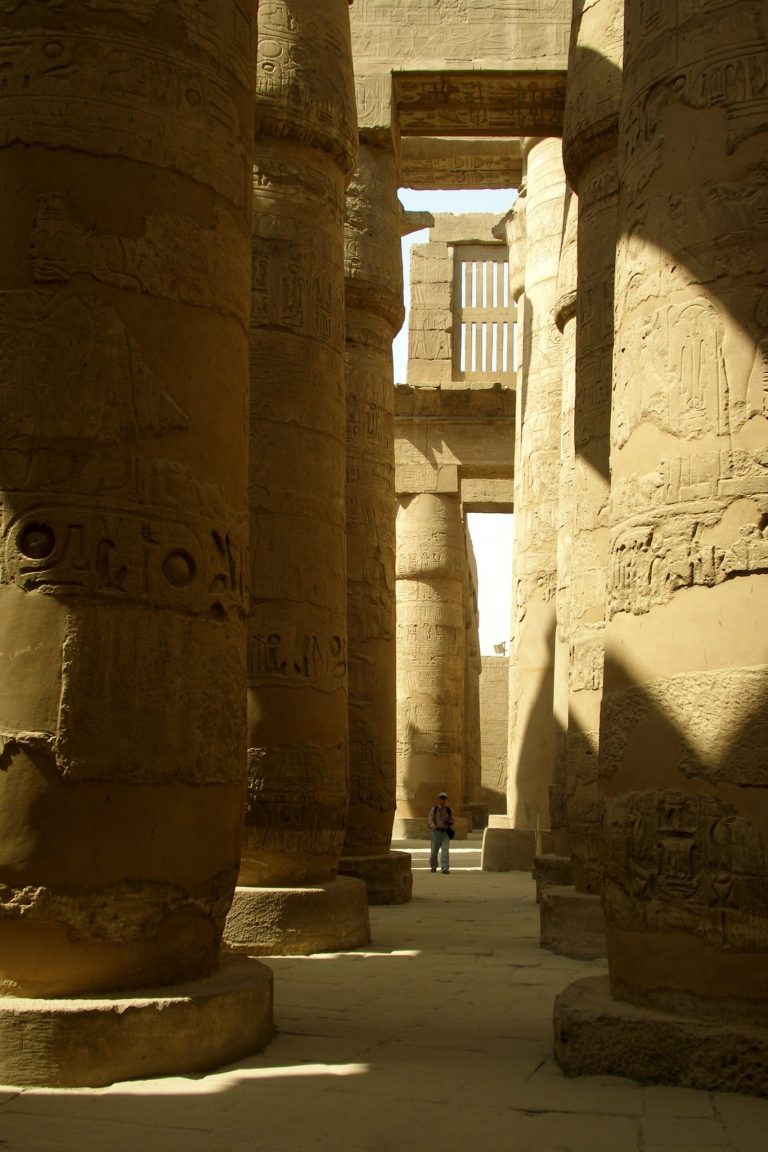
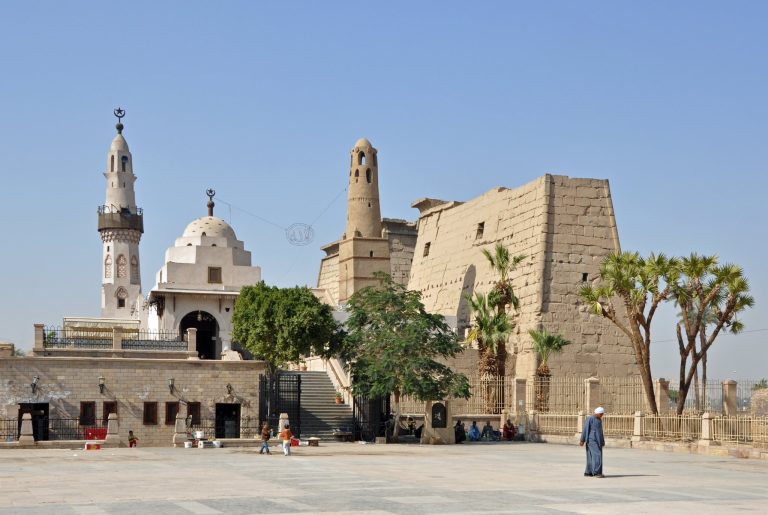
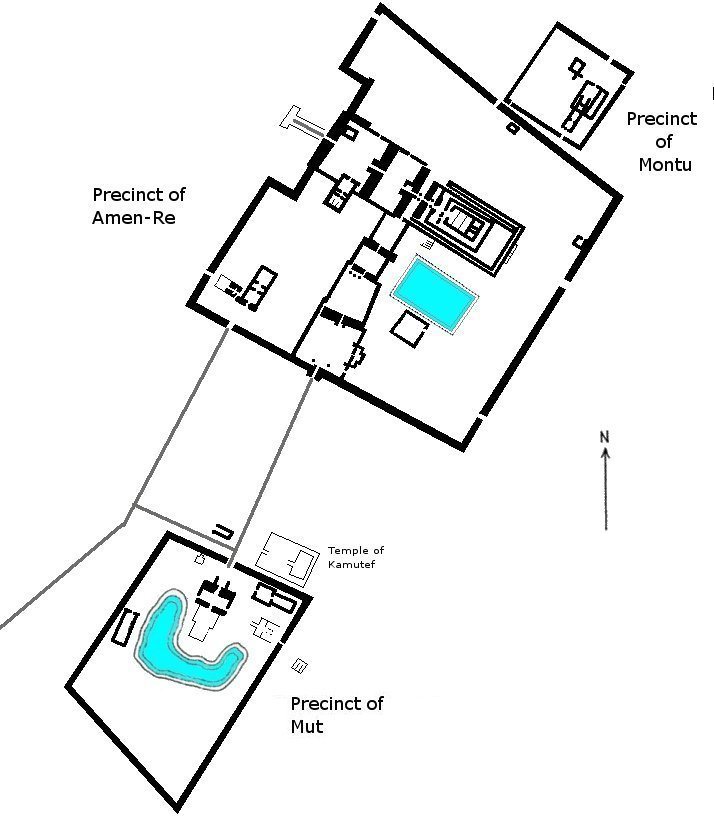
The Precinct of Mut is an ancient Egyptian temple compound at South Karnak in modern Luxor, Egypt. Dedicated to Mut, the consort of Amun-Ra and mother of Khonsu, it formed one of the four principal precincts of the Karnak complex and stood about 325 metres south of the Precinct of Amun. The complex was enlarged during the Eighteenth Dynasty, remained active into the Greco-Roman period, and received its latest stated additions during the reign of the Roman emperor Tiberius.
Foundations and the New Kingdom
One tradition attributes the foundation of the Mut Temple to Hatshepsut, while the earliest dated royal names at the site belong to Thutmose II and Thutmose III. Amenhotep III was once regarded as the founder, but his work appears to have enlarged an already established complex. During his reign, numerous statues and monumental elements were added. Many of the Sekhmet statues at the precinct date from this period, and some were later reinscribed in the name of Shoshenq I.
The Mut complex expanded during the New Kingdom, the period of Egyptian imperial power conventionally dated to about 1550–1070 BC. In the Nineteenth Dynasty, Ramesses II undertook extensive work at Temple A, placing two colossal statues of himself and two alabaster stelae before its first pylon, a monumental gateway formed by two towers and a central entrance. One stela describes his building activity, while the other commemorates his marriage to a Hittite princess.
Ramesses III built Temple C during the Twentieth Dynasty. It remained in use until the Twenty-fifth Dynasty, when parts of it were quarried for renovation work at Temple A. The Kushite ruler Taharqa then reshaped the precinct. He built a sandstone gateway in the north-west, opened a new route to Temple A, renovated parts of the Mut Temple, and erected a south-facing columned porch or kiosk. The Twenty-fifth Dynasty was a Kushite ruling house from Nubia that controlled Egypt during the eighth and seventh centuries BC.
Later religious use
Under Taharqa, Temple A became part of the Precinct of Mut and was adapted as a mammisi, or temple birth house associated with the divine birth of a deity. Its religious role was connected with the birth of Khonsu. Ptolemy VI later built a small chapel inside the Mut Temple. Several stelae also record construction under Augustus and Tiberius between the first century BC and the first century AD.
The Theban clergy grew increasingly powerful during the temple’s later history and eventually became largely independent of monarchs based in Tanis. The worship of Mut also spread beyond Thebes, with sanctuaries reaching as far as Napata in Nubia. After the Assyrian invasion of Egypt, the Karnak temples entered a gradual decline. Attention from the early Ptolemies continued, but Hellenization, Roman rule, and the emergence of Christianity contributed to the reduced use of the temples and the eventual end of Mut’s cult.
Exploration and excavation
Napoleon Bonaparte and Sir John Gardiner Wilkinson visited the precinct between 1799 and 1845. Their photographs, journals, and maps preserve evidence of its appearance during the early period of modern exploration. Margaret Benson and Janet Gourlay carried out the first major excavation in 1895–1897. Over three seasons, Benson cleared the First and Second Courts and the Contra Temple, recovering numerous high-quality statues. She published the results in 1899.
Maurice Pillet resumed excavation in the 1920s and restored Temples A and C. From 1976 to 2001, Richard A. Fazzini, the Brooklyn Museum of Art, and the Detroit Institute of Arts investigated the wider precinct. Betsy M. Bryan and a Johns Hopkins University team continued the work from 2001 to 2004, including excavation south of and behind the sacred lake. Excavation resumed in the winter of 2015, with investigation of the cemetery behind the lake as a principal objective.
Work in 2002–2004 revealed New Kingdom baking and brewing centres, together with granaries. Human remains were uncovered south of the sacred lake in 2011, and burials behind the Isheru were found in 2012. The precinct covers approximately nine hectares and remains largely ruined, with continuing renovation and archaeological investigation as part of the wider Karnak temple landscape.
Remains
Layout and sacred landscape
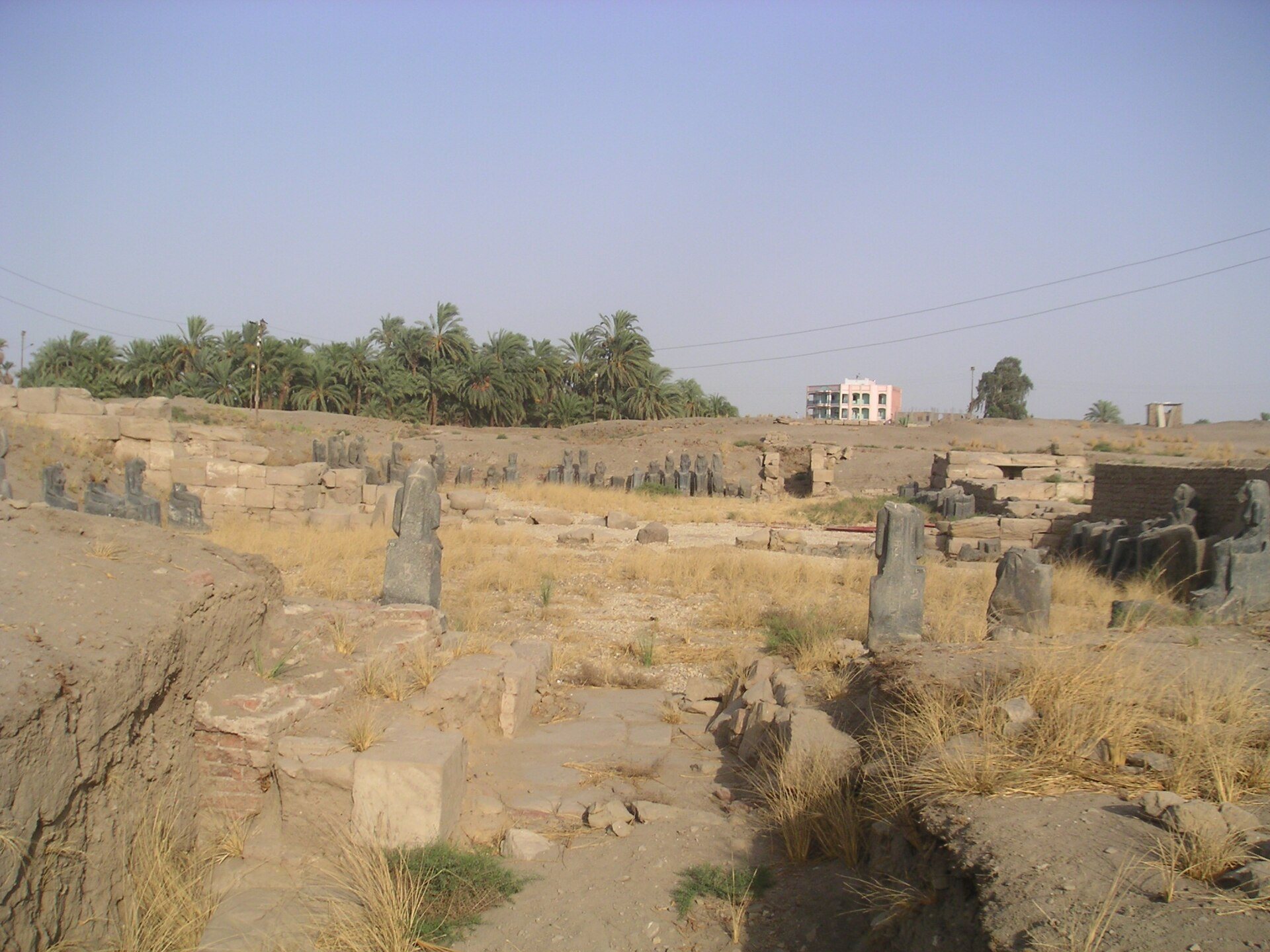
The precinct contains at least six principal temples or structures, enclosed by a mud-brick wall dating to the Thirtieth Dynasty. The Mut Temple occupies the central area and is aligned north to south, directly in line with the Precinct of Amun. The artificial, crescent-shaped sacred lake called the Isheru surrounds the temple on three sides. It held religious importance for Mut’s cult, and Sekhmet statues stood along parts of its edge.
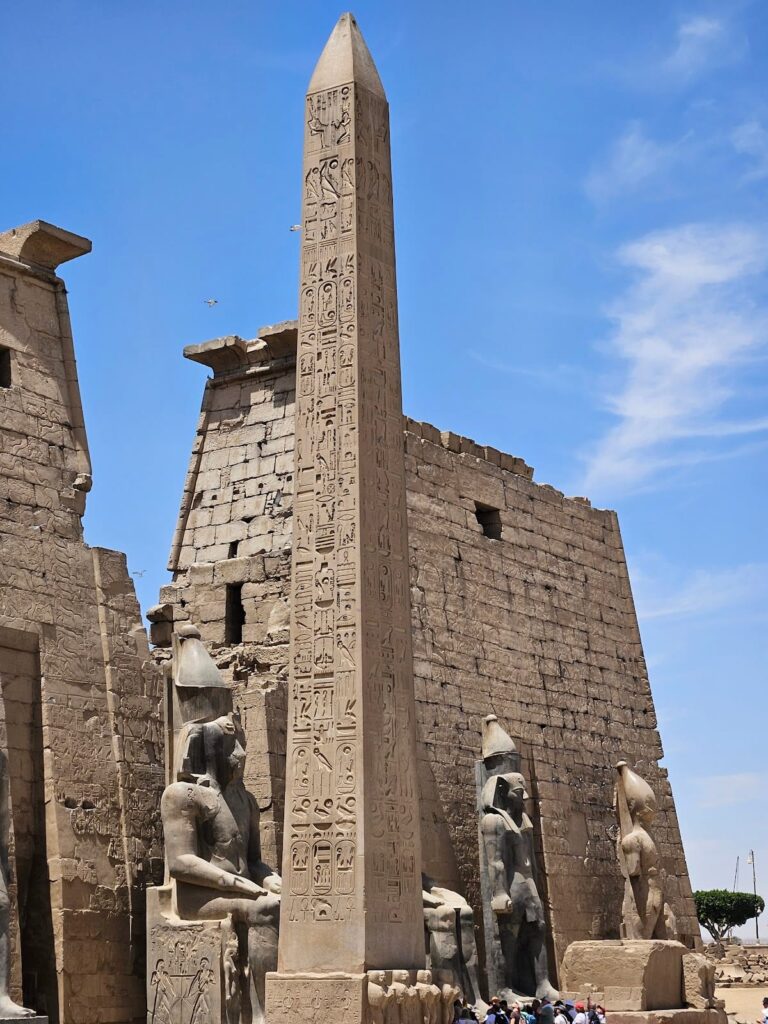
The southern forecourt and nearby monumental remains formed a broad ceremonial space for crowds during major festivals. Broken colossal statues remain among the ruins, while Osirian colossi bearing the name of Amenhotep I were re-erected against the remains of a pylon. An Osirian colossus portrays a king in a form associated with regeneration and the afterlife.
The Mut Temple and Sekhmet statues
The Mut Temple proper was built of sandstone. Its plan included a monumental entrance and forecourt, a first pylon, a second court, a second pylon, and a sanctuary area containing a barque hall and a naos. A barque hall held the sacred boat carrying a deity’s image during ritual processions, while a naos was the shrine that housed the cult image. A chapel attached to the sanctuary faced the Isheru.
The second court contained many statues of Sekhmet, the lioness-headed goddess associated with destructive power, warfare, disease, and healing. In Thebes, Sekhmet was closely connected with Mut. The statues were commissioned by Amenhotep III and made from diorite, black granite, or granodiorite. Approximately 570 granodiorite examples were once thought to have stood in the precinct, while another tradition gives a total of 365 statues for day and 365 for night. Their arrangement in the courts and around the temple may have created a protective secondary enclosure.
Many Sekhmet statues remain in situ or were recovered from the precinct, while others are now dispersed among museums. Examples include statues in the Museum of Fine Arts, Boston, the Egyptian Museum in Cairo, the British Museum, the Louvre, and the Musée d’Art et d’Histoire in Geneva. Most are considered to have come from the precinct, although some may have been moved from Amenhotep III’s mortuary temple on the west bank of the Nile.
Other temples
Contra Temple
The sandstone Contra Temple borders the southern end of the Mut Temple. It probably dates to the Thirtieth Dynasty and was altered during the Ptolemaic period. Its purpose remains uncertain, although it may have served as a stopping point along a partly colonnaded passage around the Mut Temple.
Temple A
Temple A stands in the north-eastern part of the precinct. Also called the Temple of Millions of Years, it was dedicated to Ramesses II and Amun-Ra. Its remains include the two stelae associated with Ramesses II, one describing his work on the temple and the other commemorating his marriage to a Hittite princess. After its incorporation into the Mut precinct during the Twenty-fifth Dynasty, the temple was adapted as a mammisi associated with the birth of Khonsu.
Temple B
Temple B lies east of the Mut Temple and is heavily damaged. Its condition has made archaeological excavation difficult.
Temple C
Temple C stands west of the sacred lake. Built by Ramesses III, it retains military scenes on its outer walls. Two headless colossal statues of the king stood before its entrance.
Temple D
Temple D, also called Structure D, is a small Ptolemaic chapel. Its front room was dedicated to Mut, while the rear room preserves evidence of an ancestor cult, a religious practice honouring deceased forebears through offerings, commemorative rites, or ritual representation.
Gateways and processional avenues
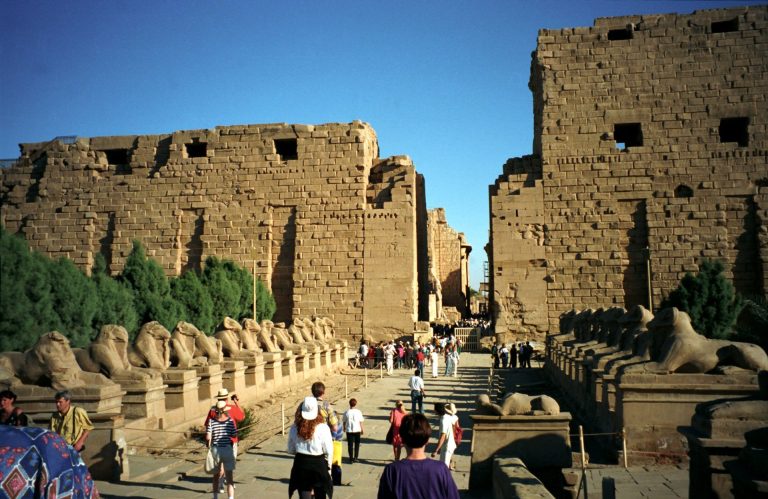
The Taharqa Gateway is a sandstone entrance in the north-west of the precinct. About seven yards wide, it faces south and west and was built to enlarge the complex and create a new route to Temple A. A 400-metre dromos, or processional avenue leading toward a temple, extended north from the entrance toward the Tenth Pylon of the Precinct of Amun-Ra. Ram-headed sphinxes lined the avenue, which is currently under restoration.
A second sphinx avenue extended about 250 metres west from the entrance before joining a processional route approximately three kilometres long. This route connected the Ptolemaic III Euergetes Gate of the Amun precinct with Luxor Temple and was used by divine barques during the annual Opet Festival.
Southern excavations and finds
A large area south of the sacred lake remains under archaeological investigation. Its discoveries include New Kingdom baking and brewing installations, granaries, burials, human remains, and a cemetery area. Between 2001 and 2004, excavators catalogued 42 female figurines from the industrial areas. Their purpose remains uncertain, although a possible relationship to childbearing and health-related rituals has been proposed.
The figurines include handmade nude women of marl clay, reclining figures on fired-clay or limestone beds, figures with flat backs and elaborate hairstyles, forms with pinched heads and projecting arms, thin flat figures with smooth surfaces, and small lower-body figures made from Nile silt and marked by a large pubic triangle.
In January 2006, excavators found a life-sized granite statue of Queen Tiy after clearing debris south of the sacred lake. Tiy was the great royal wife of Amenhotep III. The statue retains her tripartite wig, a modius bearing her epithets, and the titulary of her royal husband. It appears not to have undergone the systematic defacement associated with the religious changes of the Amarna period. The statue was transferred to the Egyptian Museum in Cairo, where it is displayed.