Tongdosa: A Buddhist Relic Temple in South Korea
Site at a Glance
- Rating
- 4.6
- Popularity
- Medium
- Country
- South Korea
- Primary era
- Early Modern
- External website
- Open
- Eras represented
- Medieval, Early Modern
- Civilizations
- Goryeo, Joseon, Silla
- Site type
- Religious
- Remains
- Monastery
On this page20 sections
History
Tongdosa is a Buddhist temple in Yangsan, South Korea, founded by the Silla monk Jajang-yulsa in 646 during the reign of Queen Seondeok. It stands on the southern foothills of Mount Chiseosan, a mountain traditionally identified with India’s Vulture Peak, which is associated with the Buddha’s preaching. The temple was established to enshrine relics that Jajang was believed to have brought from Tang China, including a robe, begging bowl, tooth, and fragment of skull bone.
Foundation and Buddhist development
Jajang travelled to Tang China before founding Tongdosa and began ordaining monks at the new temple. Ordination has continued there, making the site both a relic shrine and a long-standing center of Buddhist training. Tongdosa flourished during Later Silla and Goryeo, when Buddhism held the position of state religion. It retained an important place during the Joseon dynasty, even though Joseon policies restricted Buddhism.
The temple represents the Buddha Jewel in Korea’s Three Jewels Temples. Haeinsa represents the Dharma, or Buddhist teaching, through its preservation of the Goryeo Tripitaka, while Songgwangsa represents the Sangha, or monastic community, through its association with eminent monks and national preceptors. Tongdosa is also one of Korea’s five Jeokmyeolbogung, temples centered on relics attributed to the Buddha rather than primarily on a Buddha image. It remains a head temple of the Jogye Order, Korea’s principal Buddhist order associated with Seon meditation, and continues to function as an active Seon monastery and a major monastic center known as a chongnim.
Expansion and wartime destruction
At the height of its prosperity in the mid-fifteenth century, Tongdosa was said to contain hundreds of buildings and house thousands of monks. It was described as Korea’s fifteenth parish temple and administered 92 affiliated monasteries. Fires and warfare repeatedly damaged the complex. The Imjin War, the Japanese invasion of Korea from 1592 to 1598, destroyed Tongdosa, with Daeungjeon identified as the only building that survived. The present form of the main hall dates from its rebuilding in 1645.
Further reconstruction followed during the reigns of King Seonjo and King Injo. A fire in the late seventeenth century was also said to have left only Daeungjeon standing, after which the temple was rebuilt again. These successive campaigns produced the large complex of buildings and varied architectural forms that survive today.
Institutional disputes and modern status
Between 1906 and 1910, Japanese Buddhist missionaries and Korean monks contested Tongdosa’s institutional direction. Unshō Shaku promoted state-supported Buddhist policy and a Buddhist research institute. Enshin Okumura sought to bring the temple into the Higashi Hongan-ji tradition, while Mokuzen Hioki represented the Sōtō school. Groups within Tongdosa subsequently pursued possible affiliations with Jōdo-shū, Higashi Hongan-ji, or Sōtō.
In 1908, the Jōdo-shū missionary Kōtan Saibi attempted to establish an official Pure Land branch at Tongdosa, but the monk Kang Taeryŏn of the Wŏnjong tradition expelled him. In 1910, Patriarch Yi Hŏgwang negotiated with representatives of Tongdosa over support for a proposed central Buddhist temple in Seoul and the possible elevation of Tongdosa as Korea’s principal temple. The plan failed after the authorities refused to approve the Wŏnjong organization.
Tongdosa became South Gyeongsang Provincial Monument 289 in January 2018. In July of the same year, it joined the UNESCO World Heritage property Sansa, Buddhist Mountain Monasteries in Korea, inscribed under criterion (iii) as evidence of a distinctive or rare cultural tradition.
Legends and continuing traditions
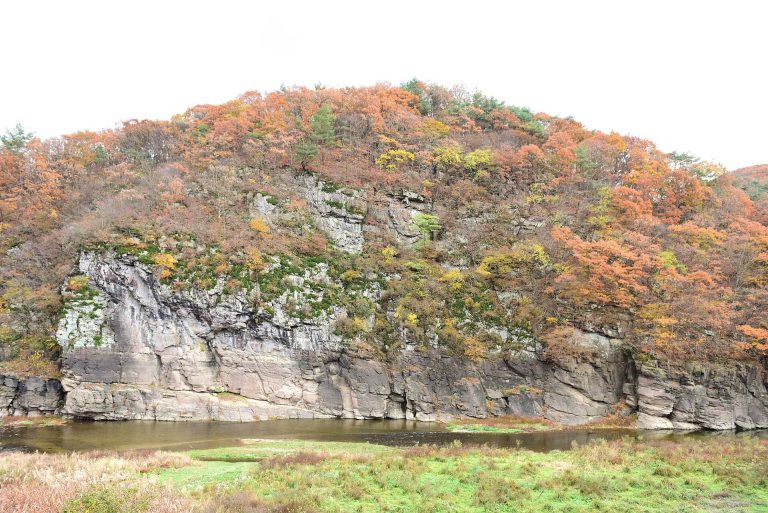
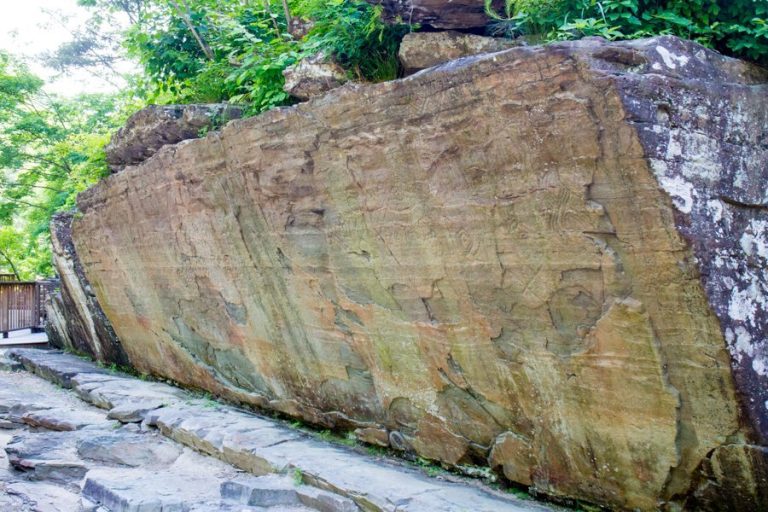
A founding legend tells that nine dragons occupied a pond at the future temple site. Jajang drove them away by reciting Buddhist texts and causing the water to boil after writing the character for fire and casting it into the air. Three dragons struck a cliff now called Yonghyeolam, five flew toward the valley now called Oryonggok, and the blinded ninth dragon remained in the pond after promising to protect the temple. The pond is identified with Guryongji.
Another tradition holds that Tongdosa’s flame has been preserved for more than 1,300 years by lighting each new candle from the preceding one. This practice, together with the continuing ordination tradition, links the present monastery with the institution established by Jajang.
Remains
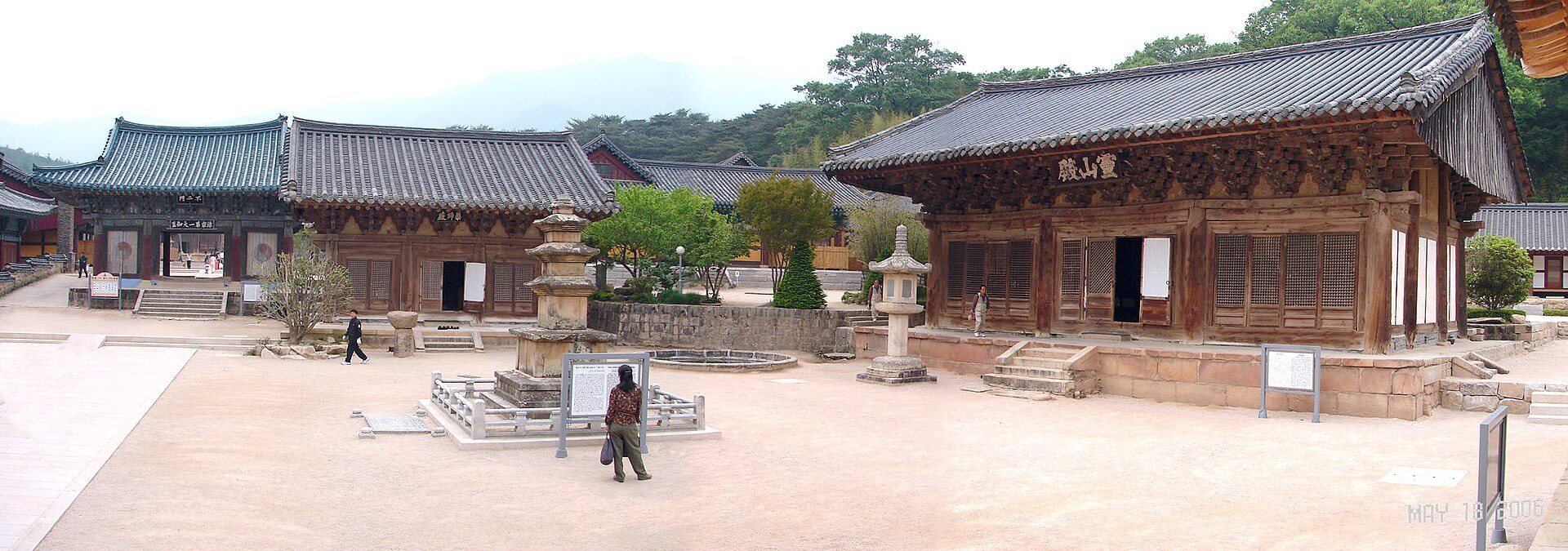
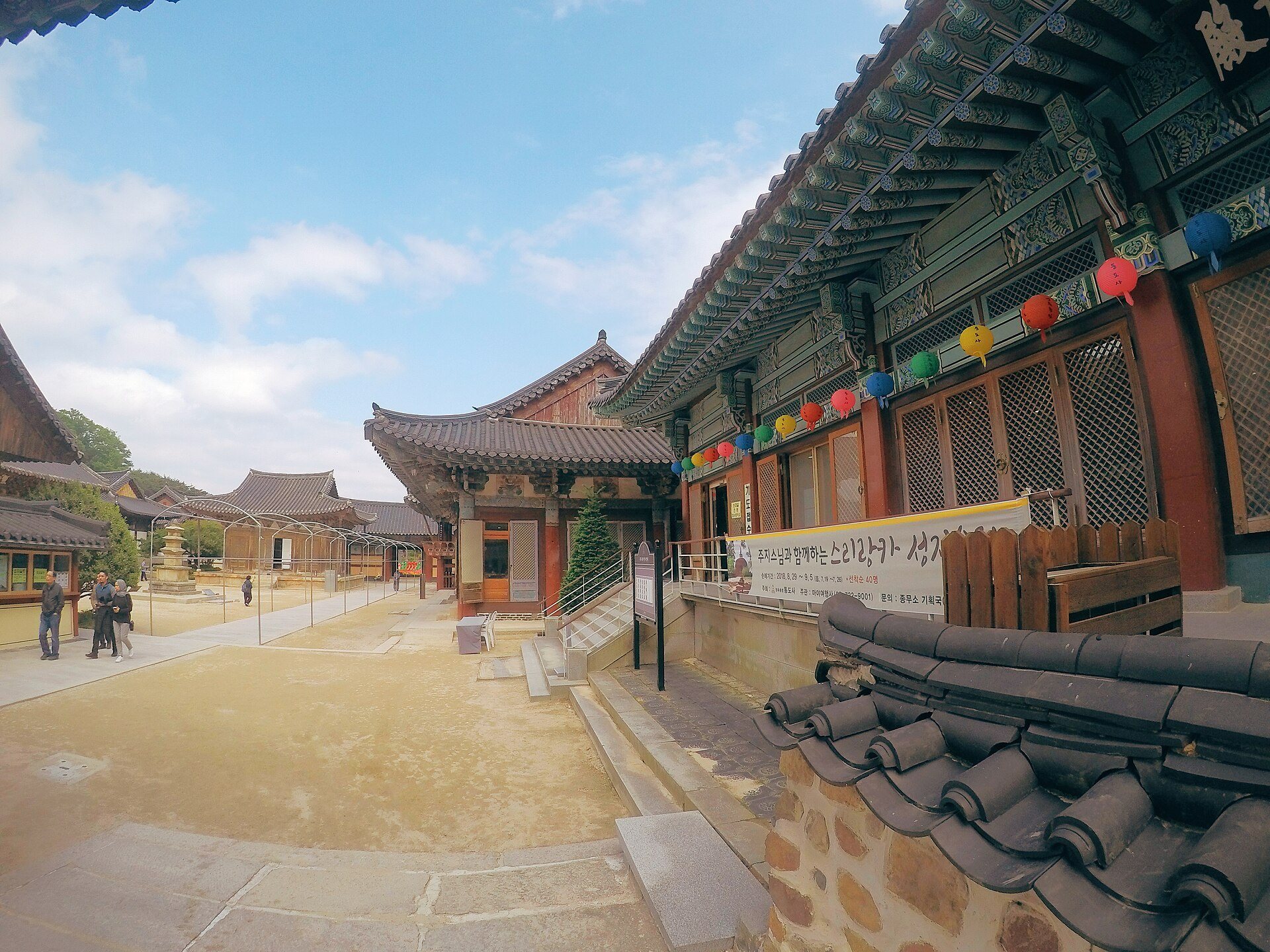
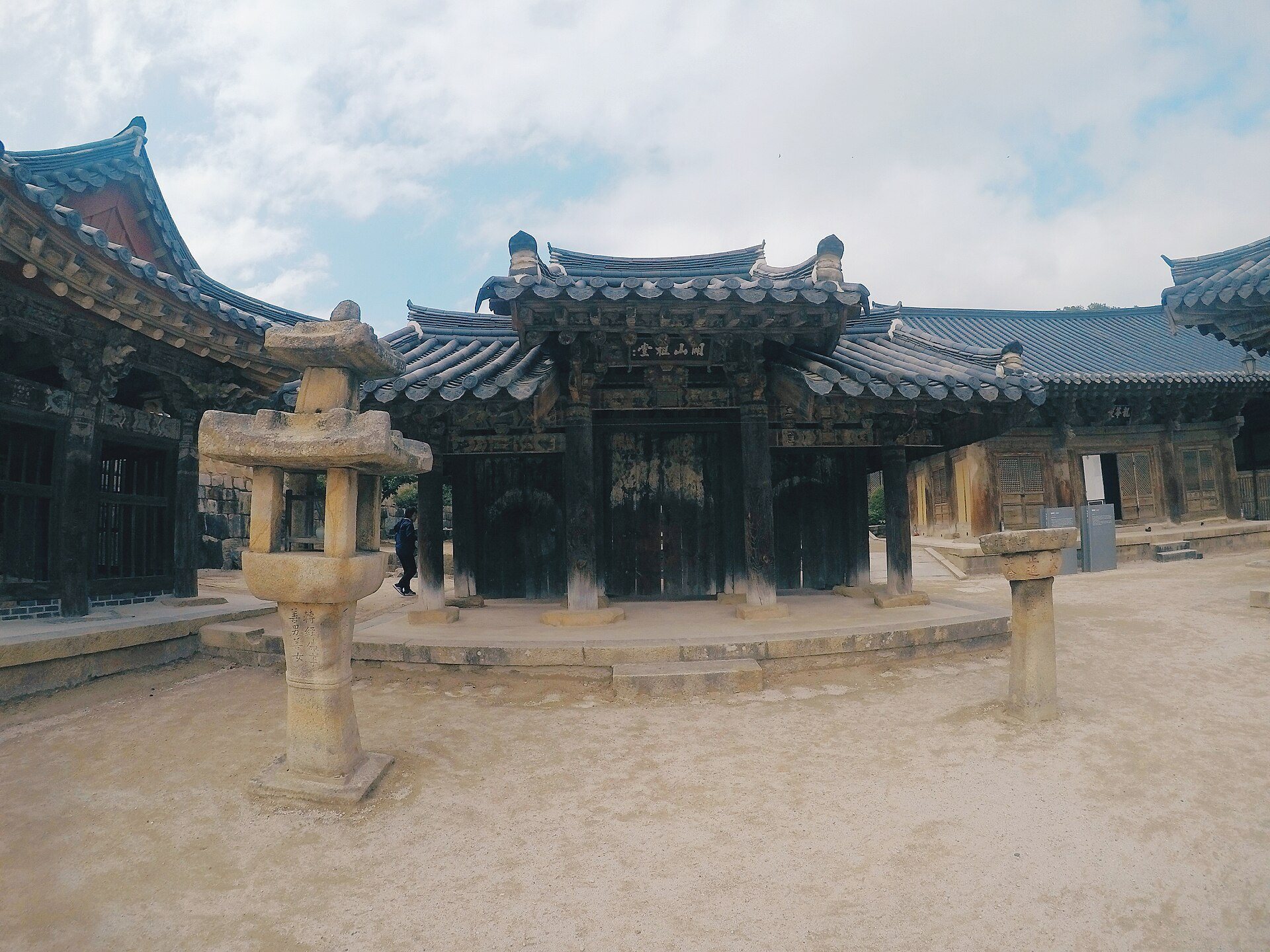
Tongdosa extends across wooded mountain slopes and comprises 65 buildings containing approximately 580 rooms. Its buildings vary in architectural style, and many are unpainted or retain faded decoration. The complex includes meditation and educational facilities, outlying hermitages, gates, bridges, ponds, halls, pagodas, relic monuments, and a museum containing Buddhist and historical material.
The main hall and relic altar
Daeungjeon
Daeungjeon, also called the Mahavira Hall or main Dharma hall, was rebuilt in 1645 after the destruction associated with the Imjin War. Designated National Treasure 290, it contains an altar but no statue of the Buddha or Bodhisattvas. Instead, an unusual rear opening frames a view toward the Geumgang Gyedan and its relic enclosure. Painted chrysanthemum patterns decorate the ceiling.
Geumgang Gyedan
The Geumgang Gyedan, or Diamond Altar, stands behind Daeungjeon and forms the principal cult focus of Tongdosa. It is an ordination platform used for Buddhist ordination and precept ceremonies. The altar incorporates a relic stupa, a Buddhist reliquary monument, containing relics attributed to the Buddha. Its enclosure is decorated with dragons and clouds, with granite guardian figures and additional guardians at the corners.
The relics associated with Gautama Buddha include a robe, begging bowl, tooth, and fragment of skull bone. They are distributed among relic stupas on the temple grounds. Their status as the central objects of worship explains the absence of Buddha statues in Daeungjeon and outdoors, where the relic monuments take precedence.
Historic halls and religious imagery
Dae Gwangmyeongjeon
Dae Gwangmyeongjeon, the Great Light Hall, was rebuilt near the end of the Goryeo period and is designated Korean Treasure 1827. The hall contains a three-body Buddha painting among the complex’s surviving religious artworks.
Youngsanjeon
Youngsanjeon contains an eighteenth-century mural illustrating scenes from the Lotus Sutra, a major Mahayana Buddhist scripture. The mural is designated South Gyeongsang Provincial Tangible Cultural Property 203. Another temple mural depicts a boat escorting the souls of the dead into paradise.
Yonghwajeon
Yonghwajeon, the Hall of Maitreya, was first built during the Goryeo period under King Gongmin and rebuilt during the Joseon reign of King Yeongjo. It contains a statue of Maitreya, the future Buddha in Buddhist tradition, together with interior images of dragons.
Chajang’s Chapel
Chajang’s Chapel was built in 1727. Its name preserves the association of the complex with Jajang, the monk credited with founding Tongdosa and establishing its ordination tradition.
Gates, bridges, and sacred landscape
Temple gates
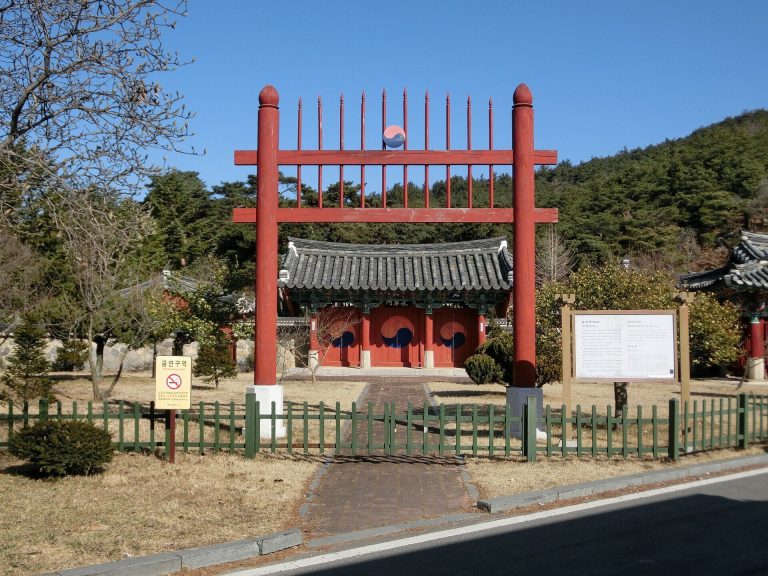
Iljumun, the One-Pillar Gate, forms the entrance and symbolizes the boundary between the secular and spiritual worlds. The Gate of the Four Guardians is the middle gate and represents guardians of the four cardinal directions. Purimun, the Gate of Non-Duality, is the final gate in the approach. Rebuilt several times, the present gate dates from the late Joseon period. It was aligned with Iljumun, the Four Guardians’ Gate, and Daeungjeon, and is designated South Gyeongsang Provincial Tangible Cultural Property 252.
Bridges and water features
Samseongbanwol, known as the Three-Arch Bridge, is associated with the symbols of three stars and a half-moon and is also called the One Mind Bridge. Another bridge on the approach is known as the Windless Bridge. Bridges of this type symbolize passage from the secular world into the sacred realm.
Guryongji, the Nine Dragons Pond, lies beside or behind the main hall between Yaksojeon and Chosajeon. Yonghyeolam, or Dragon Blood Rock, stands approximately 100 meters from the temple entrance and is linked to the legend of the nine dragons.
Pagodas, institutions, and collections
Pagodas and relic monuments
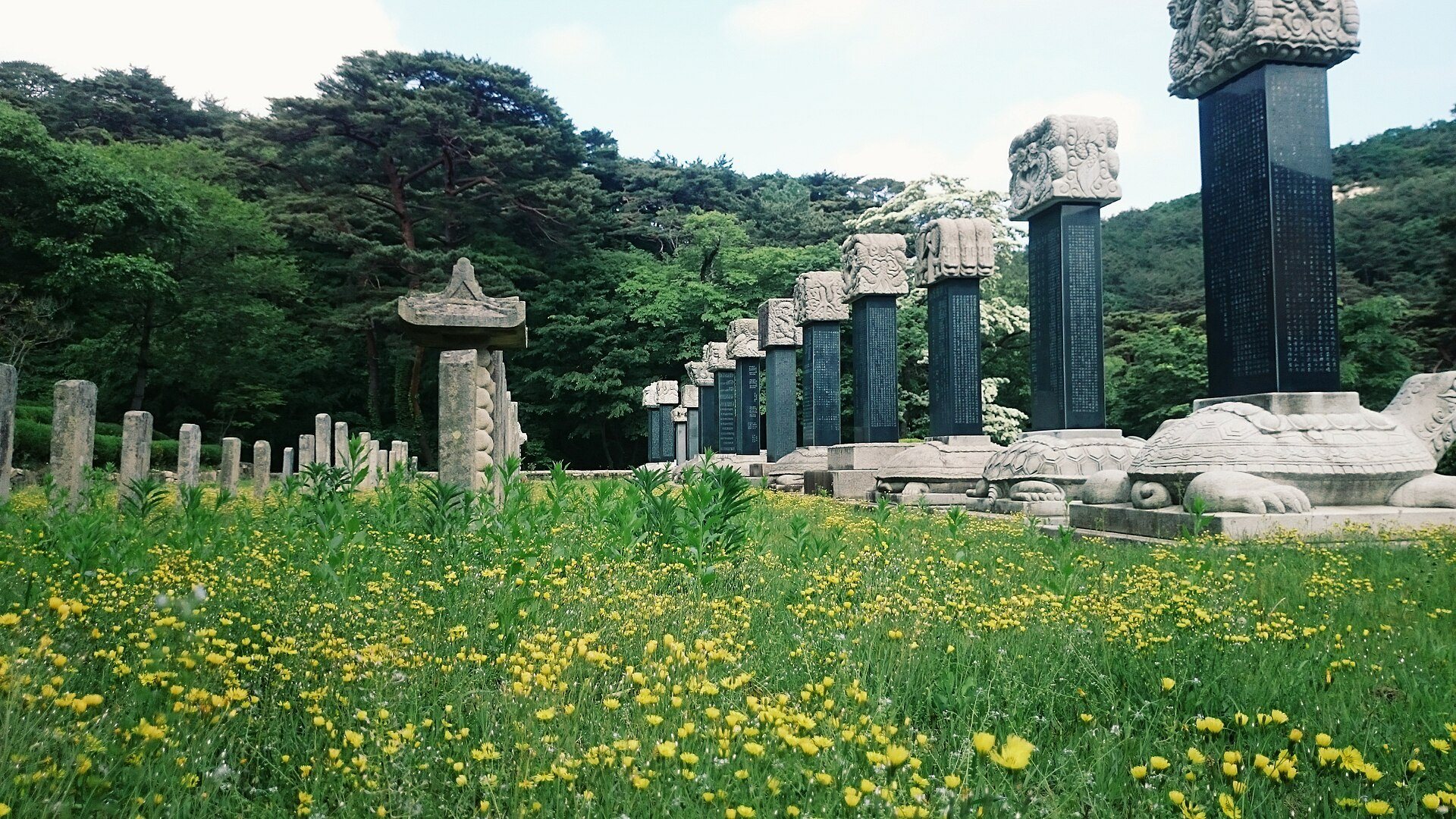
A three-story stone pagoda from the late Silla period is designated provincial cultural property number 18. The temple also contains a relic pagoda associated with the Buddha’s remains. Other associated objects include stone markers, a bronze astronomical chart, a bronze incense burner with silver inlay, hanging Buddhist paintings, paintings of Amitabha’s preaching, and a gilt-silver Amitabha triad with accompanying burial objects.
Monastic buildings and museum
The complex includes Seonwon, a meditation building, and a Buddhist school. Its outlying hermitages include Chuiun, Geungnakam, Biroam, Panyaam, Chwiseoam, Bomunam, Muryangam, Geumsuam, Gwaneumam, Seokchugam, Jajangam, Samyeongam, Seounam, Baeknyeonam, and Ongnyeonam.
A museum on the temple grounds holds approximately 30,000 valuable antiquities and 600 paintings. Tongdosa is also associated with 19 local treasures and approximately 794 other local cultural properties, extending the surviving material record beyond the principal halls and gates.