Baitala Deula: An Eighth-Century Shakti Temple in Bhubaneswar
Site at a Glance
- Rating
- 4.6
- Popularity
- Low
- Country
- India
- Primary era
- Medieval
- Eras represented
- Medieval
- Civilizations
- Unclassified
- Site type
- Religious
- Remains
- Temple
On this page9 sections
History
Baitala Deula is an eighth-century Hindu temple in Bhubaneswar, Odisha, India, built in the Kalinga architectural tradition and dedicated to the goddess Chamunda. As a Shakti shrine, it is devoted to divine feminine power, with Chamunda as its principal deity. The temple is also associated with Tantric practice, a group of ritual traditions using specialized sacred techniques and symbolism.
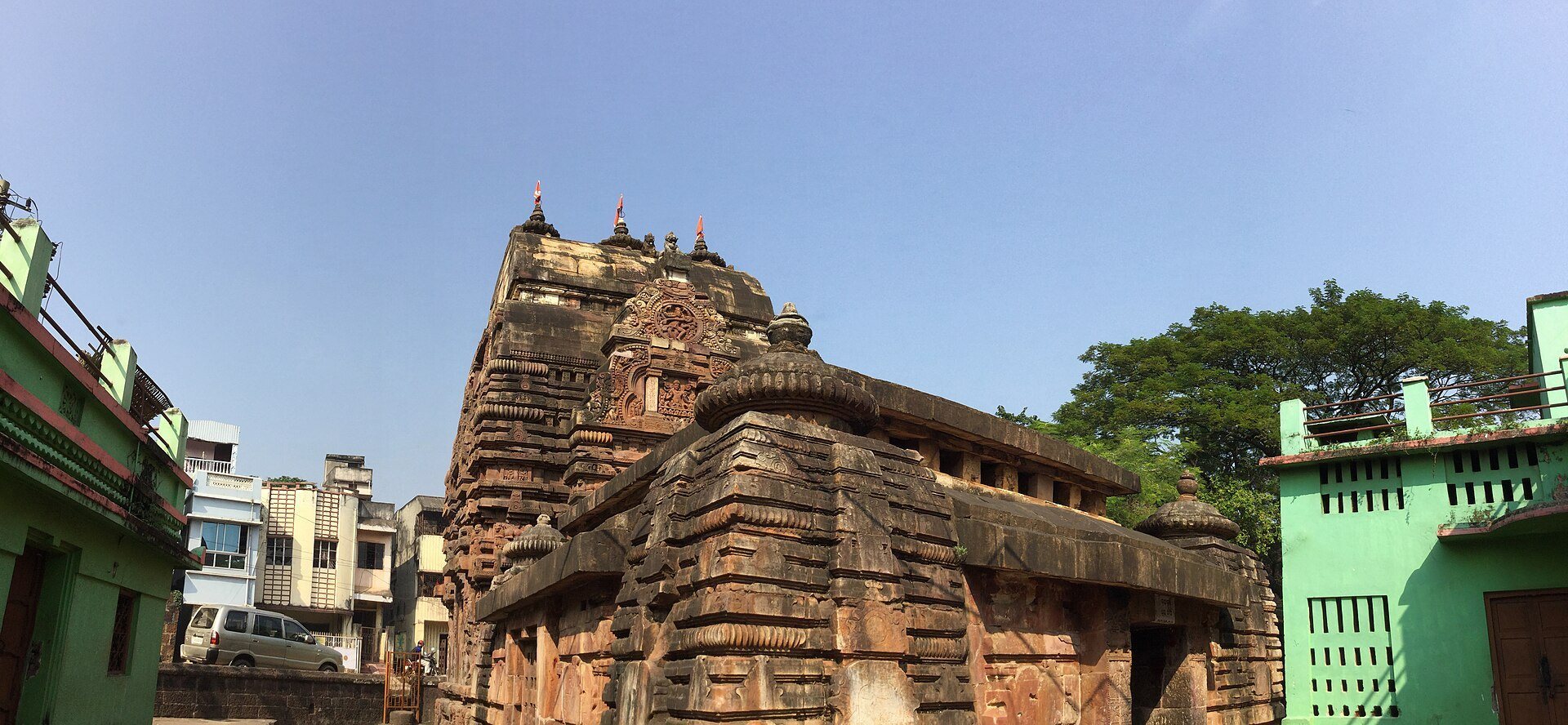
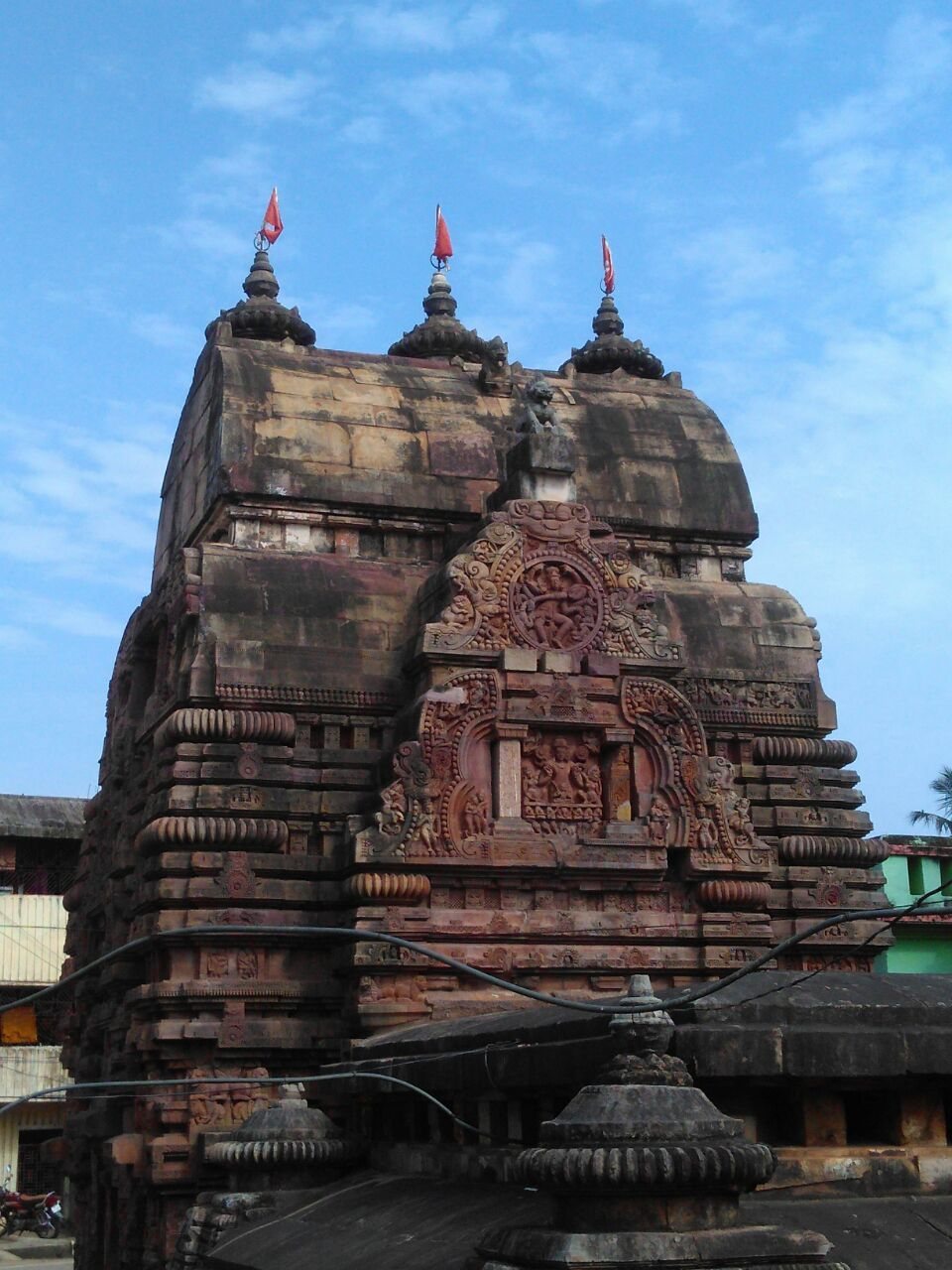
The temple is locally known as Tini-mundia Deula, meaning the “three-spired temple,” in reference to its three upper spires. Local tradition connects these spires with Chamunda’s three powers, Mahasaraswati, Mahalakshmi, and Mahakali. Chamunda is also called Kapalini or Charchika in local religious usage. The temple’s fierce goddess imagery and its association with sacrificial offerings have contributed to its identity as a Tantric shrine.
Remains
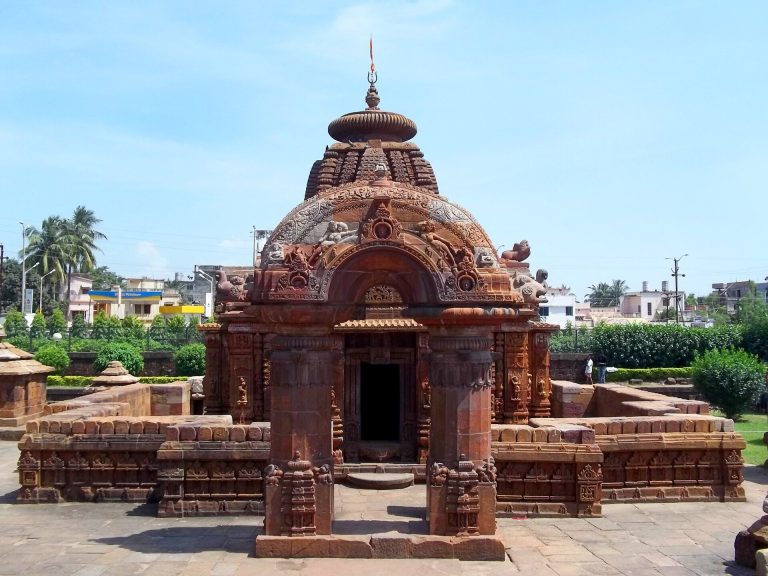
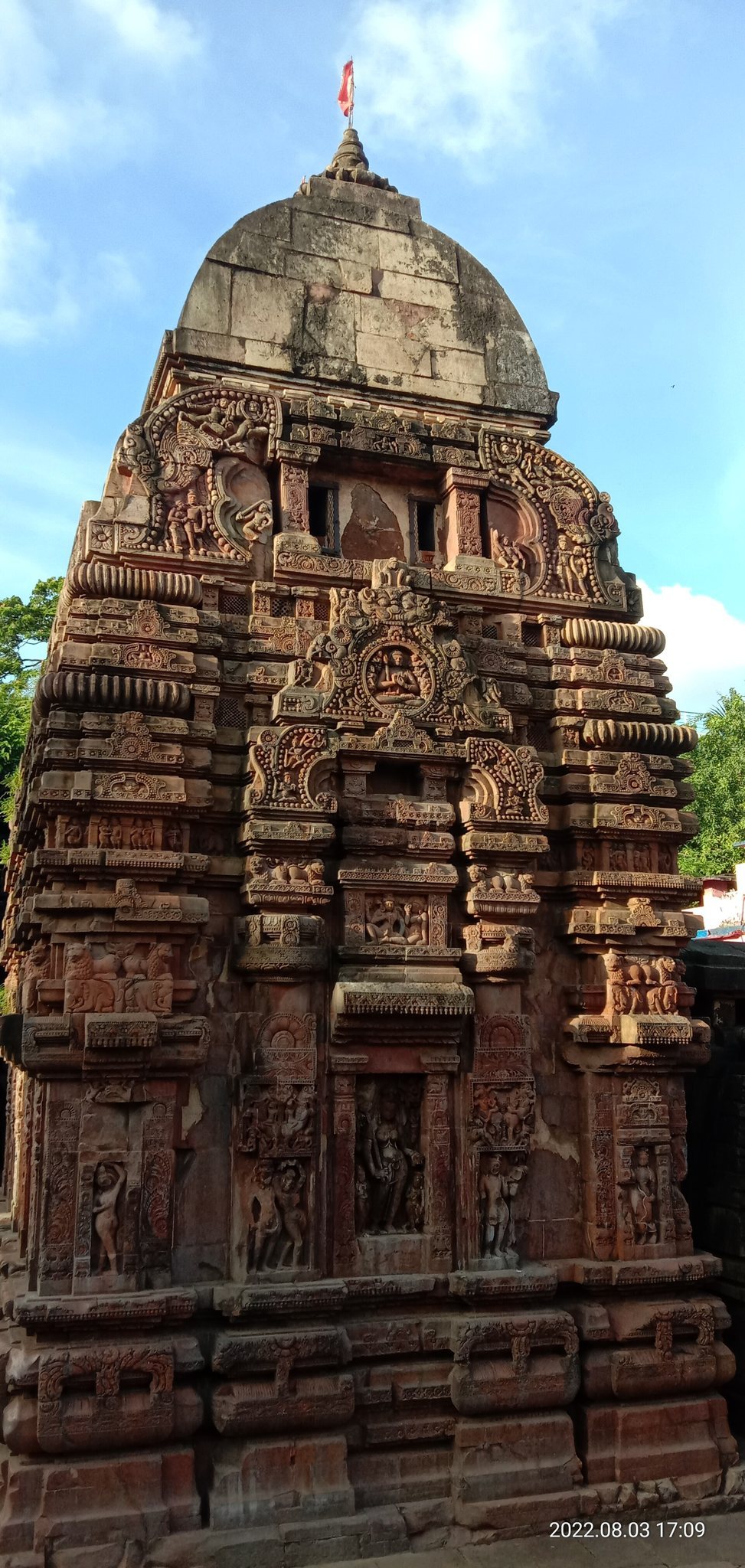
Baitala Deula follows the Khakara form of Kalinga architecture, characterized by an oblong sanctuary and a semi-cylindrical, barrel-shaped roof. Gabled towers and a row of smaller spires rise above the sanctuary, whose form has an affinity with the gopurams, or monumental gateways, of southern India. In front of it is a rectangular, flat-roofed jagamohana, the assembly hall or entrance hall of an Odisha temple. A small subsidiary shrine is built into each corner of the hall.
Sanctuary and principal image
Chamunda shrine
The central niche of the sanctum contains an eight-armed image of Chamunda, locally called Kapalini. She sits upon a corpse between a jackal and an owl, wears a garland of skulls, and pierces a demon’s neck. Her hands hold a snake, bow, shield, sword, trident, thunderbolt, and arrow. Smaller allied deities, including Bhairavas and yoginis, occupy separate niches around her, divided by pilasters. A chaitya window above the principal image, shaped after the arched openings of ancient Buddhist prayer halls, contains seated figures of Shiva and Parvati.
Bhairava and related imagery
On the east wall, beside the doorway, Bhairava appears in skeletal form as Chamunda’s counterpart. Bhairava is a fierce manifestation of Shiva. The temple’s sculptural imagery also includes Ardhanarishvara, Shiva in a composite form that combines male and female aspects.
Hall and exterior sculpture
Chaitya windows
Two chaitya windows decorate the facade above the left side of the jagamohana. The lower window presents Surya with Usha and Pratyusha shooting arrows on either side, while Aruna drives a chariot drawn by seven horses before him. The upper window contains a ten-armed Nataraja, the dancing form of Shiva.
Wall reliefs and ritual associations
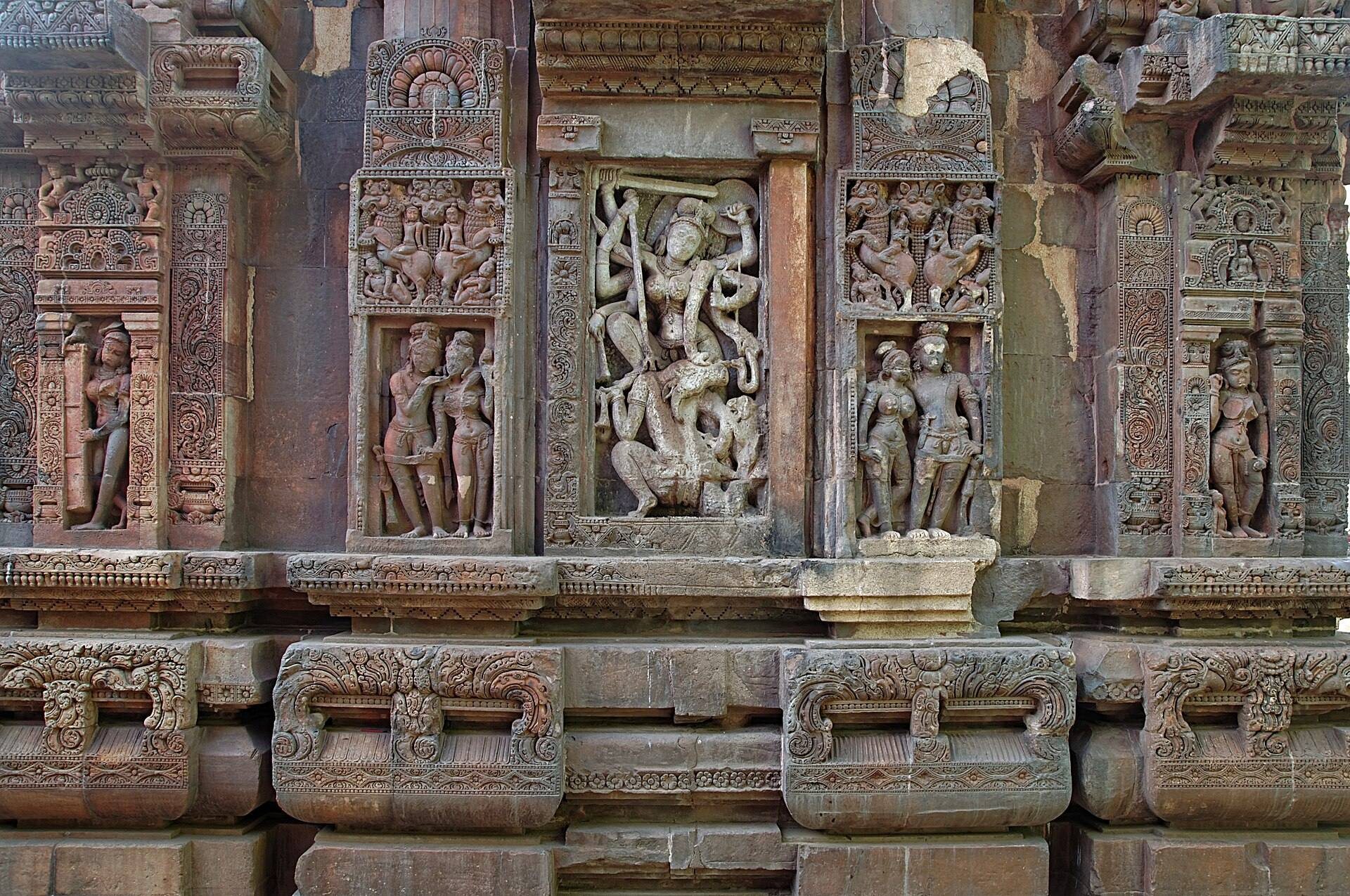
The outer walls carry reliefs of Shiva, Parvati in her Shakti aspect, hunting scenes, the capture of wild elephants, and occasional erotic couples. Their delicate features and balanced proportions are notable characteristics of the temple’s sculptural treatment.
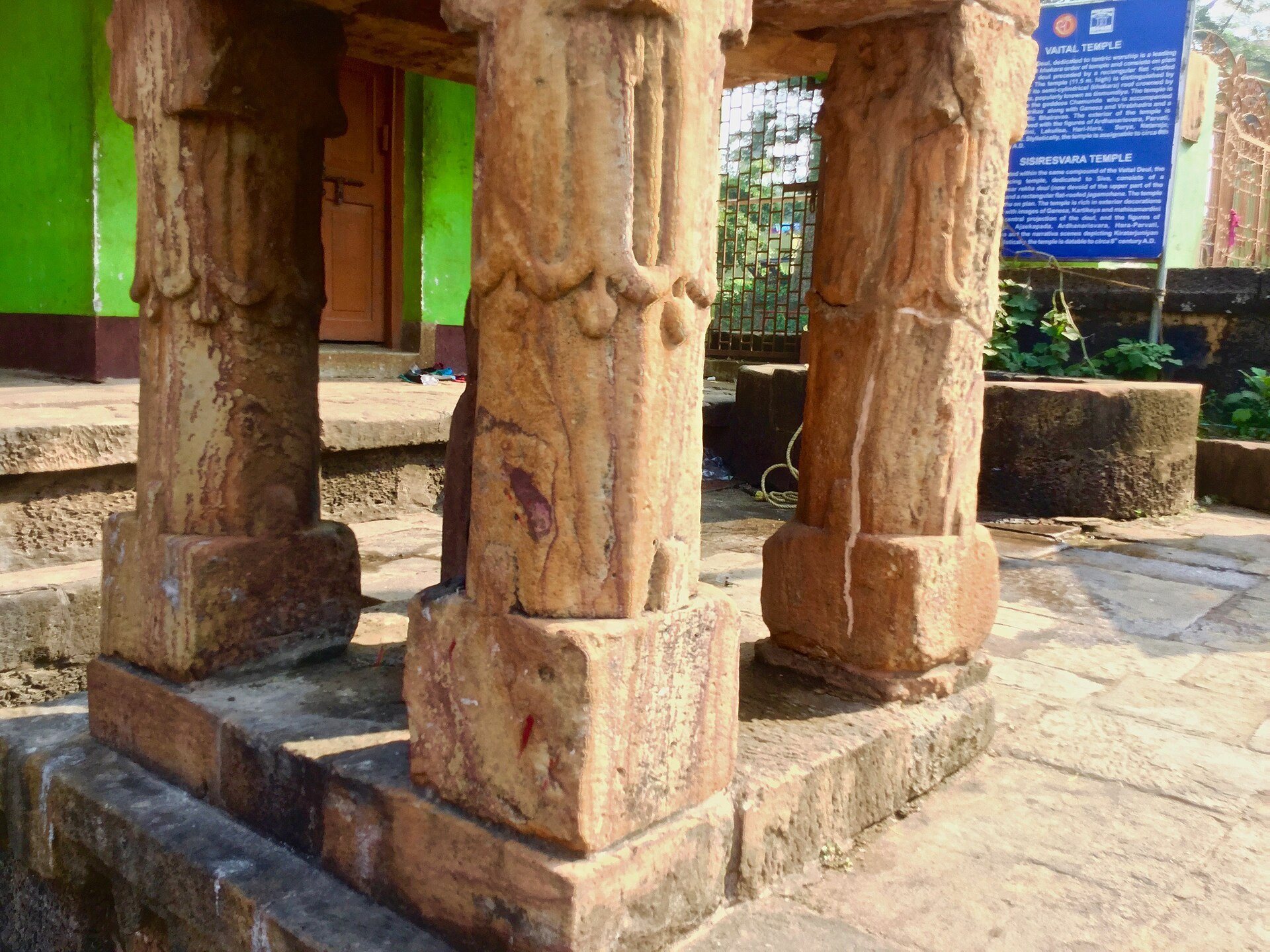
A north-wall carving shows a figure holding a blood-filled skull cup beside a severed head and body. A jackal feeds on the corpse, while a woman or yogini holds a head. Another depiction presents two additional heads on a tray supported by a tripod. In front of the jagamohana, a stone post bears two Buddha-like seated figures making the Dharma-chakra-pravartana mudra, the Buddhist gesture symbolizing the turning of the wheel of religious teaching. The post is traditionally understood to have tethered sacrificial offerings, reinforcing the temple’s Tantric associations.
Inscription and interior
An inscription on the right outer wall is read as “Sri Kasipati Saran,” meaning “I take refuge in Kasipati,” an epithet of Shiva. The temple interior is very dark and generally requires artificial light, although sunlight enters the sanctum in the early morning.